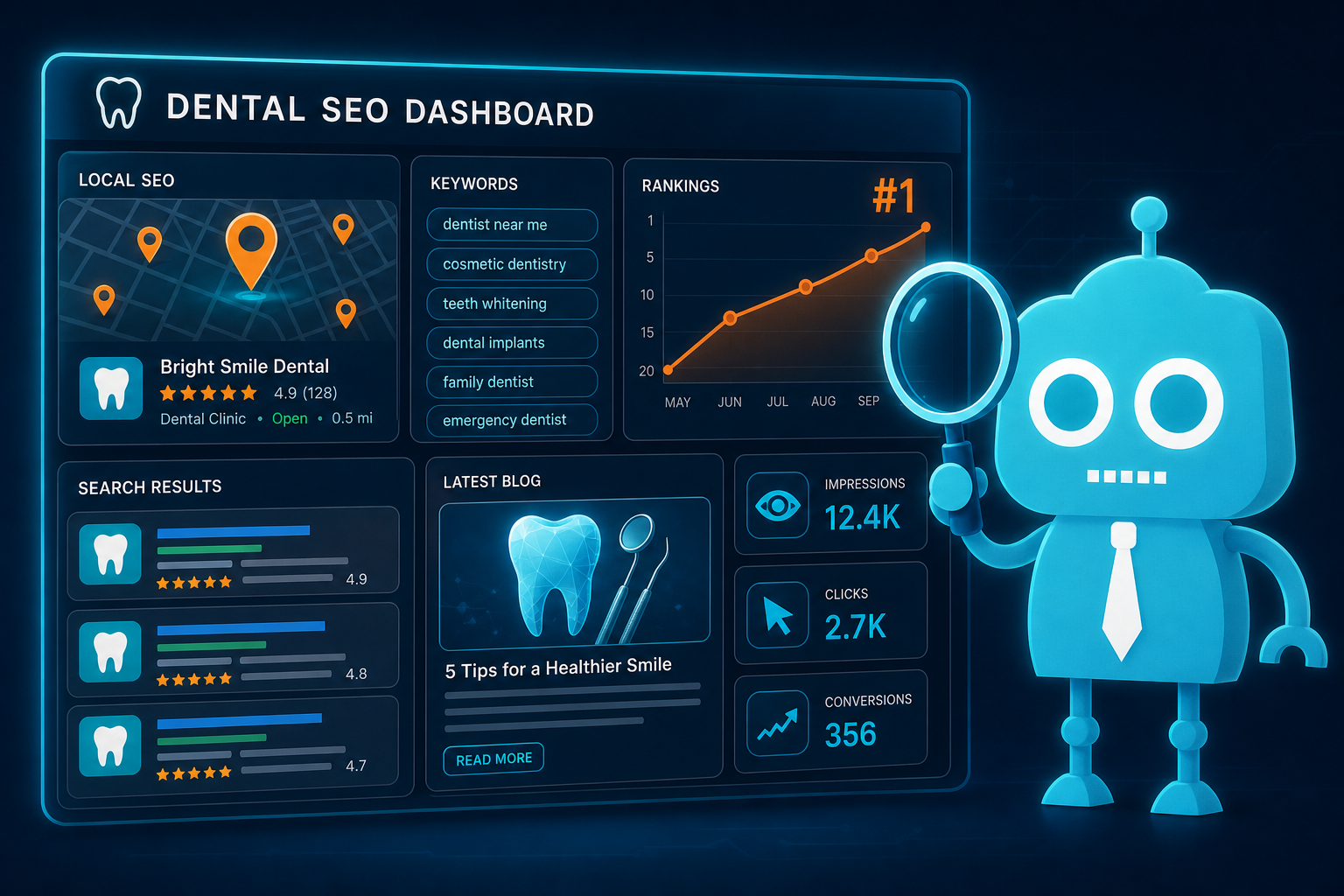
How Dental SEO Works
If you own or manage a dental practice, you have probably heard that you “need SEO.” But dental SEO can sound more complicated than it really is.
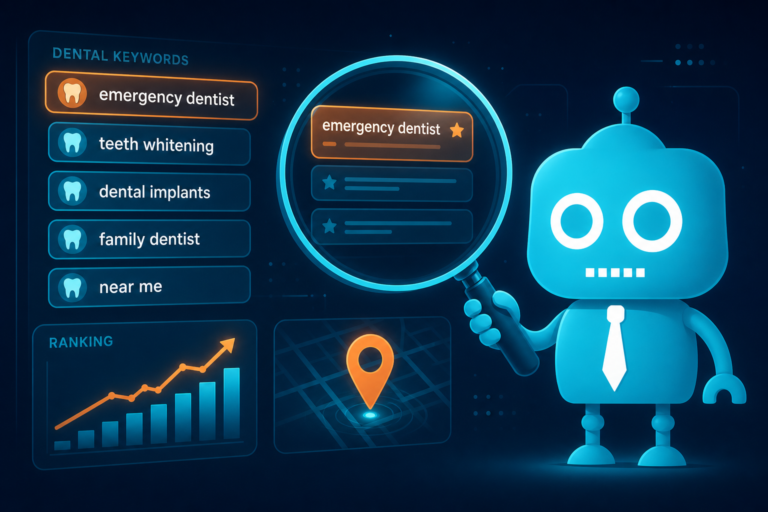
In plain English, dental SEO is the process of helping your practice show up when people search online for dental services in your area. That includes searches like:
- “dentist near me”
- “emergency dentist in [city]”
- “dental implants [city]”
- “Invisalign dentist near me”
- “teeth whitening [city]”
Good dental SEO helps more of the right patients find your practice, visit your website, call your office, request an appointment, and eventually become new patients.
This guide explains how dental SEO works in practical terms for dentists, independent practice owners, and office managers who want better visibility, better leads, and a smoother new patient intake process.

What Is Dental SEO?
Dental SEO stands for dental search engine optimization. It is the work done on and around your website to help search engines like Google understand who you are, where you are located, what services you offer, and why patients should trust your practice.
For a dental office, SEO is not just about website traffic. It is about new patient acquisition.
A successful dental SEO strategy should help your practice:
- Appear in Google search results for dental services in your area
- Show up in the Google Map Pack
- Turn website visitors into phone calls and appointment requests
- Build trust through reviews and helpful content
- Track which marketing efforts are producing real patient leads
In other words, SEO should connect directly to front desk operations, appointment scheduling, CRM follow-up, and patient communication.
Organic Search: How Patients Find You on Google
Organic search refers to the regular unpaid results on Google. These are the listings that appear below the ads and often below the local map results.
For example, if someone searches “family dentist in Scottsdale,” Google may show:
- Paid ads
- Google Map Pack listings
- Organic website results
Your goal is to appear in the organic results for the services and locations that matter most to your practice.
Why Organic Search Matters for Dental Practices
Many patients use Google when they are actively looking for care. They are not casually browsing. They may have a toothache, need a cleaning, want cosmetic treatment, or are comparing dentists after moving to a new area.
If your website appears when those searches happen, your practice has a chance to earn that patient before they call a competitor.
Example of Organic Dental SEO
A patient searches “dental crowns in Tampa.” If your website has a strong page explaining dental crowns, when they are needed, what the process looks like, and how your Tampa dental office can help, Google has a better chance of showing your page.
That page should not be written like a dental textbook. It should answer the patient’s real questions:
- Do I need a crown or a filling?
- How long does a dental crown take?
- Is the procedure painful?
- Does insurance cover crowns?
- How do I schedule an appointment?
Good SEO meets the patient at the exact moment they are searching for help.
Local SEO: Showing Up for Patients Near Your Office
Local SEO is one of the most important parts of dental SEO. Most dental patients choose a provider close to home, work, school, or a convenient commute.
Local SEO helps Google connect your practice to searches with local intent, such as:
- “dentist near me”
- “pediatric dentist near downtown Austin”
- “emergency dentist open today in Denver”
- “best cosmetic dentist in Charlotte”
Google looks at several factors when deciding which dental offices to show locally, including:
- Your physical location
- Your Google Business Profile
- Your website content
- Your reviews
- Your business listings across the web
- How well your website works on mobile devices
The Goal of Local SEO
The goal is simple: when someone nearby needs a dentist, your practice should be easy to find, easy to trust, and easy to contact.
For dental practices, local SEO is often the difference between a website that looks nice and a website that consistently brings in new patient opportunities.
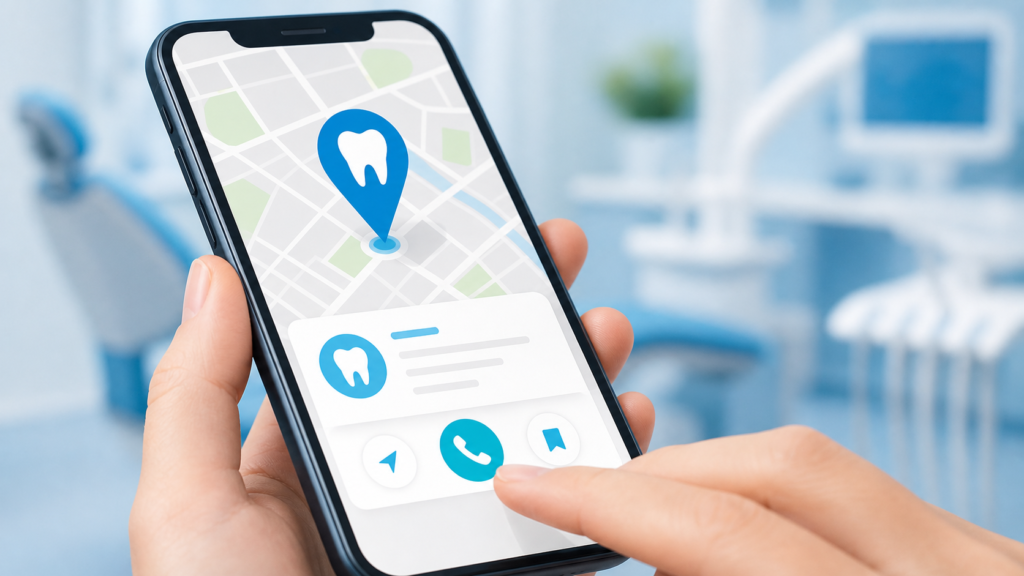
Google Business Profile: Your Practice’s Local Search Hub
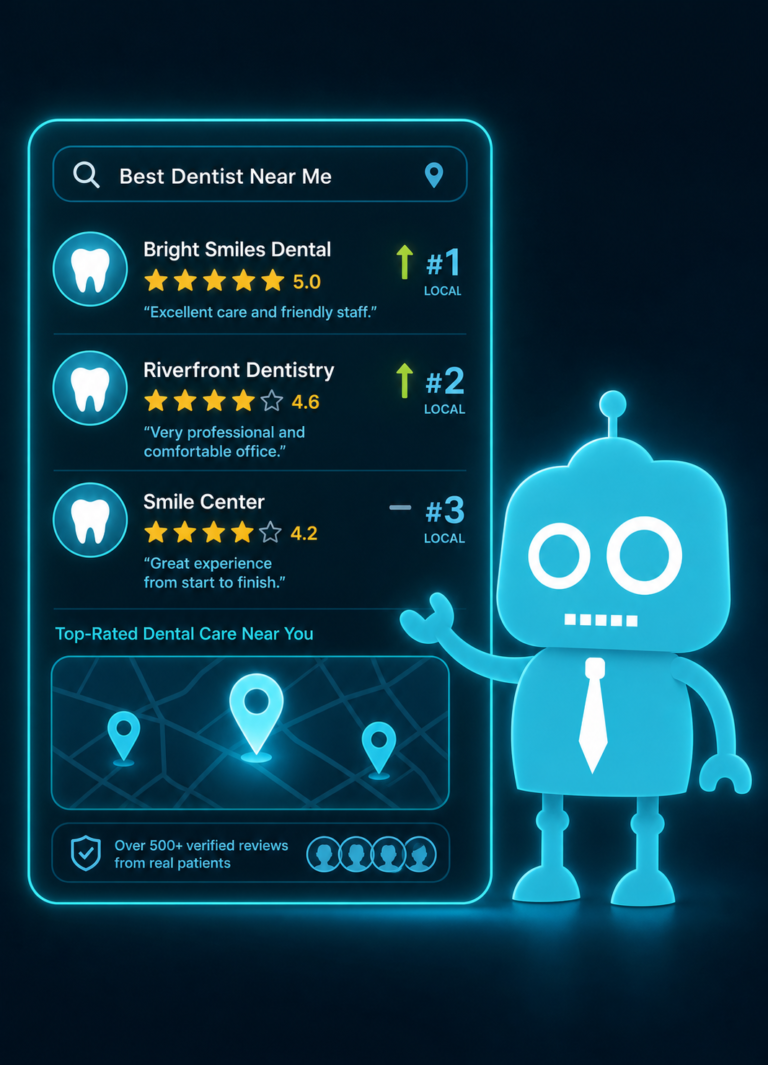
Your Google Business Profile is the listing that appears in Google Maps and local search results. It usually includes your practice name, address, phone number, hours, reviews, photos, services, and a link to your website.
For many patients, this profile is their first impression of your dental office.
What a Strong Google Business Profile Should Include
- Correct practice name, address, and phone number
- Accurate office hours, including holiday hours
- Primary and secondary dental categories
- Detailed service listings
- High-quality office photos
- Photos of the team and treatment rooms
- A clear appointment or website link
- Regular review responses
- Posts about services, promotions, or practice updates
Think of your Google Business Profile as a mini homepage inside Google. Many patients may call your office without ever visiting your website, so the profile needs to be complete and accurate.
Front Desk Tip
Make sure your front desk team knows which phone number is listed on your Google Business Profile. If you use call tracking, confirm that calls are being routed correctly and that missed calls are followed up quickly.
A missed call from Google may be a missed new patient.
Service Pages: Helping Google Understand What You Offer
Service pages are individual pages on your website that explain specific treatments you provide. For dental SEO, these pages are extremely important.
Instead of having one general “Services” page with a long list of treatments, your website should have separate pages for your most important services.
Examples of Dental Service Pages
- Dental Cleanings and Exams
- Emergency Dentistry
- Dental Implants
- Invisalign or Clear Aligners
- Teeth Whitening
- Porcelain Veneers
- Dental Crowns
- Root Canal Therapy
- Pediatric Dentistry
- Dentures
- Tooth Extractions
Each service page gives Google a clear signal about what your practice provides. It also gives patients a helpful place to learn before they call.
What a Good Dental Service Page Should Include
- A plain-English explanation of the treatment
- Who may need the service
- What the appointment process looks like
- Benefits of the treatment
- Common patient questions
- Insurance or financing guidance when appropriate
- Trust signals, such as dentist experience or technology used
- A clear call-to-action to call or request an appointment
For example, an emergency dentistry page should make it obvious that the patient can call right away. It should mention common emergencies like tooth pain, broken teeth, swelling, knocked-out teeth, and lost crowns.
A cosmetic dentistry page should focus more on confidence, smile goals, treatment options, before-and-after expectations, and consultation scheduling.
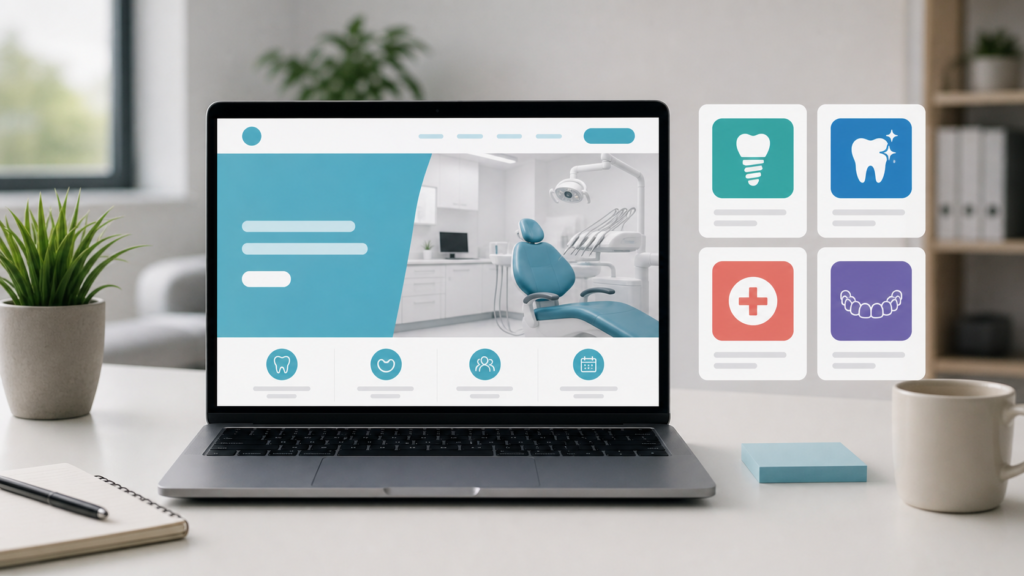
Location Pages: Important for Multi-Location Practices and Service Areas
Location pages help your practice show up for searches in specific cities, neighborhoods, or office locations.
If you have one office, your homepage may already target your main city. But if you serve nearby communities or have multiple locations, dedicated location pages can help patients and search engines understand where you provide care.
Examples of Location Page Strategies
A dental practice with offices in three cities may need pages like:
- Dentist in Plano
- Dentist in Frisco
- Dentist in McKinney
A single-location practice may use pages for nearby communities if they are genuinely relevant, such as:
- Dentist Near West Loop Chicago
- Dentist Near South Tampa
- Dentist Serving North Scottsdale
What Location Pages Should Avoid
Location pages should not be thin, copy-pasted pages with only the city name changed. Google is better at detecting low-value content than it used to be.
A useful dental location page should include:
- Specific directions or nearby landmarks
- Parking information
- Office hours for that location
- Services offered at that location
- Photos from the actual office
- Local patient review highlights
- A location-specific phone number or appointment form if applicable
The page should feel genuinely helpful to someone deciding whether your office is convenient for them.
Reviews: Trust Signals That Influence SEO and Patient Decisions
Reviews are a major part of dental SEO because they affect both visibility and conversion.
Google uses reviews as one of many signals when ranking local businesses. Patients also use reviews to decide whether they feel comfortable calling your office.
Why Reviews Matter So Much in Dentistry
Dental care is personal. Many patients feel anxious, embarrassed, or uncertain about cost. Reviews help reduce that hesitation.
A potential patient may look for comments like:
- “The front desk was helpful with my insurance.”
- “The hygienist was gentle.”
- “The dentist explained everything clearly.”
- “They got me in quickly for an emergency.”
- “The office was clean and modern.”
These details help patients imagine what their own visit will be like.
How to Build a Better Review Process
The best review strategy is operational, not random. Your team should have a simple process for requesting reviews from happy patients.
For example:
- The hygienist or dentist identifies a satisfied patient.
- The front desk confirms the patient had a good visit.
- An automated SMS or email review request is sent after the appointment.
- The patient clicks a link to leave a Google review.
- Your office responds professionally to reviews on a regular basis.
CRM systems, patient communication tools, and SMS/email automation can make this process much easier. Instead of relying on memory, your system can send review requests automatically after selected appointment types.
Website Speed: Patients Will Not Wait for a Slow Dental Website
Website speed affects both SEO and patient conversion. If your website loads slowly, visitors may leave before they ever see your phone number or appointment button.
This is especially important for mobile users. A patient with a toothache searching from their phone is not going to wait for a slow homepage, oversized images, or broken scripts to load.
Common Causes of Slow Dental Websites
- Large, uncompressed photos
- Outdated website themes
- Too many plugins
- Cheap or overloaded hosting
- Unused code from old marketing tools
- Videos loading directly on the page
- Poor mobile optimization
Why Speed Matters for New Patient Leads
Every second matters. If your site is slow, patients may return to Google and choose another dentist.
A fast dental website helps visitors quickly:
- Find your phone number
- Check your services
- Confirm your location
- Read your reviews
- Request an appointment
Speed is not just a technical issue. It is a front desk issue, a scheduling issue, and a revenue issue.
Mobile Optimization: Your Dental Website Must Work on Phones
Most patients will interact with your practice online from a mobile device. They may find you in Google Maps, tap your website, read reviews, and call your office without ever using a desktop computer.
Mobile optimization means your website is easy to use on a smartphone.
What Mobile Optimization Looks Like for a Dental Practice
- Tap-to-call phone numbers
- Simple appointment request buttons
- Fast-loading pages
- Easy-to-read text
- Clean navigation
- Forms that are short and easy to complete
- Maps and directions that open correctly
- No awkward zooming or horizontal scrolling
For dental practices, mobile optimization should focus on action. A patient should be able to call, request an appointment, or get directions within seconds.
Example of a Mobile Conversion Problem
Imagine a patient searching “emergency dentist near me.” They land on your website, but the phone number is tiny, the page loads slowly, and the contact form has 14 required fields.
That patient is likely to leave.
Now imagine the same patient lands on a fast page with a large “Call Now” button, emergency instructions, office hours, and a short appointment request form. That is a much better path to conversion.

Blog Content: Answering Patient Questions Before They Call
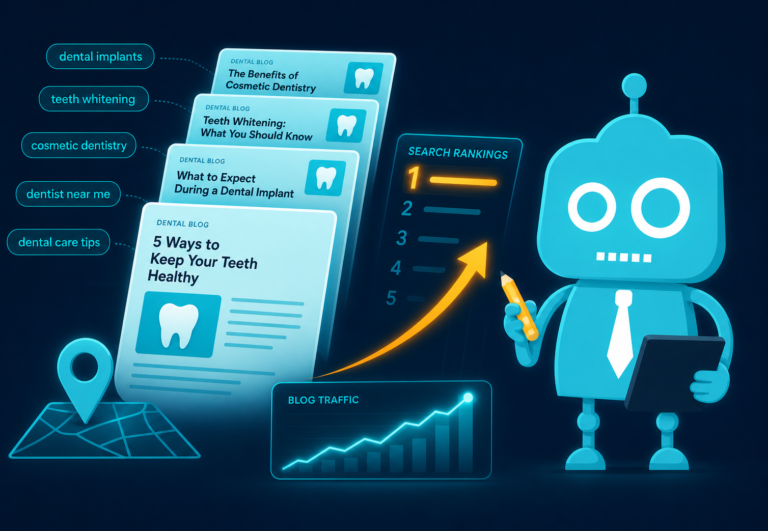
Blog content helps your website rank for more searches and builds trust with potential patients. But dental blogging should be strategic.
Your blog should not be filled with generic posts like “Remember to Brush and Floss.” Instead, it should answer real questions your patients ask every week.
Good Blog Topics for Dental SEO
- What should I do if I crack a tooth?
- How do I know if I need a root canal?
- Dental implant vs. bridge: which is better?
- How often should I get a dental cleaning?
- Is Invisalign worth it for adults?
- Why are my gums bleeding?
- What counts as a dental emergency?
- How much does teeth whitening last?
These topics attract patients who are researching symptoms, treatment options, and next steps.
How Blog Content Supports Service Pages
Blog posts can link to your main service pages. For example, a blog post titled “What Counts as a Dental Emergency?” can link to your Emergency Dentistry page.
This helps patients move from education to action. It also helps Google understand how your website content is connected.
The goal is not to publish content just to publish content. The goal is to create useful pages that support patient decisions and appointment requests.
Technical SEO: Helping Google Crawl and Understand Your Website
Technical SEO refers to the behind-the-scenes work that helps search engines access, read, and organize your website.
You do not need to be a developer to understand the basics. Think of technical SEO as the foundation of your online presence. If the foundation is weak, your content and design may not perform as well as they should.
Important Technical SEO Elements for Dental Websites
- Clean site structure: Your pages should be organized logically, such as Home, About, Services, Locations, Reviews, Blog, and Contact.
- Title tags and meta descriptions: Each page should have a clear search title and description that match the page topic.
- Schema markup: Dental business schema can help search engines understand your practice details.
- Secure website: Your website should use HTTPS.
- XML sitemap: A sitemap helps search engines find your important pages.
- No broken links: Broken pages create a poor user experience and can weaken SEO performance.
- Proper redirects: If pages are removed or URLs change, visitors should be sent to the right place.
- Image optimization: Photos should be compressed and include descriptive file names or alt text where appropriate.
Why Technical SEO Matters in Real Life
If your dental implants page is slow, missing a clear title, buried deep in the website, or not crawlable by Google, it may not rank well even if the content is good.
Technical SEO makes sure your best pages have the best chance to be found.
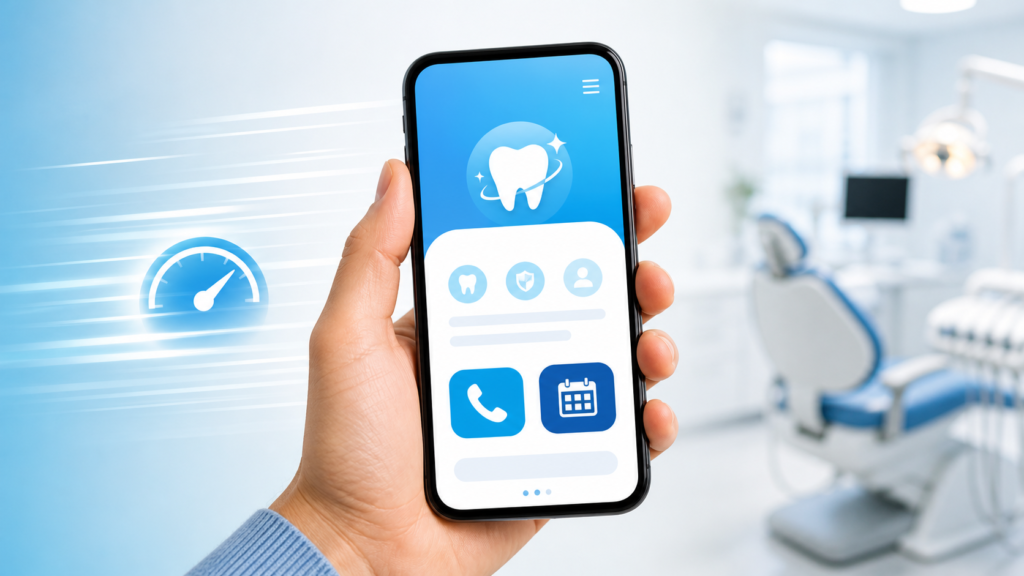
Website Conversion: SEO Should Turn Visitors Into Patients
Ranking on Google is only part of the job. Once patients land on your website, the site needs to convert them.
For dental practices, conversion usually means one of these actions:
- Calling the office
- Submitting an appointment request form
- Using online scheduling
- Clicking for directions
- Starting a text conversation
Dental Website Conversion Essentials
- Prominent phone number in the header
- Clear “Request Appointment” buttons
- Short, mobile-friendly lead capture forms
- Trust-building reviews and testimonials
- Photos of the dentist, team, and office
- Service pages with clear next steps
- Insurance and financing information
- Fast page loading
- Simple navigation
A dental website should make it easy for a nervous, busy, or comparison-shopping patient to take the next step.
Lead Tracking: Knowing Which SEO Efforts Bring New Patients
Lead tracking is where dental SEO becomes measurable. Without tracking, you may know that your website gets traffic, but you will not know how many real patient opportunities it creates.
For dental practices, lead tracking should connect marketing activity to front desk outcomes.
What You Should Track
- Phone calls from your website
- Calls from Google Business Profile
- Appointment request form submissions
- Online scheduling clicks
- SMS or chat inquiries
- Which service pages generate leads
- Which locations generate leads
- Missed calls
- Booked appointments
- New patient visits
Why CRM Integration Matters
A CRM system can help your team manage leads after they come in. This is important because not every new patient books on the first call or form submission.
For example, a patient may submit an Invisalign consultation request at 9:30 p.m. If your website is connected to a CRM, that lead can be captured immediately, tagged by service, and followed up with an automated email or SMS confirmation.
Your team can then call the patient the next morning with context instead of trying to piece together information from a generic contact form.

SMS and Email Automation for Dental Leads
Automation can help prevent leads from falling through the cracks. Useful automations may include:
- Instant confirmation after an appointment request
- Follow-up reminders for unbooked leads
- Post-visit review requests
- Treatment consultation follow-ups
- Reactivation messages for inactive patients
This is where SEO, website design, and office operations come together. Getting found is step one. Following up quickly and consistently is what turns more of those leads into scheduled patients.
How Dental SEO Works as a Complete System
Dental SEO works best when all the pieces support each other.
Here is a simple way to think about it:
- Google understands your practice through your website, Google Business Profile, service pages, location pages, and technical SEO.
- Patients find your practice through organic search, local SEO, Google Maps, reviews, and blog content.
- Your website builds trust with clear messaging, helpful content, team photos, reviews, and fast mobile performance.
- Visitors become leads through phone calls, appointment forms, online scheduling, or SMS/chat tools.
- Your team follows up using front desk workflows, CRM systems, email automation, SMS reminders, and review requests.
- You measure results through lead tracking, call tracking, form tracking, and appointment reporting.
When one part is missing, performance suffers. A beautiful website without SEO may not get found. Strong rankings with a confusing website may not convert. Great lead flow without follow-up may waste opportunities.
The best dental SEO strategy is not just about rankings. It is about building a reliable path from Google search to booked appointment.
Common Dental SEO Mistakes to Avoid
Using One Generic Services Page
If all your treatments are listed on one page, Google has less information to work with. Patients also have fewer helpful details when researching specific care.
Ignoring Google Business Profile
An incomplete or outdated profile can cost you calls. Keep hours, services, photos, and contact details accurate.
Letting Reviews Happen Randomly
Happy patients often need a reminder. A simple review request process can make a major difference over time.
Having a Slow or Outdated Website
If your website is hard to use on mobile, patients may choose a competitor before they ever contact your office.
Not Tracking Leads
If you do not know which pages, calls, or forms are producing leads, it is difficult to improve your marketing decisions.
What Dental Practices Should Focus on First
If you are just starting with dental SEO, focus on the fundamentals before chasing advanced tactics.
- Make sure your website is fast, modern, and mobile-friendly.
- Optimize your Google Business Profile.
- Create strong service pages for your most valuable treatments.
- Build location pages if you serve multiple areas or have multiple offices.
- Set up a consistent review request process.
- Publish helpful blog content based on real patient questions.
- Fix technical SEO issues that prevent Google from reading your site properly.
- Track calls, forms, appointment requests, and booked new patients.
- Connect your website leads to a CRM or follow-up workflow.
Dental SEO does not need to be mysterious. It needs to be organized, patient-focused, and connected to the way your office actually operates.
Final Thoughts: Dental SEO Is About Being Found, Trusted, and Chosen
Dental SEO works by helping patients find your practice at the exact moment they are searching for care. But visibility alone is not enough.
Your online presence must also build trust, answer questions, make scheduling easy, and help your team follow up quickly.
For independent dental practices, the winning formula is clear:
- Show up in local and organic search
- Provide helpful service and location pages
- Maintain a strong Google Business Profile
- Earn and manage patient reviews
- Keep your website fast and mobile-friendly
- Use content to educate and convert
- Track every lead source
- Support your front desk with better systems and automation
When these pieces work together, your website becomes more than an online brochure. It becomes a new patient acquisition system.
How CreateTheSite.com Helps Dental Practices Grow Online
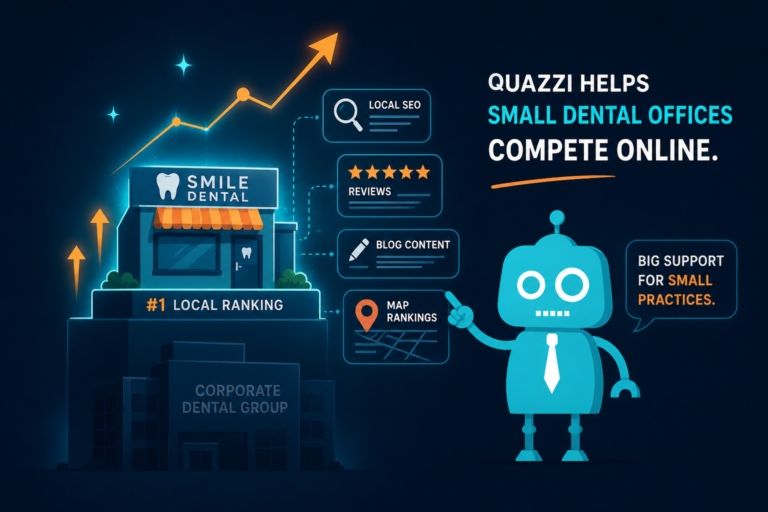
CreateTheSite.com helps dental practices build modern, high-performing websites designed for visibility, conversion, and day-to-day practice operations.
For dentists, office managers, and independent practice owners, that means more than just having a nice-looking website. It means having a website that loads quickly, works beautifully on mobile devices, captures leads clearly, and supports your team after a patient reaches out.
CreateTheSite.com can help with:
- Modern dental website design
- Reliable website hosting
- Mobile optimization
- Fast-loading pages
- Lead capture forms
- CRM integrations
- SMS and email automation
- Appointment follow-up workflows
- Review request support
- Ongoing website updates and support
If your current dental website is outdated, slow, difficult to update, or not connected to your patient follow-up process, CreateTheSite.com can help you create a stronger foundation for SEO and new patient growth.
Visit CreateTheSite.com to learn how a better dental website can support your marketing, your front desk, and your patient experience.