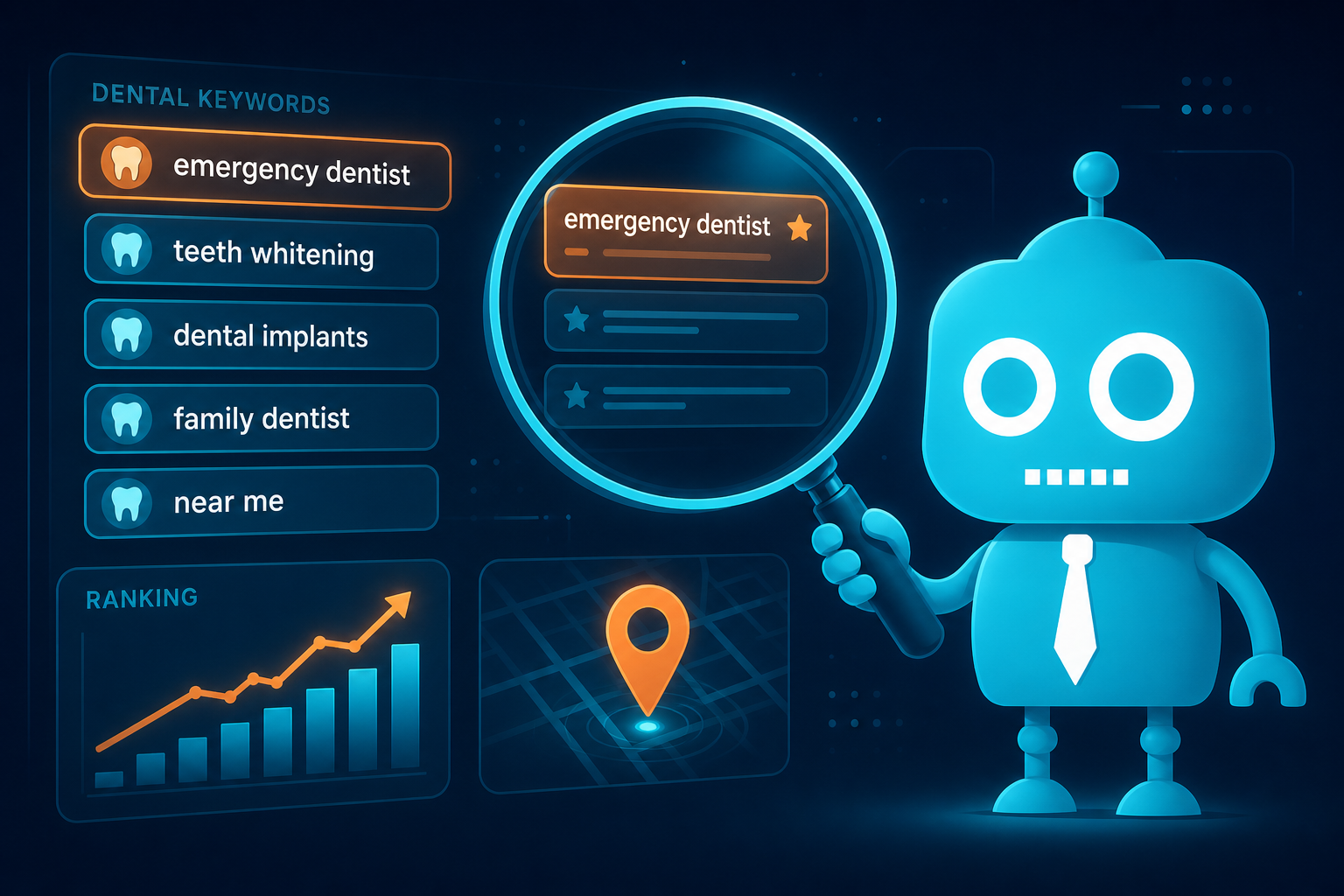
What Keywords Dentists Should Target
Choosing the right dental keywords is not about ranking for the biggest search terms. It is about matching what patients are searching for with the exact service they need, where they are located, and how ready they are to book an appointment.
For independent dental practices, the best keyword strategy connects three things:
- Patient intent: Is the patient researching, comparing, or ready to call?
- Service type: Are they looking for cleanings, emergency care, implants, Invisalign, cosmetic dentistry, or pediatric care?
- Location: Are they searching in your city, neighborhood, or “near me”?
When your website, service pages, Google Business Profile, lead forms, reviews, and follow-up systems align with those searches, your practice has a better chance of turning website visitors into new patient appointments.
Why Dental Keyword Strategy Should Start With Patient Intent
Not every dental keyword has the same value. A person searching “what causes bleeding gums” is in a different stage than someone searching “emergency dentist near me open today.”
Dental keywords usually fall into three main intent categories:
- Informational intent: The patient wants answers. Example: “how long do dental implants last?”
- Commercial intent: The patient is comparing options. Example: “best cosmetic dentist in Dallas.”
- Transactional intent: The patient is ready to act. Example: “same day dentist near me.”
Your website should target all three, but not in the same way. High-intent keywords belong on service pages, location pages, and appointment-focused landing pages. Educational questions belong in blog posts, FAQs, and patient resource sections.
General Dentist Terms
General dentist keywords are the foundation of most dental SEO campaigns. These searches are often used by patients looking for routine care, preventive services, exams, cleanings, X-rays, fillings, and a long-term dental home.
Examples of General Dentist Keywords
- dentist near me
- general dentist in [city]
- family dentist in [city]
- dental office near me
- dental clinic in [city]
- teeth cleaning near me
- dental exam in [city]
- new patient dental exam
- affordable dentist in [city]
These terms should be used on your homepage, general dentistry page, hygiene pages, and location-specific pages. If your practice accepts new patients, make that clear in the page title, headline, and calls to action.
For example, instead of a generic headline like “Welcome to Our Dental Practice,” a stronger SEO and conversion-focused headline would be:
“Family and General Dentist in Austin Accepting New Patients”
This speaks to the service, location, and patient intent immediately.
Emergency Dentist Terms
Emergency dental keywords are some of the highest-intent searches in dentistry. These patients are often in pain, anxious, and ready to call the first trustworthy office that appears available.
For emergency searches, your website must do more than rank. It must convert quickly. That means visible phone numbers, click-to-call buttons, fast mobile loading, simple forms, and clear front desk workflows for urgent appointment requests.
Examples of Emergency Dentist Keywords
- emergency dentist near me
- emergency dentist in [city]
- same day dentist near me
- tooth pain dentist in [city]
- broken tooth repair near me
- walk in dentist near me
- after hours dentist in [city]
- urgent dental care near me
- dentist open today near me
Your emergency dentistry page should include specific conditions patients search for, such as toothaches, cracked teeth, knocked-out teeth, swelling, abscesses, lost crowns, and broken fillings.
It should also answer operational questions clearly:
- Do you offer same-day appointments?
- What should patients do before they arrive?
- Can they call or text the office?
- Do you accept new emergency patients?
- What insurance or payment options are available?
Emergency leads should also be routed properly. If your website form sends an emergency request to an inbox no one checks until the next day, you are losing patients. A CRM integration, SMS alert, or front desk notification can help your team respond while the patient is still actively looking.
Cosmetic Dentistry Keywords
Cosmetic dentistry searches often have strong commercial intent. These patients may not be in pain, but they are motivated by appearance, confidence, events, photos, professional goals, or long-term smile improvement.
Cosmetic keywords should support pages for veneers, teeth whitening, bonding, smile makeovers, gum contouring, and full cosmetic consultations.
Examples of Cosmetic Dentistry Keywords
- cosmetic dentist in [city]
- best cosmetic dentist near me
- porcelain veneers in [city]
- teeth whitening near me
- smile makeover in [city]
- dental bonding near me
- fix chipped tooth in [city]
- veneers cost in [city]
Cosmetic pages should include strong visual proof. Before-and-after photos, testimonials, review highlights, financing information, and consultation calls to action can improve conversion.
For these keywords, the page should not feel like a clinical textbook. Patients want to understand what is possible, what it costs, how long it takes, and whether they can trust your practice with their smile.
Dental Implant Keywords
Dental implant searches are highly valuable because implant patients often represent significant treatment value. However, implant keywords can also be competitive, so your strategy should include broad, specific, local, and question-based terms.
Examples of Dental Implant Keywords
- dental implants in [city]
- dental implants near me
- single tooth implant in [city]
- implant dentist near me
- all on 4 dental implants in [city]
- full mouth dental implants near me
- dental implant consultation in [city]
- dental implants cost in [city]
- affordable dental implants near me
Implant patients typically need education before they book. Your implant page should explain candidacy, bone grafting, timelines, restorations, sedation options, financing, and what happens during a consultation.
Because many implant leads take time to decide, follow-up matters. If a patient submits an implant consultation form, your practice should have an automated process for:
- Confirming the inquiry by SMS or email
- Notifying the treatment coordinator or front desk
- Sending helpful information about the implant process
- Following up if the patient does not schedule
- Tracking the lead source inside your CRM
Ranking for implant keywords is valuable, but the real revenue comes from consistent follow-up and a clear consultation pathway.
Invisalign and Orthodontic Keywords
Invisalign and orthodontic keywords attract patients who are often comparing convenience, appearance, cost, and treatment time. These searches may come from adults, parents of teens, or patients who had braces years ago and experienced shifting.
Examples of Invisalign and Orthodontic Keywords
- Invisalign in [city]
- Invisalign near me
- clear aligners in [city]
- Invisalign dentist near me
- Invisalign for adults in [city]
- Invisalign teen near me
- orthodontist in [city]
- braces near me
- clear braces in [city]
- Invisalign cost in [city]
If your general dental practice offers Invisalign, make sure your page communicates that clearly. Many patients assume they need an orthodontist, so phrases like “Invisalign dentist in [city]” can help capture relevant searches.
Your Invisalign page should include:
- Who is a good candidate
- How Invisalign compares to braces
- How long treatment usually takes
- Whether digital scans are available
- Payment or monthly financing options
- A simple consultation request form
For conversion, consider adding an automated SMS follow-up for Invisalign consultation requests. Many patients submit forms after hours and respond faster to text than voicemail.
Pediatric Dentist Terms
Pediatric dental keywords are driven by parents and guardians looking for trust, convenience, friendliness, and availability. Even if you are a family dental practice rather than a pediatric specialist, you may still want to target child-focused searches if you treat children.
Examples of Pediatric Dentist Keywords
- pediatric dentist in [city]
- kids dentist near me
- children’s dentist in [city]
- family dentist for kids near me
- child dental cleaning in [city]
- baby’s first dental visit in [city]
- dentist for toddlers near me
- dental sealants for kids in [city]
- fluoride treatment for kids near me
Parents often care about details that do not appear on a generic service page. Include information about first visits, behavior management, gentle care, parent involvement, school-friendly scheduling, insurance, and what to expect.
Reviews are especially important for pediatric searches. A parent is more likely to call if they see reviews mentioning a patient, calm, kid-friendly experience. Your front desk team can support SEO by consistently requesting reviews after successful child visits.
Insurance Searches
Insurance-related searches are extremely practical. Patients often know they need a dentist, but they first need to confirm whether your office accepts their plan.
If your website does not mention insurance clearly, you may lose these patients to another practice that does.
Examples of Dental Insurance Keywords
- dentist that accepts Delta Dental in [city]
- dentist that accepts MetLife near me
- Cigna dentist in [city]
- Aetna dentist near me
- dentist that accepts Blue Cross Blue Shield in [city]
- Medicaid dentist near me
- dental office that takes my insurance
- in-network dentist in [city]
Create an insurance or payment options page that lists major accepted providers, explains how verification works, and gives patients a simple way to contact your office.
From an operations standpoint, insurance keyword traffic should connect directly to a practical workflow. A form asking for the patient’s name, phone number, insurance provider, and preferred appointment time can help your front desk verify benefits before calling back.
Near-Me Searches
“Near me” searches are a major part of dental SEO. These searches are heavily influenced by proximity, Google Business Profile optimization, reviews, website relevance, and local citations.
Examples of Near-Me Dental Keywords
- dentist near me
- emergency dentist near me
- teeth cleaning near me
- dental implants near me
- cosmetic dentist near me
- Invisalign near me
- kids dentist near me
- dentist open Saturday near me
You do not need to repeat “near me” awkwardly across every page. Google understands location signals from your business address, embedded maps, local content, Google Business Profile, reviews, schema markup, and city-specific service pages.
To perform well for near-me searches, your practice should have:
- A complete and accurate Google Business Profile
- Consistent name, address, and phone number across directories
- Location details on your website footer and contact page
- Service pages that match what patients search for
- Fresh reviews mentioning services and patient experience
- A mobile-friendly site with click-to-call buttons
Near-me searchers often make fast decisions. If your mobile website is slow, your phone number is hard to find, or your forms are too long, those patients may move on.
City + Service Keywords
City plus service keywords are among the most important terms for dental practices. These keywords tell search engines exactly what you offer and where you offer it.
Examples of City + Service Keywords
- dentist in Scottsdale
- emergency dentist in Tampa
- dental implants in Charlotte
- Invisalign in Nashville
- cosmetic dentist in San Diego
- teeth whitening in Denver
- pediatric dentist in Orlando
- veneers in Phoenix
- root canal in Columbus
Each major service should have its own dedicated page when it is important to your practice. For example, if dental implants are a major growth goal, do not bury implants under a general “Services” page. Create a focused implant page optimized for your city and supported by internal links, FAQs, reviews, and consultation calls to action.
A strong city + service page should include:
- The service name and city in the title tag and H1
- Clear explanation of the treatment
- Who the service is for
- Benefits and common concerns
- Relevant photos or visual examples
- Insurance or financing information when applicable
- Local trust signals, such as reviews or community references
- A prominent appointment request form or phone number
Question-Based Blog Keywords
Question-based keywords are ideal for dental blog content and FAQ sections. These searches usually come from patients who are researching symptoms, treatment options, cost, recovery, or timing.
While these searches may not always convert immediately, they build trust and help your website appear for a wider range of patient concerns.
Examples of Question-Based Dental Keywords
- How often should I get my teeth cleaned?
- What should I do if I have a toothache?
- How much do dental implants cost?
- Are dental implants painful?
- How long does Invisalign take?
- Is teeth whitening safe?
- What is the difference between veneers and bonding?
- When should my child first see a dentist?
- Do I need a crown after a root canal?
- What dental insurance does this office accept?
Good dental blog posts should be educational, but they should also guide the patient toward the next step. If someone reads an article about tooth pain, include a call to schedule an emergency exam. If someone reads about implant costs, include a consultation form. If someone reads about Invisalign timelines, invite them to request a scan or evaluation.
How to Map Keywords to the Right Dental Website Pages
A common mistake is trying to rank one page for every keyword. Dental SEO works better when each keyword group has a clear destination.
| Keyword Type | Best Page Type | Example Keyword |
|---|---|---|
| General dentist | Homepage or general dentistry page | family dentist in [city] |
| Emergency dentist | Emergency dental care page | emergency dentist near me |
| Cosmetic dentistry | Cosmetic dentistry or veneers page | cosmetic dentist in [city] |
| Dental implants | Dental implants page | dental implants in [city] |
| Invisalign | Invisalign or clear aligners page | Invisalign near me |
| Pediatric dentistry | Children’s dentistry page | kids dentist in [city] |
| Insurance | Insurance and payment page | dentist that accepts Delta Dental in [city] |
| Questions | Blog post or FAQ | how long do dental implants last? |
Dental Keywords Should Support New Patient Conversion
Ranking is only the first step. Once a patient lands on your website, the page needs to help them take action.
Every important dental service page should include:
- A clear headline with the service and location
- A visible phone number
- Mobile click-to-call functionality
- A short appointment request form
- Trust-building reviews or testimonials
- Insurance and financing information where relevant
- Simple next steps for new patients
Your front desk operations matter too. If calls are missed, forms are not answered, or follow-ups are inconsistent, SEO leads will leak out of the practice. A modern dental website should connect with your CRM, lead tracking, SMS reminders, and email automation so that every inquiry is captured and followed up.
Reviews Can Strengthen Keyword Relevance
Reviews help patients make decisions, but they can also reinforce local relevance. A review that says “I found this office while searching for an emergency dentist in Mesa, and they saw me the same day” is more useful than a generic five-star rating with no detail.
Your team should never script reviews, but you can ask patients to share their honest experience. Over time, reviews may naturally mention services such as cleanings, crowns, Invisalign, implants, children’s visits, or emergency care.
Make review requests part of your office workflow. After completed appointments, send an SMS or email review request while the experience is still fresh. This supports reputation, conversion, and local visibility.
Practical Keyword Strategy for Dental Practices
If you are building or improving your dental SEO strategy, start with your business goals. Do you want more emergency patients? More implant consultations? More Invisalign starts? More families? Your keyword strategy should match the type of patients you actually want to attract.
A Simple Dental Keyword Plan
- Homepage: Target your primary “dentist in [city]” or “family dentist in [city]” term.
- Service pages: Build dedicated pages for high-value services like implants, Invisalign, cosmetic dentistry, emergency care, and pediatric dentistry.
- Location pages: Use city and neighborhood terms where appropriate, especially for multi-location practices.
- Insurance page: Capture practical searches from patients looking for in-network providers.
- Blog content: Answer common patient questions that support your main services.
- Google Business Profile: Keep services, hours, photos, and reviews updated.
- CRM and automation: Track leads, send confirmations, and follow up with patients who do not book right away.
The best dental keyword strategy is not just about traffic. It is about attracting the right patients, answering their concerns, and making it easy for them to schedule.
Build a Dental Website That Turns Searches Into Appointments
The keywords dentists should target depend on patient intent, service type, and location. A patient searching for “teeth cleaning near me” needs a different page and message than someone searching for “full mouth dental implants cost in [city].” When your website is structured around those differences, your practice can attract better traffic and convert more visitors into scheduled appointments.
CreateTheSite.com helps dental practices build modern websites designed for visibility, speed, and new patient conversion. From website design and secure hosting to mobile optimization, lead capture forms, CRM integrations, SMS and email automation, appointment follow-up, and ongoing website support, CreateTheSite.com gives dental offices the tools they need to compete online.
If your current website is outdated, hard to update, slow on mobile, or not producing enough new patient inquiries, CreateTheSite.com can help you create a stronger digital front door for your practice.
Ready to turn more dental searches into scheduled appointments? Visit CreateTheSite.com to learn how a better website and smarter lead capture system can support your practice growth.