The Importance of Google Business Profiles for Dentists
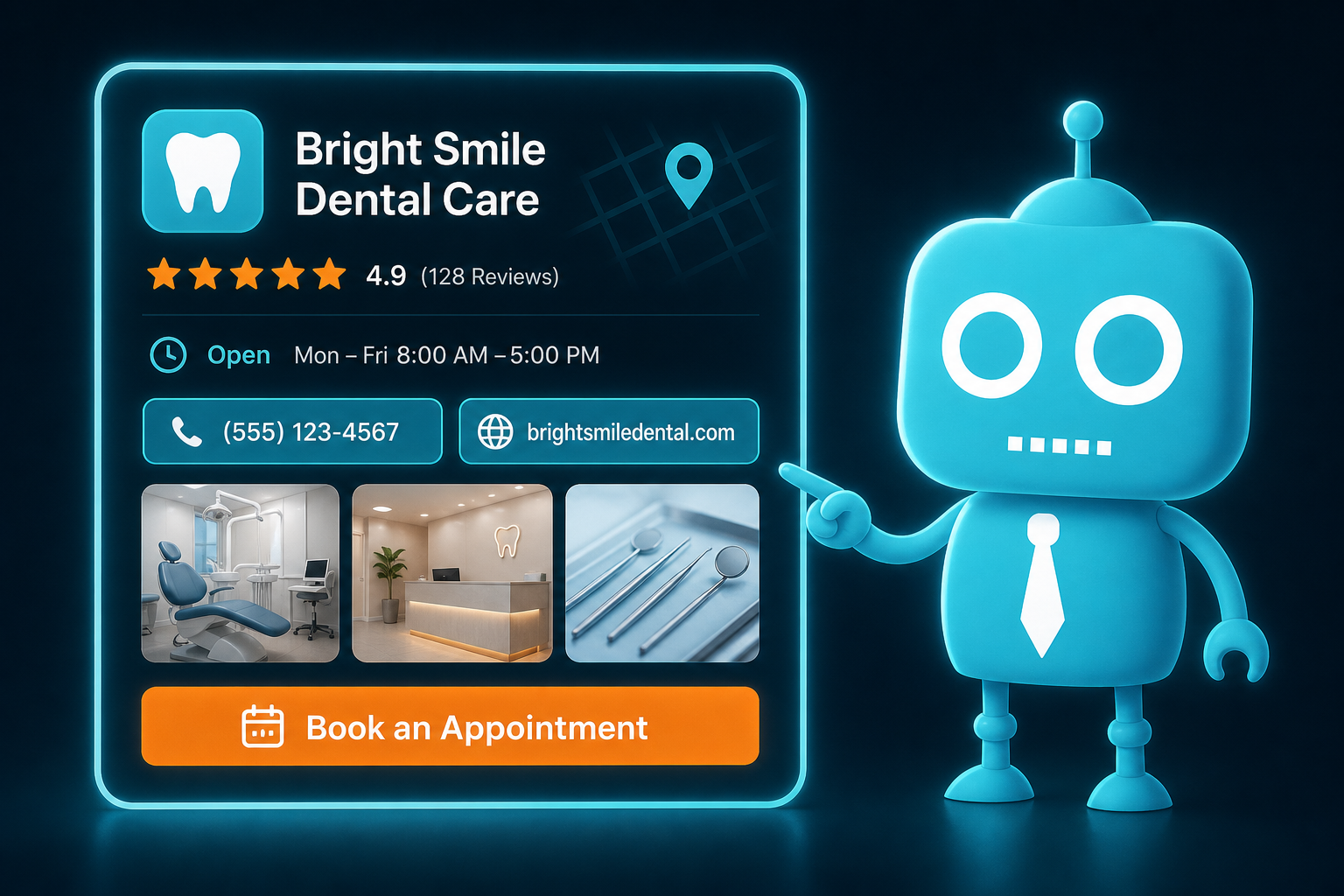
For independent dental practices, a Google Business Profile is more than an online listing. It is a patient acquisition asset.
When someone searches for a dentist nearby, your Google Business Profile can be the first thing they see, the first place they call, and the first impression they form about your practice. Before they visit your website, read your insurance page, or speak with your front desk, they may already be deciding whether your office feels trustworthy, convenient, and professional.
That makes your Google Business Profile one of the most important digital tools in your dental marketing system.
Used correctly, it can help your practice generate more phone calls, appointment requests, website visits, direction requests, and new patient opportunities. Used poorly, it can quietly cost you patients who choose a competitor with better photos, stronger reviews, clearer services, and a more complete profile.
Why Google Business Profile Matters for Dental Practices
Most dental patients are not searching casually. They often have a specific need and a high level of intent.
They may be searching for:
- “dentist near me”
- “emergency dentist open now”
- “family dentist in [city]”
- “Invisalign dentist near me”
- “dental implants consultation”
- “kids dentist accepting new patients”
- “teeth whitening near me”
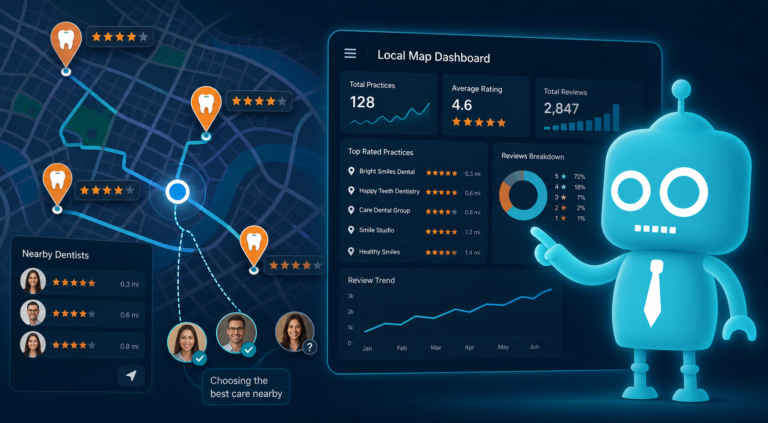
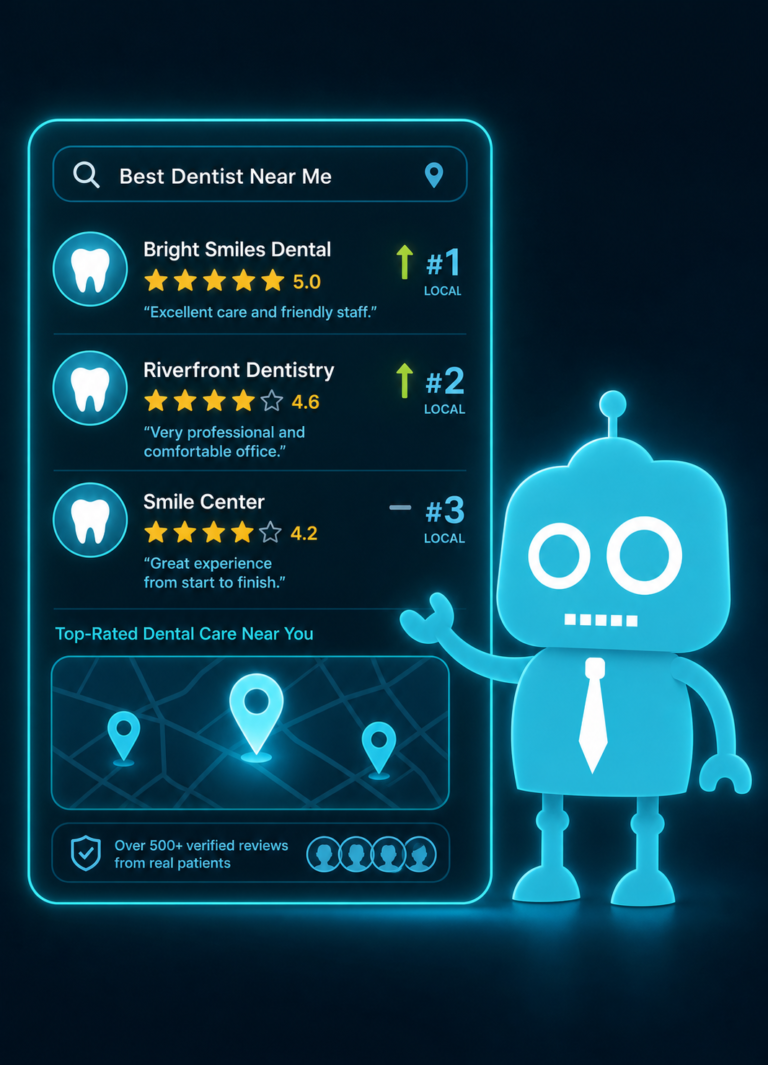
These searches often display the Google Map Pack, which highlights local businesses before traditional website results. For dentists, appearing well in these local results can directly influence new patient volume.
Your Google Business Profile helps Google understand who you are, where you are located, what services you provide, when you are open, and how patients interact with your practice. It also helps potential patients decide if they should call you, visit your website, request directions, or keep scrolling.
How Patients Find Dentists Today
Patients usually find a dental practice through a mix of search behavior, reputation signals, and convenience factors. Even if they receive a referral from a friend, many still look up the practice on Google before calling.
Common patient discovery paths
- A patient searches “dentist near me” on their phone during lunch.
- A parent searches for “family dentist in [city]” after moving to a new area.
- A patient with tooth pain searches “emergency dentist open today.”
- A cosmetic patient searches “Invisalign provider near me” or “teeth whitening dentist.”
- A referred patient searches your practice name to check reviews and office photos.
In each case, your Google Business Profile can either support the decision to contact your office or create doubt.
A complete, active, and well-optimized profile tells patients that your practice is organized, accessible, and attentive. A sparse profile with outdated hours, few photos, limited reviews, or unclear services can make even a great dental practice look less appealing.
Phone Calls from Google Business Profile
For many dental offices, phone calls are one of the most valuable actions generated by a Google Business Profile.
Patients searching on mobile can tap the call button directly from your profile. They may never visit your website before calling. This is especially true for urgent needs like tooth pain, broken crowns, dental infections, or same-day emergency appointments.
Why phone calls matter for new patient acquisition
A call from Google is often a high-intent lead. The patient is actively looking for care and may be ready to schedule. But the profile is only one part of the acquisition process. What happens next depends on front desk operations.
Your team should be prepared to answer calls with a new-patient mindset:
- Ask how the patient found the practice.
- Confirm the reason for the visit.
- Offer the earliest appropriate appointment.
- Capture name, phone number, email, and insurance details when relevant.
- Send a follow-up text or email if they do not schedule immediately.
If your practice uses a CRM system or dental lead tracking platform, calls from Google Business Profile should be tracked as a lead source. This helps you understand how many new patient opportunities are coming from local search and whether your front desk is converting those calls into appointments.
Direction Requests: A Strong Local Intent Signal
Direction requests from your Google Business Profile are another important patient acquisition signal.
When a patient taps “Directions,” they are showing strong local intent. They may be comparing proximity, planning a visit, or confirming that your office is convenient from home, work, or school.
Why directions are especially important for dentists
Dental care is local by nature. Patients often prefer a practice that is easy to reach, has convenient parking, and fits into their daily routine.
A parent may choose a dentist close to their child’s school. A professional may choose an office near work for early morning hygiene visits. An emergency patient may choose the practice that appears both reputable and nearby.
Make sure your address is accurate, your map pin is correct, and your location details are consistent across your website, Google Business Profile, and other online directories. Inaccurate location data can frustrate patients and weaken trust before they ever arrive.
Office Photos Help Patients Feel Comfortable Before They Visit
Dentistry is personal. Many patients feel nervous about choosing a new office, especially if they have dental anxiety, need extensive treatment, or are bringing children.
Office photos can reduce uncertainty and make your practice feel more approachable.
Photos that help convert searchers into patients
Your Google Business Profile should include high-quality, current photos such as:
- Exterior building photos so patients recognize the office.
- Reception area photos to show a clean, welcoming environment.
- Treatment room photos to highlight modern equipment and comfort.
- Team photos to create familiarity before the first visit.
- Doctor photos to build trust.
- Technology photos, such as scanners, CBCT units, or same-day crown systems.
- Parking or entrance photos if your location is in a plaza or medical building.
For example, if your practice offers family dentistry, show a friendly reception area and patient-centered environment. If you focus on cosmetic dentistry, professional photos of your space, smile consultation area, and technology can support a premium brand perception.
Avoid relying only on stock photos. Patients want to see your actual office, your actual team, and the experience they can expect.
Reviews Are One of the Most Powerful Conversion Factors
Reviews play a major role in how patients choose a dentist. They influence both visibility and trust.
A patient comparing three local dental practices may not fully understand the differences in clinical training, technology, or treatment philosophy. But they can quickly compare review ratings, review volume, and the tone of patient feedback.
What dental patients look for in reviews
Patients often scan reviews for specific signals, including:
- Was the dentist gentle?
- Was the front desk helpful?
- Were appointments on time?
- Was pricing or insurance explained clearly?
- Did the hygienist make the patient feel comfortable?
- Was the office good with children?
- Did the practice handle emergencies quickly?
Reviews are not just a reputation tool. They are a conversion tool. Strong reviews can make a patient more likely to call, request directions, or click through to your website.
Build review requests into your patient workflow
The best dental practices do not leave reviews to chance. They create a consistent process.
For example:
- After a successful appointment, the hygienist or dentist thanks the patient and mentions that reviews help local families find the practice.
- The front desk confirms the patient had a good experience.
- An automated SMS or email review request is sent shortly after the visit.
- The review link takes the patient directly to your Google review page.
This is where CRM systems, SMS automation, and email follow-up can make a measurable difference. A simple automated workflow can help your practice gather more reviews without relying on busy team members to remember every time.
Always respond professionally to reviews. Thank patients for positive feedback, and respond calmly to negative reviews without sharing private health information.
Service Categories Help Google and Patients Understand Your Practice
Your Google Business Profile should clearly reflect the dental services you want to be found for.
Many practices choose a primary category such as “Dentist,” but additional categories and services can help clarify your offerings.
Examples of relevant dental service areas
- Family dentist
- Cosmetic dentist
- Emergency dental service
- Dental implants periodontist
- Orthodontist
- Pediatric dentist
- Teeth whitening service
- Denture care center
The right categories depend on your actual services, credentials, and positioning. Do not add categories that misrepresent your practice. Instead, use your profile to accurately support your growth goals.
If your practice wants more implant consultations, make sure implant-related services are included where appropriate. If you want more Invisalign or clear aligner patients, your website and Google Business Profile should both clearly communicate that service.
Posts and Updates Keep Your Profile Active
Google Business Profile posts allow dental practices to share timely updates, service highlights, announcements, and helpful information directly on the profile.
These posts are often underused by dental offices, but they can support patient engagement and reinforce your services.
Practical post ideas for dental practices
- Announce new patient availability.
- Highlight emergency dental appointments.
- Promote Invisalign or clear aligner consultations.
- Share teeth whitening information before holidays or wedding season.
- Introduce a new dentist, hygienist, or team member.
- Post updates about office hours, closures, or holiday schedules.
- Share educational tips about gum health, children’s dental visits, or preventive care.
For example, a post titled “Now Accepting New Patients in [City]” can help reinforce that your office is open to new patient calls. A post about “Same-Day Emergency Dental Appointments” can speak directly to patients searching with urgent intent.
Posts should be clear, specific, and linked to relevant pages on your website when possible.
Website Clicks: Turning Google Searchers into Scheduled Patients
Many patients will click from your Google Business Profile to your website before calling. This is where your website needs to continue the conversion process.
Your website should not simply look attractive. It should help a potential patient take the next step.
What patients expect after clicking your website
When patients arrive from your Google Business Profile, they are usually looking for answers quickly:
- Do you accept new patients?
- What services do you offer?
- Do you treat emergencies?
- Do you accept my insurance?
- Where are you located?
- Can I request an appointment online?
- What do your reviews say?
- What does the office look like?
Your website should be mobile-friendly, fast, easy to navigate, and built around patient actions. Important calls to action should be visible, including “Call Now,” “Request an Appointment,” and “New Patient Forms.”
Lead capture forms should be simple. If the form is too long or difficult to use on a phone, patients may abandon it. For dental practices, a strong form may capture the patient’s name, phone number, email, preferred appointment time, reason for visit, and whether they are a new or existing patient.
Connect website leads to your front desk process
A website form is only valuable if someone follows up quickly.
Modern dental practices can use CRM integrations, SMS notifications, and email automation to help ensure leads are not missed. For example, when a new patient form is submitted, the system can:
- Notify the front desk immediately.
- Create a lead in the CRM.
- Send the patient an automated confirmation text.
- Trigger a follow-up reminder if the patient has not been scheduled.
- Track the lead source as Google Business Profile or organic search.
This turns your Google Business Profile and website into a connected acquisition system instead of disconnected marketing pieces.
Performance Tracking: Know What Is Actually Working
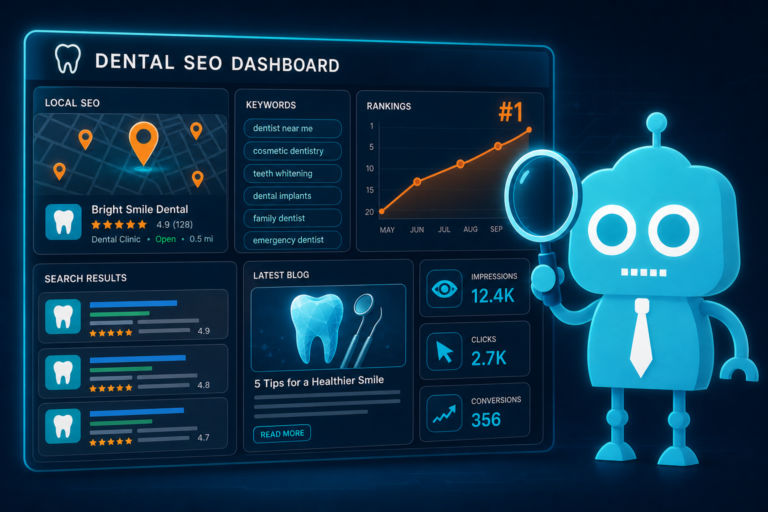
One of the biggest advantages of Google Business Profile is that it provides performance data. Practice owners and office managers should review this data regularly.
Metrics dental practices should monitor
- How many people viewed your profile.
- What search terms patients used to find you.
- How many phone calls came from the profile.
- How many direction requests were made.
- How many website clicks occurred.
- How patients interacted with photos.
- How your profile performance changes over time.
This data can help you make better decisions. If emergency-related searches are increasing, you may want to create stronger emergency dentistry content on your website. If website clicks are high but appointment requests are low, your website may need better conversion design. If calls are strong but scheduled appointments are low, your front desk call handling process may need improvement.
Google Business Profile performance should be reviewed alongside website analytics, call tracking, form submissions, CRM data, and actual scheduled new patients. The goal is not just traffic. The goal is measurable patient acquisition.
How to Treat Your Google Business Profile Like a Patient Acquisition Asset
A strong Google Business Profile is not something you set up once and forget. It should be managed as part of your practice growth system.
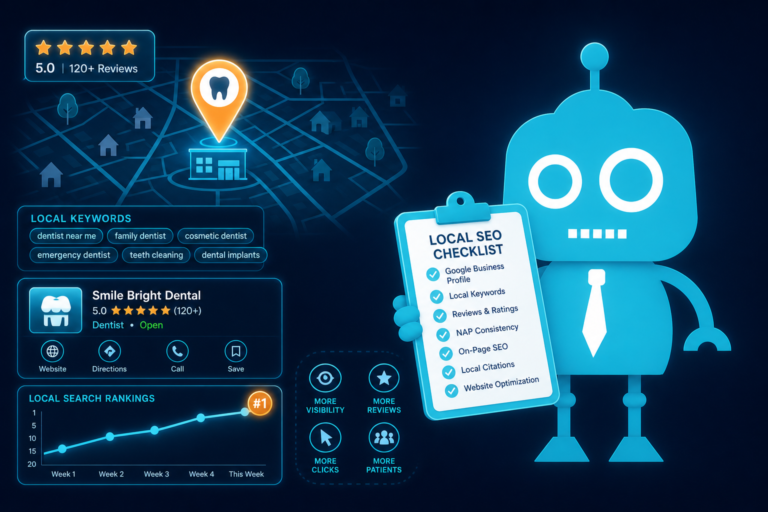
Use this practical checklist
- Confirm your practice name, address, phone number, and website are accurate.
- Choose the most relevant primary and secondary categories.
- Add detailed dental services that match your growth goals.
- Upload current office, team, exterior, and technology photos.
- Keep office hours updated, including holidays.
- Publish posts about services, availability, and practice updates.
- Build review requests into your post-appointment workflow.
- Respond to reviews professionally and consistently.
- Track calls, direction requests, website clicks, and form submissions.
- Connect your website forms to your CRM or front desk follow-up process.
For an independent dental practice, this type of attention can create a competitive advantage. You do not need the largest marketing budget in your market to win more local patients. You need a clear, trustworthy, conversion-focused presence where patients are already searching.
Your Google Business Profile Works Best With a Strong Dental Website
Your Google Business Profile may be the first interaction a patient has with your practice, but your website often determines whether that interest turns into an appointment request.
The two should work together. Your profile should generate visibility and action. Your website should educate, reassure, and convert. Your CRM and follow-up systems should help the front desk respond quickly and consistently.
When these pieces are aligned, your practice has a stronger patient acquisition system:
- Google helps patients discover your practice.
- Your profile builds trust and encourages calls, clicks, and directions.
- Your website answers questions and captures leads.
- Your CRM tracks inquiries and follow-up.
- SMS and email automation keep patients engaged.
- Your front desk converts interest into scheduled appointments.
That is the real value of a Google Business Profile for dentists. It is not just a listing. It is a gateway into your practice.
Build a Better Patient Acquisition System with CreateTheSite.com
If your dental practice is getting views, calls, and clicks from Google but your website is outdated, slow, hard to use on mobile, or missing strong lead capture tools, you may be losing new patient opportunities.
CreateTheSite.com helps dental practices build modern, conversion-focused websites that support real practice growth. Our services include professional dental website design, reliable hosting, mobile optimization, lead capture forms, CRM integrations, SMS and email automation, appointment follow-up workflows, and ongoing website support.
We help connect the dots between your Google Business Profile, your website, your front desk, and your patient follow-up process so more interested searchers become scheduled patients.
If you want your online presence to work harder for your practice, visit CreateTheSite.com to learn how we can help you build a stronger digital foundation for new patient acquisition.