
How Negative Reviews Hurt Dental Practices
A dental practice can deliver excellent clinical care and still lose new patients because of negative reviews. That is the part many practice owners, dentists, and office managers underestimate.
Online reviews do not measure dentistry the way dentists measure dentistry. A patient may not understand margin integrity, occlusion, diagnostic accuracy, periodontal risk, or the quality of a crown prep. But they do understand whether the phone was answered, whether billing felt clear, whether the hygienist seemed rushed, and whether the office responded professionally when something went wrong.
That means negative reviews can hurt a clinically strong dental practice by shaping perception before a patient ever visits the website, calls the office, or schedules an appointment.
For independent dental practices, this directly affects new patient acquisition, Google Maps performance, website conversion, and front desk efficiency.
Why Negative Reviews Matter Even When the Dentistry Is Excellent
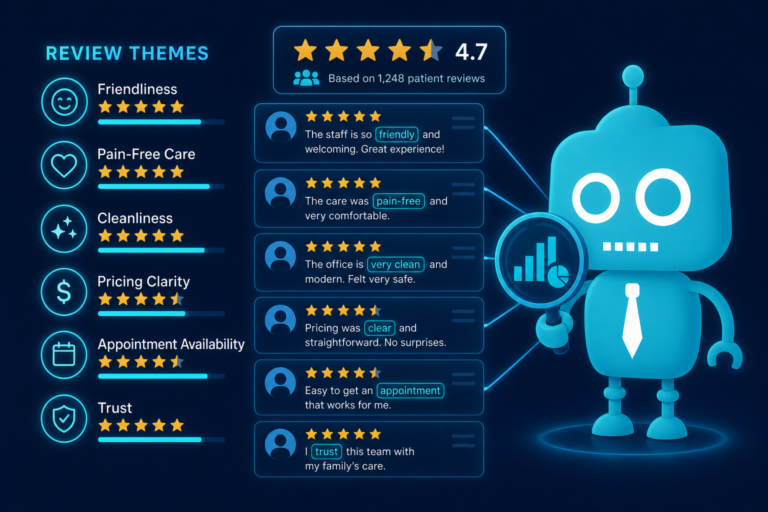
Most prospective patients are not qualified to judge clinical skill from the outside. Instead, they use signals.
Those signals include:
- Google star rating
- Number of reviews
- Recency of reviews
- Review wording and emotional tone
- How the practice responds
- Website quality and mobile experience
- Ease of scheduling or requesting an appointment
A few negative reviews can create doubt, especially when they mention communication, billing, front desk attitude, appointment delays, or treatment explanations. These issues may have little to do with clinical ability, but they strongly influence whether a new patient feels comfortable choosing the practice.
Negative Reviews Create Lost Trust Before the First Call
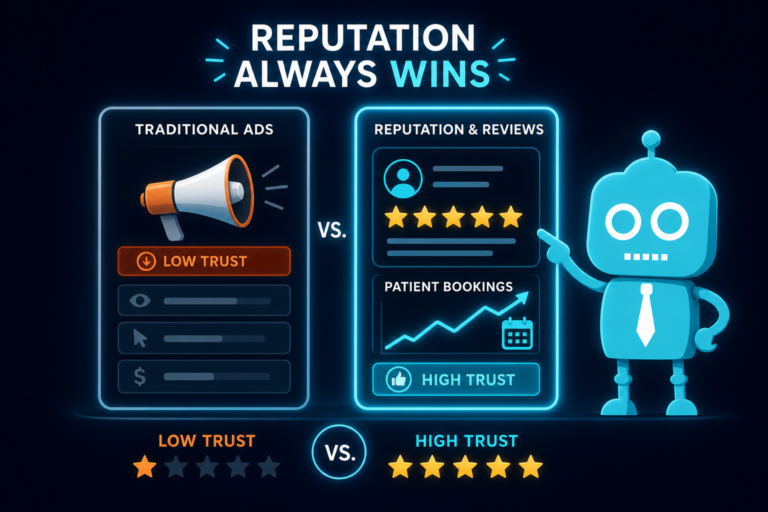
Trust is the foundation of dental marketing. Patients are often anxious, uncertain about cost, and worried about being judged. When they read negative reviews, they look for reasons to avoid risk.
A review that says, “The dentist was good, but the front desk was rude and I never got a call back,” can be just as damaging as a review about treatment. Why? Because it tells the next patient that the experience may be frustrating.
Common Trust-Damaging Review Themes in Dentistry
- “They surprised me with a bill.”
- “No one explained my treatment plan clearly.”
- “I left a voicemail and never heard back.”
- “The appointment felt rushed.”
- “They kept trying to sell me treatment.”
- “The front desk was unfriendly.”
Even if the clinical recommendation was appropriate, the perception may be that the practice is disorganized, sales-focused, or difficult to communicate with. That perception hurts trust and causes potential patients to choose another provider.
Negative Reviews Can Lower Clicks from Google Search
When patients search for a dentist, they often compare several practices at once. On a Google results page, your practice may appear next to competitors with similar services, similar locations, and similar hours.
If your listing has a lower rating or several recent negative reviews, fewer people may click.
For example, a patient searching “dentist near me” may see:
- Practice A: 4.9 stars with 425 reviews
- Practice B: 4.7 stars with 180 reviews
- Your practice: 4.2 stars with 64 reviews and two recent complaints
Even if your office provides better dentistry, many patients will click one of the higher-rated listings first. This means negative reviews can reduce traffic before your website has a chance to convert the visitor.
Lower Clicks Affect More Than Visibility
Click behavior can influence how often prospective patients engage with your Google Business Profile, website, directions, and phone number. If fewer people click your listing, you may see fewer calls, fewer appointment requests, and fewer new patient opportunities from local search.
For dental practices that depend on local SEO, this matters. Your Google presence is often the first impression.
Negative Reviews Lower Website Conversion
Some patients will still click through to your website after seeing negative reviews. But they arrive with hesitation.
That hesitation changes how they evaluate your website.
Instead of thinking, “This looks like a good office,” they may be looking for confirmation of the complaint they just read. If a review mentioned poor communication, they will notice whether your site has clear contact options. If a review mentioned billing confusion, they will look for insurance and financing information. If a review mentioned difficulty scheduling, they will pay attention to whether appointment requests are easy.
How Review Doubt Shows Up on Your Website
A visitor who is unsure may:
- Spend less time on the site
- Avoid filling out a new patient form
- Leave before calling
- Compare your practice against competitors
- Look for more reviews on other platforms
- Delay scheduling until they feel more confident
This is why dental website conversion is not only about design. It is about reassurance.
A modern dental website should quickly answer practical questions:
- What services do you provide?
- Do you accept my insurance?
- Can I request an appointment easily?
- Will someone follow up quickly?
- Does the office look professional and welcoming?
- Are there recent patient testimonials?
If the website feels outdated, slow, vague, or hard to use on mobile, negative reviews become even more damaging because the website does not rebuild confidence.
Google Maps Perception Can Make or Break New Patient Acquisition
For dental practices, Google Maps is one of the most important new patient channels. Many patients do not start with your website. They start with the map pack.
They compare practices based on proximity, rating, review count, photos, business hours, and convenience.
Negative reviews can hurt Google Maps perception in several ways:
- A lower star rating makes the listing look less competitive
- Recent negative reviews create concern about current operations
- Unanswered reviews make the practice appear inattentive
- Defensive responses make the office seem difficult
- Complaints about scheduling or phone calls suggest poor access
Patients Read Maps Listings Quickly
Many patients make snap judgments. They may not read every review. They may only scan the top few. That means one recent negative review can have an outsized impact, especially if your practice does not have a steady stream of positive reviews to balance it.
For example, if your most recent visible review says, “I called twice and nobody called me back,” that can discourage a patient who is ready to schedule today.
This is why review recency matters. A strong review strategy helps ensure that satisfied patients are also represented, not just frustrated ones.
How Patients Interpret Negative Dental Reviews
Patients read reviews emotionally. They are not just evaluating facts; they are imagining themselves in the same situation.
A dentist may see a complaint and think, “That patient did not understand the treatment plan.” But a prospective patient may think, “What if they do not explain things clearly to me either?”
An office manager may see a billing complaint and think, “The insurance estimate changed because the carrier processed it differently.” But a prospective patient may think, “What if I get a surprise bill?”
Negative Reviews Often Point to Communication Gaps
Many negative dental reviews are not truly about clinical outcomes. They are about expectations.
Examples include:
- A patient did not understand why treatment was recommended
- A patient expected insurance to cover more than it did
- A patient felt rushed during the exam
- A patient did not receive a timely follow-up call
- A patient was unclear about post-op instructions
- A patient did not know how long an appointment would take
These are operational and communication issues. They can often be improved without changing the quality of dentistry.
Response Tone Can Either Reduce or Increase the Damage
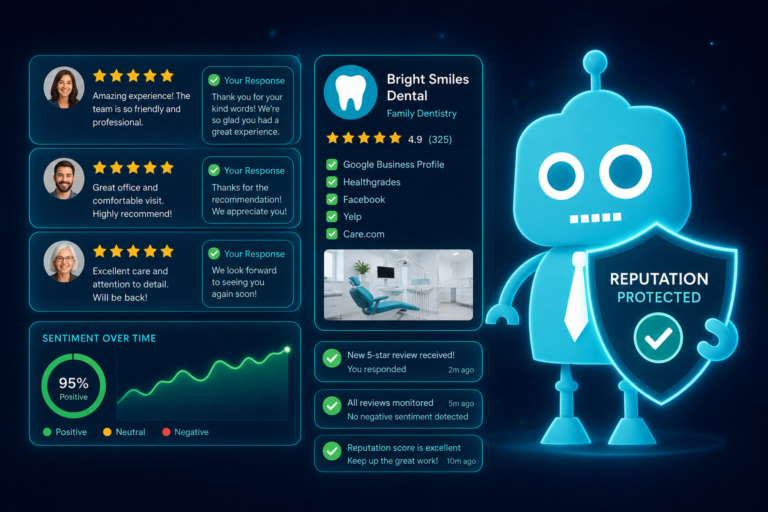
How your practice responds to negative reviews matters. A thoughtful response can show professionalism. A defensive response can make the situation worse.
Patients know there are two sides to every story. They do not expect perfection. But they do expect maturity, empathy, and a willingness to resolve concerns.
What a Good Dental Review Response Should Do
- Acknowledge the concern without arguing
- Protect patient privacy and avoid clinical details
- Invite the patient to contact the office directly
- Use a calm, professional tone
- Show that the practice takes feedback seriously
Example of a Poor Response
“This review is not accurate. We explained everything to you, and you refused treatment. We always provide excellent care.”
This type of response may feel satisfying internally, but it looks defensive to future patients. It can also create privacy concerns if it reveals details about the visit.
Example of a Better Response
“Thank you for sharing your feedback. We are sorry to hear that your experience did not meet expectations. Clear communication and patient comfort are very important to our team. Please contact our office directly so we can better understand your concerns and work toward a resolution.”
This response does not admit fault, does not disclose private information, and shows future patients that the practice is professional.
Negative Reviews Can Reveal Front Desk and Follow-Up Issues
The front desk plays a major role in review generation and new patient conversion. Many negative reviews begin before the patient ever sits in the chair.
Missed calls, delayed callbacks, unclear insurance conversations, and inconsistent follow-up can all lead to frustration.
Front Desk Moments That Influence Reviews
- How quickly the phone is answered
- How warmly new patients are greeted
- How clearly insurance participation is explained
- How appointment availability is communicated
- How cancellations and rescheduling are handled
- How treatment estimates are reviewed
- How post-appointment follow-up is managed
If your marketing is generating leads but the front desk is overwhelmed, negative reviews may increase. This is where systems matter.
Lead capture forms, CRM integrations, missed-call follow-up, SMS reminders, email automation, and appointment confirmation workflows can reduce friction. They help make sure patients do not fall through the cracks.
Communication Improvements That Reduce Negative Reviews
Negative reviews are not always preventable, but many can be reduced through better communication. The goal is to make patients feel informed, respected, and guided throughout the process.
1. Set Expectations Before the Appointment
Use confirmation emails or SMS messages to tell patients what to bring, how long the appointment may take, where to park, and what to expect during the visit.
For new patients, this can reduce anxiety and improve the first impression before they arrive.
2. Explain Treatment in Plain Language
Patients may not remember clinical terminology. They remember whether they felt informed.
Instead of saying, “You have recurrent decay under an existing restoration,” a team member might say, “There is decay forming under an older filling. If we wait, it may get deeper and could require more extensive treatment later.”
Clear explanations reduce the chance that patients interpret treatment recommendations as unnecessary or sales-driven.
3. Clarify Insurance and Financial Responsibility
Many dental complaints involve insurance confusion. Train the team to explain estimates carefully and avoid making guarantees about coverage.
A helpful phrase is: “This is an estimate based on the information available from your insurance plan. The final amount is determined by your insurance carrier when they process the claim.”
This helps protect trust when the final amount differs from the estimate.
4. Improve Appointment Follow-Up
If a patient needs treatment, a consultation, or a hygiene visit, follow-up should not depend on memory or sticky notes.
A CRM or patient communication system can help track:
- Unscheduled treatment
- New patient inquiries
- Missed calls
- Form submissions
- Appointment requests
- Post-op check-ins
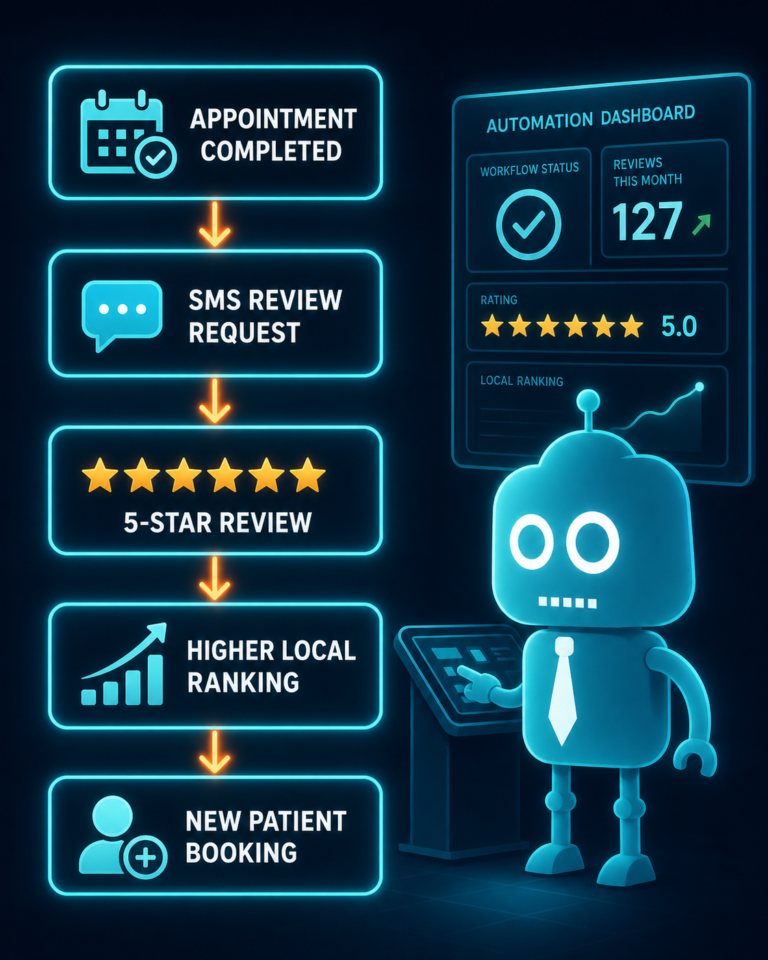
- Review requests
Automated SMS and email follow-up can support the front desk and improve consistency. The key is to make communication feel timely and personal, not robotic.
5. Ask Happy Patients for Reviews
Most satisfied patients will not leave a review unless prompted. Unhappy patients are often more motivated.
This creates an unfair picture of the practice.
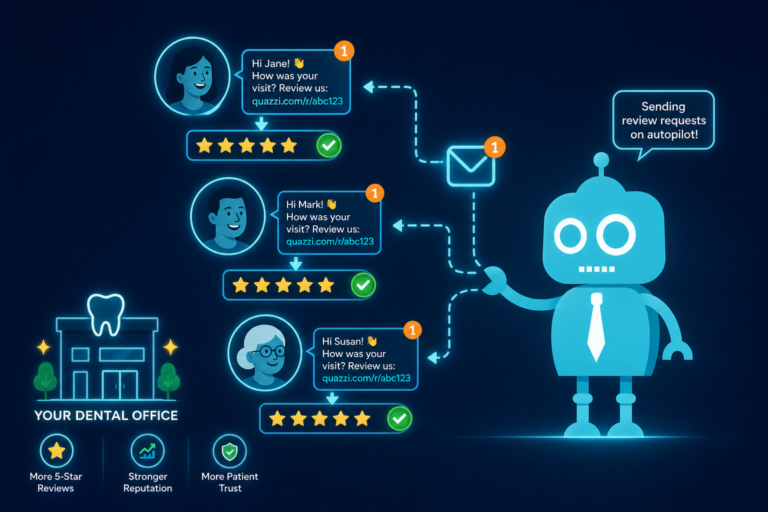
A simple review request process can help. For example, after a positive appointment, the team can send a short SMS or email with a direct link to the Google review page.
The message should be simple:
“Thank you for visiting us today. If you had a good experience, would you be willing to share a quick Google review? It helps other patients find our office.”
This helps build a more accurate online reputation over time.
Your Website Should Help Repair Review Doubt
If negative reviews create uncertainty, your website should help rebuild confidence.
A strong dental website should not only look modern. It should support new patient conversion by making the next step easy.
Important Website Elements for Dental Practices
- Mobile-friendly design
- Fast loading speed
- Clear appointment request forms
- Clickable phone numbers
- Service pages for high-value treatments
- Insurance and financing information
- Patient testimonials or review highlights
- Team photos and office photos
- Clear location and Google Maps integration
- CRM and patient communication integrations
If a patient reads a negative review but then lands on a clean, professional, helpful website, the practice has a chance to recover that trust.
If they land on an outdated site with broken forms, slow pages, or unclear calls to action, the negative review feels confirmed.
Negative Reviews Are a Business Signal, Not Just a Reputation Problem
It is easy to view negative reviews as isolated complaints. But for a dental practice, they can reveal weaknesses in the patient journey.
Look for patterns:
- Are patients complaining about callbacks?
- Are they confused about billing?
- Are they surprised by treatment costs?
- Are they frustrated with scheduling?
- Are they saying the office feels rushed?
- Are they mentioning poor communication after procedures?
These patterns can guide operational improvements. They can also help you improve your website content, automated messages, front desk scripts, and follow-up workflows.
The goal is not to eliminate every negative review. No practice can do that. The goal is to build enough trust, consistency, and positive patient experiences that one negative review does not define your practice.
How CreateTheSite.com Helps Dental Practices Build Trust Online
Negative reviews can hurt perception, even when your clinical care is strong. The right website and communication systems can help your practice make a better first impression, capture more new patient opportunities, and follow up more consistently.
CreateTheSite.com helps dental practices with modern website design, reliable hosting, mobile optimization, lead capture forms, CRM integrations, SMS/email automation, appointment follow-up, and ongoing website support.
Whether your practice needs a more professional online presence, better new patient conversion, improved follow-up workflows, or a website that supports your front desk team, CreateTheSite.com can help you build a system that turns more visitors into scheduled patients.
If your dental website is outdated, difficult to update, or not helping patients take action, visit CreateTheSite.com to learn how a modern dental website and smarter communication tools can support your practice growth.