The Importance of Trust in Dentistry
Trust is one of the most valuable growth drivers in a dental practice. It affects whether a new patient books, whether they accept a treatment plan, whether they return for preventive care, and whether they refer family members.
For independent dental practice owners, dentists, and office managers, trust is not just a “soft” concept. It directly impacts new patient acquisition, website conversion, case acceptance, online reviews, patient retention, and front desk efficiency.
When patients trust your practice, they are more likely to schedule, show up, ask questions, follow recommendations, pay for care, and stay loyal over time. When trust is weak, even a beautiful office and skilled clinical team may struggle to convert website visitors into appointments or treatment plans into accepted care.
Why Trust Matters Before the Patient Ever Calls
Many patients decide whether they trust a dental practice before speaking to anyone. They search online, scan reviews, compare websites, look for insurance information, and judge whether the practice feels modern, organized, and approachable.
Your website, Google Business Profile, reviews, forms, phone experience, and follow-up process all work together to either build trust or create hesitation.
Trust Influences Booking Decisions
A patient with a toothache, a parent searching for a family dentist, or someone considering cosmetic dentistry is often looking for reassurance. They want to know:
- Is this practice experienced?
- Will they explain my options clearly?
- Will I be judged if I have not been to the dentist in years?
- Can I afford treatment?
- Will they take care of my family?
- Is it easy to schedule?
If your website does not answer these questions quickly, patients may leave and choose another dental office that feels more transparent and easier to contact.
Fear: The First Trust Barrier in Dentistry
Fear is one of the biggest reasons patients delay dental care. Some patients fear pain. Others fear judgment, cost, bad news, or losing control during treatment.
Trust helps lower that fear before the appointment starts.
How Dental Practices Can Reduce Fear Online
Your website and patient communication should make nervous patients feel safe. Practical ways to do this include:
- Adding website copy that clearly says you welcome anxious patients
- Explaining what happens during a first visit
- Highlighting comfort options, sedation options, or gentle techniques if available
- Using real office photos so patients know what to expect
- Including friendly team bios to make the practice feel familiar
- Sending pre-appointment instructions by email or SMS
For example, a new patient who receives a simple text message saying, “We’re looking forward to seeing you tomorrow. If you have any questions before your visit, reply to this message or call us,” is more likely to feel supported and show up.
Cost: Patients Need Financial Transparency
Cost is another major trust factor. Dental treatment can be a significant investment, and patients may hesitate if they feel surprised, pressured, or confused about fees.
Patients do not always expect dentistry to be cheap. They do expect your team to be clear and respectful.
Trust-Building Cost Communication
Dental practices can build trust around cost by:
- Explaining insurance participation clearly on the website
- Listing accepted payment methods
- Mentioning financing options when available
- Training the front desk to explain estimates in plain language
- Providing written treatment plans before major procedures
- Avoiding vague phrases like “we’ll figure it out later”
A patient is more likely to accept treatment when they understand what is recommended, why it matters, what it may cost, and what payment options exist.
Trust Increases Treatment Acceptance
Treatment acceptance is not only about clinical need. It is also about whether the patient believes the recommendation is necessary, appropriate, and explained in a way they can understand.
Even when a dentist is completely correct clinically, a patient may decline care if they feel rushed or uncertain.
How Transparent Communication Supports Case Acceptance
Transparent communication helps patients make confident health decisions. This includes:
- Showing intraoral photos or digital X-rays when appropriate
- Explaining the condition in simple terms
- Describing the risk of waiting
- Offering treatment options when possible
- Confirming that the patient understands the recommendation
- Following up after the visit if they need time to decide
For example, instead of saying, “You need a crown,” a trust-building explanation might be: “This tooth has a large crack and an old filling. A crown helps protect the tooth from breaking further. If we wait, the crack may deepen and could lead to a root canal or extraction.”
That kind of communication gives the patient context, not pressure.
Family Care Depends on Trust
When a patient chooses a dentist for their family, the trust standard is even higher. Parents want to know their children will be treated gently, their spouse will be respected, and aging parents will receive careful attention.
Family care is not just a service category. It is a long-term relationship opportunity.
What Families Look For in a Dental Practice
Families often evaluate:
- Convenient scheduling options
- Clear communication with parents or caregivers
- A welcoming environment for children
- Preventive care reminders
- Help understanding insurance benefits
- Consistency with providers and staff
If your practice website says you offer family dentistry but does not explain what that experience looks like, you may miss opportunities to convert local families searching for a long-term dental home.
Health Decisions Require Confidence
Dental care often involves important health decisions. Patients may need to choose between a filling and a crown, a bridge and an implant, periodontal therapy and delayed treatment, or whitening and veneers.
These decisions can feel overwhelming when patients do not understand the clinical reasoning.
Patient Education Builds Trust
Patient education should happen in the chair, on your website, through follow-up messages, and in post-treatment instructions.
Useful educational content includes:
- Service pages that explain procedures clearly
- FAQs about common treatments
- Short videos from the dentist
- Post-op instructions sent by email or SMS
- Blog articles about preventive care and dental concerns
- Downloadable guides for implants, clear aligners, or cosmetic dentistry
Good patient education does not replace a clinical consultation. It prepares patients for better conversations and more informed decisions.
Reviews Are Public Trust Signals
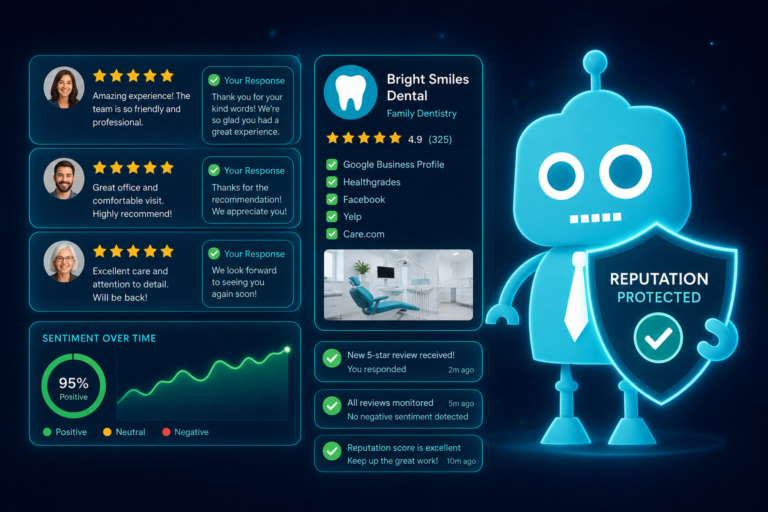
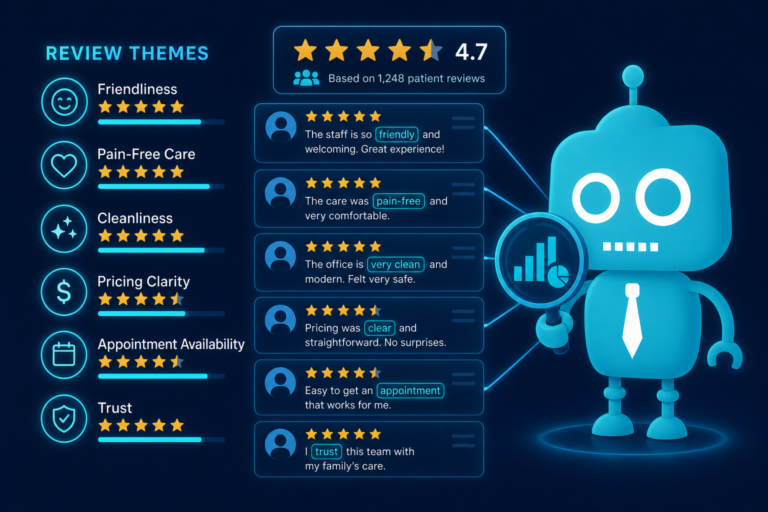
Online reviews are one of the most powerful forms of social proof for dental practices. Before calling, many patients read what others say about your team, communication style, comfort, billing process, and results.
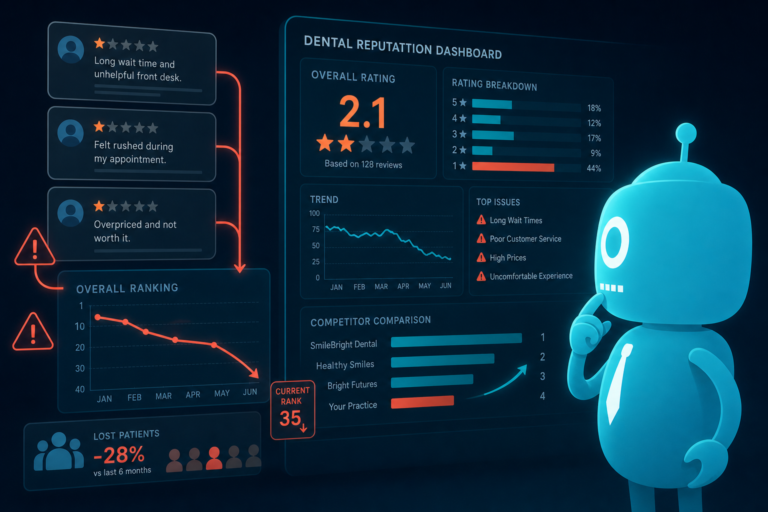
A strong review profile can increase website conversion and phone calls. A weak or outdated review profile can create doubt, even if the practice provides excellent care.
What Patients Look for in Dental Reviews
Prospective patients often look for comments about:
- Gentle care
- Friendly front desk staff
- Clear explanations
- Help with insurance questions
- Clean and modern office environment
- Positive experiences for children
- Emergency appointments
- Fair and transparent treatment recommendations
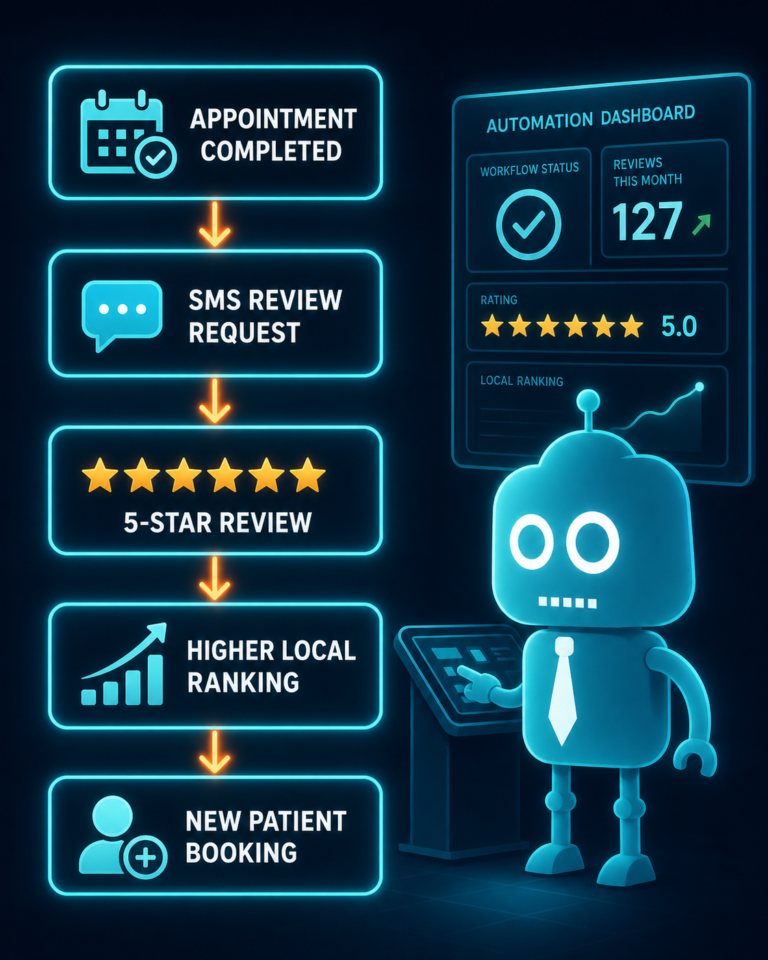
Reviews do more than improve reputation. They support local SEO, increase confidence, and help patients feel comfortable choosing your office.
How to Build a Better Review Process
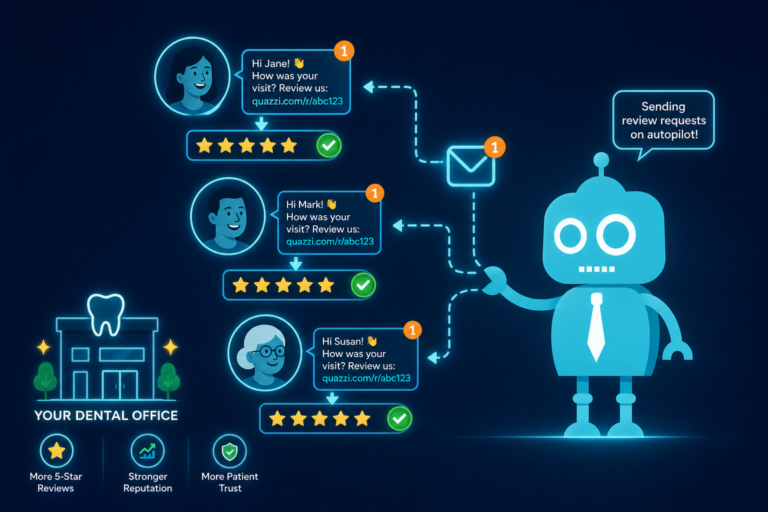
Many practices rely on patients to leave reviews on their own. A more reliable process is to use helpful automation.
For example, after a completed appointment, your CRM or patient communication system can send a polite SMS or email:
“Thank you for visiting us today. We appreciate the opportunity to care for your smile. If you had a positive experience, would you be willing to share a quick review?”
This keeps the process simple and consistent without adding more manual work for the front desk.
Website Credibility Affects New Patient Conversion
Your dental website is often the first impression of your practice. If it looks outdated, loads slowly, is difficult to use on a phone, or lacks clear calls to action, patients may question whether the practice is equally outdated or disorganized.
Website credibility directly affects booking.
Trust Signals Every Dental Website Should Include
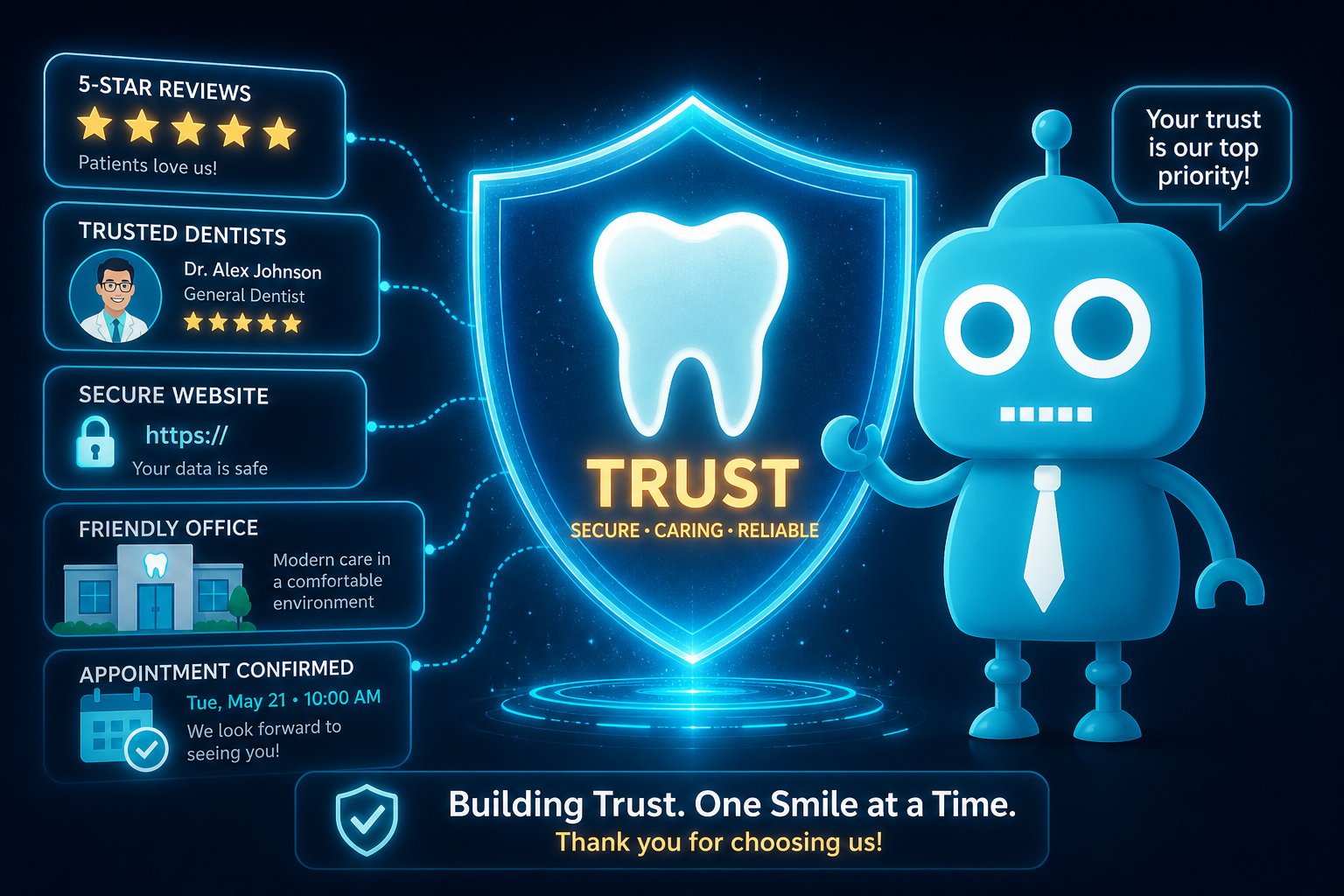
A high-converting dental website should include:
- Clear phone number and appointment buttons
- Mobile-friendly design
- Fast loading speed
- Real photos of the dentist, team, and office
- Provider credentials and experience
- Patient reviews and testimonials
- Service pages for key treatments
- Insurance and financing information
- Secure online forms
- Easy-to-use lead capture forms
- Location, hours, and parking details
For a dental practice, credibility is not only about design. It is about removing friction. Patients should know who you are, what you offer, how to contact you, and why they should feel comfortable choosing your office.
The Front Desk Plays a Major Role in Trust
The front desk is often where trust is either strengthened or lost. A patient may like your website and reviews, but if the phone experience feels rushed or confusing, they may not schedule.
Trust-Building Front Desk Operations
Strong front desk systems include:
- Answering calls warmly and consistently
- Responding quickly to website form submissions
- Explaining appointment availability clearly
- Confirming insurance details without overpromising coverage
- Sending appointment confirmations
- Following up on missed calls and unscheduled leads
- Using scripts that sound helpful, not robotic
A common missed opportunity happens when a website lead comes in after hours and no one follows up until the next afternoon. By then, the patient may have already booked elsewhere.
CRM systems, lead notifications, and SMS/email automation can help ensure every inquiry receives timely attention.
Follow-Up Turns Interest Into Appointments
Many dental practices lose potential patients because they do not have a structured follow-up process. A patient may fill out a form, ask about implants, request an emergency visit, or call after hours. If the practice does not respond quickly and consistently, trust drops.
Examples of Effective Dental Follow-Up
Helpful follow-up can include:
- Immediate confirmation after a form submission
- SMS reminders for appointment requests
- Email follow-up for treatment plan questions
- Post-op care messages after procedures
- Recall reminders for hygiene visits
- Reactivation campaigns for overdue patients
- Review requests after positive appointments
For example, when a patient requests an appointment online, an automated message can confirm the request instantly:
“Thank you for contacting our office. We received your appointment request and will reach out soon to confirm a time. If this is urgent, please call us directly at the number below.”
This small touch reassures the patient that their request did not disappear into a inbox.
Helpful Automation Builds Trust When Used Correctly
Automation should not replace personal care. It should support it.
In a dental practice, helpful automation keeps communication consistent, reduces missed opportunities, and gives the front desk more time to focus on patients in the office.
Where Automation Helps Dental Practices Most
Useful automation can support:
- New patient lead capture
- Appointment confirmations
- Recall and reactivation campaigns
- Treatment plan follow-up
- Post-treatment instructions
- Review requests
- Missed call follow-up
- Birthday or family care reminders
- Internal task notifications for the front desk
The key is to keep messages clear, helpful, and human. Patients should feel supported, not spammed.
Trust Supports Long-Term Patient Relationships
Trust does not end after the first appointment. It grows through consistent experiences over time.
Patients are more likely to stay with a practice when they feel recognized, informed, respected, and cared for between visits. This is especially important in family dentistry, preventive care, periodontal maintenance, orthodontics, implants, and cosmetic treatment planning.
Ways to Strengthen Long-Term Patient Trust
Dental practices can build long-term relationships by:
- Remembering patient preferences and concerns
- Following up after major treatment
- Sending timely hygiene reminders
- Explaining changes in oral health clearly
- Being transparent about costs and insurance limitations
- Keeping the website updated with accurate services and hours
- Responding professionally to reviews
- Making it easy to contact the office
Long-term trust improves retention, increases referrals, and helps patients accept necessary care before small problems become major ones.
How Trust Connects Booking, Treatment Acceptance, and Retention
The most successful dental practices understand that trust is not isolated to one part of the patient journey. It connects every stage.
Before the Visit
Patients evaluate your website, reviews, Google profile, and ease of scheduling. Trust determines whether they call or submit a form.
During the Visit
Patients judge communication, comfort, professionalism, and financial clarity. Trust determines whether they accept treatment.
After the Visit
Patients notice follow-up, reminders, post-op instructions, and ongoing communication. Trust determines whether they return, refer, and leave positive reviews.
When dental practices improve trust across the full patient journey, growth becomes more consistent and less dependent on one-time marketing campaigns.
Practical Trust Checklist for Dental Practices
Use this checklist to identify opportunities in your practice:
- Does your website look modern, credible, and mobile-friendly?
- Can patients easily request an appointment online?
- Are your reviews current and visible?
- Do your service pages explain treatments in patient-friendly language?
- Do you clearly communicate insurance, financing, and payment options?
- Does your front desk follow up quickly with online leads?
- Are missed calls tracked and returned?
- Do patients receive appointment confirmations and reminders?
- Do you send post-treatment instructions automatically?
- Do you have a review request process?
- Are overdue patients receiving recall or reactivation messages?
- Does your CRM help organize leads, follow-up tasks, and communication?
If several of these areas are weak, your practice may be losing patients not because of clinical quality, but because of avoidable trust gaps.
Build More Patient Trust With CreateTheSite.com
Trust starts before the first phone call, and your digital presence plays a major role in how patients perceive your dental practice.
CreateTheSite.com helps dental practices create modern, credible, and conversion-focused websites that support new patient acquisition, appointment requests, follow-up, and long-term patient relationships.
Our services for dental practices include:
- Modern dental website design
- Secure website hosting
- Mobile optimization
- Lead capture forms
- CRM integrations
- SMS and email automation
- Appointment follow-up systems
- Review generation support
- Ongoing website updates and support
If your practice wants a website and follow-up system that builds trust, captures more leads, and helps your front desk stay organized, CreateTheSite.com can help you put the right foundation in place.
Visit CreateTheSite.com to learn how a better dental website and smarter automation can help your practice earn more trust from the first click.