
How to Respond to Negative Dental Reviews Professionally
Negative dental reviews can feel personal. Your team works hard, your schedule is full, and one frustrated patient can make a public comment that seems unfair, incomplete, or even inaccurate.
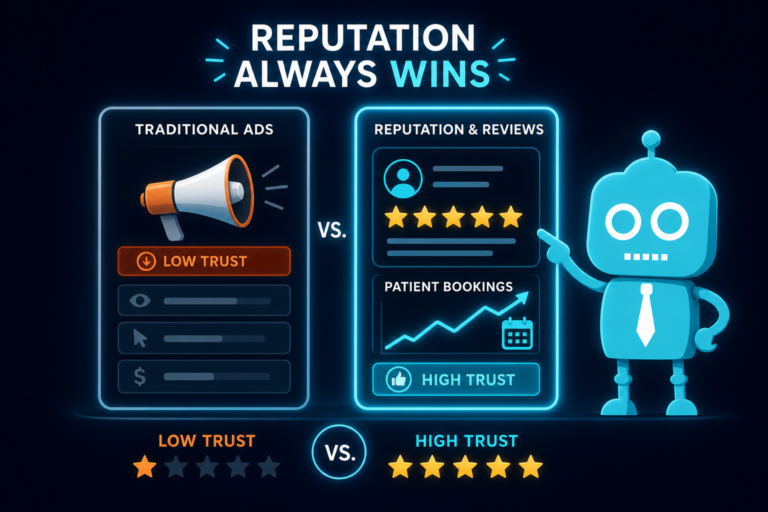
But here is the important shift: your response is not only for the unhappy reviewer. It is a marketing message to every future patient reading your Google reviews, Facebook reviews, Healthgrades profile, or website testimonials page.
Prospective patients often read negative reviews first because they want to know what happens when something goes wrong. A calm, professional, privacy-conscious response can actually increase trust, support new patient acquisition, and improve website conversion when reviews are connected to your online presence.
For independent dental practice owners, dentists, and office managers, knowing how to respond to negative dental reviews is now part of reputation management, front desk operations, patient communication, and digital marketing.
Why Negative Dental Review Responses Matter to Future Patients
When someone searches for a dentist near them, they are comparing more than star ratings. They are evaluating how your practice communicates.
A negative review response can tell future patients:
- Whether your dental office stays calm under pressure
- Whether your team listens to patient concerns
- Whether you protect patient privacy
- Whether you try to resolve issues professionally
- Whether your front desk systems are organized
- Whether your practice is trustworthy enough to call or book online
In other words, your public response becomes part of your brand. It can either reassure new patients or give them a reason to keep searching.
Stay Calm Before Responding
The first rule of responding to negative dental reviews is simple: do not respond while angry.
Dental reviews can be emotionally charged. A patient may complain about billing, insurance confusion, wait times, a treatment outcome, pain after a procedure, or how they felt they were treated by the front desk. Even if the review feels unfair, your public response should never sound defensive or irritated.
What to Do First
- Take a screenshot of the review for your records
- Look up the patient interaction internally, if identifiable
- Speak with the dentist, hygienist, treatment coordinator, or front desk team involved
- Wait until you can respond calmly and objectively
- Use an approved response template as a starting point
A rushed response often creates a second problem. A calm response shows leadership.
Example: Calm Dental Review Response
Review: “I waited forever and no one seemed to care. Terrible experience.”
Professional response:
“Thank you for sharing your feedback. We are sorry to hear that your visit did not meet expectations. We know patients’ time is valuable, and we take concerns about scheduling and communication seriously. Please contact our office directly so we can learn more and address this with the appropriate team members.”
This response does not argue. It acknowledges the issue, protects privacy, and invites offline resolution.
Avoid Privacy Issues in Every Review Response
Dental practices must be especially careful with online reviews because of patient privacy rules, including HIPAA considerations. Even if a patient publicly mentions their treatment, diagnosis, appointment, or billing issue, your practice should not confirm details in a public response.
Do not mention:
- The patient’s name, if not already displayed publicly
- Specific procedures, such as crowns, implants, root canals, extractions, or dentures
- Diagnosis or clinical findings
- Insurance details
- Account balances or payment history
- Appointment dates or treatment timelines
- Whether the reviewer is or is not a patient
Even a well-intentioned response can create privacy risk if it confirms protected information.
What Not to Say
Avoid this:
“You were late to your crown appointment, and we explained your insurance would not cover the full amount.”
This may feel factual, but it publicly confirms appointment details, treatment type, and insurance information.
What to Say Instead
Use this:
“We are sorry to hear about your concerns. Our team works hard to provide clear communication about appointments and financial information. Please contact our office directly so we can review the matter privately and work toward a resolution.”
This protects privacy while still showing future patients that your office takes communication seriously.
Acknowledge the Concern Without Admitting Fault
Acknowledging a concern does not mean you are admitting wrongdoing. It means you are listening.
Many dental offices make the mistake of either ignoring negative reviews or responding with a cold, legal-sounding statement. Neither approach helps with patient trust or new patient conversion.
A good response validates the patient’s experience without discussing confidential details.
Useful Phrases for Dental Practices
- “We are sorry to hear that your experience did not meet expectations.”
- “Thank you for bringing this to our attention.”
- “We take patient feedback seriously.”
- “Clear communication is important to our team.”
- “We would appreciate the opportunity to discuss this privately.”
- “Please contact our office manager so we can better understand your concerns.”
These phrases are professional, measured, and appropriate for a dental setting.
Move the Conversation Offline Quickly
The goal of a negative review response is not to solve the entire issue in public. The goal is to show that your practice is responsive and then move the conversation to a private channel.
For dental practices, offline resolution may involve a phone call with the office manager, a follow-up conversation with the dentist, a billing review, or a discussion about scheduling expectations.
Best Offline Resolution Options
- A direct phone call from the office manager
- A private email follow-up
- An appointment to discuss clinical concerns
- A billing review with the treatment coordinator
- A documented CRM task for follow-up
If your practice uses a CRM system, patient communication platform, or dental marketing automation tool, create a workflow for negative review follow-up. Assign ownership, set reminders, and track whether the issue was addressed.
Example: Offline Resolution Response
Review: “The front desk was rude and I had trouble getting answers about my bill.”
Professional response:
“Thank you for your feedback. We are sorry to hear that communication with our office did not meet expectations. Our goal is to provide helpful, respectful service from the first phone call through follow-up care. Please contact our office manager directly so we can review your concerns privately and work toward a resolution.”
This shows future patients that your practice values both customer service and privacy.
Do Not Argue Publicly, Even If the Review Is Wrong
Public arguments rarely help dental practices. Even if your team has documentation proving the review is inaccurate, future patients usually do not have the full context. They only see the tone of the exchange.
If your response sounds combative, the reviewer may reply again, and the situation can escalate. That thread may then become one of the first things a potential patient reads before deciding whether to request an appointment.
Avoid These Public Response Mistakes
- Correcting every detail in the review
- Blaming the patient
- Using sarcasm
- Mentioning signed consent forms
- Discussing missed appointments or late arrivals
- Threatening legal action
- Asking staff members to respond emotionally
There may be situations where a review violates platform guidelines, includes false claims, uses offensive language, or appears to be from someone who was never associated with the practice. In those cases, use the platform’s reporting process. But still keep any public response professional and limited.
Example: When You Believe the Review Is Inaccurate
Professional response:
“We take feedback seriously and would like the opportunity to better understand this concern. Because we are committed to protecting privacy, we cannot discuss details in a public forum. Please contact our office directly so we can review the matter appropriately.”
This response avoids confrontation and reinforces your professionalism.
Show Professionalism in a Way That Builds Trust
Your review responses should sound like your practice: warm, competent, and organized.
For many prospective patients, especially those with dental anxiety, your response to criticism can be more persuasive than a perfect five-star review. They want to know that if they have a concern about pain, cost, scheduling, or treatment options, your office will handle it respectfully.
Professional Dental Review Response Formula
Use this simple structure:
- Thank the reviewer for sharing feedback
- Acknowledge the concern in general terms
- State your practice value, such as communication, patient comfort, or respect
- Invite private follow-up with a specific contact option
Template for a Negative Dental Review
“Thank you for taking the time to share your feedback. We are sorry to hear that your experience did not meet expectations. Our team is committed to providing respectful communication, comfortable care, and a positive patient experience. Please contact our office directly so we can discuss your concerns privately and work toward a resolution.”
This template can be adapted for reviews about wait times, front desk interactions, billing confusion, or general dissatisfaction.
Use Repeated Complaints as Operational Data
One negative review may be an isolated issue. Repeated complaints are data.
If several patients mention the same concern, your dental practice should treat it as an operations signal, not just a reputation problem.
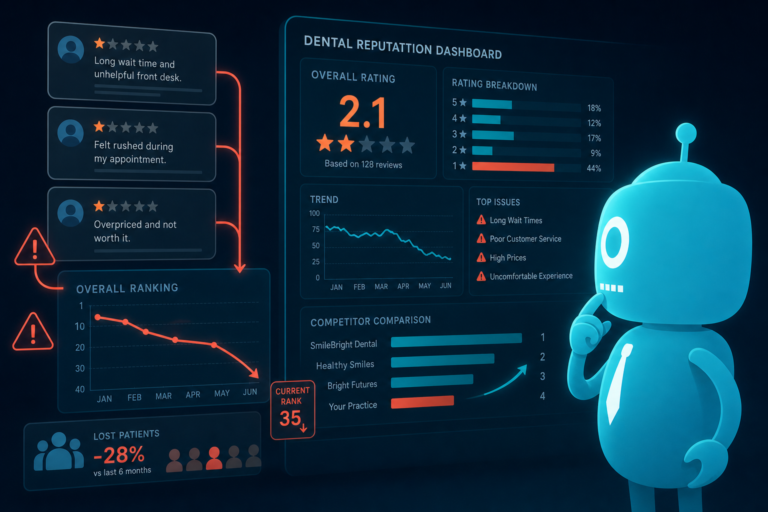
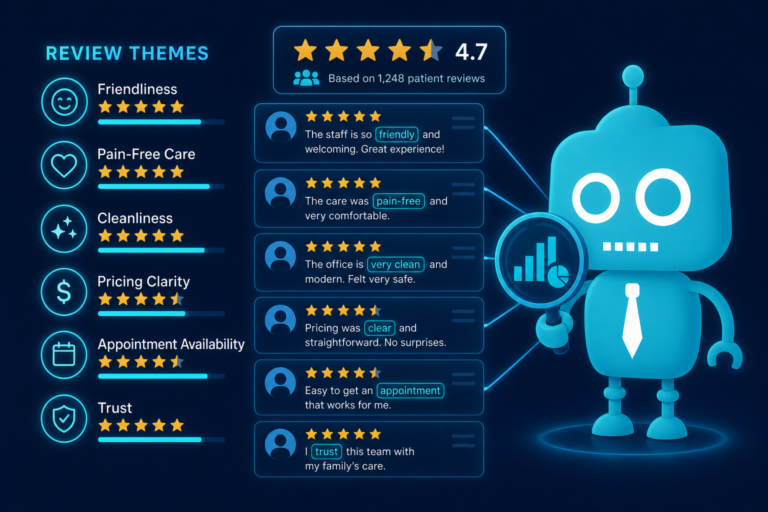
Common Repeated Dental Review Themes
- Long wait times
- Difficulty reaching the office by phone
- Confusing insurance or payment explanations
- Unexpected treatment costs
- Feeling rushed during appointments
- Unclear post-op instructions
- Problems scheduling follow-up visits
- Front desk tone or handoff issues
These patterns can directly affect new patient acquisition. For example, if reviews repeatedly mention unanswered calls, future patients may assume your office will be hard to reach. If your website has a lead capture form but your front desk does not follow up quickly, those new patient opportunities may be lost.
Negative reviews can reveal gaps between your marketing promise and the actual patient experience.
Create an Internal Follow-Up System for Reviews
Professional review management should not depend on whoever happens to see the review first. Your dental practice needs a defined internal system.
This is especially important for growing practices, multi-provider offices, and teams using online scheduling, CRM integrations, SMS reminders, email automation, or website lead forms.
Build a Review Response Workflow
Your workflow should answer these questions:
- Who monitors Google, Facebook, Yelp, and industry review platforms?
- How often are reviews checked?
- Who drafts the response?
- Who approves responses involving clinical or billing concerns?
- How are privacy risks reviewed?
- How is the patient contacted offline?
- Where is the follow-up documented?
- How are repeated complaints reported to leadership?
A practical process might look like this:
- Office manager receives an alert for a new review
- Review is logged in the CRM or internal task system
- Relevant team members provide context privately
- A privacy-safe public response is posted within 24 to 48 hours
- A private follow-up call or email is assigned
- The issue is categorized, such as scheduling, billing, clinical concern, or front desk communication
- Monthly review trends are discussed in a team meeting
This turns online reputation management into a repeatable business system.
Connect Review Management to Website Conversion
Your reviews and your dental website work together. A potential patient may find your Google Business Profile, read reviews, click to your website, and then decide whether to call, submit a form, or request an appointment.
If your negative review responses are professional, they reduce hesitation. If your website is modern, mobile-friendly, fast, and easy to use, it becomes easier for that person to take the next step.
Review Signals That Support New Patient Conversion
- Recent responses from the practice
- Professional tone in difficult situations
- Consistent patient communication standards
- Clear calls to action on the website
- Simple appointment request forms
- Fast mobile experience for patients searching from their phone
- Automated SMS or email follow-up after inquiries
A great review response can get a patient interested. A strong website and follow-up system help turn that interest into a scheduled appointment.
Examples of Professional Responses to Common Negative Dental Reviews
Complaint About Wait Time
Response:
“Thank you for your feedback. We understand that patients’ time is valuable, and we are sorry to hear that your visit did not meet expectations. Our team continually works to improve scheduling and communication. Please contact our office directly so we can learn more about your experience.”
Complaint About Billing or Insurance
Response:
“Thank you for bringing this to our attention. We know that billing and insurance questions can be frustrating, and our goal is to communicate financial information as clearly as possible. Because we protect patient privacy, we cannot discuss details online. Please contact our office so we can review your concerns privately.”
Complaint About Front Desk Service
Response:
“We appreciate your feedback and are sorry to hear that your interaction with our office did not reflect the level of service we aim to provide. Respectful and helpful communication is very important to our team. Please contact our office manager directly so we can better understand and address your concerns.”
Complaint About Treatment Experience
Response:
“Thank you for sharing your concerns. Patient comfort, communication, and quality care are priorities for our practice. To protect privacy, we cannot discuss individual care details in a public forum. Please contact our office directly so we can speak with you privately.”
Train Your Front Desk Team on Review-Sensitive Communication
Many negative dental reviews are not only about clinical care. They often involve the patient experience before or after the appointment.
Your front desk team plays a major role in reputation management. Phone calls, appointment reminders, insurance explanations, treatment plan handoffs, and post-visit follow-up all shape how patients feel about the practice.
Front Desk Habits That Reduce Negative Reviews
- Confirm appointment expectations clearly
- Explain delays before patients become frustrated
- Use friendly language during check-in and checkout
- Provide written financial estimates when possible
- Follow up quickly on missed calls and website forms
- Use SMS and email reminders to reduce confusion
- Document patient concerns in the practice management system or CRM
When your communication systems are organized, fewer patients feel ignored. That can reduce negative reviews and improve patient retention.
Make Review Follow-Up Part of Your Dental Marketing System
Review management should not be separate from your marketing. It should connect to your website, CRM, lead tracking, patient communication, and appointment follow-up.
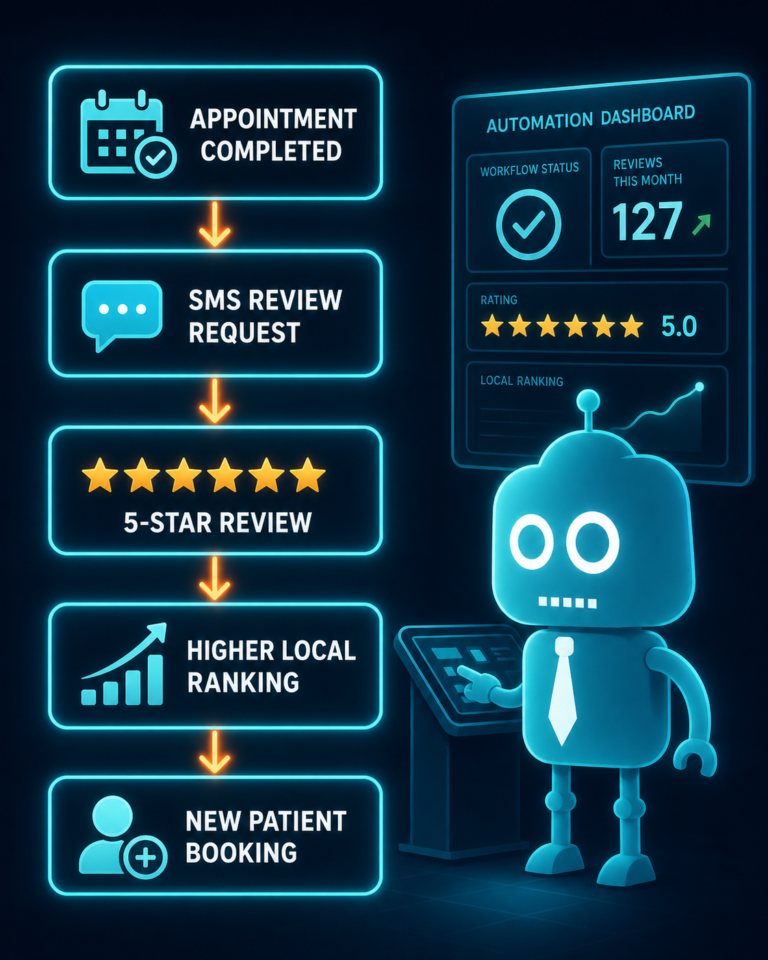
For example, if a new patient submits a website form, your CRM can create a task for the front desk, trigger an email confirmation, and send an SMS follow-up. If the patient schedules and completes a visit, your system can later request a review. If a complaint comes in, your office manager can document the issue and assign follow-up.
This kind of system helps your dental practice respond faster, communicate better, and protect the patient experience from the first click to the next appointment.
Final Takeaway: Your Response Is Part of Your Reputation
Negative reviews are never enjoyable, but they are an opportunity to show future patients how your dental practice handles concerns.
Stay calm. Protect privacy. Acknowledge concerns. Move the conversation offline. Avoid public arguments. Show professionalism. Learn from repeated complaints. Build internal follow-up systems.
When done well, a negative review response can strengthen trust, support new patient acquisition, and improve how patients perceive your practice before they ever walk through the door.
Build a Stronger Online Presence With CreateTheSite.com
Your review responses are only one part of your digital patient experience. Once a potential patient reads your reviews, they often visit your website next. That website needs to load quickly, look professional on mobile devices, capture leads clearly, and connect smoothly with your follow-up systems.
CreateTheSite.com helps dental practices build modern, conversion-focused websites designed to support new patient growth and better front desk operations.
Our services include dental website design, secure hosting, mobile optimization, lead capture forms, CRM integrations, SMS and email automation, appointment follow-up workflows, and ongoing website support.
If your practice wants a stronger website, better lead handling, and a more organized digital patient experience, CreateTheSite.com can help you turn online interest into scheduled appointments.
Visit CreateTheSite.com to learn how we can support your dental practice’s website, automation, and patient acquisition goals.