
Online Reputation Management for Dentists
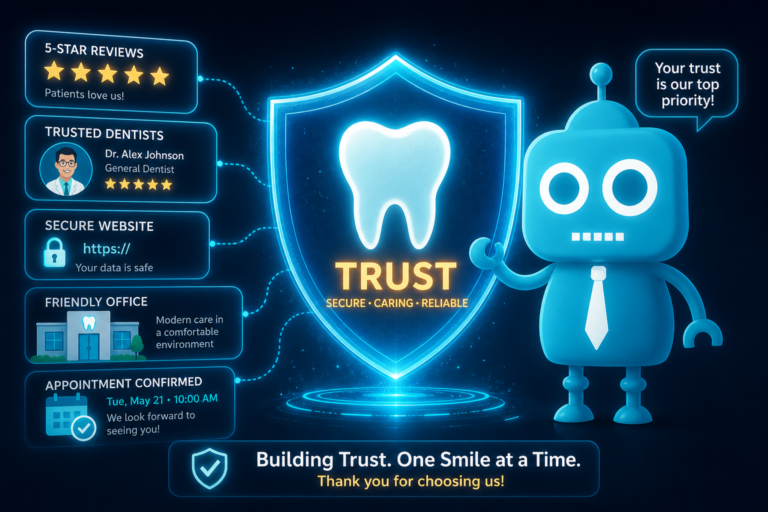
For dental practices, online reputation management is not something to think about only after a bad review appears. It is an ongoing system that supports patient trust, new patient acquisition, website conversion, and long-term practice growth.
Most prospective patients do not choose a dentist based on clinical skill alone. They compare Google reviews, read patient comments, visit the practice website, check photos, look for convenience, and decide whether the office feels trustworthy before they ever call.
That means your reputation is shaped every day by front desk conversations, appointment follow-up, review requests, website testimonials, patient education, and how your team responds when something goes wrong.
Independent dental practices that treat reputation management as a repeatable system have a clear advantage. They generate more consistent reviews, improve patient communication, protect their brand, and turn their website into a stronger conversion tool.
Why Online Reputation Management Matters for Dental Practices
Dental care is personal. Patients are often anxious, cost-conscious, and unsure about treatment. Before scheduling, they want reassurance that your practice is professional, friendly, transparent, and reliable.
Your online reputation helps answer questions like:
- Is this dentist gentle and trustworthy?
- Does the office run on time?
- Is the front desk helpful with insurance and scheduling?
- Are treatment plans explained clearly?
- Do other patients feel comfortable here?
- Will this practice be responsive if I have a question or concern?
A strong reputation does more than make your practice look good. It can directly improve:
- Local SEO visibility in Google Maps
- Click-through rates from search results
- New patient phone calls and form submissions
- Conversion rates on your dental website
- Patient retention and referrals
- Trust in higher-value services such as implants, Invisalign, veneers, crowns, and full-mouth rehabilitation
The key is consistency. A few great reviews are helpful, but a steady flow of recent, authentic feedback is far more powerful.
Reputation Management Is a System, Not Damage Control
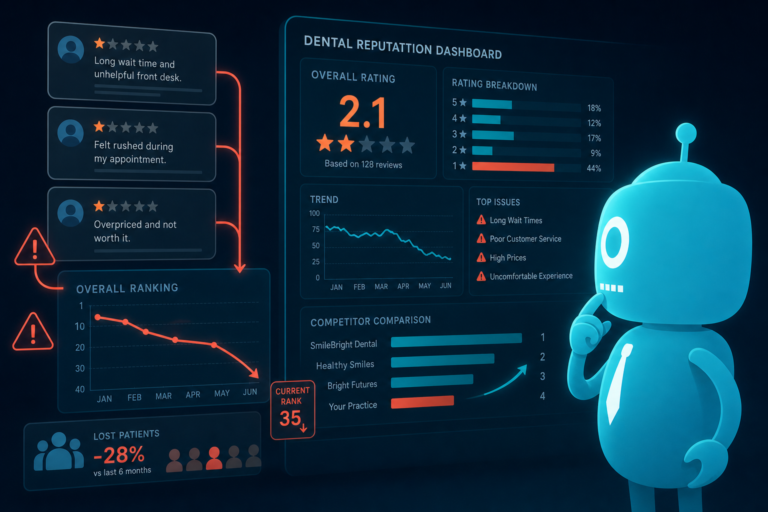
Many dental offices only focus on reputation when a negative review appears. By then, the practice is reacting under pressure.
A better approach is to build an ongoing reputation management system that runs in the background of your daily operations. This system should include review monitoring, review requests, response protocols, patient communication improvements, website testimonials, automation, and brand protection.
When reputation management is built into your workflow, your practice does not have to “chase” reviews or panic over occasional criticism. You have a process that continually strengthens your online presence.
Monitoring Reviews Across Key Platforms
The first step in online reputation management for dentists is knowing what patients are saying and where they are saying it.
Most dental practices should monitor reviews on:
- Google Business Profile
- Yelp, where relevant
- Healthgrades
- Zocdoc, if used
- Insurance directories
- Local business directories
- Specialty platforms for orthodontics, implants, or cosmetic dentistry if applicable
Google is usually the most important platform because reviews influence local search visibility and patient decisions. However, patients may encounter your practice in multiple places before choosing to call.
Practical Example: Weekly Review Check
Assign one person in the office to check review platforms at least once per week. This could be the office manager, treatment coordinator, or a trained front desk team member.
Create a simple checklist:
- Check new Google reviews
- Check Facebook recommendations
- Check other active profiles
- Record new review count and average rating
- Flag any review that needs a response
- Share positive comments with the team
- Identify recurring issues such as wait times, billing confusion, or scheduling problems
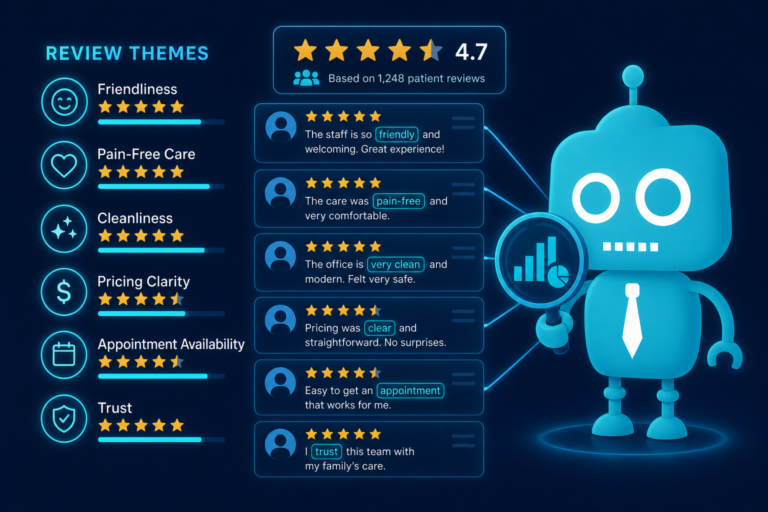
This turns reviews into useful business intelligence. If several patients mention confusion about insurance estimates, for example, the issue may not be marketing. It may be a communication process that needs improvement.
Asking for Reviews Without Making It Awkward
Many satisfied dental patients are happy to leave a review, but they usually need to be asked at the right time in the right way.
The best review requests happen shortly after a positive experience. This might be after a successful hygiene visit, a completed cosmetic case, a same-day emergency appointment, or a patient expressing gratitude at checkout.
When to Ask for a Dental Review
Good moments to ask include:
- After a patient compliments the dentist or hygienist
- After completing a crown, implant restoration, whitening, or Invisalign milestone
- After helping a nervous patient through treatment
- After fitting in an emergency patient quickly
- After a long-time patient mentions referring a friend or family member
- After a new patient says the visit was easier than expected
How the Front Desk Can Ask
Your front desk team does not need a complicated script. A simple, natural request works best.
Example:
“We’re so glad you had a good visit today. Reviews really help other patients find our office and feel comfortable choosing us. Would it be okay if we texted you a quick link to leave a Google review?”
This approach works because it is specific, respectful, and easy for the patient to accept.
Make the Review Process Easy
Do not ask patients to search for your practice online. Send them directly to the review page with a link by SMS or email.
The fewer steps involved, the more reviews your practice will receive.
Using Automated Review Requests
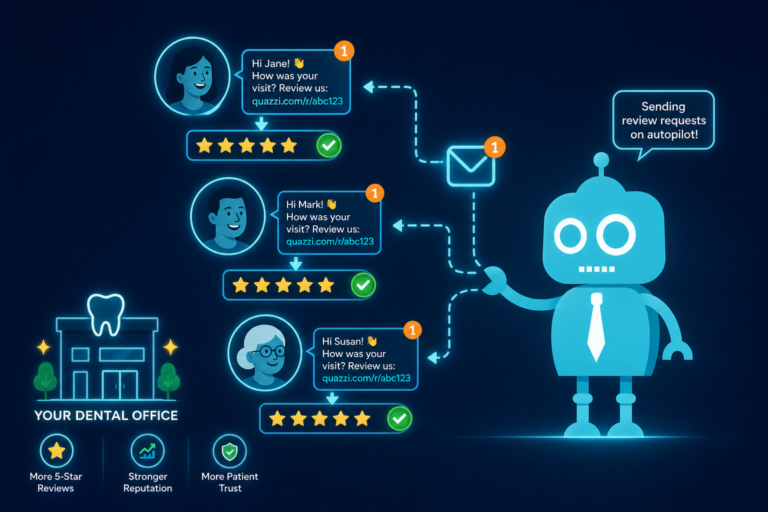
Automation is one of the most effective ways to make reputation management consistent. If your team relies only on memory, review requests will happen occasionally. If the process is automated, it becomes part of your patient communication system.
Dental practices can use CRM systems, patient communication platforms, or website-integrated automation tools to send review requests after appointments.
SMS and Email Review Automation
A typical automated review workflow might look like this:
- Patient completes an appointment
- CRM or practice management system triggers a follow-up message
- Patient receives a friendly SMS or email
- Message thanks the patient for visiting
- Message includes a direct link to leave a review
- Positive responses can be encouraged toward public review platforms
- Concerns can be routed internally for follow-up
Example SMS:
“Hi Sarah, thank you for visiting Bright Smile Dental today. We appreciate your trust in our team. If you had a great experience, would you mind sharing it in a quick Google review? [Review Link]”
Automation should feel personal, not robotic. Use the patient’s name when appropriate, keep the message short, and make sure the link works perfectly on mobile devices.
Avoid Review Gating Problems
Dental practices should be careful with review gating, which means only directing happy patients to public review sites while filtering unhappy patients away. Some platforms, including Google, discourage or prohibit this.
A safer approach is to ask patients for honest feedback and make it easy for them to share their experience. If a patient has a concern, your team should have a clear internal process to respond quickly and professionally.
Responding to Patient Feedback Professionally
Responding to reviews is a major part of reputation management. Patients notice whether a dental office responds with care, professionalism, and consistency.
Responses show prospective patients that your practice is engaged and values feedback. They also help reinforce your brand voice.
How to Respond to Positive Reviews
Positive reviews deserve more than a generic “Thanks.” A thoughtful response reinforces patient trust and encourages others to leave feedback.
Example:
“Thank you for the kind review. Our team is glad to hear you felt comfortable during your visit. We appreciate you choosing our office for your dental care.”
Keep responses warm but avoid revealing protected health information. Even if the patient mentions a specific procedure, your response should remain general.
How to Respond to Negative Reviews
Negative reviews should be handled calmly and carefully. Do not argue, diagnose, discuss treatment details, mention billing specifics, or reveal anything that could violate patient privacy.
A good response should:
- Acknowledge the concern
- Stay professional
- Avoid clinical or personal details
- Invite the patient to contact the office directly
- Show prospective patients that your practice takes feedback seriously
Example:
“We’re sorry to hear that your experience did not meet expectations. Our team takes patient feedback seriously and would appreciate the opportunity to discuss your concerns directly. Please contact our office manager at your convenience.”
The goal is not to “win” the review conversation online. The goal is to demonstrate professionalism and move the conversation offline.
Create a Review Response Policy
Every dental practice should have a simple review response policy. This helps prevent rushed, emotional, or inconsistent replies.
Your policy should define:
- Who is responsible for responding
- How quickly reviews should receive a response
- Approved response templates
- What not to mention for privacy reasons
- When to escalate a review to the dentist or practice owner
- How to document serious complaints internally
This is especially important for multi-provider practices or offices with several front desk team members.
Using Testimonials on Your Dental Website
Reviews help patients discover your practice. Testimonials on your website help convert visitors into scheduled appointments.
When a prospective patient lands on your website from Google, an ad, or a referral, testimonials can provide immediate reassurance. They support the claims you make about your care, service, and patient experience.
Where to Place Testimonials
Strong locations for testimonials include:
- Homepage near the appointment request section
- New patient page
- Cosmetic dentistry service pages
- Dental implant pages
- Invisalign or orthodontic pages
- Emergency dental care pages
- Smile gallery pages
- Contact or scheduling page
For example, a patient testimonial about feeling comfortable during treatment is especially useful on a sedation dentistry or emergency dental page. A testimonial about loving a new smile may be ideal for a veneers or cosmetic dentistry page.
Keep Testimonials Specific
Generic praise is less persuasive than specific feedback.
Less effective:
“Great dentist. Highly recommend.”
More effective:
“The front desk helped me understand my insurance, the hygienist was gentle, and the dentist explained everything before starting treatment.”
Specific testimonials address real patient concerns and can improve website conversion rates.
Get Permission Before Publishing
Before adding testimonials to your dental website, make sure you have appropriate permission. If using a public review, avoid including unnecessary personal details and follow applicable privacy and advertising guidelines.
Patient Education Strengthens Your Reputation
Reputation management is not only about reviews. It is also about reducing confusion, building trust, and helping patients make informed decisions.
Patient education plays a major role in how patients perceive your practice. When patients understand their oral health, treatment options, costs, timelines, and home care responsibilities, they are less likely to feel surprised or frustrated.
Educational Content That Supports Trust
Your dental website should answer common questions clearly. Helpful content may include:
- What to expect at a first dental visit
- How dental insurance estimates work
- When a crown is recommended instead of a filling
- What happens during a dental implant consultation
- How Invisalign treatment works
- How to handle a dental emergency
- Post-op instructions for extractions, implants, crowns, and fillings
- How often patients should schedule cleanings
This type of content improves SEO and also supports front desk operations. When patients can find clear answers online, your team spends less time repeating the same explanations by phone.
Education Reduces Negative Feedback
Many negative reviews come from unmet expectations. Patients may be upset about wait times, out-of-pocket costs, treatment discomfort, or follow-up instructions.
Clear education can reduce these issues before they become complaints.
For example, if your website and appointment reminders explain that emergency visits focus on diagnosis and pain relief first, patients are less likely to expect complete treatment during a short same-day appointment.
Improving Communication at the Front Desk
Your online reputation often reflects your offline communication. The front desk is one of the most important reputation-building points in a dental practice.
Patients may love the dentist, but if they struggle with scheduling, unclear billing conversations, or unanswered calls, their overall impression can suffer.
Common Communication Gaps in Dental Offices
Watch for issues such as:
- Calls going to voicemail during business hours
- Delayed responses to website form submissions
- Unclear explanations of insurance estimates
- Patients not knowing what to expect at their first visit
- No follow-up after treatment presentations
- No confirmation or reminder system for appointments
- Inconsistent communication between clinical and administrative teams
Each of these gaps can affect patient satisfaction and reviews.
Use Scripts Without Sounding Scripted
Front desk scripts help create consistency, but they should sound natural. The goal is not to make every interaction identical. The goal is to make sure important points are covered.
For a new patient call, the front desk should be ready to explain:
- Appointment availability
- Insurance participation or payment options
- What the first visit includes
- How long the appointment usually takes
- What forms need to be completed
- How to confirm the appointment
Clear communication creates confidence before the patient ever sits in the chair.
Lead Capture and Follow-Up Affect Reputation Too
A prospective patient’s first impression may come from your website, not your office. If they submit a contact form and do not hear back quickly, the practice may lose the lead and create a poor impression.
Dental practices should treat website inquiries as high-priority opportunities. This is especially true for high-value services such as implants, clear aligners, cosmetic dentistry, sleep apnea appliances, and full-mouth cases.
Best Practices for Website Lead Follow-Up
- Use clear appointment request forms on mobile and desktop
- Send form submissions directly to the correct team member
- Integrate website forms with your CRM when possible
- Use automated confirmation emails or texts
- Follow up quickly during business hours
- Track whether leads scheduled, declined, or need follow-up
- Create reminders for unscheduled treatment inquiries
A fast, organized follow-up process makes your practice feel responsive and professional. It also improves the return on your website and marketing efforts.
Protecting Your Dental Brand Online
Brand protection means making sure your practice is accurately represented online and that patients can easily identify the correct office.
This is especially important if your practice has changed names, moved locations, added providers, or acquired another dental office.
Dental Brand Protection Checklist
- Claim and verify your Google Business Profile
- Keep your practice name, address, and phone number consistent
- Update office hours, holiday hours, and emergency availability
- Use current photos of the office, team, and exterior signage
- Remove or correct outdated directory listings
- Monitor duplicate Google profiles
- Make sure old phone numbers or old addresses do not appear online
- Use a professional domain name and secure website hosting
- Protect access to your website, domain, Google profile, and social accounts
Inconsistent information can frustrate patients and hurt local SEO. For example, if Google lists one closing time but your website lists another, patients may show up when the office is closed. That type of experience can quickly turn into a negative review.
Building a Practical Reputation Management Workflow
A strong reputation system does not have to be complicated. It needs to be clear, consistent, and connected to your existing operations.
Daily Tasks
- Deliver clear, friendly communication at check-in and checkout
- Confirm that new patient calls and website leads are followed up
- Send appointment reminders and post-visit messages
- Identify happy patients who may be willing to leave a review
Weekly Tasks
- Check review platforms
- Respond to new reviews
- Review feedback trends with the office manager
- Follow up on unresolved patient concerns
- Check that automation tools are working properly
Monthly Tasks
- Review total review count and average rating
- Compare review growth to new patient goals
- Update website testimonials if needed
- Audit website forms and lead capture performance
- Check Google Business Profile details
- Discuss recurring patient feedback during team meetings
This workflow helps your practice stay proactive instead of reactive.
What Dentists Should Track
You do not need to track every possible metric. Focus on the numbers that connect reputation to patient acquisition and operations.
Useful reputation management metrics include:
- Google review rating
- Number of new reviews per month
- Total Google review count
- Review response time
- Most common positive themes
- Most common complaints or concerns
- Website form submissions
- Call volume from Google Business Profile
- New patient appointment requests
- Conversion rate from website visits to leads
- No-show or cancellation trends after reminders
These metrics help connect marketing, patient experience, and front desk performance. If your website traffic is strong but appointment requests are low, you may need better trust signals, clearer calls to action, stronger testimonials, or improved mobile design.
Common Mistakes Dental Practices Should Avoid
Only Asking for Reviews Once in a While
Review generation should be ongoing. If your most recent review is six months old, prospective patients may wonder whether the practice is still active or consistent.
Ignoring Positive Reviews
Positive reviewers took time to support your practice. Responding shows appreciation and encourages more engagement.
Arguing With Negative Reviewers
A defensive response can make the practice look worse than the review itself. Stay calm, professional, and privacy-conscious.
Letting Website Testimonials Become Outdated
If your website testimonials are old, generic, or hidden on a single page, they are not doing enough to support conversions.
Using Automation Without Oversight
Automated SMS and email systems are powerful, but they still need monitoring. Make sure messages are timely, accurate, and appropriate for the patient experience.
Forgetting That Reputation Starts Inside the Office
No software can overcome poor communication, rushed explanations, or inconsistent patient care. Technology supports the system, but the patient experience drives the reputation.
Online Reputation Management Supports New Patient Growth
For independent dental practices, reputation management is one of the most practical ways to improve new patient acquisition without relying entirely on paid advertising.
A strong reputation helps your practice appear more trustworthy in local search results. It also makes your website more persuasive once visitors arrive.
When reviews, testimonials, patient education, mobile-friendly design, lead capture forms, and follow-up automation work together, your online presence becomes a complete patient acquisition system.
The goal is not to look perfect. Patients know that every business receives occasional criticism. The goal is to show that your practice is active, responsive, organized, and committed to patient care.
Build a Stronger Reputation System With CreateTheSite.com
Your dental reputation is shaped by more than reviews. It is influenced by your website, mobile experience, forms, follow-up process, patient communication, and the systems that connect everything together.
CreateTheSite.com helps dental practices build modern, conversion-focused websites that support reputation management and new patient growth. Our services include professional dental website design, secure hosting, mobile optimization, lead capture forms, CRM integrations, SMS and email automation, appointment follow-up, and ongoing website support.
Whether your practice needs a better website, smoother patient inquiry follow-up, automated review requests, or stronger online trust signals, CreateTheSite.com can help you put the right system in place.
A better reputation starts with a better digital foundation. If your dental website and follow-up systems are not helping patients choose your practice, now is the time to improve them.
Contact CreateTheSite.com to build a dental website and online reputation system designed to attract, convert, and support more patients.