The Importance of Speed-to-Lead in Dentistry
For independent dental practices, speed-to-lead is often treated like a front desk habit: answer the phone quickly, call back when possible, and try not to let inquiries sit too long.
But that view is too limited.
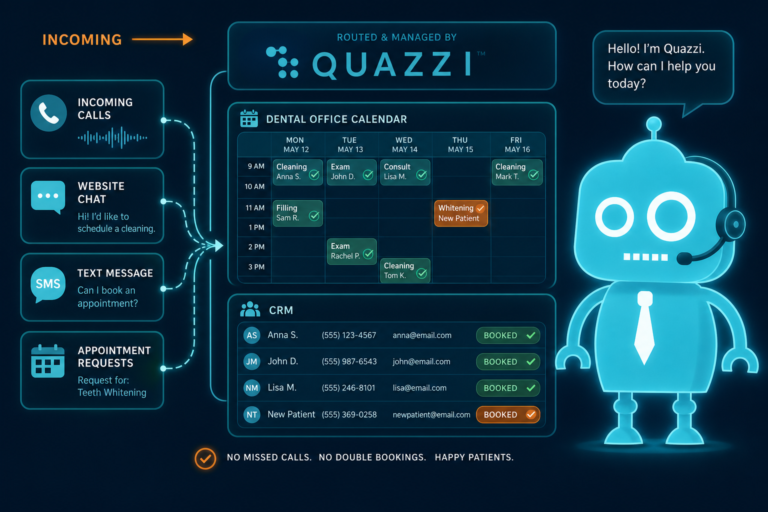
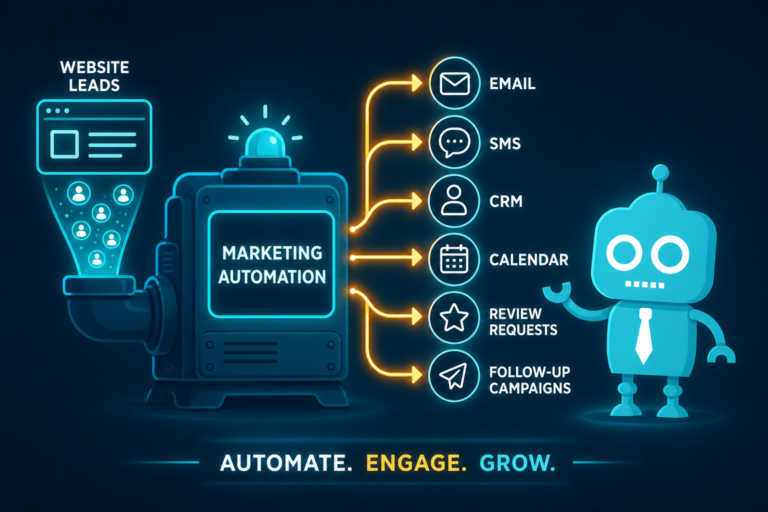
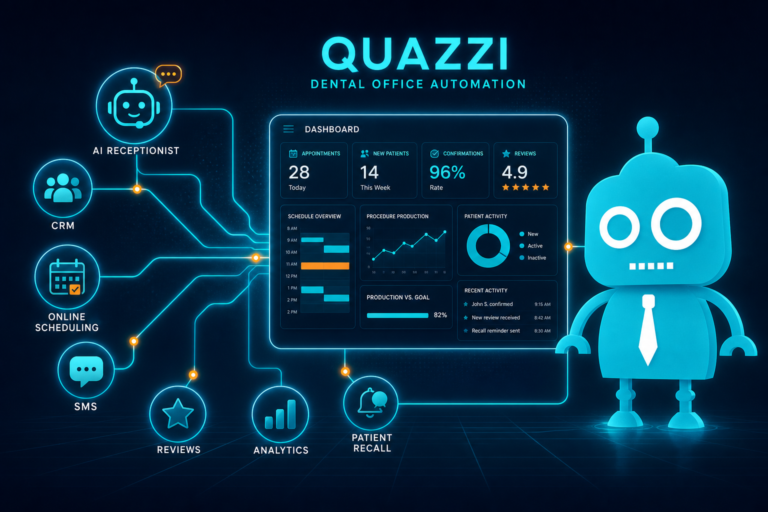
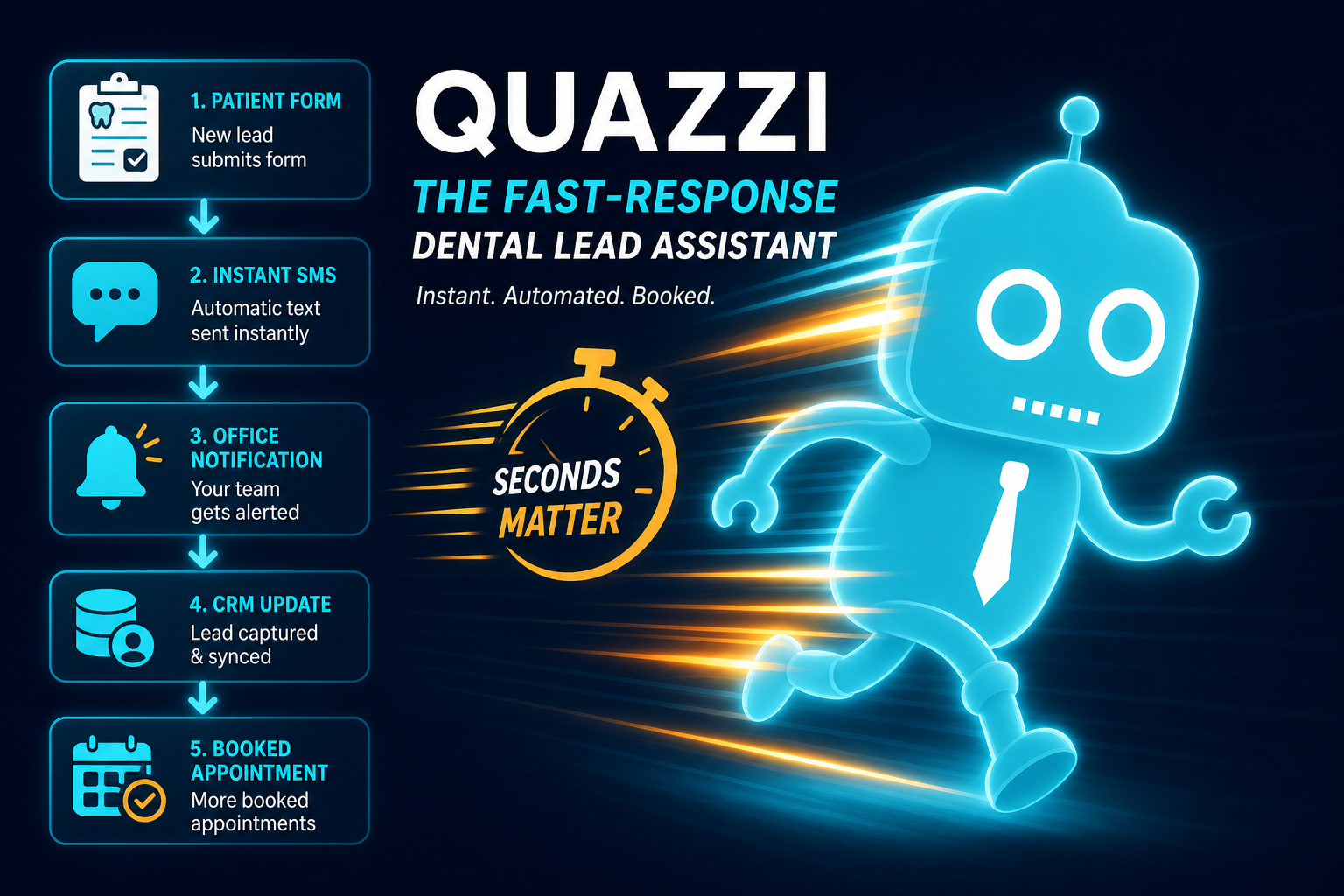
In dentistry, speed-to-lead is a business system. It connects your website, ads, lead forms, phone calls, CRM, text messages, email follow-ups, reviews, and front desk workflow into one coordinated process. When that system works, more new patient inquiries turn into booked appointments. When it breaks down, marketing dollars leak out before your team ever gets a chance to help the patient.
Whether you are a dentist, practice owner, or office manager, improving speed-to-lead can directly impact new patient acquisition, ad ROI, schedule production, and patient experience.

What Speed-to-Lead Means in a Dental Practice
Speed-to-lead refers to how quickly your dental practice responds after a prospective patient contacts you or submits their information.
That inquiry may come from:
- A website contact form
- A “Request an Appointment” form
- A Google Ads landing page
- A Facebook or Instagram ad
- A phone call from Google Business Profile
- A live chat or chatbot conversation
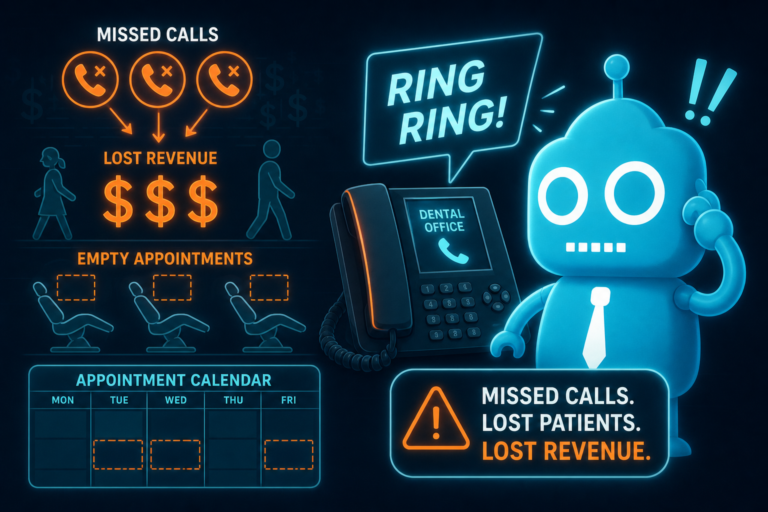
- A missed call
- A text message
- An email inquiry
In practical terms, speed-to-lead answers one question:
How long does it take your office to respond when a potential patient raises their hand?
For dental practices, this matters because the patient is often ready to act now. They may be in pain, comparing cosmetic options, looking for a new family dentist, or trying to schedule before insurance benefits expire. If your office waits too long, another practice may respond first.
Why Speed-to-Lead Is a Business System, Not Just a Sales Tactic
Many practices assume speed-to-lead is simply about the front desk making faster calls. While front desk responsiveness is important, it is only one part of the system.
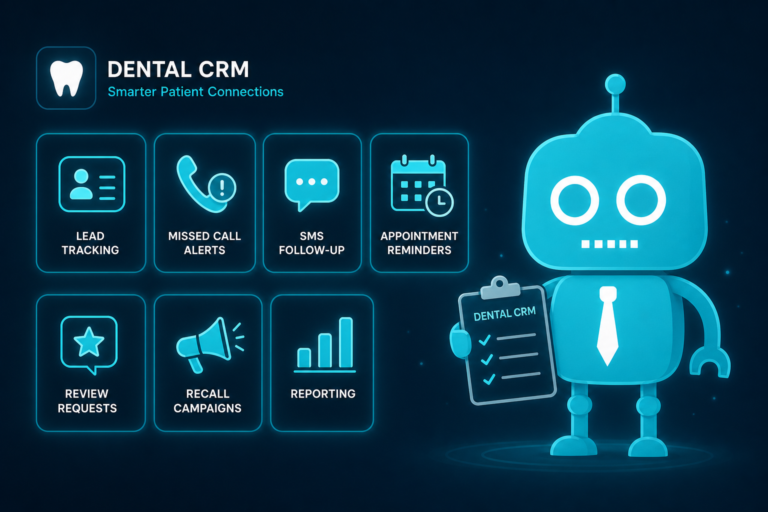
A strong dental speed-to-lead system includes:
- A mobile-friendly website that makes it easy to request an appointment
- Clear lead capture forms for new patient inquiries
- Call tracking and missed call notifications
- CRM alerts when a new lead comes in
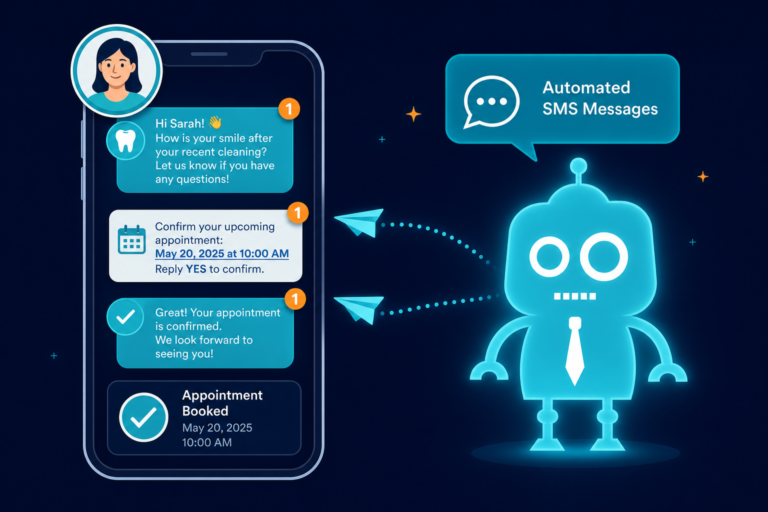
- Automated SMS and email confirmations
- Follow-up sequences for patients who do not immediately book
- Front desk scripts and ownership of new patient follow-up
- Tracking from ad click to booked appointment
When these pieces are disconnected, leads fall through the cracks. A patient fills out a form, but no one sees it until the next day. A voicemail is left, but no one owns the callback. A Google Ads lead comes in, but it is never marked as booked. The practice keeps spending money on marketing without knowing which campaigns are producing actual appointments.
That is why speed-to-lead should be managed as an operational system, not an occasional sales push.

Dental Inquiries Are Time-Sensitive
Dental leads are not all the same, but nearly all of them are time-sensitive.
A patient searching for a dentist online is usually in an active decision-making window. They are not casually browsing in the same way someone might research a future vacation. They often have a specific need, concern, or deadline.
Examples of Time-Sensitive Dental Leads
- Emergency dentistry: “I have a broken tooth and need help today.”
- Implants: “I want to know if I am a candidate and what it costs.”
- Invisalign or clear aligners: “I am comparing providers and financing options.”
- Cosmetic dentistry: “I want veneers before a wedding or major event.”
- Family dentistry: “I need appointments for my children before school starts.”
- Insurance-driven appointments: “I want to use my benefits before the end of the year.”
Each of these patients may contact multiple practices. The office that responds quickly, clearly, and helpfully has a major advantage.
Emergency Patients vs. Elective Patients
Speed-to-lead matters for both emergency and elective dental patients, but the approach should be different.
Emergency Dental Patients Need Immediate Response
Emergency patients are usually in pain, anxious, and looking for the fastest available solution. They may search phrases like:
- “Emergency dentist near me”
- “Same-day dentist appointment”
- “Broken tooth repair today”
- “Tooth pain dentist open now”
For these patients, response time can determine whether they book with your office or call the next practice on Google.
A strong emergency lead system should include:
- Click-to-call buttons on mobile pages
- Clear emergency appointment messaging
- Fast missed call alerts
- SMS replies when calls are missed
- Front desk instructions for urgent scheduling
- After-hours routing or next-business-day automation
For example, if a patient calls during lunch and no one answers, an automated text can immediately say:
“Hi, this is Smile Dental. We’re sorry we missed your call. If you’re experiencing a dental emergency, reply URGENT and our team will respond as soon as possible.”
That simple automation can prevent the patient from moving on to another office.
Elective Patients Need Fast Education and Follow-Up
Elective patients may not be in pain, but they are still time-sensitive. Someone interested in implants, veneers, whitening, Invisalign, or a smile makeover is often researching multiple providers.
These patients may need more information before booking. They may have questions about:
- Cost and financing
- Insurance coverage
- Treatment timeline
- Before-and-after results
- Provider experience
- Consultation availability
For elective leads, speed-to-lead is not just about calling quickly. It is about starting the right conversation while interest is high.
A useful follow-up could include:
- An immediate text confirming the inquiry was received
- An email with relevant treatment information
- A link to request a consultation
- Patient reviews related to the treatment
- Before-and-after case examples, if appropriate and compliant
- A front desk call within minutes during business hours
Elective dentistry often has a longer decision cycle. A CRM and automation system helps your practice stay organized without relying on memory or sticky notes.

The Role of Your Website in Speed-to-Lead
Your website is often the first step in the speed-to-lead process. If your website is slow, confusing, or difficult to use on mobile, patients may never become leads in the first place.
A dental website built for conversion should include:
- Fast page load speed
- Mobile-friendly design
- Visible phone numbers
- Click-to-call buttons
- Simple appointment request forms
- Clear service pages for high-value treatments
- Trust signals such as reviews, credentials, and photos
- Location and office hours that are easy to find
- HIPAA-conscious forms and workflows where applicable
Consider a patient searching for “dental implants near me” from their phone. If your implant page takes too long to load, hides the contact form, or does not explain the next step, that patient may leave. Even if your clinical skills are excellent, the website failed to move the patient into your system.
Speed-to-lead starts before the phone rings. It starts with a website that turns visitors into trackable inquiries.

Automation Helps Your Team Respond Faster
Automation does not replace your front desk team. It supports them.
Dental offices are busy. Phones ring, patients check in, insurance questions come up, treatment plans need explanation, and emergencies disrupt the schedule. Even a strong front desk can miss inquiries when everything depends on manual follow-up.
Automation gives your practice a safety net.
Useful Automation for Dental Lead Follow-Up
- Instant form confirmations: Let patients know their request was received.
- SMS auto-replies: Respond immediately to appointment requests or missed calls.
- Email follow-ups: Send helpful information about services, financing, or next steps.
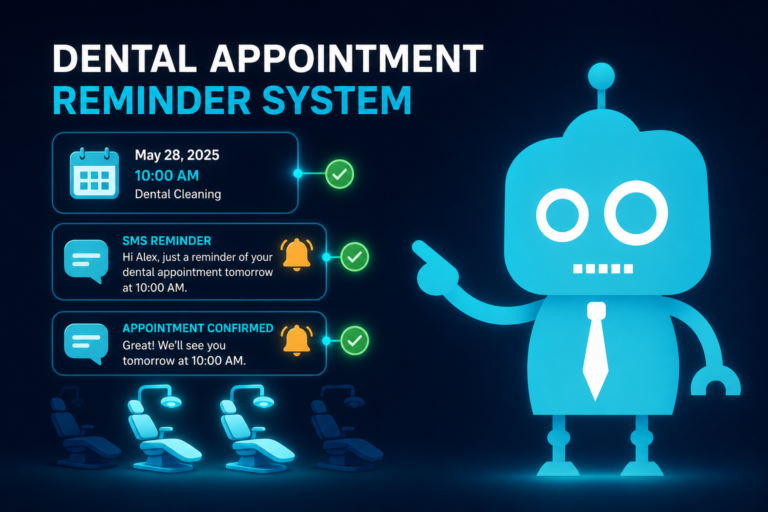
- Appointment reminders: Reduce no-shows and last-minute confusion.
- Reactivation campaigns: Follow up with patients who inquired but never booked.
- Review requests: Ask happy patients for reviews after completed visits.
For example, if someone submits a request for Invisalign, your system can automatically send:
- An immediate text: “Thanks for contacting us about Invisalign. Our team will reach out shortly.”
- An email explaining consultation options and financing
- A CRM task for the front desk to call the patient
- A follow-up reminder if the patient has not booked within 24 hours
This creates consistency. Every lead receives a prompt response, and your team has a clear process to follow.
CRM Alerts Keep Dental Leads from Falling Through the Cracks
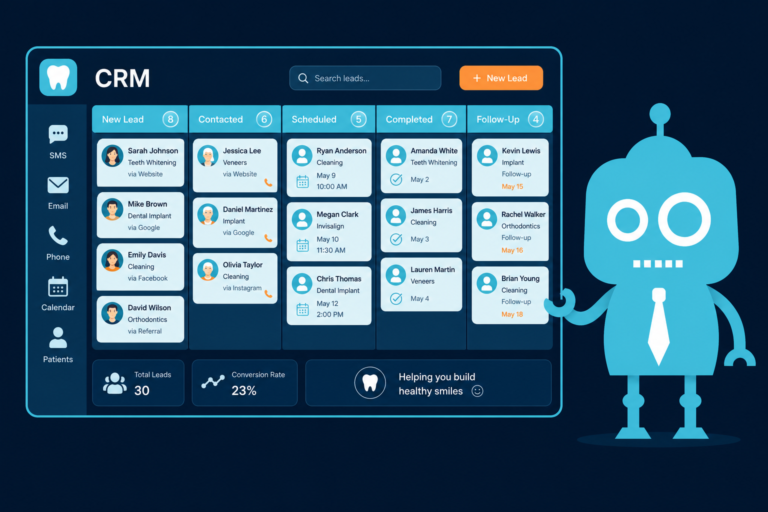
A CRM, or customer relationship management system, helps your practice track new patient inquiries from first contact to booked appointment.
Without a CRM, leads often live in too many places:
- Email inboxes
- Voicemail
- Website form notifications
- Call logs
- Paper notes
- Individual staff memory
This makes it difficult to know who followed up, who booked, and who still needs attention.
CRM alerts can notify your team when:
- A new website form is submitted
- A call is missed
- A lead replies to a text message
- A patient opens or clicks an email
- A lead has not been contacted within a set time
- A consultation request has not been marked as booked
For dental practices investing in SEO, Google Ads, social media ads, or website redesign, CRM visibility is essential. It allows you to see not just how many leads came in, but how well your office converted them into scheduled patients.
Speed-to-Lead Improves Ad ROI
If your practice pays for Google Ads, Meta ads, local SEO, or directory listings, slow response time can quietly reduce your return on investment.
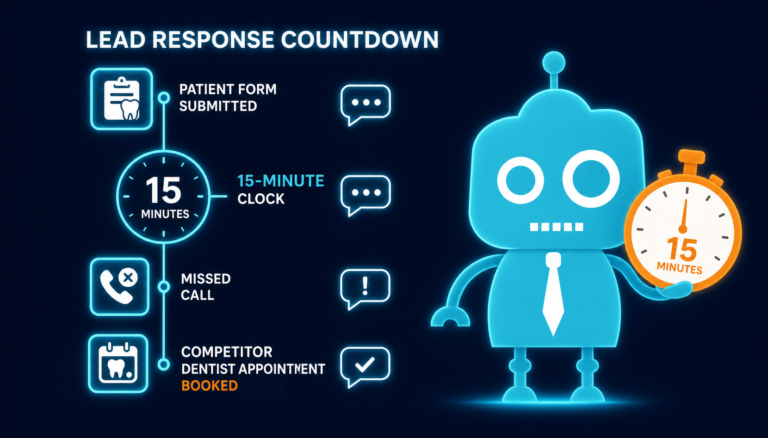
Imagine your practice spends money to generate a dental implant consultation request. The patient fills out a form at 9:15 a.m. No one calls until 4:30 p.m. By then, the patient has already booked a consultation with another office that responded in ten minutes.
From a marketing report, that campaign may still look like it generated a lead. But from a business standpoint, the opportunity was lost.
This is why dental marketing should be measured beyond clicks and form submissions.
Track Booked Appointments, Not Just Leads
Important metrics include:
- Website visitors
- Phone calls
- Form submissions
- Missed calls
- Response time
- Contact rate
- Booked appointments
- Show rate
- Treatment acceptance
The most important question is not simply, “How many leads did we get?”
The better question is:
How many new patient inquiries became booked appointments?
When your website, CRM, automation, and front desk process are aligned, you can better understand which marketing channels are producing real growth.

Practical Speed-to-Lead Examples for Dental Offices
Improving speed-to-lead does not always require a complete operational overhaul. Sometimes, small changes create immediate gains.
Example 1: Missed Call Text-Back
A patient calls after seeing your Google Business Profile. Your team is helping patients at the desk and misses the call. Instead of losing the opportunity, the system sends an automatic text:
“Hi, this is Oakview Dental. Sorry we missed your call. Would you like help scheduling an appointment?”
This gives the patient an easy way to respond without calling another office.
Example 2: Website Form to CRM Alert
A new patient submits a form for a dental cleaning. The form instantly creates a CRM record, sends a notification to the front desk, and triggers a confirmation email to the patient.
The office manager can now see whether the patient was contacted and whether the appointment was booked.
Example 3: Implant Consultation Follow-Up
A patient downloads information about dental implants but does not schedule. The system sends a helpful email about implant consultations, financing options, and what to expect. The CRM reminds the treatment coordinator to call the patient the next day.
This keeps the conversation moving without pressuring the patient.
Example 4: Review-Driven Conversion
A cosmetic dentistry lead receives a follow-up email that includes links to relevant patient reviews and smile makeover information. The patient feels more confident and books a consultation.
Speed-to-lead is not just fast response. It is fast, relevant, trust-building response.
How to Build a Better Speed-to-Lead System
To improve speed-to-lead in your dental practice, start by reviewing the full patient inquiry journey.
Audit Your Current Process
Ask these questions:
- How quickly do we respond to website forms during business hours?
- What happens when a call is missed?
- Who owns new patient follow-up?
- Are form submissions going into a CRM or just an email inbox?
- Do we use SMS and email automation?
- Can we track which leads become booked appointments?
- Are emergency leads handled differently from elective leads?
- Does our website make it easy to call or request an appointment on mobile?
Create Clear Response Standards
Set practical internal goals, such as:
- Respond to new website leads within five minutes during business hours
- Send instant automated confirmation for all appointment requests
- Text back missed calls automatically
- Review unbooked leads daily
- Track every lead source through booked appointment
The goal is not to make your team feel rushed. The goal is to design a system that makes prompt follow-up realistic and repeatable.
Align Marketing and Front Desk Operations
Marketing can generate attention, but your front desk converts that attention into appointments. If these two areas are not aligned, growth becomes inconsistent.
Your practice should know:
- Which campaigns are running
- Which services are being promoted
- What questions patients are likely to ask
- How to prioritize urgent inquiries
- How to log lead outcomes in the CRM
For example, if you launch ads for same-day emergency dentistry, your front desk should know how to identify urgent cases, offer available times, and escalate calls when needed. If you promote dental implants, your team should be prepared to discuss consultation options, financing, and next steps.

Speed-to-Lead Creates a Better Patient Experience
Fast follow-up is not only good for revenue. It is also good patient care.
When someone reaches out to a dental office, they may feel nervous, embarrassed, overwhelmed, or in pain. A quick, helpful response makes your practice feel organized and compassionate from the first interaction.
That first impression matters.
A patient who receives a prompt text, a helpful call, and a clear next step is more likely to trust your office. They are also more likely to show up prepared, leave a positive review, and refer others.
In this way, speed-to-lead supports both new patient acquisition and long-term practice reputation.
Make Speed-to-Lead Part of Your Dental Growth Strategy
Independent dental practices compete in a fast-moving digital environment. Patients compare websites, reviews, services, availability, and convenience before they ever walk through the door.
If your practice is investing in SEO, paid ads, social media, or a new website, speed-to-lead should be part of the strategy from the beginning.
A modern dental growth system should help you:
- Capture more website visitors as leads
- Respond faster to new patient inquiries
- Prioritize emergency and high-value treatment requests
- Support the front desk with automation and CRM alerts
- Track marketing performance through booked appointments
- Improve the patient experience from first contact
Speed-to-lead is not about being pushy. It is about being available, organized, and responsive when patients are ready to take action.
Build a Faster, Smarter Lead System with CreateTheSite.com
Your website should do more than look professional. It should help your dental practice capture inquiries, respond quickly, and turn more interested patients into booked appointments.
CreateTheSite.com helps dental practices build modern digital systems that support real practice growth. Our services include:
- Modern dental website design
- Reliable website hosting
- Mobile optimization for patients searching on phones
- Lead capture forms for new patient inquiries
- CRM integrations
- SMS and email automation
- Appointment follow-up workflows
- Ongoing website support
Whether you want to improve new patient acquisition, increase website conversions, support your front desk team, or get more visibility into your marketing ROI, CreateTheSite.com can help you build a website and lead system designed for the way dental practices actually operate.
Ready to turn more dental website visitors into booked appointments? Visit CreateTheSite.com to learn how we can support your practice with a faster, smarter, and more reliable online presence.