
Why Missed Calls Are Costing Your Dental Office Thousands
For many dental practices, missed calls feel like a normal part of a busy day. The front desk is checking in patients, verifying insurance, collecting payments, scheduling hygiene appointments, and answering clinical questions. A call rings, no one gets to it, and the day moves on.
But that missed call may not be “just a call.” It may be a new patient ready to schedule a dental implant consultation, an Invisalign evaluation, an emergency visit, or a family cleaning appointment.
In other words, missed calls are often missed revenue opportunities.
If your dental office is investing in a website, SEO, Google Ads, social media, mailers, or referral marketing, every unanswered phone call can reduce your return on investment. The good news is that most missed-call revenue leakage can be fixed with better systems, automation, call tracking, and front desk support.

Missed Calls Are High-Intent Dental Leads
Not every website visitor is ready to book. Some patients are researching symptoms, comparing dental offices, checking insurance information, or looking at reviews.
But when someone calls your office, they are usually much closer to making a decision.
A phone call often means the patient has an immediate need, such as:
- A toothache or dental emergency
- A broken crown, filling, or veneer
- Interest in cosmetic dentistry or whitening
- Questions about Invisalign or clear aligners
- A child due for a dental visit
- A new patient appointment after moving to the area
- Insurance questions before scheduling
- Pricing or financing questions for larger treatment
These are not casual leads. They are often ready to take action.
A Practical Example
Imagine a patient searches “emergency dentist near me” on their phone at 7:45 a.m. They click your dental website, like your reviews, and tap the phone number.
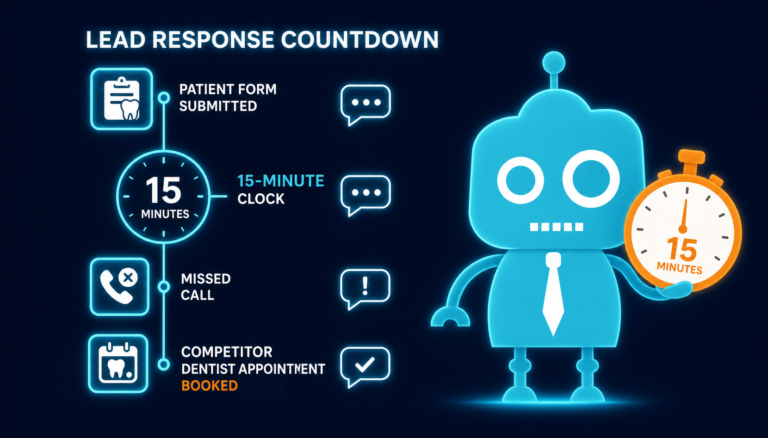
If your office does not answer, they probably will not wait. They will call the next dentist in the search results.
That one missed call could represent a same-day emergency visit, X-rays, treatment, a follow-up appointment, and possibly a long-term patient relationship. Over time, that adds up to thousands of dollars in lost production.
The Real Cost of a Missed Dental Call
The cost of a missed call depends on your services, location, case acceptance, and lifetime patient value. But even conservative math shows how expensive missed calls can be.
For example:
- If your office misses 10 calls per week
- And only 3 of those callers would have become new patients
- And each new patient is worth $800 to $1,500 in first-year revenue
That could mean $2,400 to $4,500 in lost revenue per week.
Over a month, that may become $9,600 to $18,000. Over a year, it can easily reach six figures.
And that does not include treatment plans, referrals, recall visits, hygiene production, cosmetic work, or family members who may also become patients.
Why Dental Front Desks Miss Calls
Missed calls usually do not happen because the front desk is careless. In most dental offices, the opposite is true. The team is busy helping the patients already in the office.
Dental front desks are often responsible for:
- Answering phones
- Greeting patients
- Checking patients in and out
- Collecting co-pays and balances
- Verifying insurance
- Explaining treatment estimates
- Managing cancellations and reschedules
- Coordinating with hygienists and assistants
- Handling patient forms and medical histories
- Responding to texts and emails
When three patients are standing at the counter and two lines are ringing, something has to give.
The Hidden Problem: Call Volume Peaks at the Worst Times
Dental offices often receive calls during the exact times the front desk is most stretched:
- Early morning when patients are calling about pain or scheduling
- Late morning when checkouts and treatment discussions increase
- Lunch hour when staffing may be limited
- Late afternoon when patients call after work or school
- After hours when emergencies happen
These are also some of the highest-intent call windows. If your practice does not have a plan for them, your marketing may be sending patients to competitors.
Lunch and After-Hours Gaps Can Drain New Patient Opportunities
Many dental practices close their phones during lunch or route callers to voicemail. That may be operationally convenient, but from a patient’s perspective, it creates friction.
Patients often search for dental care during their own lunch break. They may only have 20 minutes to compare offices and make a call. If they reach voicemail, they may not leave a message.
After-hours gaps are even more important.
A prospective patient might visit your dental website at 8:30 p.m. after their kids are asleep. Another might search for a dentist on Sunday while planning the week. Someone with dental pain may call after business hours because they need help quickly.
If there is no response, no text-back, no online form, and no appointment request option, the lead may disappear.
Voicemail Is Not a Reliable Lead Capture System
Some patients leave messages. Many do not.
Modern patients are used to instant communication. If they cannot reach your office, they may assume you are too busy, unavailable, or less responsive than another practice.
For new patient acquisition, voicemail alone is not enough.
Missed Call Text-Back: A Simple Fix With Big Impact
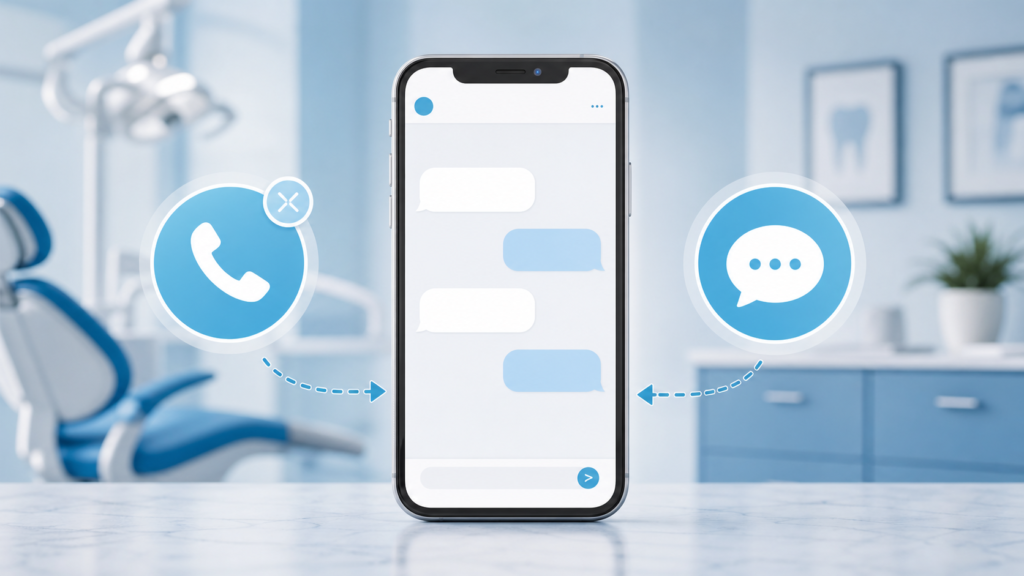
One of the most effective ways to recover missed dental calls is missed call text-back.
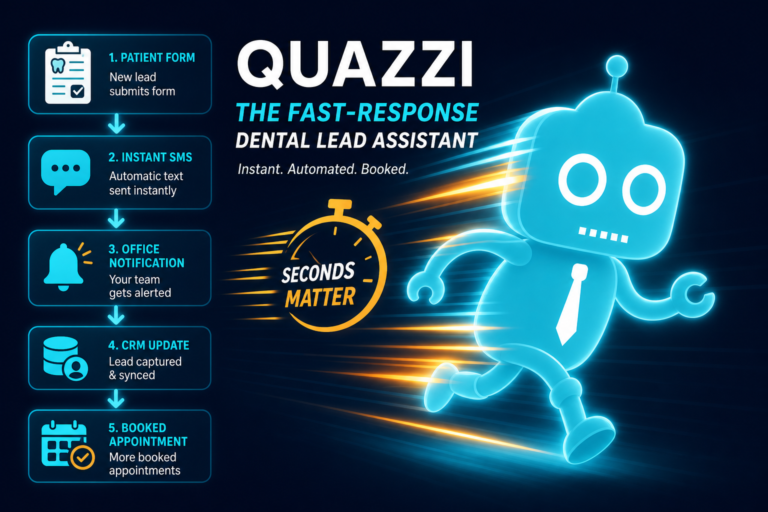
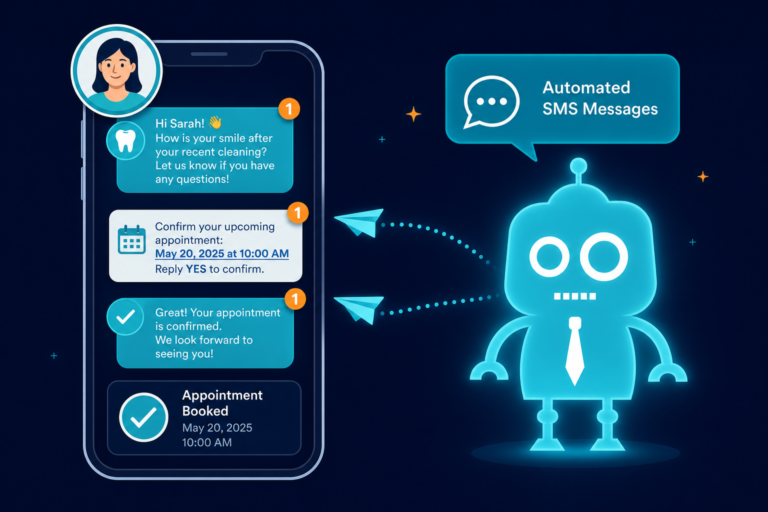
Missed call text-back automatically sends an SMS message to a caller when your office does not answer. The message can be simple, helpful, and immediate.
Example Missed Call Text-Back Message
“Hi, this is Bright Smile Dental. Sorry we missed your call. Would you like to schedule an appointment or ask a question? Reply here and our team will help.”
This small automation can turn a missed call into a conversation.
It is especially useful for:
- New patient calls
- Emergency dental inquiries
- Lunch-hour calls
- After-hours website leads
- Patients who prefer texting over voicemail
- Busy parents and working professionals
Text-back automation does not replace your front desk. It supports them by keeping leads warm until a team member can respond.
Why SMS Works Well for Dental Practices
Patients may ignore voicemail, but they often read text messages quickly. SMS is familiar, low-pressure, and convenient.
For dental offices, texting can help with:
- Appointment requests
- New patient questions
- Insurance follow-up
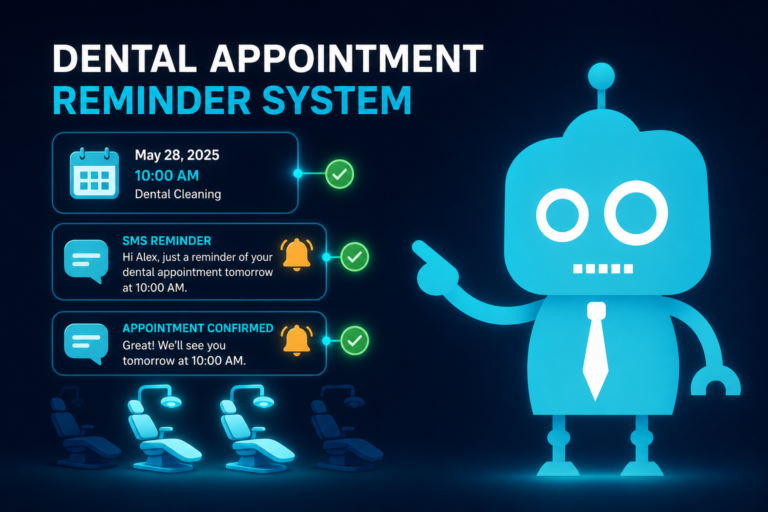
- Confirmation messages
- Recall and reactivation campaigns
- Post-visit review requests
When connected to your website and CRM system, SMS can become a powerful part of your patient acquisition and follow-up process.
AI Receptionist Options for Dental Offices
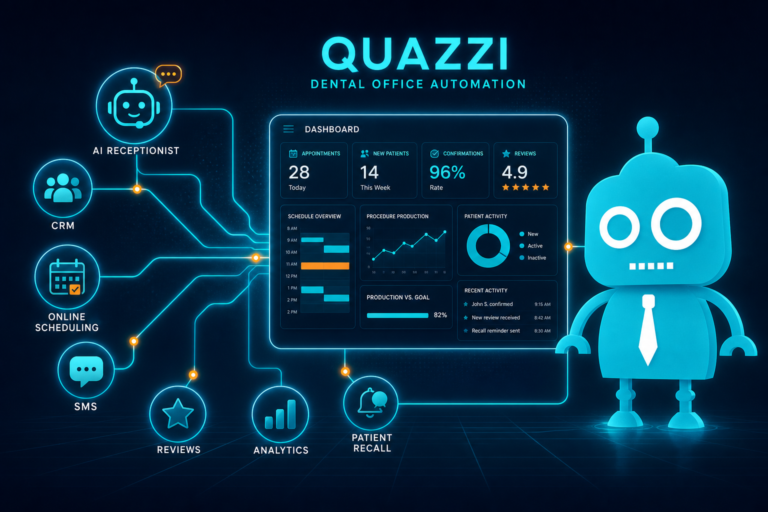
AI receptionist tools are becoming more common in healthcare and dental marketing. When used correctly, they can help reduce missed opportunities without overwhelming your staff.
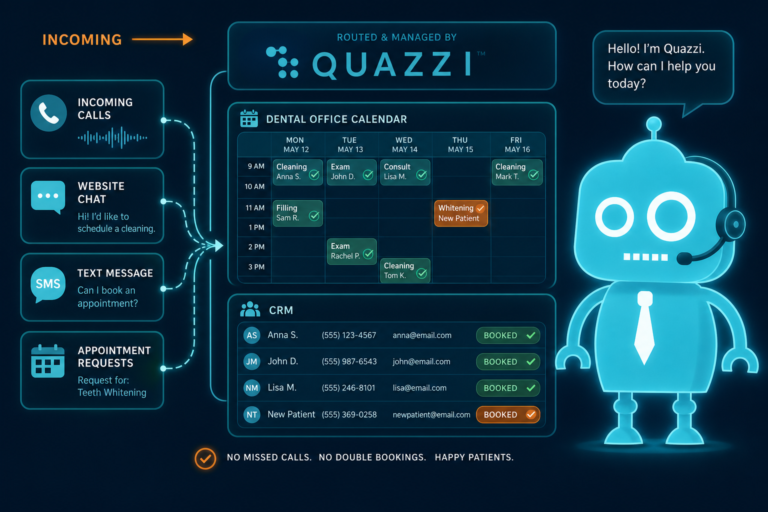
An AI receptionist can answer basic questions, collect patient information, route inquiries, and help after hours. Some systems can even assist with scheduling when connected to practice management software or booking workflows.
What an AI Receptionist Can Handle
Depending on the platform, an AI receptionist may be able to:
- Answer frequently asked questions about office hours and location
- Collect a new patient’s name, phone number, email, and reason for visit
- Identify emergency dental needs
- Send appointment request links
- Route messages to the front desk
- Provide insurance and financing instructions
- Trigger SMS or email follow-up
This can be especially helpful after hours, during lunch, or when your team is helping in-office patients.
AI Should Support the Front Desk, Not Replace It
Dental care is personal. Patients still want to feel heard, especially if they are in pain, nervous, or considering expensive treatment.
The best use of AI is not to remove the human touch. It is to make sure no lead gets ignored before your team can respond.
For example, an AI receptionist can capture an emergency caller’s information at 9:00 p.m., send a notification to your team, and trigger an automated message letting the patient know what to expect next.
That is a much better experience than silence.
CRM Logging: If It Is Not Tracked, It Gets Lost
Many dental practices rely on sticky notes, inboxes, voicemail, and memory to manage new patient leads. That may work when call volume is low, but it breaks down quickly as marketing increases.
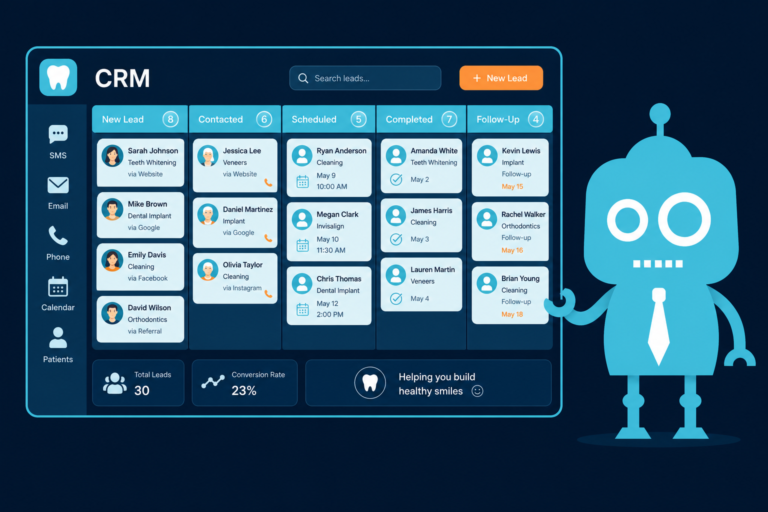
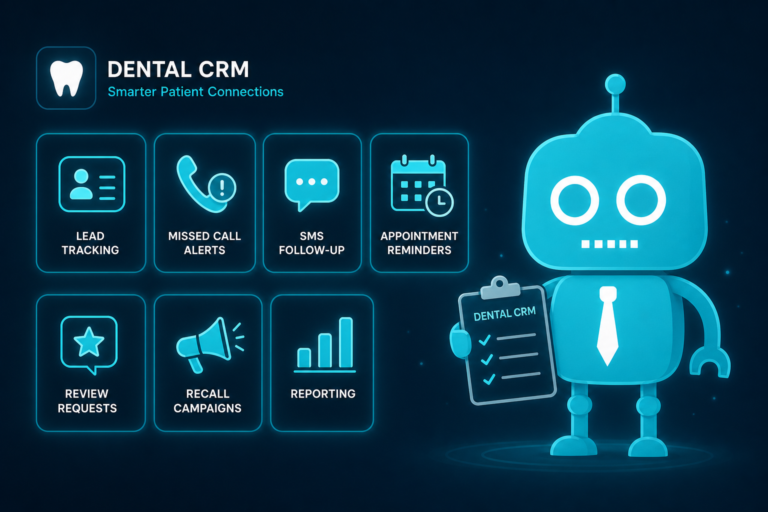
A CRM, or customer relationship management system, helps your practice track leads from first contact to scheduled appointment.
For dental offices, CRM logging can help you see:
- Who called
- When they called
- Whether the call was answered or missed
- What service they were interested in
- Which marketing source they came from
- Whether they booked an appointment
- Whether follow-up is still needed
Why CRM Systems Matter for New Patient Follow-Up
A missed call is bad. A missed follow-up is worse.
Sometimes the office calls back once, does not reach the patient, and moves on. But the patient may still be interested. They may be at work, driving, or unable to answer.
A CRM can create a structured follow-up process, such as:
- Immediate missed call text-back
- Follow-up call from the front desk
- Email with appointment request link
- Second SMS reminder the next day
- Task assigned to a team member
This makes lead handling more consistent and less dependent on memory.
CRM Integration With Dental Website Forms
Your website should do more than look professional. It should capture and organize new patient opportunities.
When your appointment request forms connect to a CRM, every submission can be logged automatically. That means your team can see the patient’s name, phone number, email, preferred appointment time, service interest, and message in one place.
This is especially helpful for leads related to:
- Dental implants
- Cosmetic dentistry
- Invisalign or clear aligners
- Emergency dentistry
- Family dentistry
- Second opinions
Better tracking leads to better follow-up. Better follow-up leads to more scheduled appointments.

Call Tracking Shows Which Marketing Is Actually Working
If your practice gets calls from your website, Google Business Profile, SEO pages, Google Ads, social media, and direct mail, how do you know which channels are producing real patient opportunities?
Call tracking helps answer that question.
With call tracking, you can identify where calls are coming from and how many are being answered, missed, or converted into appointments.
What Dental Call Tracking Can Reveal
Call tracking can help you understand:
- Which website pages generate the most calls
- Whether SEO leads are turning into appointments
- How many calls come from Google Ads
- Which campaigns produce emergency dental calls
- When your office misses the most calls
- How many first-time callers reach your office
- Whether front desk call handling needs improvement
This is valuable because not all traffic is equal. A blog post may bring visitors, but an emergency dentistry page may bring callers who are ready to schedule immediately.
Call Tracking and Website Conversion
Your dental website’s job is not just to look good. It should convert visitors into patients.
Important conversion elements include:
- Click-to-call buttons on mobile
- Clear appointment request forms
- Prominent emergency dental contact options
- Trust-building reviews and testimonials
- Service-specific pages for high-value treatments
- Fast-loading mobile design
- Easy navigation for insurance, financing, and location details
Call tracking helps you see whether those elements are working. If your website generates calls but the calls are missed, the issue may not be traffic. It may be lead handling.
Reviews Can Be Affected by Missed Calls Too
Missed calls do not only affect new patient revenue. They can also affect patient experience and online reputation.
A patient who cannot reach your office may become frustrated, especially if they have a billing question, pain after treatment, or a scheduling concern.
Responsive communication can help prevent negative reviews and encourage positive ones.
For example, SMS and email automation can be used to:
- Confirm appointments
- Send post-visit instructions
- Follow up after treatment
- Request Google reviews from happy patients
- Reactivate overdue hygiene patients
A practice that communicates clearly feels more organized and patient-focused. That can influence both retention and referrals.
How to Reduce Missed Calls in Your Dental Practice
You do not need to overhaul your entire operation overnight. Start by identifying where calls are slipping through the cracks.
1. Audit Your Missed Calls
Review your phone system reports or call tracking data. Look for patterns.
- How many calls are missed each week?
- What times of day have the most missed calls?
- Are lunch and after-hours calls being captured?
- Are new patient calls being returned quickly?
- Are missed calls logged anywhere?
2. Add Missed Call Text-Back
If your team cannot answer, an immediate text-back can keep the lead engaged.
Make the message simple and conversational. The goal is to reopen communication, not overwhelm the patient.
3. Improve Your Website Calls to Action
Make sure your website gives patients multiple ways to connect:
- Click-to-call phone numbers
- Appointment request forms
- Emergency dental contact prompts
- SMS-friendly lead capture options
- Clear office hours and location details
On mobile, your phone number should be easy to tap from every important page.
4. Use CRM Logging for Every Lead
Every new patient opportunity should be tracked. Calls, forms, texts, and emails should flow into a system your team can manage.
This helps prevent leads from getting buried in voicemail, inboxes, or paper notes.
5. Consider AI Receptionist Support
If your office frequently misses calls during peak times, lunch, or after hours, an AI receptionist may help capture key information and route leads.
This can be especially useful for emergency dentistry, implant consultations, cosmetic dentistry inquiries, and new patient scheduling.
6. Train the Front Desk on Call Conversion
Answering the phone is only part of the process. The goal is to help the caller take the next step.
Front desk teams should be comfortable with:
- Asking how the patient found the practice
- Identifying urgent needs
- Explaining appointment availability clearly
- Offering financing or insurance guidance when appropriate
- Collecting accurate contact information
- Scheduling before the call ends whenever possible

The Bottom Line: Your Phone Is a Revenue Channel
Your dental office phone is not just an administrative tool. It is one of your most important revenue channels.
When a prospective patient calls, they are often telling you they are ready. Ready to schedule. Ready to ask about treatment. Ready to choose a dentist.
If that call goes unanswered and there is no automated follow-up, CRM logging, or text-back system, the opportunity may be lost.
By improving call tracking, missed call recovery, website conversion, CRM integration, and SMS/email automation, dental practices can capture more leads without necessarily increasing marketing spend.
Sometimes the fastest way to grow is not getting more traffic. It is doing a better job with the opportunities you already have.
Need Help Turning Your Dental Website Into a Better Lead Capture System?
CreateTheSite.com helps dental practices build modern websites that do more than look good. We help independent dental offices create online systems designed to attract, capture, and follow up with new patient opportunities.
Our services include:
- Modern dental website design
- Reliable website hosting
- Mobile optimization and click-to-call improvements
- Lead capture forms for new patient inquiries
- CRM integrations to organize calls, forms, and follow-ups
- SMS and email automation for appointment follow-up
- Website support and ongoing updates
- Conversion-focused improvements for service pages and contact flows
If your practice is investing in marketing but missing calls, losing form submissions, or struggling to follow up consistently, your website and automation systems may need a smarter foundation.
CreateTheSite.com can help your dental office capture more opportunities, support your front desk, and create a better experience for patients from the first click to the first appointment.
Ready to make your dental website work harder for your practice? Visit CreateTheSite.com to learn how we can help.