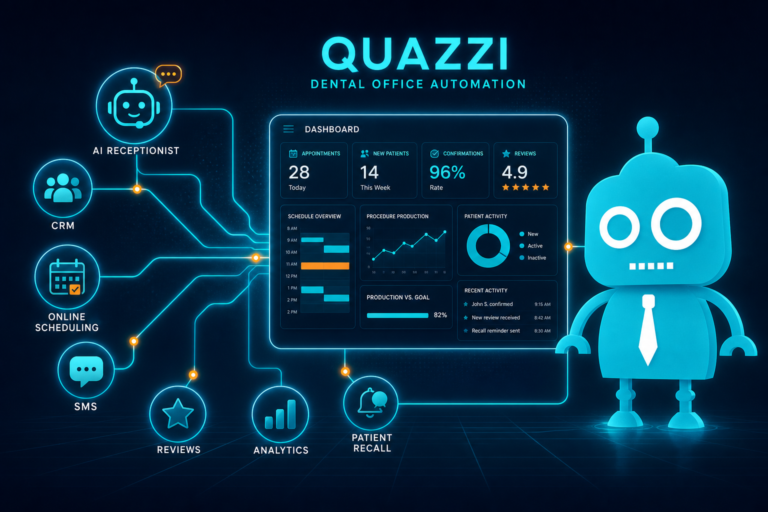
Why Dental Practices Need Marketing Automation
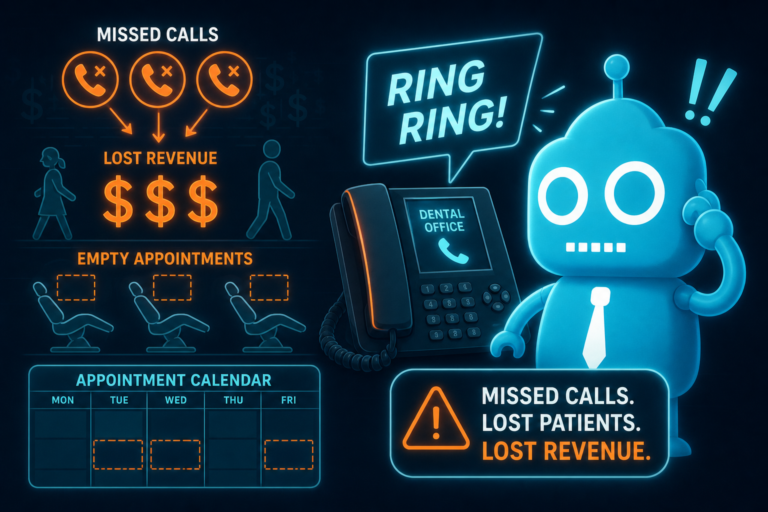
Independent dental practices do not lose opportunities because they are careless. They lose them because the team is busy.
The front desk is answering phones, checking insurance, greeting patients, collecting payments, filling last-minute openings, and helping the clinical team stay on schedule. Meanwhile, new patient leads come in from the website, hygiene patients fall overdue, treatment plans sit unscheduled, and happy patients leave without being asked for a review.
Manual follow-up works when there are only a few tasks. It breaks down when your practice is trying to grow.
That is where dental marketing automation becomes essential. With the right website, CRM system, SMS/email automation, and appointment follow-up process, your practice can respond faster, stay organized, improve patient communication, and generate more booked appointments without adding more front desk workload.

Marketing Automation Solves a Real Front Desk Problem
Dental teams are expected to do a lot more than answer the phone. They manage the patient experience before, during, and after the appointment. They also carry much of the responsibility for converting website leads, confirming appointments, gathering reviews, and keeping the schedule full.
The problem is scale.
If your practice receives 20, 50, or 100 online inquiries per month, every lead needs timely follow-up. Every missed call should be tracked. Every new patient should get reminders. Every completed appointment is an opportunity for a review. Every unscheduled treatment plan needs nurturing. Every overdue hygiene patient needs recall communication.
Trying to manage all of that manually through sticky notes, spreadsheets, inboxes, and memory is not a reliable growth strategy.
Dental marketing automation helps your practice create repeatable communication systems. Instead of relying on someone to remember every task, automated workflows send the right message at the right time through email, SMS, or internal notifications.
New Patient Follow-Up: Respond Before They Choose Another Dentist
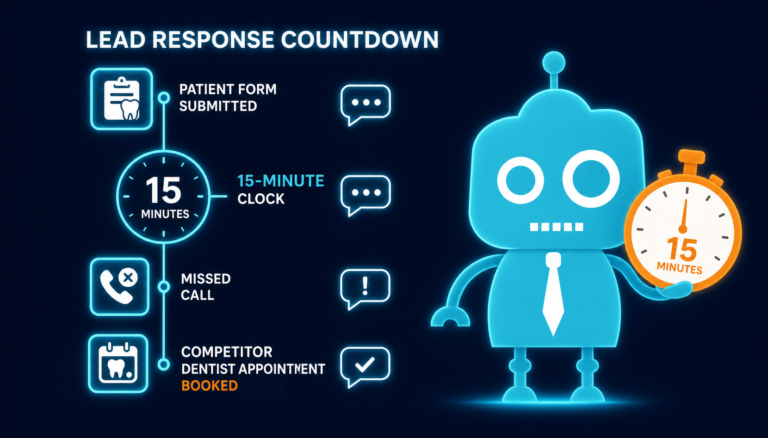
When someone fills out a contact form on your dental website, they are usually not casually browsing. They may have tooth pain, need a cleaning, want cosmetic dentistry, or be looking for a new family dentist. If your practice waits hours or days to respond, that patient may contact another office.
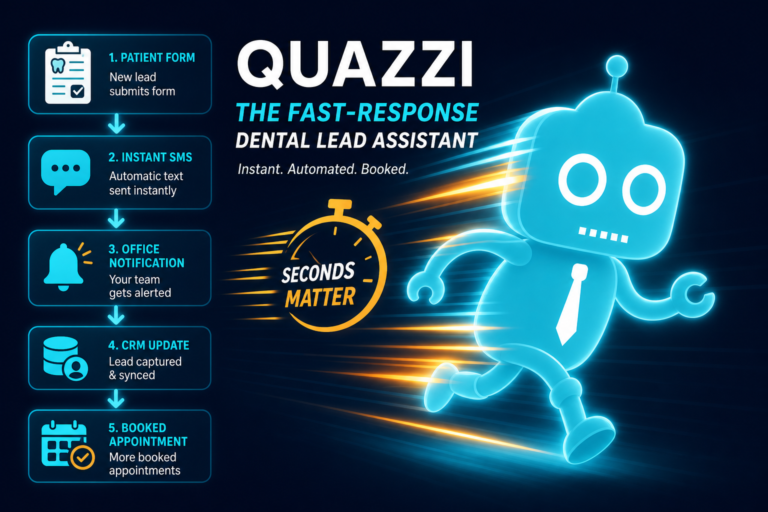
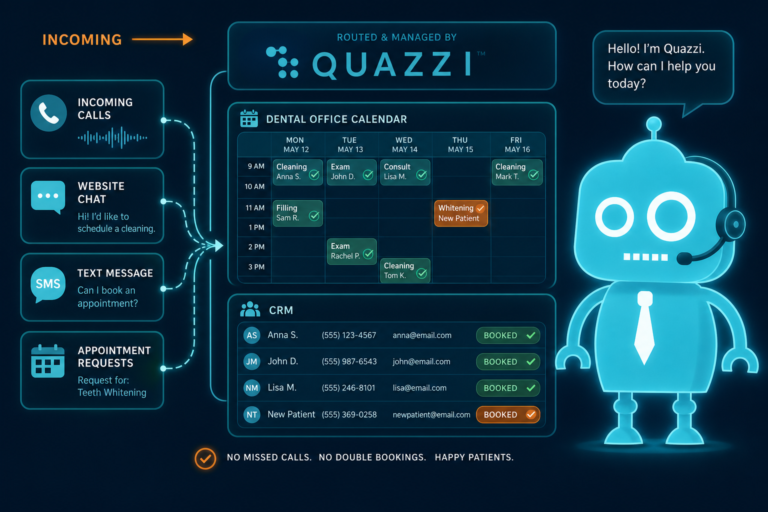
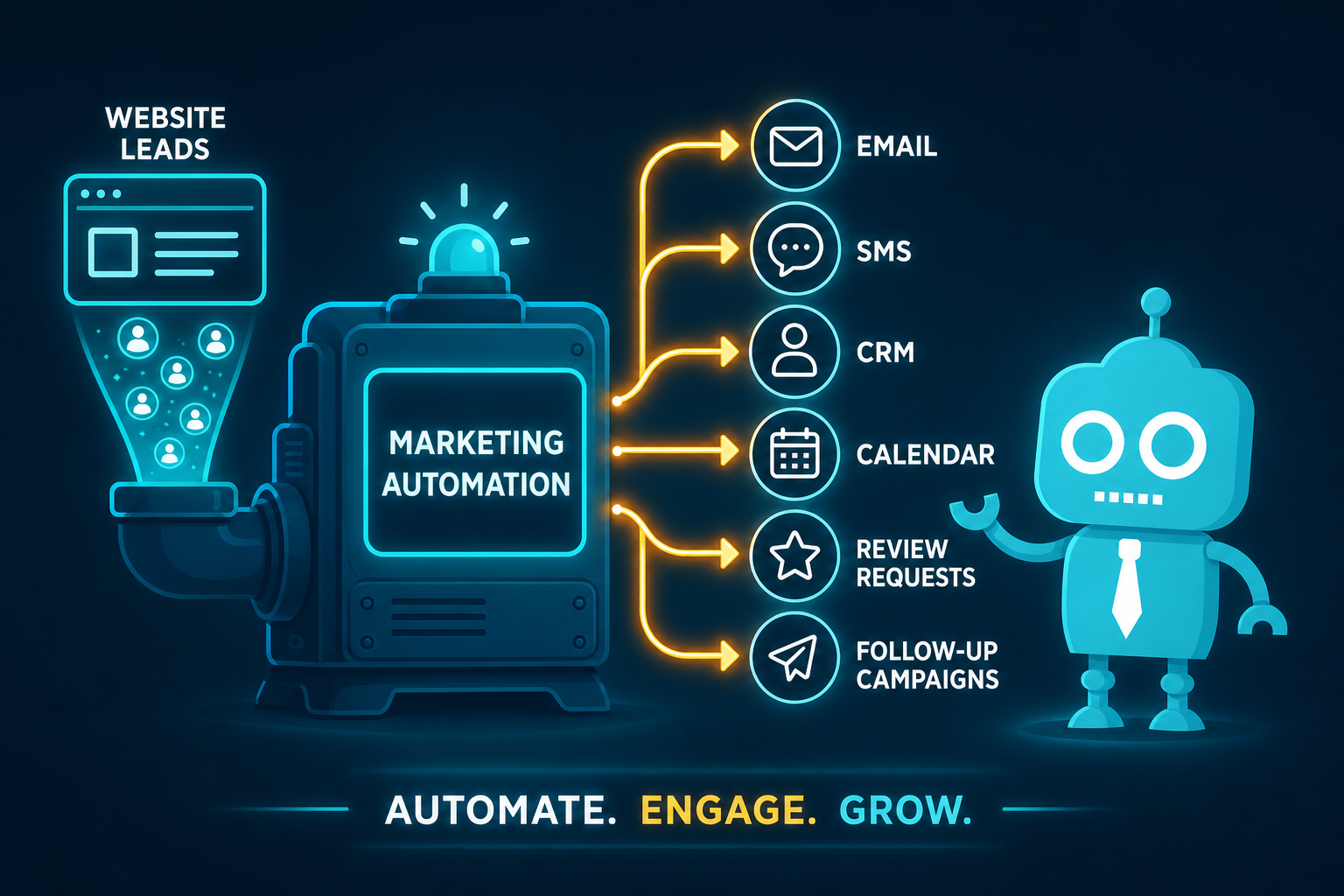
Marketing automation helps turn website visitors into scheduled patients by triggering immediate follow-up after a form submission.
Example: New Patient Website Lead Workflow
- A visitor fills out a “Request an Appointment” form on your website.
- The form sends the lead into your CRM system.
- The patient receives an instant text message confirming the request was received.
- The front desk receives an internal notification with the patient’s contact information.
- If the lead is not marked as contacted, an automated reminder notifies the team again.
- A follow-up email can introduce the practice, share office hours, and explain what to expect.
This kind of automation does not replace your team. It gives them a better system. The patient feels acknowledged immediately, and your staff gets a clear task instead of relying on an inbox notification that may be missed during a busy day.
Appointment Reminders Reduce No-Shows and Last-Minute Confusion
No-shows and late cancellations are expensive. They create gaps in the schedule, reduce production, and add stress for the front desk. Manual reminder calls are time-consuming, especially when patients do not answer.
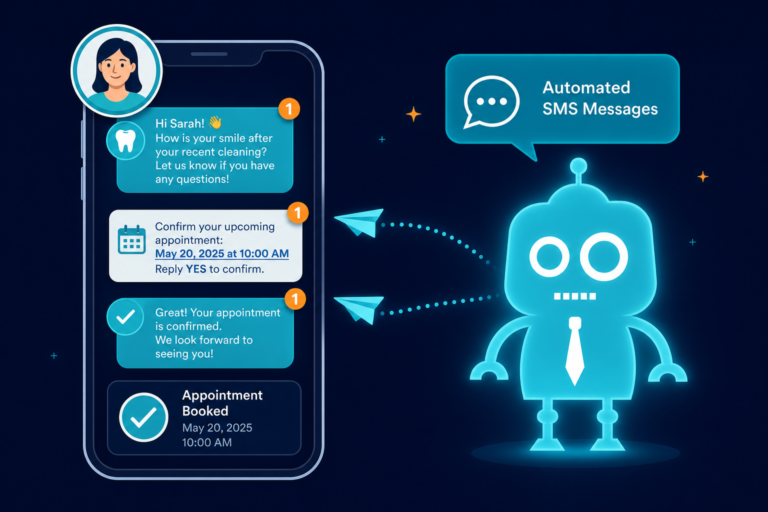
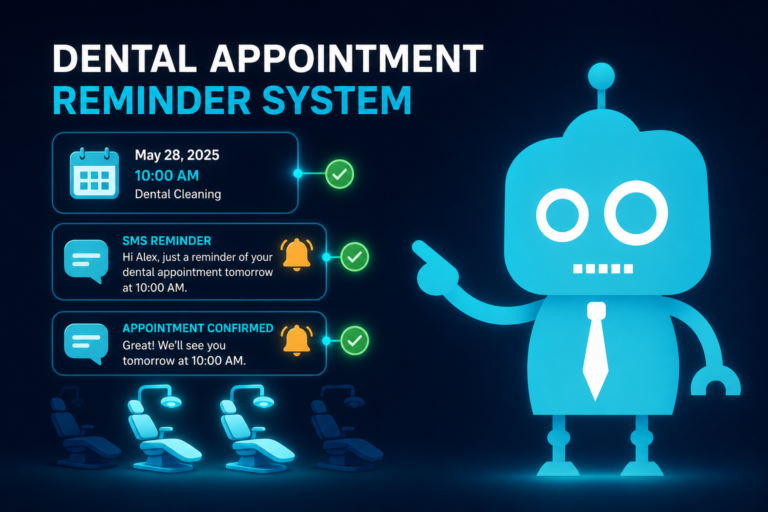
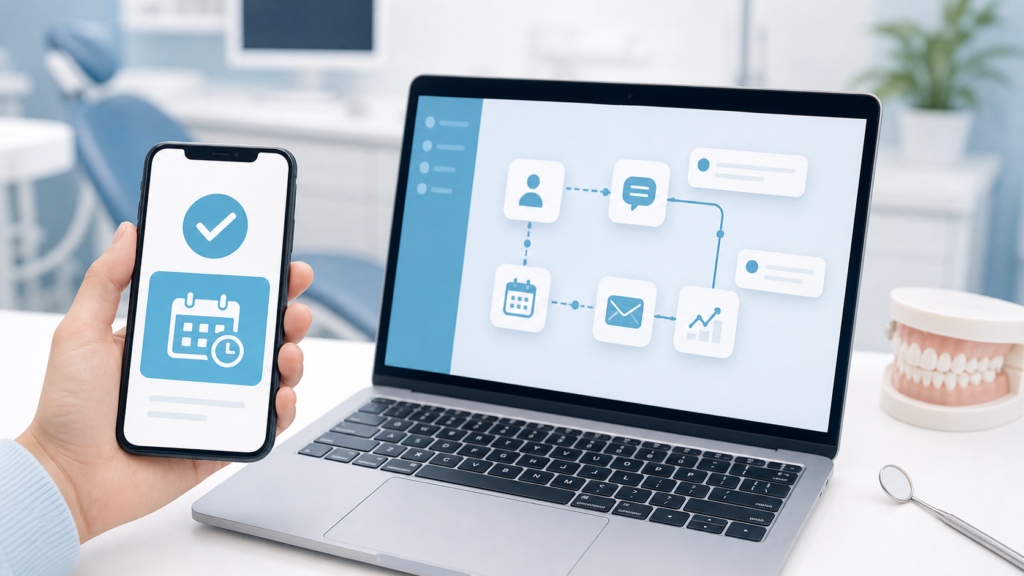
Automated appointment reminders through SMS and email help patients remember their visit and confirm attendance with less staff effort.
What Effective Dental Appointment Reminders Can Include
- Appointment date and time
- Provider name or appointment type
- Office address with a map link
- Parking instructions or arrival details
- New patient paperwork link
- Confirmation option by text
- Instructions for rescheduling if needed
For example, a new patient scheduled for a comprehensive exam can automatically receive a reminder one week before the visit, another 48 hours before, and a final text the morning of the appointment. If forms are incomplete, the reminder can include a link to finish them before arrival.
That means fewer phone calls, fewer surprises, and a smoother check-in process.
Review Requests Help Build Trust After Positive Visits
Online reviews are one of the most important marketing assets for a dental practice. Patients often compare dentists on Google before they ever call. A practice with strong, recent reviews has a major advantage in local search and patient trust.
The challenge is that happy patients do not always think to leave a review. Your team may intend to ask, but the end of an appointment is busy. The patient is checking out, scheduling the next visit, paying a balance, or heading back to work.
Automated review requests make the process consistent.
Example: Post-Appointment Review Automation
After a completed hygiene visit, cosmetic consultation, emergency appointment, or implant consultation, the patient can receive a friendly SMS or email asking about their experience and linking directly to your Google review profile.
A simple message may say:
“Thank you for visiting our office today. We’re grateful you chose us for your dental care. If you had a great experience, would you mind sharing a quick Google review? It helps other patients find our practice.”
This process works best when it is timely. Patients are more likely to leave a review shortly after a positive appointment than several weeks later.
Recall Campaigns Keep Hygiene Schedules Full
Recall is one of the most important revenue and patient health opportunities in a dental practice. Yet many practices have hundreds or even thousands of inactive or overdue hygiene patients.
Manually calling every overdue patient is difficult. It often gets postponed because the front desk has more urgent work in front of them.
Automated recall campaigns help your practice stay in touch with patients who are due or past due for preventive care.
What a Dental Recall Campaign Can Look Like
- 30 days before due date: Email reminder to schedule a cleaning
- Due date: SMS reminder with appointment request link
- 30 days overdue: Follow-up message emphasizing preventive care
- 90 days overdue: Reactivation-style email with convenient scheduling options
- 6+ months overdue: Internal notification for staff to personally call high-value patients
Recall automation helps protect both patient health and practice production. It also gives your staff a prioritized list of patients who need personal outreach, instead of expecting them to manually search through patient records.
Reactivation Brings Back Patients Who Have Gone Quiet
Every dental practice has patients who have not scheduled in a year, two years, or longer. Some moved away, but many simply got busy, lost track of time, or delayed care because nothing hurt.
Reactivation campaigns are designed to bring these patients back into the schedule.
An effective reactivation workflow may segment patients based on how long they have been inactive. For example, a patient who is 14 months overdue may need a different message than someone who has not visited in three years.
Practical Reactivation Message Ideas
- “You’re due for your dental cleaning. We’d be happy to help you find a convenient time.”
- “It has been a while since we have seen you. Preventive visits can help catch small issues before they become bigger problems.”
- “We have openings available this month for returning patients.”
- “If you have new insurance or updated contact information, our team can help you get everything updated.”
Reactivation is especially powerful because these patients already know your practice. You do not need to build trust from scratch. You need a consistent way to remind them, reduce friction, and make scheduling easy.
Treatment-Specific Nurture Turns Interest Into Scheduled Care
Not every patient schedules treatment immediately. This is especially true for higher-value services such as dental implants, clear aligners, veneers, crowns, sleep apnea appliances, and full-mouth rehabilitation.
A patient may need time to think, talk with a spouse, review financing, compare options, or overcome anxiety. If your practice does not follow up, the treatment plan may sit unscheduled indefinitely.
Treatment-specific nurture campaigns help educate patients and keep your practice top of mind.
Example: Dental Implant Nurture Sequence
- Day 1: Thank-you email after the consultation with a summary of next steps
- Day 3: Educational message explaining the benefits of replacing missing teeth
- Day 7: Financing information or payment options
- Day 14: Patient testimonial or before-and-after case example, if appropriate
- Day 21: Reminder to schedule a follow-up call with the treatment coordinator
This kind of automation supports the treatment coordinator without being pushy. It gives patients useful information at the right time and helps them feel more confident moving forward.
The same approach can be used for Invisalign or clear aligners, cosmetic dentistry, whitening, sedation dentistry, periodontal therapy, crowns, bridges, dentures, and other services your practice wants to grow.
Staff Notifications Keep the Team Aligned
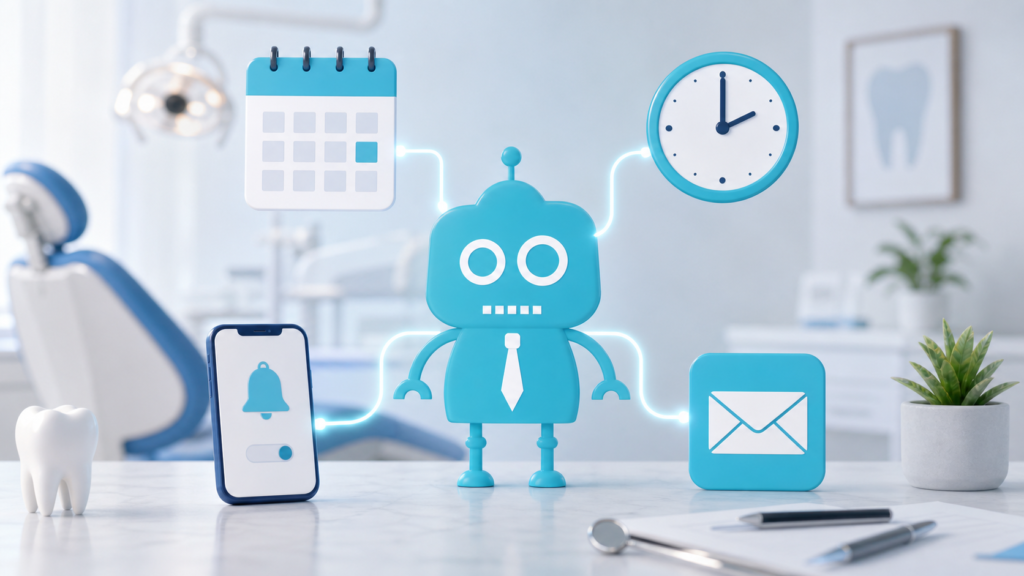
Marketing automation is not only about patient-facing messages. Some of the most valuable automations are internal staff notifications.
When a lead comes in, a patient requests to reschedule, a form is completed, or a high-value treatment inquiry is submitted, the right team member needs to know quickly.
Useful Internal Notifications for Dental Practices
- New website appointment request
- Emergency dental inquiry
- Dental implant consultation request
- Missed call notification
- Unconfirmed appointment alert
- New patient paperwork completed
- Negative feedback response requiring follow-up
- Unscheduled treatment plan reminder
For example, if someone submits a form for emergency dental care, that lead should not sit in a general inbox. An automated notification can alert the front desk immediately so the team can call or text as soon as possible.
Internal automation creates accountability. It also helps prevent leads from slipping through the cracks during lunch breaks, staff changes, busy mornings, or end-of-day rushes.
ROI Tracking Shows What Is Actually Working
Dental marketing should not be based on guesswork. If your practice is investing in a new website, SEO, Google Ads, social media, email campaigns, or local marketing, you need to know which channels are generating real patient opportunities.
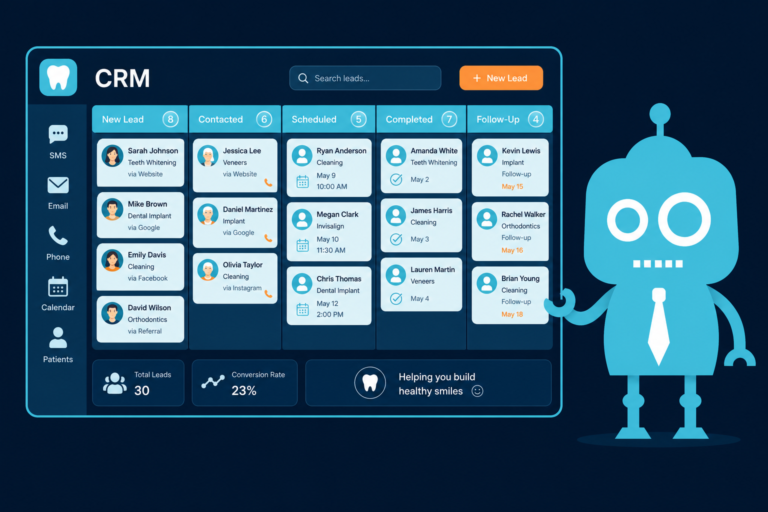
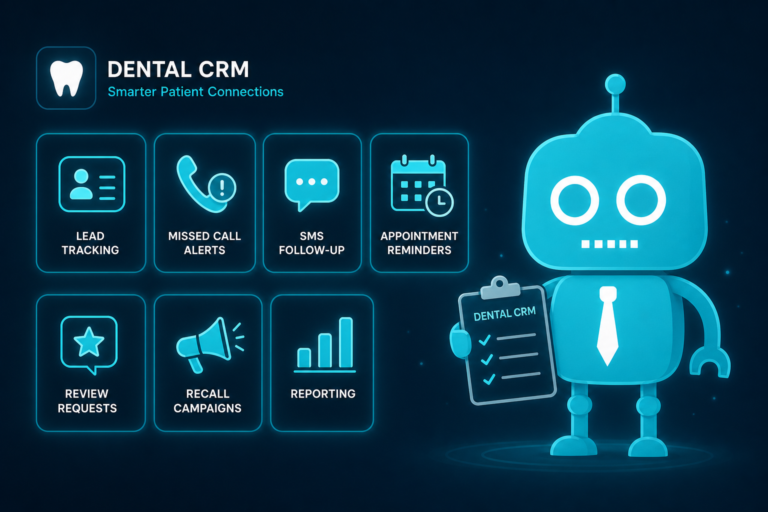
Marketing automation and CRM tracking can help connect the dots between website traffic, form submissions, phone calls, appointments, and production.
Metrics Dental Practices Should Track
- Website form submissions
- Phone call leads from the website
- Appointment requests by service type
- Lead response time
- New patient conversion rate
- Booked appointments from SMS/email follow-up
- Recall campaign responses
- Reactivation campaign results
- Review request conversion rate
- Estimated revenue from specific campaigns
For example, if your cosmetic dentistry page generates 15 consultation requests in a month, but only three become scheduled appointments, the issue may not be traffic. It may be follow-up speed, messaging, scheduling friction, or lack of nurturing.
ROI tracking gives practice owners and office managers better visibility. Instead of asking, “Is our website working?” you can ask more specific questions: “Which pages generate leads? Which campaigns book appointments? Which follow-up steps improve conversion?”
Your Website Should Be Connected to Your Follow-Up System
A modern dental website is not just an online brochure. It should be a patient acquisition system.
That means your website should make it easy for visitors to take action and should connect those actions to your internal follow-up process.
Website Features That Support Dental Marketing Automation
- Mobile-friendly appointment request forms
- Service-specific landing pages for treatments like implants, veneers, and clear aligners
- Clickable phone numbers for mobile users
- Lead capture forms connected to a CRM
- Automated SMS and email confirmations
- Tracking for form submissions and phone calls
- Review generation links
- Fast hosting and strong mobile performance
- Clear calls to action on every important page
If a patient lands on your website from Google, reads about emergency dentistry, and submits a request for help, the system should immediately notify your team and begin follow-up. If someone downloads an implant guide or requests a consultation, the CRM should capture that interest and trigger the appropriate next steps.
Without automation, your website may generate leads that are never fully worked. With automation, your website becomes part of your front desk workflow.
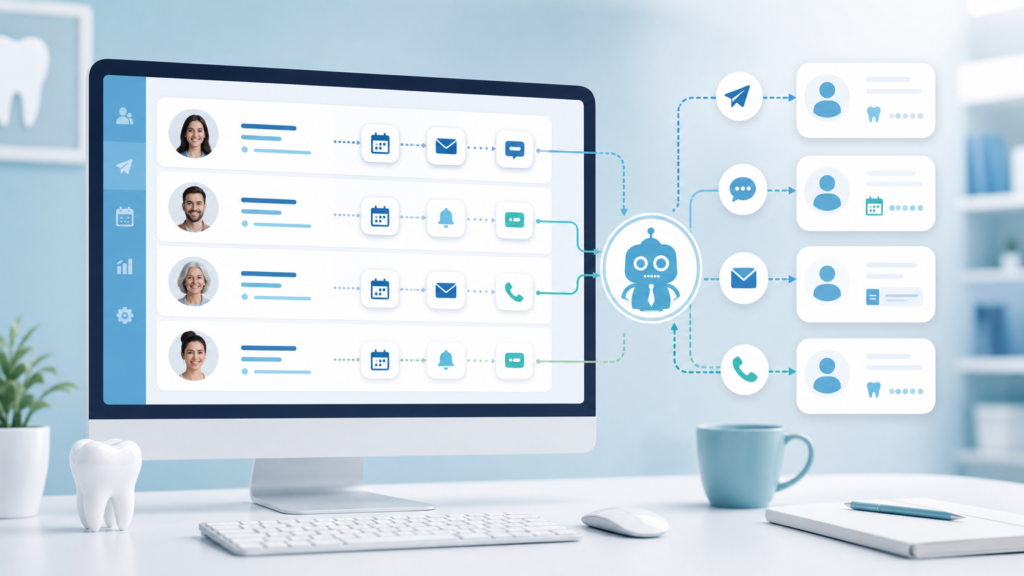
Marketing Automation Does Not Replace Personal Service
Dental care is personal. Patients still want to talk to a real person, feel welcomed, and trust the clinical team. Automation should never make the experience feel cold or robotic.
The goal is to automate the repetitive parts so your team has more time for the human parts.
Automated reminders, review requests, recall messages, and CRM notifications help your staff stay organized. They reduce missed opportunities and create a more consistent patient experience. When done well, automation makes the practice feel more responsive, not less personal.
Start With the Highest-Impact Automations
You do not need to automate everything at once. Most dental practices can start with a few high-impact workflows and expand over time.
A Practical Starting Plan
- New patient lead follow-up: Make sure every website form submission gets an immediate response and staff notification.
- Appointment reminders: Reduce no-shows and improve confirmation rates with SMS and email reminders.
- Review requests: Ask satisfied patients for Google reviews shortly after completed visits.
- Recall campaigns: Bring due and overdue hygiene patients back into the schedule.
- Treatment nurture: Follow up with patients who have shown interest in high-value services.
These automations directly support new patient acquisition, schedule stability, reputation growth, and production.

Why Dental Practices Need Marketing Automation Now
Patients expect fast communication. They are used to receiving instant confirmations, text updates, online scheduling links, and helpful reminders from other businesses. Dental practices are no exception.
At the same time, staffing is a challenge for many independent practices. Asking an already busy team to manually manage every lead, reminder, review request, recall list, reactivation campaign, and treatment follow-up is unrealistic.
Marketing automation gives dental practices a better system. It helps your team respond faster, follow up consistently, keep the schedule healthier, improve online reviews, and measure what is driving results.
Most importantly, it allows your staff to focus on patients instead of chasing every task manually.
Build a Better Dental Website and Follow-Up System With CreateTheSite.com
If your dental website is not generating leads, capturing patient inquiries, or connecting to a reliable follow-up process, it may be time to modernize your system.
CreateTheSite.com helps dental practices build modern websites that support real practice growth. Our services include dental website design, secure hosting, mobile optimization, lead capture forms, CRM integrations, SMS and email automation, appointment follow-up, and ongoing website support.
We understand that your front desk team is busy. That is why your website and automation tools should work together to help capture new patient opportunities, improve communication, and reduce manual follow-up wherever possible.
If you want a dental website that looks professional, converts visitors, and supports smarter patient follow-up, CreateTheSite.com can help you build the right foundation.
Ready to improve your dental practice website and automate more of your follow-up? Visit CreateTheSite.com to learn how we can support your practice.