
Why Dental Practices Lose Leads Within 15 Minutes
When a prospective patient fills out a contact form on your dental website, they are usually not waiting patiently for your office to respond. In many cases, they have already contacted two or three other dental practices in your area.
That means the first practice to respond often wins the appointment.
For independent dental practice owners, dentists, and office managers, this creates a major new patient acquisition challenge. You may be investing in SEO, Google Ads, social media, referral campaigns, and a professional dental website, but if your team does not respond quickly, those leads can disappear within minutes.
The problem is not always lead quality. Often, it is response speed, follow-up consistency, and front desk capacity.

The 15-Minute Window: Why Speed Matters in Dental Lead Conversion
Dental patients are often motivated by a specific need. They may have a toothache, a broken crown, dental anxiety, interest in implants, or a child who needs an appointment before school starts. When they submit a form or request an appointment online, they want reassurance quickly.
If they do not hear back soon, they keep searching.
In competitive dental markets, a delay of even 15 minutes can be enough for another practice to call, text, answer questions, and book the visit. By the time your office responds, the patient may already have an appointment elsewhere.
Example: A Common New Patient Scenario
A patient searches “dentist near me accepting new patients” on their phone during lunch. They visit three dental websites and submit two contact forms. One practice sends an immediate text confirming the request and calls within five minutes. Another practice waits until the end of the day.
Which office is more likely to schedule the patient?
The answer is usually the practice that responds first and makes the next step simple.
Patients Contact Multiple Dentists Before Choosing One
Many dental practices assume that a form submission means the patient has chosen their office. In reality, a form submission often means the patient is comparing options.
Patients may be evaluating:
- How quickly the office responds
- Whether the practice accepts their insurance
- Available appointment times
- Online reviews and reputation
- Distance from home or work
- Website quality and professionalism
- Financing options for larger treatments
- How friendly and helpful the first response feels
Your website may create the first impression, but your response process often determines whether the lead becomes a booked appointment.
Your Competitor May Be One Text Away
Modern patients expect fast communication. If another dental office sends a helpful SMS message, answers a question about availability, and offers a specific appointment time, the patient may stop looking.
This is especially true for high-value services such as dental implants, Invisalign, cosmetic dentistry, emergency dentistry, sedation dentistry, and full-mouth restorations. These patients often research multiple providers before making a decision.
Form Submissions Need an Immediate Response
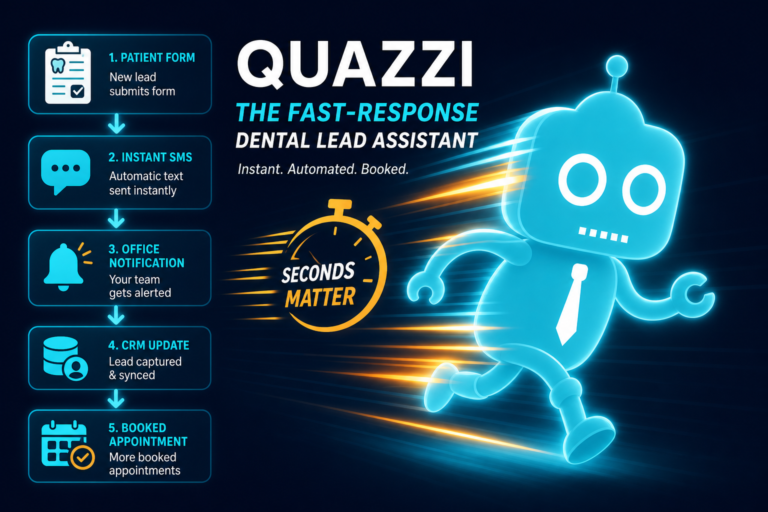
A contact form should not simply send an email to the front desk and wait in an inbox. Every form submission should trigger an immediate response that confirms the practice received the request.
This does not mean your team must manually reply within seconds. It means your website and CRM system should be set up to respond automatically while your team follows up personally.
What an Immediate Response Should Include
A strong automated response can include:
- A confirmation that the request was received
- A friendly message from the practice
- Expected response time
- Office phone number
- A link to request or confirm an appointment
- Basic next steps for new patients
- Emergency instructions if applicable
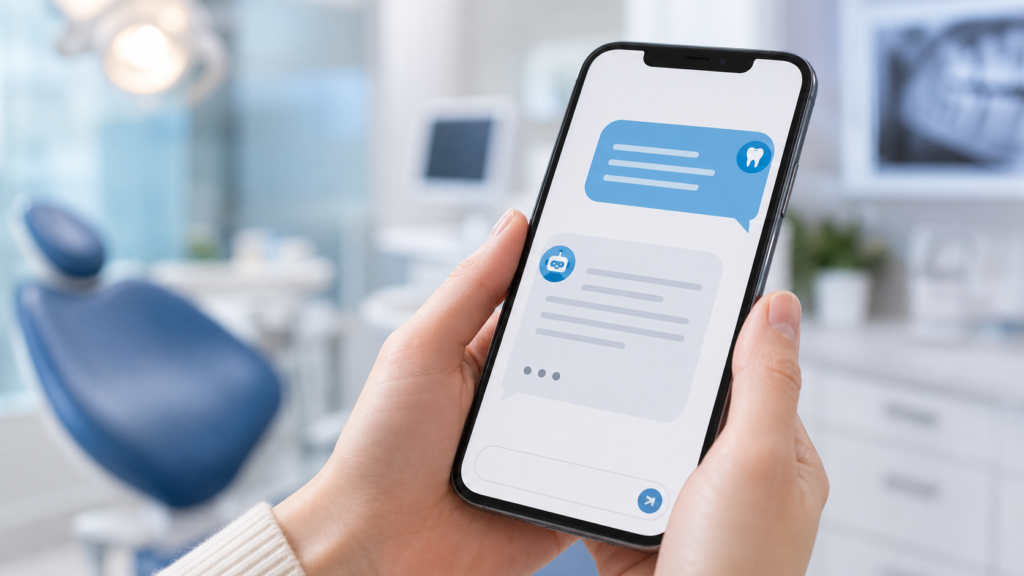
For example, an automated SMS message could say:
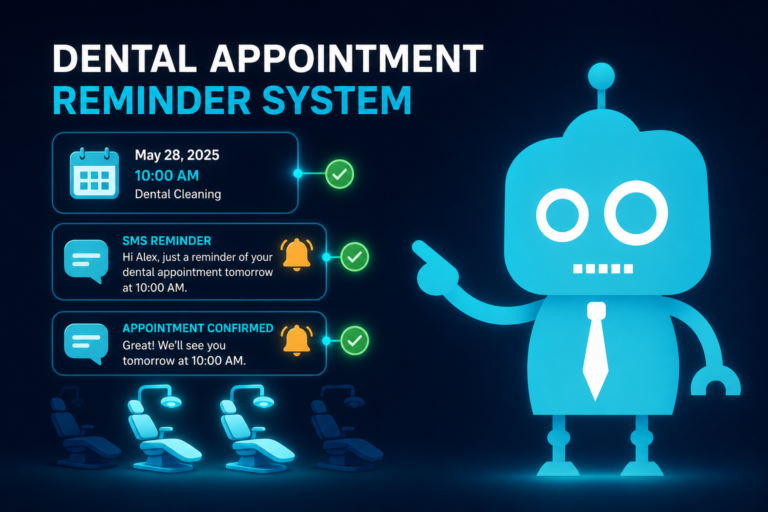
“Hi Sarah, thank you for contacting Bright Smiles Dental. We received your appointment request and our team will follow up shortly. If you need immediate help, call us at (555) 123-4567.”
This simple message tells the patient their request did not disappear into a void. It also keeps your practice top of mind while your front desk team prepares to respond.
Front Desk Overload Is a Real Lead Conversion Problem
Most dental front desk teams are already managing a demanding workload. They answer phones, check patients in and out, verify insurance, collect payments, manage cancellations, support treatment plan questions, and coordinate with clinical staff.
When a website lead arrives during a busy morning schedule, it can easily be pushed aside.
This is not usually a staffing failure. It is a systems problem.
Common Reasons Dental Leads Are Missed
- Contact form emails go to a general inbox that is not monitored constantly
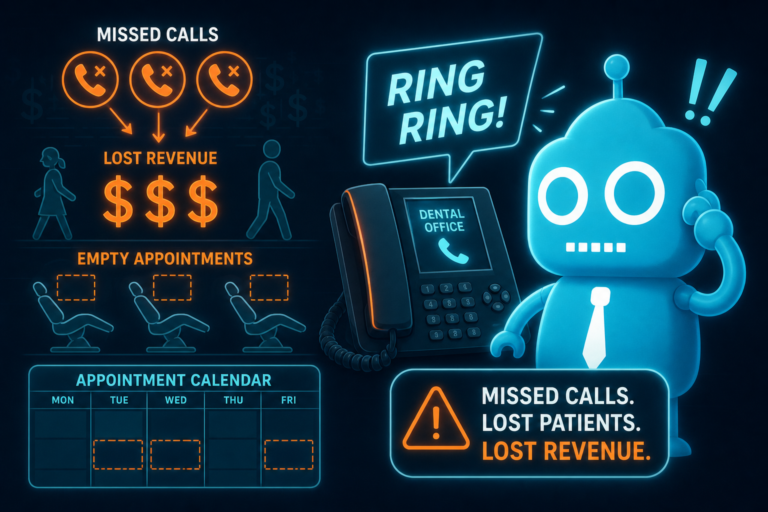
- Voicemails pile up during busy patient hours
- Front desk staff assume another team member followed up
- No one tracks whether a lead was called, texted, or emailed
- Leads arrive after hours and are not handled until the next business day
- There is no standardized new patient follow-up process
- Spam filters or email issues prevent form submissions from being seen
Even a great front desk team can lose leads if the process depends entirely on memory, sticky notes, or shared inboxes.

Automated SMS and Email Responses Help Protect New Patient Opportunities
Automation does not replace personal service. It supports it.
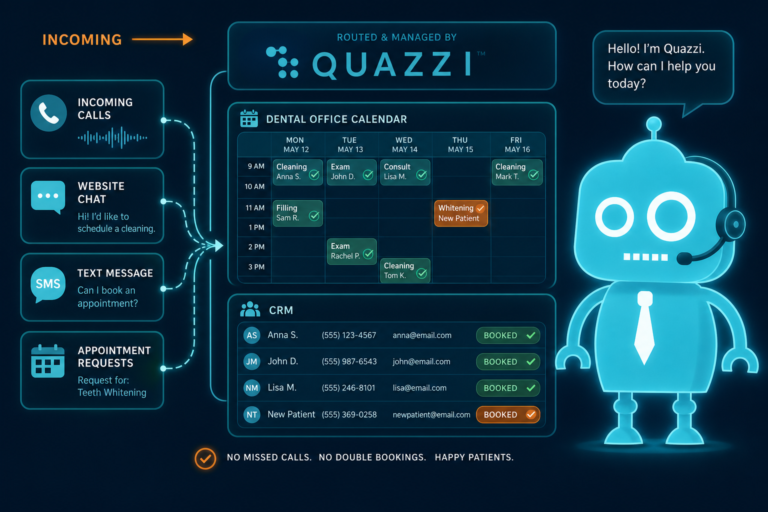
For dental practices, automated SMS and email responses can make sure every new lead receives an immediate acknowledgment, even when your office is closed or your team is helping patients in the practice.
How SMS Automation Helps Dental Practices
SMS is especially effective because patients often respond faster to text messages than emails or voicemails. A patient who may not answer an unknown phone number might reply to a text within minutes.
Practical SMS automation uses include:
- Instant confirmation after a website form submission
- New patient appointment request follow-up
- Missed call text-back messages
- After-hours inquiry responses
- Appointment confirmation links
- Reminders to complete new patient forms
- Reactivation campaigns for unscheduled patients
How Email Automation Supports the Patient Journey
Email is useful for more detailed information. After a lead submits a form, an automated email can provide office details, insurance information, patient forms, financing options, or links to service pages.
For example, a cosmetic dentistry lead could receive an email with information about veneers, whitening, smile makeovers, and consultation scheduling. An implant lead could receive a helpful overview of the consultation process and financing options.
The goal is not to overwhelm the patient. The goal is to keep the conversation moving.
CRM Tracking Turns Dental Leads Into a Manageable Pipeline
If your practice is serious about website conversion, you need more than a contact form. You need a way to track each lead from first inquiry to scheduled appointment.
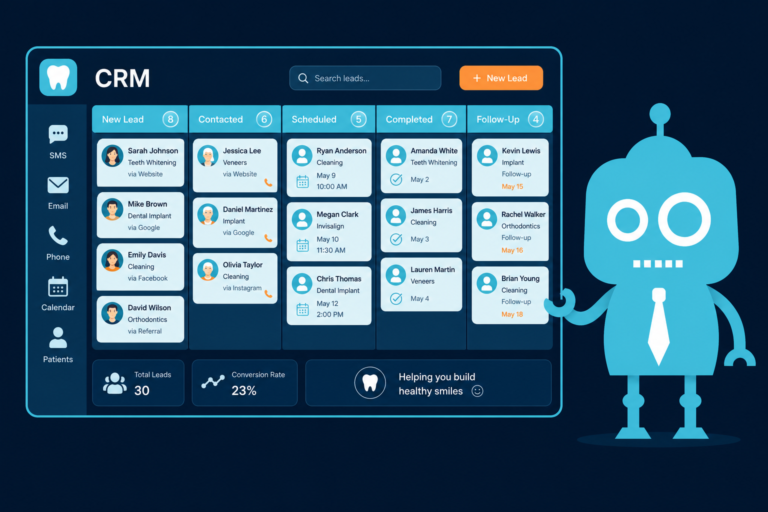
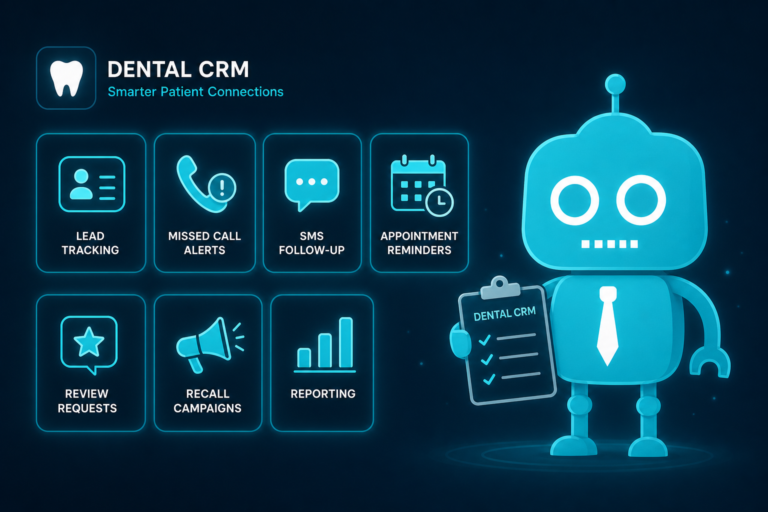
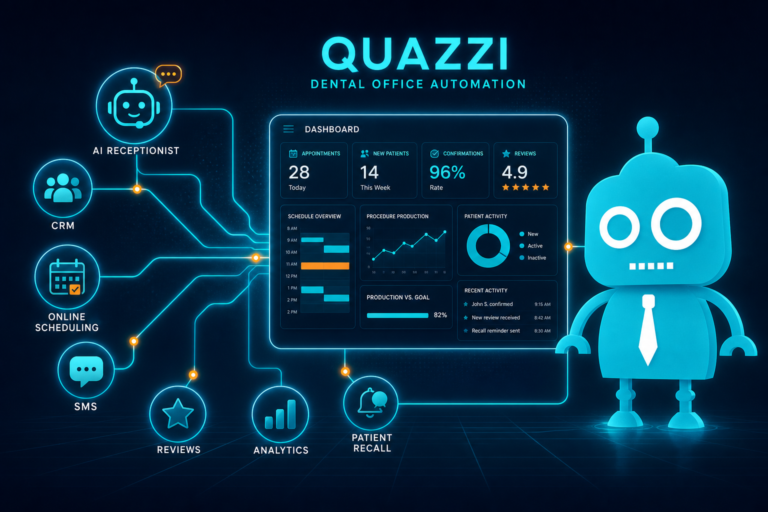
A CRM, or customer relationship management system, helps your team organize and follow up with prospective patients. For dental practices, a CRM can provide visibility into where leads are coming from, who contacted them, and whether they booked.
What a Dental CRM or Lead Tracking System Should Show
- Patient name and contact information
- Source of the lead, such as Google, SEO, ads, or website form
- Service interest, such as implants, emergency care, Invisalign, or general dentistry
- Date and time of inquiry
- Follow-up status
- Call, text, and email history
- Appointment outcome
- Notes from the front desk team

Without CRM tracking, it is difficult to know whether your marketing is working. You may see website traffic increasing, but you may not know how many leads were actually contacted or scheduled.
CRM Tracking Improves Accountability Without Micromanaging
A CRM gives your office manager and front desk team a shared system. Instead of asking, “Did anyone call that new patient lead?” your team can see the status immediately.
This helps prevent duplicate calls, missed follow-ups, and confusion during shift changes or busy clinical days.
Missed Follow-Up Creates Real ROI Loss
Every missed dental lead has a cost. If you are paying for SEO, Google Ads, website design, content marketing, or social media, each lead represents part of that investment.
When a lead is not contacted quickly, your marketing ROI drops.
The Hidden Cost of a Missed New Patient
Consider a dental practice that spends money to generate implant consultation leads. If one implant lead is missed because no one follows up until the next day, the loss may be much larger than a single appointment.
That patient could have become:
- A high-value treatment case
- A long-term hygiene patient
- A source of family referrals
- A positive online review
- A repeat patient for future restorative care
For general dentistry, the lifetime value of one new patient can be significant. For specialty or elective services, the lost opportunity may be even greater.

Online Reviews Influence Whether Patients Wait or Move On
Reviews play a major role in dental lead conversion. If your practice has strong Google reviews, patients may be more willing to contact you. But if they do not receive a fast response, those reviews may not be enough to keep them from booking elsewhere.
A patient may think, “This office looks great, but I need an appointment now.”
Fast response paired with strong reviews creates a powerful advantage. The patient sees social proof and then experiences professionalism immediately.
Use Reviews in Your Follow-Up Process
Your automated email or SMS follow-up can include a subtle link to your reviews or testimonials. For example:
“While you wait for our team to follow up, you can read what our patients say about their experience here.”
This reinforces trust while keeping the patient engaged with your practice instead of continuing their search.
Your Website Must Be Built for Lead Capture, Not Just Appearance
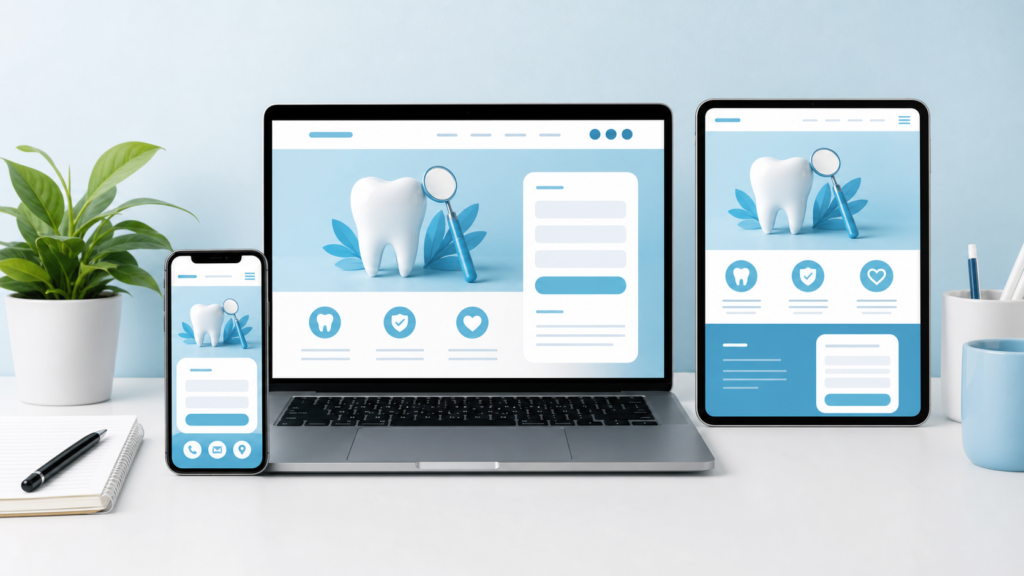
A modern dental website should look professional, load quickly, and work well on mobile devices. But design alone is not enough. Your website needs to convert visitors into trackable leads.
Important Website Conversion Features for Dental Practices
- Clear “Request an Appointment” buttons
- Mobile-friendly contact forms
- Click-to-call phone numbers
- SMS-enabled lead capture
- Service-specific landing pages
- Trust signals such as reviews, credentials, and before-and-after examples
- Simple navigation for emergency, cosmetic, implant, and family dentistry pages
- Fast page speed and secure hosting
- CRM integration for form submissions
If your website generates leads but those leads are not organized, tracked, and followed up with, your conversion system is incomplete.
Practical Ways to Stop Losing Dental Leads Within 15 Minutes
Improving dental lead response does not always require a major operational overhaul. Many practices can improve quickly by tightening the process.
1. Send an Instant SMS and Email Confirmation
Every form submission should trigger an immediate automated response. This gives patients confidence and buys your team time to respond personally.
2. Route Leads to the Right People
Do not rely on one general inbox. Send form submissions to the front desk, office manager, and CRM system so there is visibility.
3. Use a CRM to Track Every Inquiry
Track each lead from the moment it arrives. Make sure your team can see whether the patient was contacted, when, and by whom.
4. Create a Follow-Up Standard
Set a practice rule for new patient inquiries. For example: call within five minutes during business hours, send an SMS immediately, and follow up again if there is no response.
5. Prepare Scripts for Common Questions
Your front desk team should have simple responses for insurance, emergency appointments, new patient visits, financing, Invisalign consultations, dental implants, and cleaning availability.
6. Monitor Lead Sources and Outcomes
Review which sources generate leads and which leads become patients. This helps you make better decisions about SEO, advertising, and website improvements.
7. Plan for After-Hours Leads
Patients often search for dentists at night or on weekends. An automated response can keep them engaged until your office opens.
The Practices That Respond Fast Win More New Patients
Dental marketing does not end when someone lands on your website. It does not even end when they submit a form. The real conversion moment happens in the minutes after the patient reaches out.
If your practice responds quickly, tracks every inquiry, and follows up consistently, you are more likely to turn website visitors into scheduled new patients.
If your practice waits too long, the patient may choose the dental office that made them feel seen first.
Need a Better Dental Website and Lead Follow-Up System?
CreateTheSite.com helps dental practices turn their websites into stronger new patient acquisition tools. We build modern dental websites designed for mobile users, fast loading, clear appointment requests, and better lead capture.
Our services include dental website design, secure hosting, mobile optimization, lead capture forms, CRM integrations, SMS and email automation, appointment follow-up support, and ongoing website maintenance.
If your current website is generating inquiries that are difficult to track, slow to follow up on, or easy for your front desk to miss, CreateTheSite.com can help you create a more reliable system.
With the right website, automation, and CRM setup, your practice can respond faster, reduce missed opportunities, and convert more visitors into scheduled patients.
Visit CreateTheSite.com to learn how we can help your dental practice capture, track, and follow up with more new patient leads.