
Building Long-Term Relationships with Dental Patients
Long-term dental patient relationships are not built only in the operatory. They are built in the days, weeks, and months between visits.
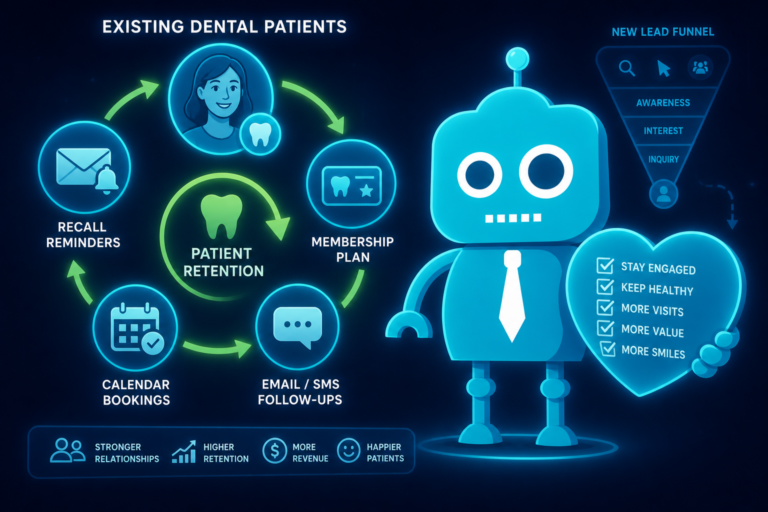
For independent dental practice owners, dentists, and office managers, this is a critical shift in thinking. A patient may only sit in your chair two to four times per year, but their perception of your practice is shaped much more often: when they receive a reminder, read an email, visit your website, leave a review, ask a billing question, or decide whether to schedule treatment they have been postponing.
If your practice wants stronger retention, better case acceptance, more referrals, and higher lifetime patient value, the relationship cannot go silent after checkout. It needs to be supported through trust, consistent communication, personalized reminders, education, follow-up, reviews, and clear oral health planning.
Why Patient Relationships Matter Beyond the Appointment
Many dental practices focus heavily on new patient acquisition. That is important, but keeping patients engaged after they become patients is just as valuable.
A new patient who books from your website, completes their first appointment, and never hears from you again may not return. A patient who receives helpful reminders, educational content, treatment follow-up, and easy scheduling options is far more likely to stay connected to your practice.
Strong patient relationships support:
- Higher hygiene recall rates
- Improved treatment acceptance
- More positive online reviews
- Better patient referrals
- Reduced no-shows and cancellations
- Greater trust in recommended treatment plans
- More predictable practice growth
In other words, relationship-building is not just good customer service. It is a core business strategy for a successful dental practice.
Trust Is Built Through Every Interaction
Trust is the foundation of every long-term patient relationship. Patients need to believe that your recommendations are in their best interest, that your team is organized, and that your practice will communicate clearly.
Trust begins before the first appointment. A patient may form an opinion about your office based on your website, Google reviews, online scheduling process, phone experience, and response time.
Practical ways dental practices build trust between visits
- Keep your website current. Outdated services, broken forms, old photos, or missing insurance information can create doubt.
- Make scheduling easy. Online appointment requests, click-to-call buttons, and mobile-friendly forms reduce friction.
- Send clear confirmations. Patients should know the date, time, provider, location, and what to expect.
- Be transparent about next steps. After exams or treatment consultations, follow up with written summaries when appropriate.
- Respond quickly. Fast replies to website inquiries, voicemail, texts, and emails show professionalism.
Trust is not created by one impressive visit. It is reinforced every time the patient interacts with your practice and feels, “They are organized, they care, and they make this easy.”
Consistent Communication Keeps Patients Engaged
Patients are busy. Dental care is important, but it competes with work, family, school schedules, finances, and daily responsibilities. If your practice only communicates when a patient is overdue, you are missing opportunities to stay relevant.
Consistent communication helps patients remember your practice before they have a problem. It also makes dental care feel like an ongoing relationship rather than a series of disconnected appointments.
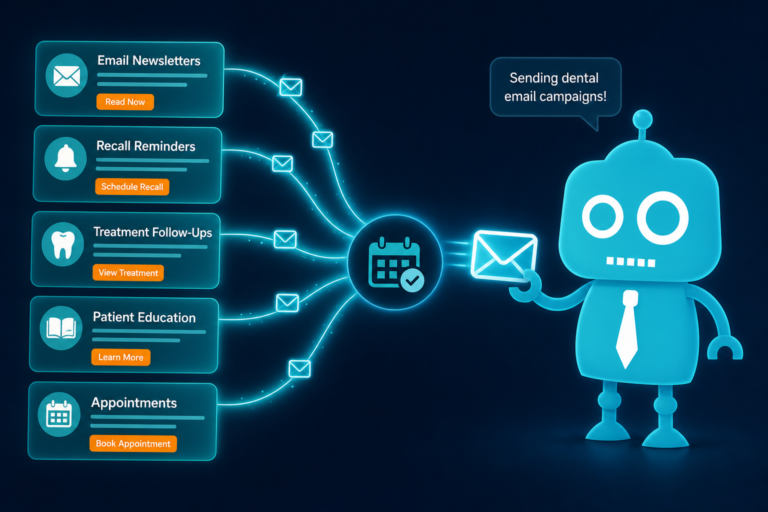
Examples of useful between-visit communication
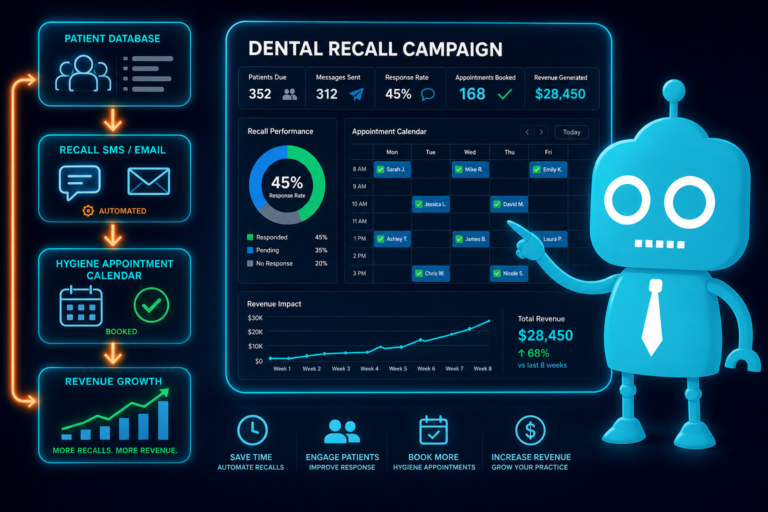
- Six-month hygiene recall reminders
- Unscheduled treatment reminders
- Post-treatment care instructions
- Insurance benefit reminders before year-end
- New service announcements, such as clear aligners, implants, whitening, or same-day crowns
- Seasonal oral health tips for families
- Office updates, holiday hours, or emergency care instructions
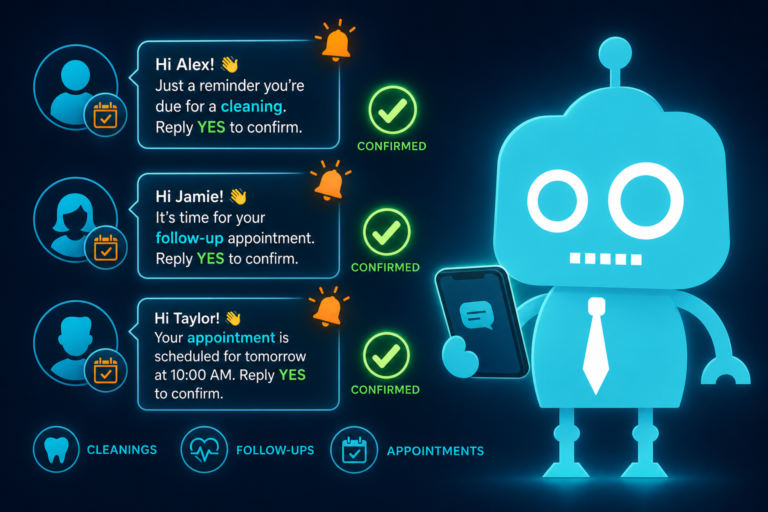
The key is consistency without overwhelming patients. A thoughtful SMS and email automation system can help your office stay in touch while reducing manual workload for the front desk.
Personalized Reminders Improve Recall and Treatment Acceptance
Generic reminders are better than no reminders, but personalized reminders are more effective. Patients are more likely to respond when communication feels specific to their needs.
For example, “You are due for your cleaning” is useful. But “Hi Sarah, you are due for your periodontal maintenance visit with Dr. Lewis. We have openings next Tuesday and Thursday” is more relevant and actionable.
Personalized reminder opportunities
- Hygiene recall: Remind patients when they are due for cleanings, periodontal maintenance, or exams.
- Unscheduled treatment: Follow up on crowns, fillings, implants, night guards, or other diagnosed treatment.
- Family scheduling: Remind parents when multiple family members are due and offer grouped appointments.
- Insurance benefits: Notify patients who have unused benefits before they expire.
- Post-op follow-up: Check in after extractions, root canals, implant placement, or surgical procedures.
This is where a dental CRM system becomes valuable. When your website forms, lead capture tools, patient inquiries, email campaigns, and SMS reminders are connected, your team can communicate with more accuracy and less manual tracking.
Education Builds Confidence and Reduces Treatment Hesitation
Patients often delay treatment because they do not fully understand the problem, the risks of waiting, or the benefits of moving forward. Education helps close that gap.
Dental education should not be limited to the few minutes a provider has during an appointment. Practices can educate patients between visits through website content, email campaigns, short videos, blog posts, FAQs, and follow-up messages.
Educational content that helps dental patients take action
- What happens if a cavity is left untreated?
- When does a cracked tooth need a crown?
- How periodontal disease affects overall health
- Signs a child may need an orthodontic evaluation
- How dental implants compare to bridges or dentures
- Why night guards help protect teeth from grinding
- What to expect after a root canal or extraction
When this content is available on your dental website, it also supports SEO and website conversion. A patient searching for answers may discover your practice, read a helpful article, and submit an appointment request.
For existing patients, educational emails and follow-up links can reinforce what was discussed in the chair. That extra support can improve case acceptance because patients have time to process information in a low-pressure setting.
Family Care Creates Multi-Patient Loyalty
For family dental practices, long-term relationships often extend beyond one patient. Parents want a dental office that can care for their children, themselves, and sometimes older family members.
When a practice makes family scheduling simple, it becomes more convenient to stay with the office long term.
How to strengthen family patient relationships
- Offer appointment blocks for siblings or parents and children
- Send family recall reminders instead of separate disconnected messages
- Provide age-specific education for children, teens, adults, and seniors
- Make new patient forms easy to complete online for multiple family members
- Use your website to clearly explain pediatric, preventive, cosmetic, restorative, and emergency services
The front desk plays a major role here. If your team can quickly identify family members, upcoming recall needs, and incomplete treatment plans, they can make scheduling easier and more proactive.
A smooth family experience also supports referrals. Parents who trust your office are more likely to recommend your practice to neighbors, coworkers, school groups, and local community networks.
Follow-Up After Treatment Shows Patients You Care
One of the most effective ways to build patient loyalty is also one of the simplest: follow up after treatment.
Patients remember when your office checks in after a procedure. A short message after an extraction, crown prep, implant procedure, root canal, deep cleaning, or cosmetic treatment can make a strong impression.
Examples of post-treatment follow-up messages
After an extraction: “Hi Mark, this is Dr. Adams’ office checking in after your extraction yesterday. We hope you are recovering well. Please call or text us if you have increased swelling, bleeding, or pain that is not improving.”
After crown placement: “Hi Linda, we wanted to make sure your new crown feels comfortable when biting. If anything feels high or sensitive, let us know and we will be happy to adjust it.”
After scaling and root planing: “Hi James, we hope you are doing well after your periodontal treatment. Remember to follow the home care instructions we reviewed. Your maintenance visits will be important for keeping your gums healthy.”
These messages can be automated through SMS or email, but they should still feel personal. Good automation does not replace care. It helps your team deliver care consistently.
Reviews and Feedback Strengthen the Relationship
Online reviews are essential for new patient acquisition, but they also play a role in long-term relationship-building. Asking for feedback shows patients that their experience matters.
A strong review strategy helps your practice understand what patients appreciate, where operations can improve, and how your team is perceived.
When to ask for dental patient reviews
- After a positive new patient visit
- After successful cosmetic or restorative treatment
- After a patient compliments the dentist, hygienist, assistant, or front desk
- After emergency care when the patient expresses relief
- After a smooth family appointment experience
Automated review requests can be sent by text or email shortly after the appointment. The request should be simple, polite, and direct.
For example: “Thank you for visiting our office today. If you had a positive experience, would you consider leaving us a Google review? It helps other patients find our practice.”
Just as important, make it easy for patients to share private feedback. Not every concern should become a public review. A feedback form on your website or a post-visit survey can help your office identify service issues before they affect retention.
Oral Health Planning Turns Appointments Into a Long-Term Strategy
Patients are more likely to remain loyal when they understand where their oral health is headed. Instead of presenting treatment as isolated procedures, frame care as part of a long-term oral health plan.
This is especially important for patients with periodontal disease, extensive restorative needs, cosmetic goals, missing teeth, bruxism, or ongoing maintenance concerns.
What an oral health plan can include
- Current dental conditions and priorities
- Recommended treatment phases
- Urgent needs versus elective options
- Estimated timing for each phase
- Insurance and financing considerations
- Preventive maintenance schedule
- Home care recommendations
When patients leave with a clear plan, they are less likely to feel surprised by future recommendations. They can budget, schedule, and make decisions with more confidence.
Your website and CRM can support this process. For example, patients who are considering implants, veneers, clear aligners, or full-mouth rehabilitation can receive educational follow-up emails that explain options and encourage consultation scheduling.
The Front Desk Is Central to Long-Term Patient Relationships
Relationship-building is not only clinical. The front desk often has more frequent contact with patients than the dentist does.
Phone calls, appointment confirmations, billing questions, insurance discussions, treatment follow-up, and rescheduling all shape the patient experience. A friendly and organized front desk can turn a routine interaction into a loyalty-building moment.
Front desk systems that improve patient relationships
- Call tracking for new patient inquiries
- Fast response to website contact forms
- Clear handoffs from clinical team to scheduling team
- Templates for recall, reactivation, and treatment follow-up
- Automated appointment confirmations by text and email
- Easy review request workflows
- CRM notes that help personalize future communication
Without systems, even great team members can miss opportunities. With the right systems, the front desk can consistently support patient retention and practice growth.
Your Dental Website Should Support Relationships, Not Just Attract Traffic
A dental website is often treated as a digital brochure. In reality, it should be a relationship-building tool.
Yes, your website should help new patients find you through search engines. But it should also help existing patients take the next step, schedule care, understand treatment, contact your office, leave reviews, and stay engaged.
Website features that support long-term dental patient relationships
- Mobile-friendly design for patients searching on phones
- Clear appointment request forms
- Service pages for preventive, restorative, cosmetic, emergency, and family dentistry
- Educational blog content that answers patient questions
- Online forms for new patients
- Click-to-call and click-to-text features
- Review links and testimonials
- CRM integrations for lead tracking and follow-up
- Automated SMS and email workflows
If a patient visits your website after receiving a reminder, they should be able to quickly schedule, request information, or learn more about recommended treatment. Every extra click or confusing page can reduce conversion.
Practical Workflow: Building Relationships Between Visits
Here is a simple example of how an independent dental practice can build stronger patient relationships between appointments.
New patient workflow
- A prospective patient finds your practice on Google and visits your mobile-friendly website.
- They submit an appointment request through a lead capture form.
- The form connects to your CRM so the front desk can respond quickly.
- The patient receives an appointment confirmation by text and email.
- After the visit, they receive a thank-you message and any relevant treatment information.
- If they had a positive experience, they receive a review request.
- If treatment was diagnosed but not scheduled, they receive a helpful follow-up message.
- When they are due for recall, they receive a personalized reminder with scheduling options.
This type of workflow helps convert a first visit into a long-term relationship. It also reduces the burden on staff because much of the communication can be supported by automation.
How to Measure Patient Relationship Success
To improve long-term relationships, dental practices should track more than website traffic or appointment volume. The right metrics can show whether your communication and retention systems are working.
Key metrics to monitor
- New patient website form submissions
- Call volume from website visitors
- Appointment request conversion rate
- Recall appointment completion rate
- Unscheduled treatment follow-up rate
- No-show and cancellation rate
- Review volume and average rating
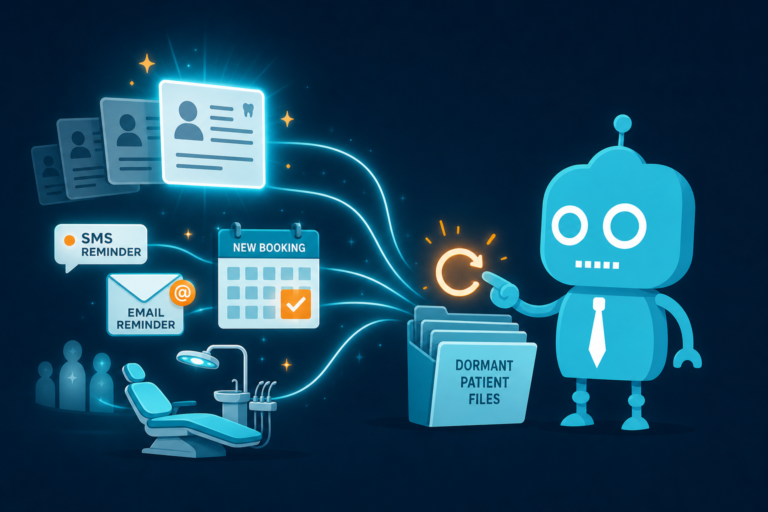
- Patient reactivation success
- Email and SMS response rates
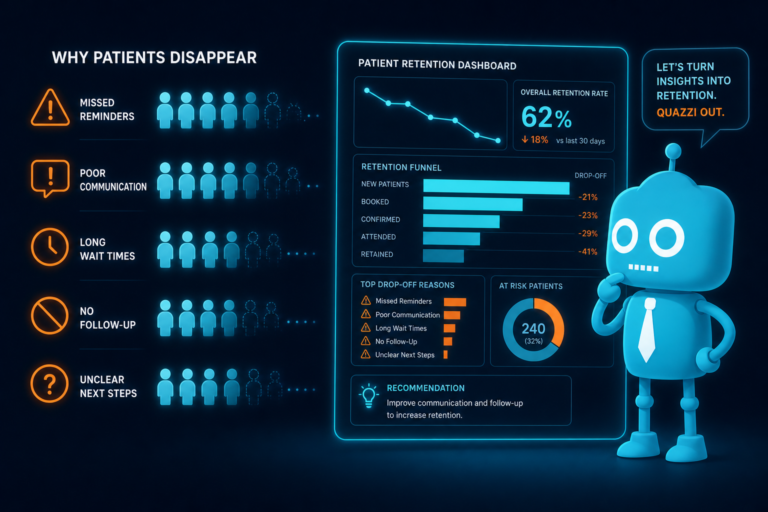
These numbers help practice owners and office managers identify gaps. For example, if website traffic is high but appointment requests are low, the website may need better conversion design. If many patients accept hygiene visits but delay restorative care, your treatment follow-up and education process may need improvement.
Building Long-Term Patient Relationships Requires a System
Patients want a dental practice that is clinically excellent, easy to communicate with, and attentive between visits. That does not happen by accident.
Long-term relationships are created through repeatable systems:
- Trust-building website and front desk experiences
- Consistent communication through SMS and email
- Personalized recall and treatment reminders
- Educational content that supports informed decisions
- Family-friendly scheduling and communication
- Post-treatment follow-up
- Review and feedback workflows
- Clear oral health planning
When these systems work together, patients feel supported before, during, and after appointments. That is what turns one-time visits into long-term loyalty.
How CreateTheSite.com Helps Dental Practices Build Stronger Patient Relationships
CreateTheSite.com helps dental practices create modern digital systems that support patient relationships between visits.
We work with independent dental practices that need more than a basic website. Our services include modern dental website design, reliable hosting, mobile optimization, lead capture forms, CRM integrations, SMS and email automation, appointment follow-up tools, and ongoing website support.
Whether your goal is to attract more new patients, improve website conversion, automate reminders, follow up after treatment, or make your front desk workflow more efficient, CreateTheSite.com can help build the online foundation your practice needs.
Your dental website should not just look professional. It should help patients take action, stay connected, and return for care.
Ready to make your dental website work harder for your practice? Visit CreateTheSite.com to learn how we can help your office improve patient communication, online scheduling opportunities, and long-term patient engagement.