
Why Existing Patients Are Your Most Valuable Asset
Most independent dental practices think growth starts with attracting more new patients. New patient acquisition matters, but it is not the only growth lever—and often it is not the most profitable one.
Your existing patients are already inside your practice. They know your team, trust your clinical recommendations, understand your process, and are far more likely to schedule, accept treatment, refer family members, leave reviews, and return for ongoing care.
That makes existing patients the most valuable growth engine inside your dental practice.
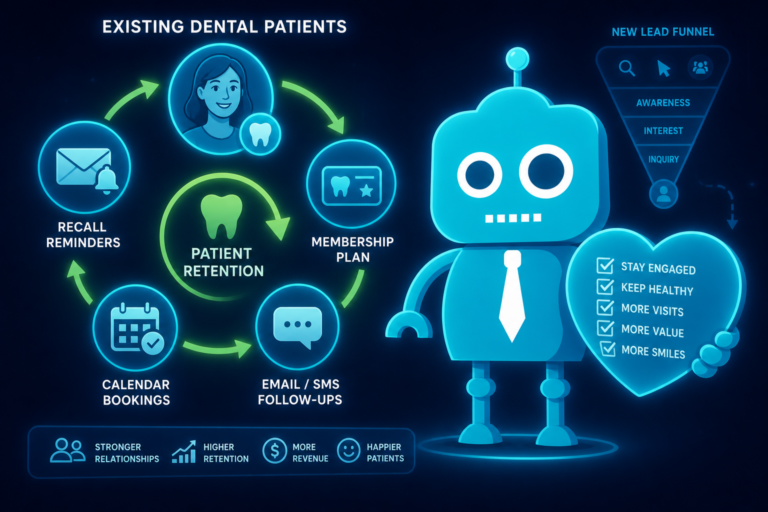
When you combine strong patient relationships with a modern website, effective CRM segmentation, SMS and email automation, and consistent front desk follow-up, your existing patient base can produce more revenue with lower marketing costs and less operational friction.
The Hidden Growth Engine Inside Your Dental Practice
Many dental practices spend heavily on SEO, Google Ads, social media, postcards, and third-party lead services to attract new patients. But while those channels can work, they often require ongoing investment and careful conversion tracking.
Existing patients are different. They have already chosen your practice once. Your job is to keep them engaged, educated, scheduled, and confident in your care.
That is where the real opportunity begins.
A well-managed patient base can drive growth through:
- Higher lifetime value
- Consistent hygiene recall
- Cosmetic and elective treatment upgrades
- Family referrals
- Positive online reviews
- Lower marketing costs
- Better CRM segmentation
- Automated retention campaigns
Instead of only asking, “How do we get more new patients?” practices should also ask, “How do we create more value from the patients who already trust us?”
Lifetime Value: The Metric Every Dental Practice Should Understand
Lifetime value, often called LTV, is the total revenue a patient can generate over the full length of their relationship with your practice.
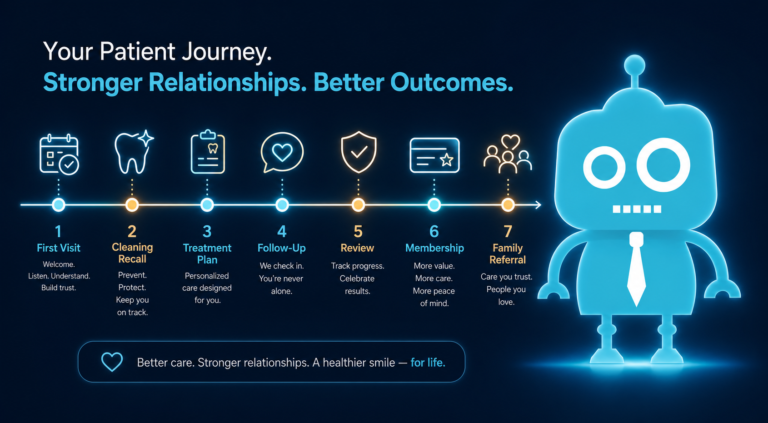
For a dental office, that value can be significant. A patient may begin with an exam and cleaning, continue with hygiene recall visits, accept restorative treatment, bring in a spouse or children, pursue cosmetic dentistry, and refer friends over several years.
A Practical Dental Example
Consider a patient who visits twice per year for hygiene, periodically needs restorative care, and eventually chooses whitening or veneers. If that patient remains active for 10 years, their value to the practice is far greater than the revenue from their first appointment.
Now add a spouse, two children, and one referred coworker. The original patient is no longer just one chart in your practice management system. They become a source of recurring care, case acceptance, referrals, and reputation growth.
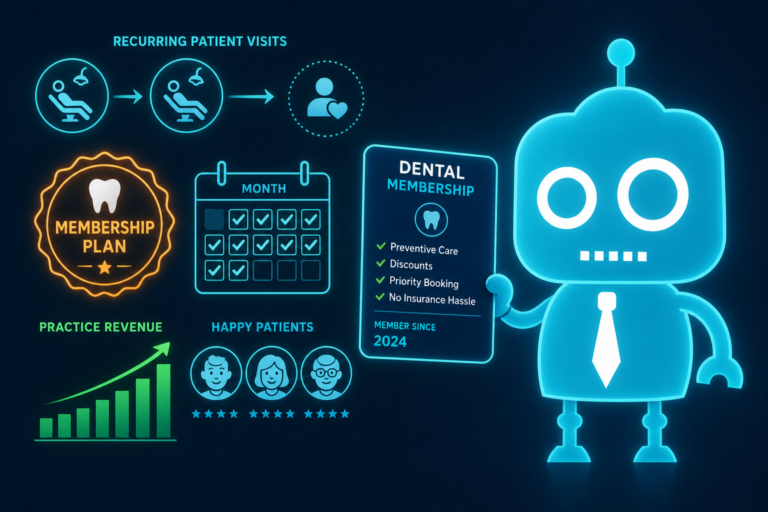
This is why retention should be treated as a primary growth strategy, not an afterthought.
Hygiene Recall Is the Foundation of Patient Retention
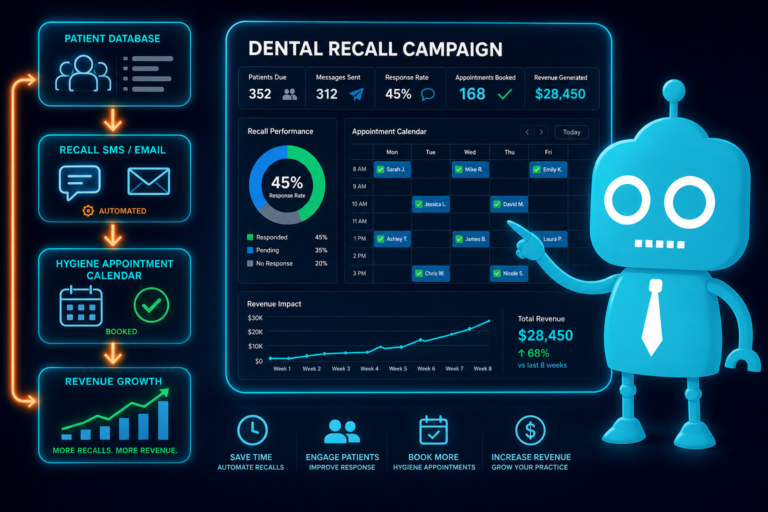
Hygiene recall is one of the most predictable revenue sources in an independent dental practice. It also supports better oral health outcomes, stronger patient relationships, and more treatment opportunities.
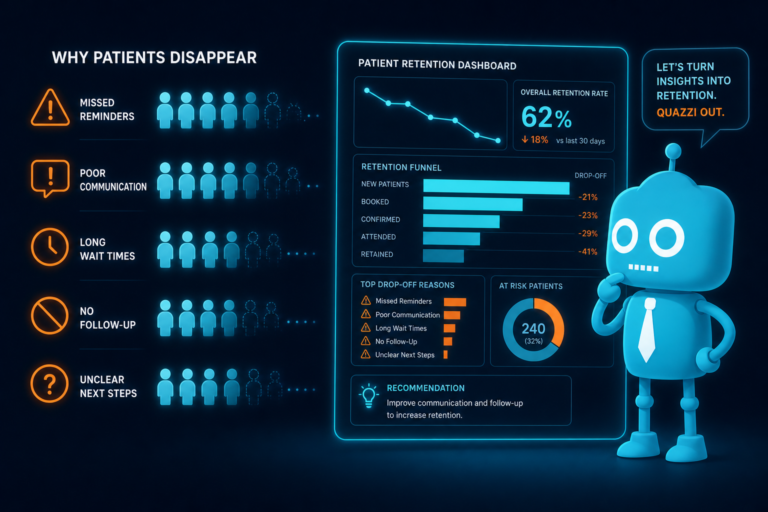
Yet many practices still rely heavily on manual phone calls, postcards, or inconsistent front desk follow-up. That creates gaps. Patients fall through the cracks, delay cleanings, and may eventually drift to another provider.
Why Hygiene Recall Matters for Growth
Every hygiene visit gives your team an opportunity to:
- Reinforce trust with the patient
- Identify new clinical needs
- Discuss pending treatment
- Educate patients about preventive care
- Introduce cosmetic or elective options
- Encourage reviews and referrals
A full hygiene schedule is not just a sign of operational efficiency. It is a sign that your patient relationships are active and healthy.
How Automation Improves Recall
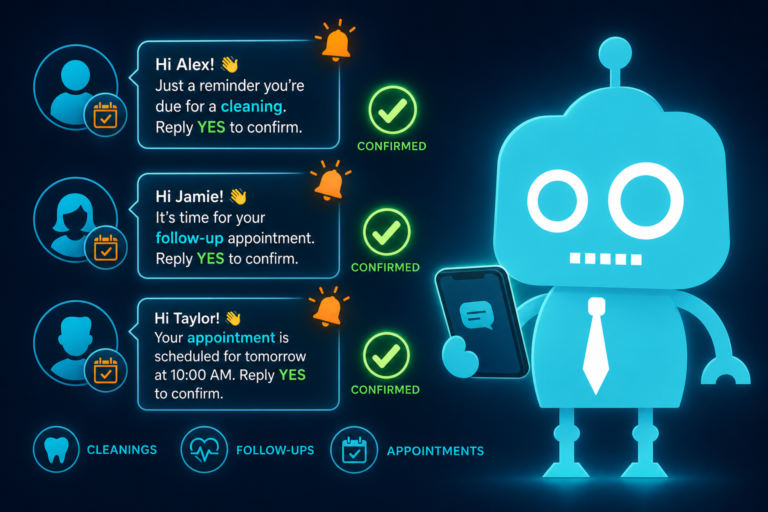
SMS and email automation can make hygiene recall far more consistent. For example, your CRM or patient communication system can send a sequence like this:
- Six months after the last cleaning: “You’re due for your next hygiene visit. Click here to request an appointment.”
- One week later: A friendly reminder with available appointment windows
- Two weeks later: A follow-up message encouraging the patient to schedule before spots fill
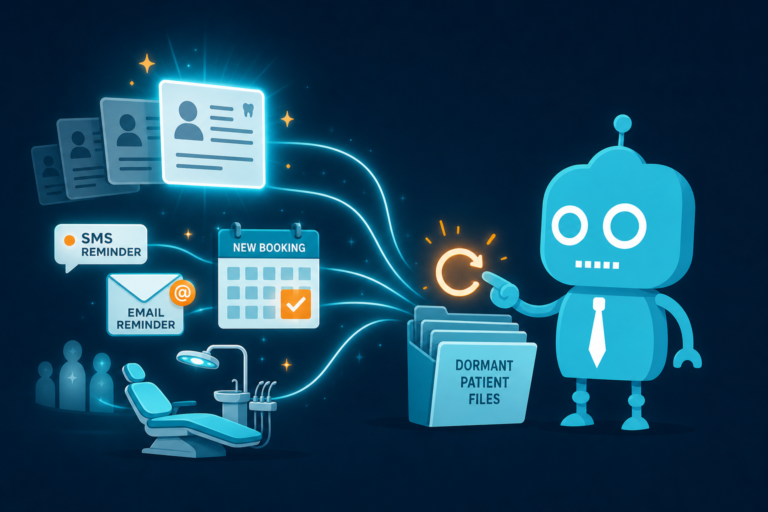
- If inactive for 12 months: A reactivation campaign with a personal tone from the practice
This reduces pressure on the front desk while keeping patients engaged. Your team can then focus on higher-value conversations instead of chasing every overdue cleaning manually.
Existing Patients Are More Likely to Accept Cosmetic Upgrades
Cosmetic dentistry often depends on trust. Patients may be interested in whitening, bonding, veneers, clear aligners, or smile makeovers, but they may not bring it up unless your practice makes the conversation easy.
Existing patients are ideal candidates for cosmetic education because they already have a relationship with your dentists, hygienists, and treatment coordinators.
Use Patient Touchpoints to Educate, Not Pressure
The goal is not to aggressively sell cosmetic procedures. The goal is to make patients aware of options that align with their goals.
For example:
- A hygiene patient asks about staining before a wedding. Your hygienist mentions whitening options and sends a follow-up email with details.
- A patient with minor spacing says they dislike photos. Your team introduces clear aligner treatment and offers a consultation.
- A patient with worn edges or old bonding receives educational content about modern cosmetic restorations.
Your website should support this process. If your front desk or hygienist mentions whitening, veneers, or aligners, the patient should be able to visit a clear, mobile-friendly service page that explains benefits, expectations, photos, FAQs, and appointment options.
Segmenting Cosmetic Opportunities in Your CRM
CRM segmentation allows your practice to organize patients based on interests, treatment history, or behavior. For cosmetic dentistry, that might include:
- Patients who asked about whitening
- Patients with incomplete aligner consultations
- Patients who clicked on cosmetic dentistry emails
- Patients with upcoming life events, if voluntarily shared
- Patients with diagnosed but unscheduled elective treatment
Once segmented, you can send relevant SMS or email campaigns that feel helpful rather than random. A whitening message sent to a patient who recently asked about staining is far more effective than a generic promotion sent to everyone.
Family Referrals Turn One Patient Into a Household
One of the most valuable aspects of an existing patient is their ability to introduce your practice to family members.
For independent dental practices, household growth is powerful. If one patient has a positive experience, they may bring in a spouse, children, parents, or siblings. That can turn one new patient relationship into multiple active patient relationships.
Make Family Referrals Easy
Patients often intend to refer but never get around to it. Your practice can help by making the next step simple.
Examples include:
- Adding a “Schedule a Family Member” button to appointment follow-up emails
- Training the front desk to ask, “Would you like us to help schedule your spouse or children while we’re looking at the calendar?”
- Creating a family dentistry page on your website with clear information for parents
- Sending seasonal reminders before school, holidays, or insurance benefit deadlines
- Including referral links in SMS and email campaigns
The key is convenience. If referring a family member requires a patient to search your phone number, explain your services, or coordinate multiple calls, many will postpone it. If your website and communication systems make it easy, referrals increase naturally.
Online Reviews Start With Existing Patients
Online reviews play a major role in dental website conversion and local SEO. When prospective patients compare dentists in their area, they often look at Google reviews before they call, click, or book.
Your existing patients are the best source of authentic reviews because they have real experiences with your team.
Why Reviews Impact New Patient Acquisition
Strong reviews help your practice by:
- Increasing trust before a patient visits your website
- Improving conversion rates on your dental website
- Supporting local search visibility
- Reducing hesitation for high-anxiety patients
- Reinforcing the quality of your front desk, hygienists, assistants, and dentists
A modern dental website can explain your services, but reviews provide social proof. They answer the question many prospective patients are really asking: “Will I feel comfortable choosing this practice?”
Automate Review Requests After Positive Visits
The best time to request a review is soon after a positive appointment. This can be done through automated SMS or email follow-up.
For example:
“Thank you for visiting our office today. We appreciate the opportunity to care for your smile. If you had a great experience, would you mind sharing a quick Google review?”
This simple message can be automated while still feeling personal. It also removes a task from the front desk, which is often already managing phones, scheduling, insurance questions, checkouts, and treatment coordination.
Existing Patients Lower Your Marketing Costs
New patient marketing can be expensive. SEO, paid ads, direct mail, and lead generation campaigns require time, budget, and ongoing optimization. In competitive dental markets, the cost per new patient can rise quickly.
Existing patients are less expensive to reach because you already have their contact information, appointment history, treatment history, and relationship context.
Retention Usually Costs Less Than Acquisition
It often costs far less to bring an overdue patient back than to attract a completely new patient who has never heard of your practice.
For example, a reactivation campaign sent to patients who have not visited in 12 to 18 months may require only a segmented email, a text message, and a follow-up call list. Compare that with launching a new paid advertising campaign, building landing pages, and competing with other dentists for clicks.
This does not mean dental practices should stop marketing to new patients. It means retention and reactivation should be part of the same growth plan.
CRM Segmentation Helps You Communicate With the Right Patients
Many dental practices send the same message to every patient. That is easy, but it is rarely the most effective approach.
CRM segmentation allows you to group patients based on relevant data so your communication is more timely, specific, and useful.
Useful CRM Segments for Dental Practices
Here are practical segments an independent dental practice can use:
- Overdue hygiene patients: Patients due or past due for cleanings
- Unscheduled treatment: Patients with diagnosed treatment who have not scheduled
- Inactive patients: Patients who have not visited in 12, 18, or 24 months
- Cosmetic interest: Patients who asked about whitening, veneers, bonding, or aligners
- New patients: Patients who recently completed their first appointment
- Families: Households with multiple members or potential family scheduling needs
- Insurance deadline patients: Patients with remaining benefits near year-end
- Review candidates: Patients who recently completed a positive appointment
With segmentation, your practice can send messages that match the patient’s situation. That improves response rates and reduces the feeling of generic marketing.
How CRM Segmentation Supports the Front Desk
Your front desk team should not have to rely only on memory, sticky notes, or manual lists. A good CRM workflow can help the team know who needs follow-up, why they need it, and what message should be sent.
For example, instead of calling every overdue patient the same way, your system can identify patients who are overdue for hygiene, have unscheduled treatment, and previously clicked an appointment link. Those patients may be more likely to respond and should be prioritized.
This makes front desk operations more focused and productive.
Retention Automation Keeps Patients Engaged Between Visits
Dental practices often have long gaps between patient visits. A patient may come in every six months, annually, or only when something hurts. Without consistent communication, it is easy for them to disengage.
Retention automation keeps your practice visible between appointments.
Examples of Dental Retention Automation
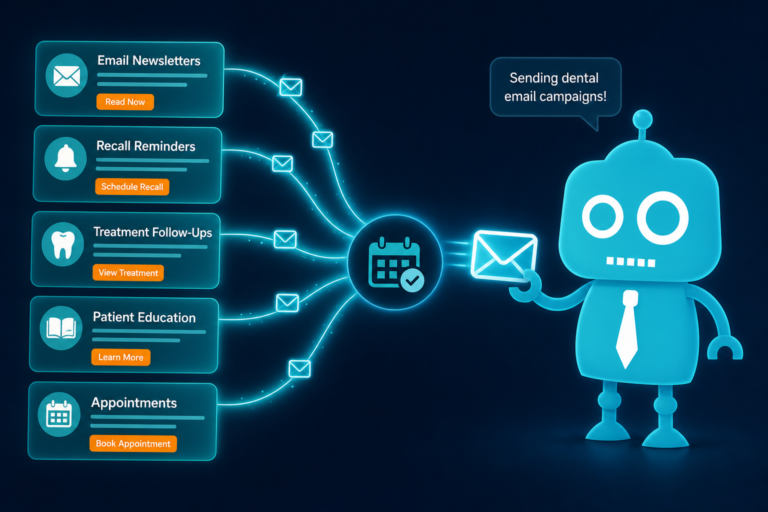
Useful automated campaigns include:
- Appointment reminders: Reduce no-shows and last-minute cancellations
- Post-appointment follow-up: Thank patients, provide care instructions, and request reviews
- Hygiene recall: Remind patients when they are due for preventive care
- Unscheduled treatment follow-up: Encourage patients to complete recommended care
- Reactivation campaigns: Bring inactive patients back into the schedule
- Cosmetic education: Share relevant content with patients interested in elective services
- Insurance benefit reminders: Encourage patients to use remaining benefits before year-end
- Birthday or seasonal messages: Maintain a friendly relationship without always selling
Automation should not replace personal care. It should support it. The best systems help your team communicate consistently while still giving patients an easy path to speak with a real person when needed.
Your Website Plays a Major Role in Patient Retention
Many practices think of their website only as a tool for new patient acquisition. But your website also supports existing patient growth.
Patients visit your website to:
- Request appointments
- Find your phone number or location
- Review service information after a recommendation
- Learn about cosmetic options
- Refer family members
- Read patient reviews
- Complete forms
- Confirm office hours or emergency care information
If your website is outdated, slow, confusing, or difficult to use on mobile, it can create friction for both new and existing patients.
Website Conversion Matters for Existing Patients Too
Imagine a hygienist mentions Invisalign or whitening during a visit. The patient goes home and checks your website. If the service page is thin, outdated, or missing a clear appointment request form, interest may fade.
Now imagine the same patient lands on a modern, mobile-optimized page with clear explanations, before-and-after examples, FAQs, and a simple lead capture form. That patient is much more likely to take the next step.
Your website should not only attract visitors. It should convert patient interest into scheduled appointments and follow-up opportunities.
Front Desk Operations Can Make or Break Patient Value
Your front desk team is central to patient retention. They manage scheduling, calls, confirmations, cancellations, forms, insurance questions, payment conversations, and follow-up.
Even the best marketing strategy can fail if front desk workflows are disorganized.
Give the Front Desk Better Systems
To maximize the value of existing patients, your front desk needs clear systems for:
- Tracking appointment requests from the website
- Responding quickly to lead capture forms
- Following up on missed calls and voicemails
- Managing overdue hygiene lists
- Sending unscheduled treatment reminders
- Requesting reviews after successful appointments
- Updating CRM segments based on patient behavior
When your website, CRM, and communication tools work together, your front desk can operate with more confidence and less chaos.
How to Start Turning Existing Patients Into a Growth Engine
You do not need to overhaul your entire practice overnight. Start with a few high-impact improvements.
1. Measure Your Active Patient Base
Identify how many patients have visited in the last 18 months, how many are overdue for hygiene, and how many have unscheduled treatment. These numbers reveal immediate growth opportunities.
2. Improve Hygiene Recall
Create a consistent recall workflow using SMS, email, and front desk follow-up. Make it easy for patients to request appointments from any device.
3. Build Segmented Campaigns
Separate patients by need: overdue hygiene, unscheduled treatment, cosmetic interest, inactive patients, and review candidates. Send specific messages to each group.
4. Strengthen Your Website Conversion
Make sure your website has fast load times, mobile-friendly design, clear service pages, strong calls to action, and simple lead capture forms.
5. Automate Review Requests
Send review requests after positive visits. Make the process simple and direct so happy patients can easily support your online reputation.
6. Follow Up on Cosmetic Interest
If a patient asks about whitening, veneers, bonding, implants, or aligners, do not let that interest disappear. Use CRM notes and automated follow-up to continue the conversation.
7. Make Family Scheduling Simple
Add website forms, email links, and front desk scripts that make it easy for patients to schedule spouses, children, or other family members.
The Most Profitable Growth May Already Be in Your Practice
New patients will always be important. But if your practice focuses only on acquisition, you may overlook the growth sitting inside your existing patient base.
Existing patients can generate long-term revenue, fill hygiene schedules, accept cosmetic and restorative treatment, refer family members, leave reviews, and reduce your dependence on expensive marketing campaigns.
The practices that grow most efficiently are not just better at getting attention. They are better at building systems that keep patients engaged, informed, and connected.
Grow Your Dental Practice With CreateTheSite.com
CreateTheSite.com helps dental practices turn their websites and patient communication systems into practical growth tools.
We support independent dental practices with modern website design, reliable hosting, mobile optimization, lead capture forms, CRM integrations, SMS and email automation, appointment follow-up, and ongoing website support.
Whether you want to improve new patient acquisition, increase website conversion, reactivate existing patients, automate recall, or make it easier for your front desk to manage online appointment requests, CreateTheSite.com can help you build the digital foundation your practice needs.
Your existing patients are already your most valuable asset. The right website, CRM, and automation strategy can help you unlock more of that value—without adding unnecessary complexity to your team’s day.
Ready to modernize your dental practice website and improve patient follow-up? Visit CreateTheSite.com to learn how we can help your practice grow with smarter digital systems.