
How Email Marketing Helps Dental Practices Retain Patients
Email marketing is often treated like a promotion tool: send a whitening special, announce a discount, hope patients book. But for dental practices, email is much more valuable when it is used as a patient education and retention channel.
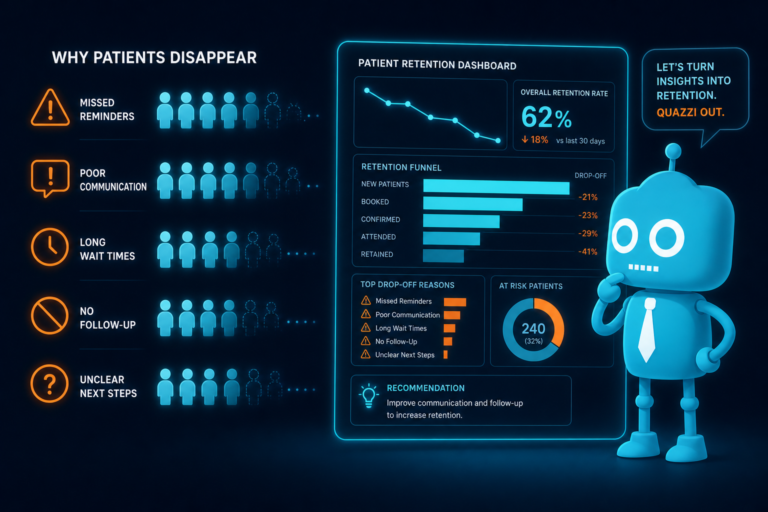
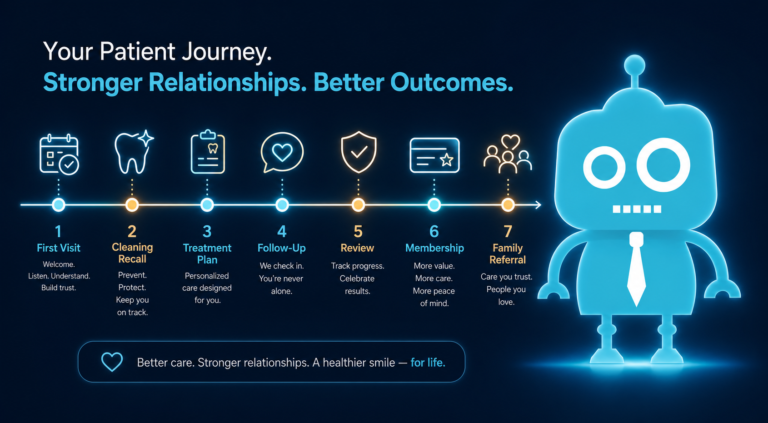
Independent dental practices do not just need more website visitors or one-time new patients. They need patients who understand their oral health, complete recommended treatment, return for hygiene visits, refer family members, leave reviews, and stay connected between appointments.
That is where strategic dental email marketing can make a measurable difference.
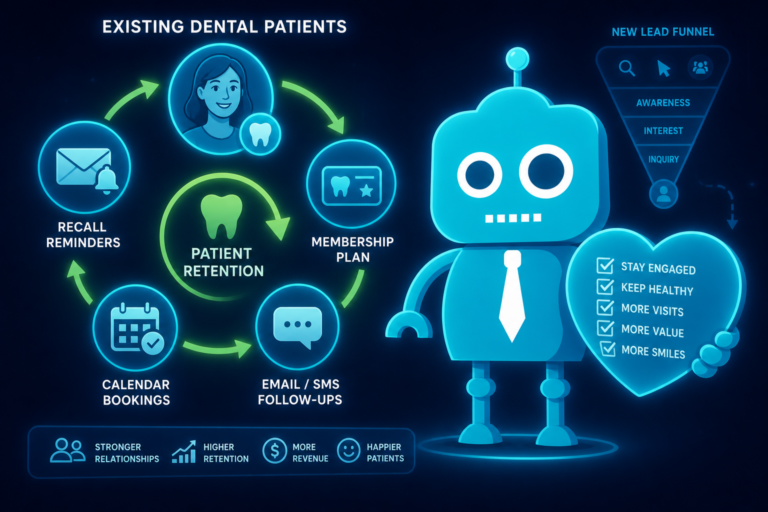
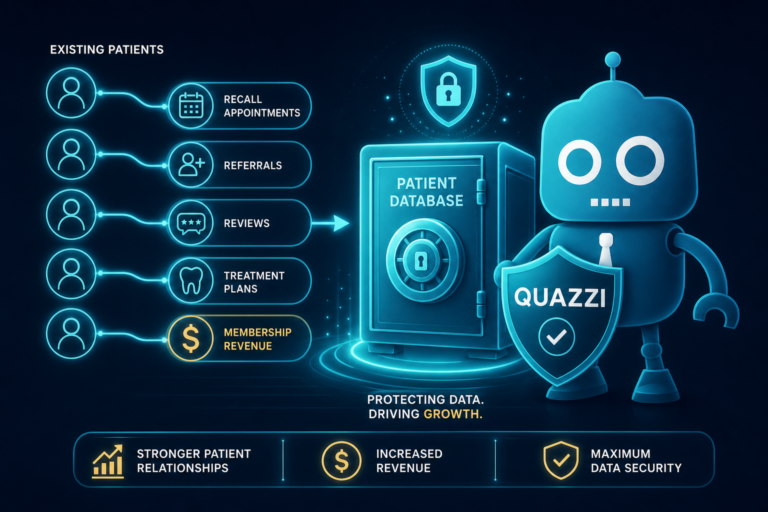
When connected to your website, CRM, online forms, SMS reminders, and front desk workflow, email becomes part of a complete patient retention system. It helps your team educate patients at the right time, reduce no-shows, reactivate overdue patients, and improve the lifetime value of every new patient who finds your practice online.
Why Email Still Matters for Dental Patient Retention
Dental practices are busy. The front desk is answering calls, verifying insurance, checking patients in and out, managing cancellations, and following up on treatment plans. Without automation, important patient communication often gets delayed or skipped.
Email helps fill that gap.
Unlike social media, where patients may or may not see your posts, email lands directly in the patient’s inbox. Unlike phone calls, it does not require your team to reach every patient manually. Unlike text messages, email gives you more room to explain care recommendations, share educational content, and link patients to appointment forms or helpful website pages.
For dental offices, email is especially useful for:
- Educating patients about prevention and treatment
- Encouraging patients to schedule recall visits
- Following up after consultations or incomplete treatment plans
- Promoting cosmetic dentistry in a helpful, non-pushy way
- Re-engaging patients who have not visited in a year or more
- Requesting reviews after positive appointments
- Increasing patient loyalty through newsletters and practice updates
When done well, email marketing supports both patient care and practice growth.
Email as a Patient Education Tool
Patients do not always understand why dental care is urgent. They may know they have bleeding gums, sensitivity, or a cracked filling, but they may delay treatment because symptoms come and go.
Educational emails help patients connect the dots before a small issue becomes a larger problem.
Practical dental education email examples
- “Why bleeding gums are not normal” for patients with signs of gingivitis or periodontal disease
- “What happens if a cracked tooth is left untreated?” after a dentist diagnoses a fracture
- “How nightguards protect teeth from grinding damage” for patients with bruxism
- “What to expect during a dental crown appointment” for patients with recommended restorative treatment
- “How often should children see the dentist?” for families with young patients
These emails do not need to be long. They should be clear, specific, and written in the same reassuring tone your team uses in the office.
Educational email also improves website conversion. For example, if a patient clicks an email about dental implants and lands on a well-designed implant page with before-and-after examples, FAQs, trust signals, and a consultation form, the email has moved that patient closer to booking.
Recall Reminders That Reduce Gaps in Care
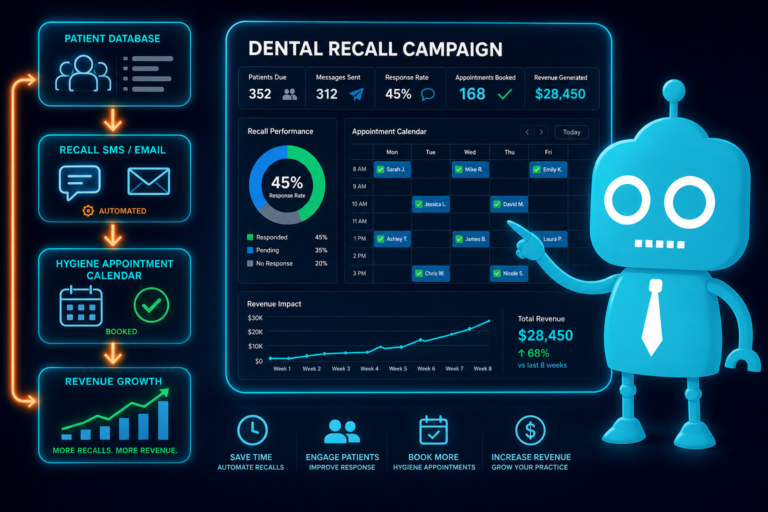
Recall reminders are one of the most important email campaigns for any dental practice. Hygiene appointments drive prevention, patient relationships, treatment diagnosis, and recurring revenue.
Many patients intend to schedule but forget. Others do not realize they are overdue until months have passed. A simple automated recall email sequence can help bring them back.
Example recall reminder sequence
- Two weeks before due date: “You’re almost due for your next cleaning”
- On due date: “It’s time to schedule your preventive visit”
- 30 days overdue: “Your dental cleaning is overdue — schedule a convenient time”
- 90 days overdue: “We’d love to help you get back on track”
For best results, recall emails should include a clear call to action, such as:
- Call the office
- Request an appointment through a website form
- Use an online scheduling link if available
- Reply to the email for help finding a time
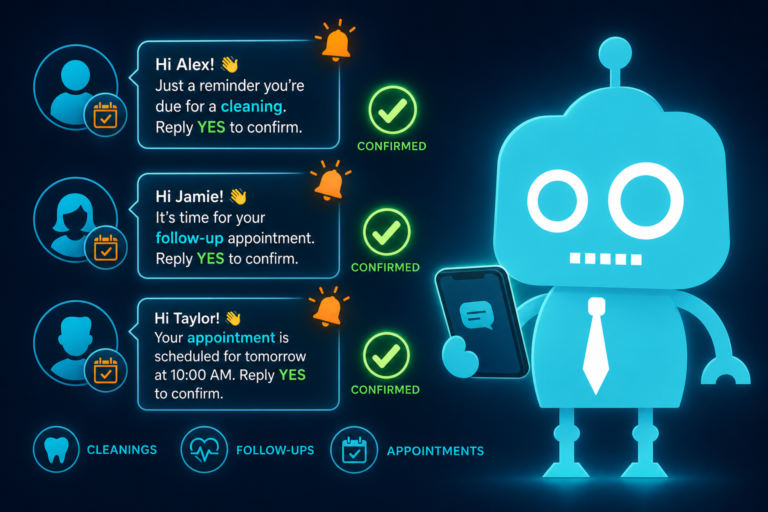
Many practices pair email with SMS automation. For example, an email can provide the details, while a text message gives the patient a quick reminder. This combination helps reduce front desk workload and improves response rates.
Seasonal Tips That Keep Your Practice Top of Mind
Seasonal dental emails are a natural way to educate patients without sounding promotional. They give your practice a reason to stay visible throughout the year, even when a patient does not currently need treatment.
Seasonal dental email ideas
- January: “Start the year with a healthier smile”
- Spring: “Sports mouthguards for kids and teens”
- Summer: “Travel tips for keeping your teeth healthy on vacation”
- Back-to-school: “Dental checkups before school schedules get busy”
- Halloween: “How to manage candy without cavities”
- End of year: “Use remaining dental benefits before they expire”
These campaigns work because they are timely. They also give patients a helpful reminder to schedule care around life events, school calendars, holidays, and insurance deadlines.
For independent dental practices, seasonal emails can also support new patient acquisition. If your email encourages patients to forward a back-to-school dental checklist to another parent, that email may introduce your practice to a new family.
Treatment Awareness Emails Help Patients Say Yes to Care
Many patients leave the office with recommended treatment but do not schedule right away. They may need to check their calendar, discuss costs with a spouse, review financing options, or simply think about it.
The problem is that if your practice does not follow up, that treatment plan can go cold.
Email can help patients understand the value of recommended care after they leave the chair.
Examples of treatment awareness campaigns
- Crown follow-up: Explain why crowns protect weakened teeth and what can happen if treatment is delayed.
- Periodontal therapy education: Help patients understand gum disease, bone loss, and maintenance visits.
- Dental implant consultation follow-up: Share the steps, timeline, and benefits of replacing missing teeth.
- Invisalign or clear aligner education: Explain who is a good candidate and how treatment fits into daily life.
- Root canal reassurance: Address pain concerns and explain how modern endodontic treatment saves natural teeth.
These emails should not pressure patients. Instead, they should answer the questions patients often forget to ask during the appointment.
For stronger results, connect these campaigns to your CRM or patient communication platform. When a treatment plan is presented but not scheduled, your team can trigger an automated follow-up email sequence. This keeps communication consistent without adding more manual work for the front desk.
Cosmetic Campaigns That Educate Before They Promote
Cosmetic dentistry can be highly profitable, but patients often need education before they are ready to book. They may be curious about whitening, veneers, bonding, clear aligners, or smile makeovers but unsure what is realistic for their teeth and budget.
Email is a strong channel for cosmetic campaigns because it allows your practice to build interest over time.
Cosmetic email campaign ideas
- Teeth whitening: Explain professional whitening versus store-bought products.
- Veneers: Share who is a good candidate and what veneers can correct.
- Bonding: Show how bonding can repair chips or close small gaps.
- Clear aligners: Discuss discreet orthodontic options for adults.
- Smile makeover consultations: Invite patients to explore personalized options.
A good cosmetic campaign should link to high-converting website pages. Those pages should include clear service descriptions, FAQs, photos where appropriate, trust-building content, and easy consultation request forms.
This matters because interest alone does not create appointments. The patient needs a smooth path from email to website to inquiry to follow-up.
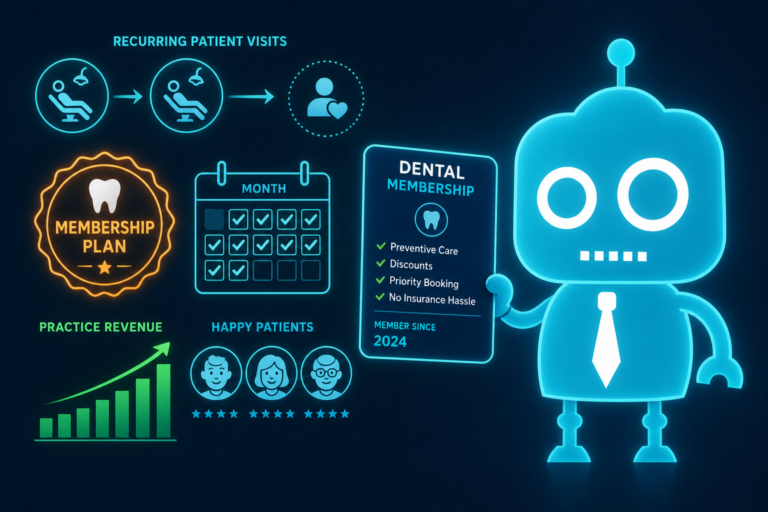
Membership Plan Emails Support Patient Loyalty
If your practice offers an in-house dental membership plan, email can help both promote and explain it.
Membership plans are especially helpful for patients without dental insurance. But many patients do not immediately understand how these plans work. Email gives you space to explain the benefits in simple language.
What to include in membership plan emails
- What is included in the plan
- How much the plan costs
- Who the plan is best for
- How it differs from dental insurance
- How members save on preventive and restorative care
- How to enroll online or contact the office
For example, a patient who has not scheduled due to insurance concerns may respond well to an email titled, “No dental insurance? Here’s a simple way to keep up with care.”
Membership plan emails can also improve retention because they create a reason for patients to return to your practice instead of shopping around.
Re-Engagement Campaigns Bring Inactive Patients Back
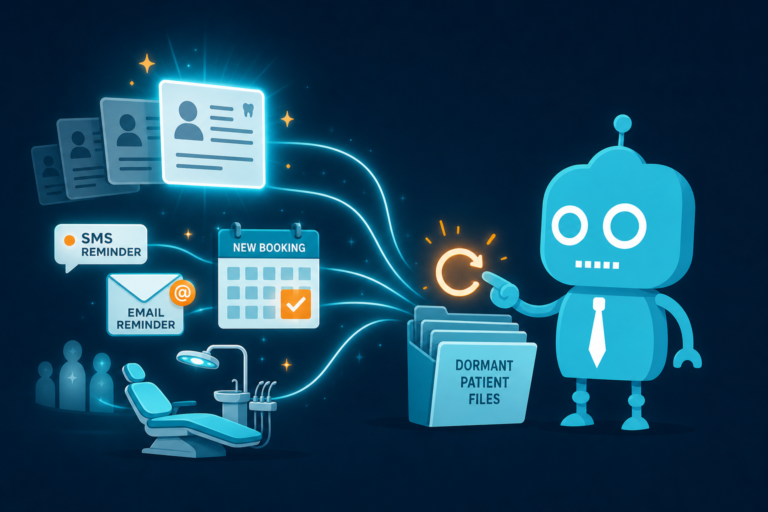
Every dental practice has inactive patients. Some moved away, but many simply fell out of routine. They missed a cleaning, ignored a reminder, or delayed care during a busy season of life.
Re-engagement emails help bring those patients back before they are permanently lost.
Re-engagement email examples
- “We haven’t seen you in a while”
- “It’s time to get your smile back on schedule”
- “Overdue for a cleaning? We can help make it easy”
- “Your dental health is worth catching up on”
These emails should be warm, not judgmental. Avoid making patients feel embarrassed for being overdue. Instead, make the next step simple.
For example:
“If it has been more than six months since your last visit, you are not alone. Our team can help you get back on track with a comfortable cleaning and exam. Request an appointment online or call us today.”
Re-engagement campaigns work best when your patient database is segmented. A patient who is 7 months overdue should not receive the same message as someone who has not visited in 3 years. Your CRM or patient communication system can help organize these groups.
Review Requests That Strengthen Local SEO
Online reviews are critical for dental practices. When someone searches for a dentist near them, they compare ratings, review volume, comments, photos, location, and website quality before contacting the office.
Email can help your practice consistently request reviews from satisfied patients.
When to send review request emails
- After a positive new patient appointment
- After a completed cosmetic case
- After a patient compliments the dentist or team
- After successful emergency treatment
- After a child has a great first visit
The key is timing. A review request should be sent shortly after a positive experience, while the appointment is still fresh.
Your email should be short and direct:
“Thank you for visiting our office today. If you had a great experience, would you be willing to share your feedback in a Google review? Reviews help local patients find our practice and feel confident choosing our team.”
For many practices, the best workflow is a combination of front desk identification and automation. The team notes a happy patient, and the CRM or review platform sends the request by email or SMS.
More quality reviews can improve local SEO, increase trust, and help convert website visitors into new patient appointments.
Newsletters Build Long-Term Patient Relationships
A dental newsletter does not need to be complicated. It simply needs to be useful and consistent.
Monthly or quarterly newsletters keep your practice visible and give patients a reason to stay engaged. They can include oral health tips, office updates, team highlights, service education, seasonal reminders, and links to helpful website content.
Dental newsletter content ideas
- A short tip from the dentist
- A featured service, such as dental implants or clear aligners
- A reminder about unused dental benefits
- A team member spotlight
- A link to a recent blog post
- Holiday office hours
- New technology or comfort options
- Patient-friendly explanations of common dental conditions
The best newsletters feel like they come from a real local dental office, not a corporate marketing department. Use plain language. Mention your community. Feature your team. Make it easy for patients to reply, call, or request an appointment.
How Email Supports New Patient Acquisition and Website Conversion
Patient retention and new patient acquisition are connected. A strong email strategy helps maximize the value of every lead your website generates.
For example, imagine a potential patient visits your website after searching for “dentist near me” or “dental implants in [city].” They fill out a consultation form but do not book immediately. Without follow-up, that lead may go nowhere.
With email automation, your practice can send:
- A confirmation that the inquiry was received
- An introduction to the dentist and team
- Helpful information about the requested service
- Insurance, financing, or membership plan details
- A reminder to schedule if they have not responded
This helps your front desk follow up faster and more consistently. It also makes the practice look organized, responsive, and patient-focused.
Website design plays a major role here. If your dental website has clear calls to action, mobile-friendly forms, service pages, and CRM integrations, your email marketing becomes more effective because patients have an easy path to take action.
Email and SMS Automation Can Reduce Front Desk Overload
Email marketing should not create more work for your team. It should reduce repetitive tasks and improve follow-up consistency.
With the right systems in place, your practice can automate communication for:
- Appointment confirmations
- Recall reminders
- Post-appointment follow-up
- Treatment plan reminders
- New patient form completion
- Review requests
- Membership plan education
- Reactivation campaigns
SMS is useful for short, urgent reminders. Email is better for education, treatment explanations, newsletters, and longer-form communication. Together, they create a stronger patient communication system.
The goal is not to replace personal service. The goal is to make sure patients receive timely communication while freeing your front desk to focus on calls, scheduling, insurance questions, and in-office patient experience.
Best Practices for Dental Email Marketing
To get better results from email, dental practices should focus on relevance, timing, and clarity.
Segment your patient list
Not every patient should receive the same message. Segment patients by status, treatment interest, insurance status, age group, last visit date, or incomplete treatment plan.
Use clear subject lines
Avoid vague marketing language. A subject line like “You’re due for your dental cleaning” is more useful than “Exciting news from our office.”
Make every email easy to act on
Include one main call to action, such as “Request an appointment,” “Call our office,” “Read more,” or “Leave a review.”
Connect emails to strong website pages
If an email links to a service page, that page should be mobile-friendly, easy to read, and designed to convert visitors into appointments.
Keep the tone patient-friendly
Use educational language instead of fear-based messaging. Patients respond better when they feel informed and supported.
Track performance
Review open rates, click rates, appointment requests, reactivated patients, and completed treatment. This helps your practice understand which campaigns are actually working.
Email Marketing Helps Dental Practices Retain More Patients
Email marketing is not just about sending promotions. For dental practices, it is a practical way to educate patients, improve follow-up, increase treatment acceptance, reactivate overdue patients, request reviews, and keep your practice top of mind.
When email is connected to your website, CRM, SMS automation, and front desk workflow, it becomes part of a complete patient retention system.
Patients are more likely to return when they understand their oral health, trust your team, receive timely reminders, and have an easy way to schedule. Email helps make that happen consistently.
Build a Better Patient Retention System with CreateTheSite.com
CreateTheSite.com helps dental practices turn their websites into stronger patient acquisition and retention tools.
Our team supports dental offices with modern website design, reliable hosting, mobile optimization, lead capture forms, CRM integrations, SMS and email automation, appointment follow-up systems, and ongoing website support.
If your practice wants a website that does more than look good, we can help you build a system that captures new patient leads, follows up automatically, supports your front desk, improves website conversion, and keeps patients connected after they leave the office.
Visit CreateTheSite.com to learn how we can help your dental practice modernize its online presence and create a better patient communication experience.