
How Dental Offices Can Reduce Patient Churn
Patient churn is one of the most expensive problems in dentistry, but many independent dental practices do not track it closely enough. A patient comes in for a new patient exam, accepts part of a treatment plan, misses a hygiene recall, or disappears after one emergency visit. The practice then spends more money on ads, SEO, referrals, and website traffic to replace patients it could have retained.
The good news is that dental patient churn is often preventable. In many cases, patients leave or go inactive because communication breaks down. They forget. They get confused about costs. They do not understand the urgency of treatment. They do not feel connected to the office. Or they simply never receive the right message at the right time.
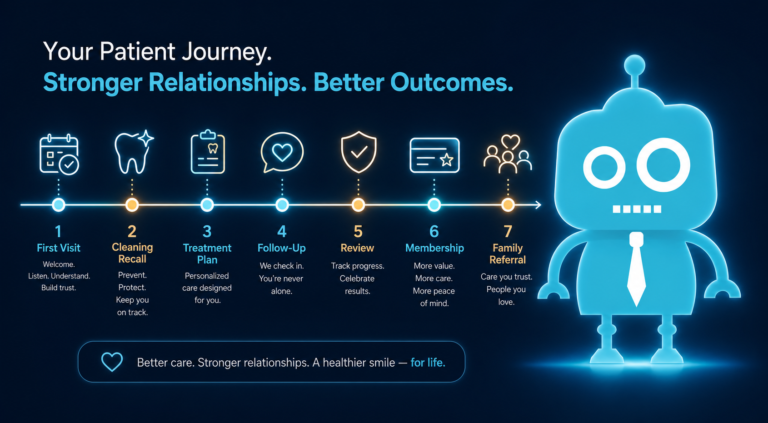
The most effective dental offices reduce churn by improving communication and segmenting patients based on where they are in the patient journey. A new patient needs different communication than an overdue hygiene patient. A patient with an unscheduled crown needs a different follow-up than a patient considering clear aligners. A family on a membership plan needs different reminders than a patient with PPO benefits expiring soon.
Below are practical ways dental practice owners, dentists, and office managers can reduce patient churn using better onboarding, reminders, recall systems, education, reviews, treatment plan follow-up, membership plans, CRM segmentation, and automation.
What Patient Churn Means for a Dental Practice
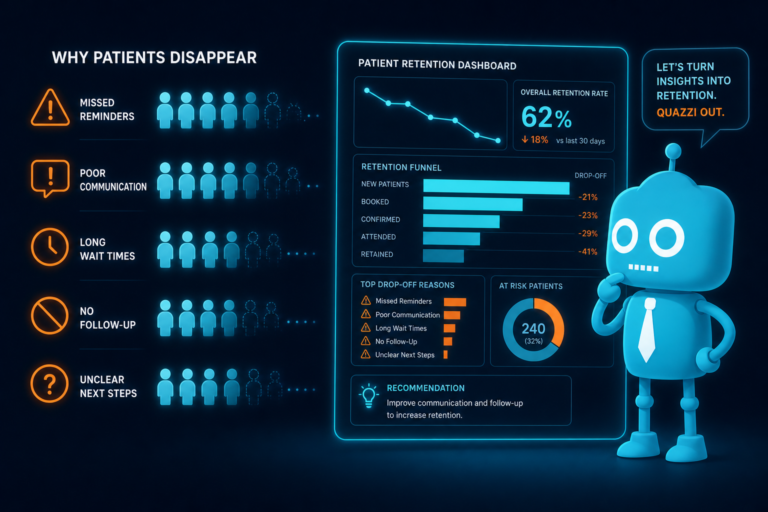
Patient churn happens when patients stop returning to your office for ongoing care. This can include patients who skip recall visits, do not schedule diagnosed treatment, fail to return after a first appointment, cancel without rescheduling, or quietly choose another dental office.
For dental practices, churn affects more than the schedule. It impacts production, hygiene utilization, case acceptance, online reviews, word-of-mouth referrals, and the return on investment from new patient acquisition.
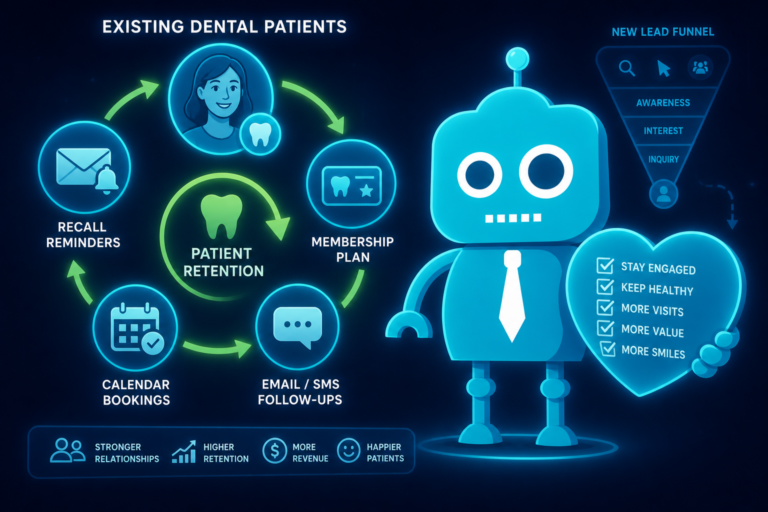
If your website, Google Ads, SEO, social media, or referral program brings in new patients, but those patients do not stay active, your growth becomes inefficient. Reducing churn allows your practice to get more value from every new patient lead and every existing patient relationship.
The Core Strategy: Better Communication and Smarter Segmentation
Many dental offices send the same reminders and emails to every patient. That is better than no communication, but it is not enough to reduce churn in a modern practice.
Patients should be segmented based on behavior, treatment status, insurance status, appointment history, and communication preference. This allows your front desk and CRM system to send more relevant messages.
Examples of Useful Dental Patient Segments
- New patients who scheduled but have not yet arrived
- New patients who completed their first visit but have no next appointment
- Patients overdue for hygiene recall
- Patients with unscheduled diagnosed treatment
- Patients who requested an implant, Invisalign, whitening, or cosmetic consultation
- Patients who canceled and did not reschedule
- Patients with unused insurance benefits
- Patients without insurance who may benefit from a membership plan
- Patients who left a positive review
- Patients who had a poor experience or gave negative feedback
When patients are grouped this way, your communication becomes more personal, timely, and effective. That is where churn reduction starts.
Improve New Patient Onboarding Before the First Visit
Patient retention begins before the patient sits in the chair. The first few interactions after a website form submission, phone call, or online booking request shape the patient’s perception of your practice.
If a new patient fills out a form on your dental website and waits two days for a response, trust drops immediately. If they schedule but receive no preparation instructions, they may arrive anxious, forget paperwork, or cancel. If the first visit feels disorganized, they may not return.
What Better Onboarding Looks Like
- Immediate confirmation after a website form submission or online booking request
- A friendly welcome email or SMS from the practice
- Clear directions, parking information, and office expectations
- Digital forms sent before the visit
- Insurance and payment information explained in advance
- A short introduction to the dentist, hygienist, or care philosophy
- A reminder that the patient can call or text with questions
For example, if a patient requests a cosmetic consultation through your website, the follow-up should reference cosmetic dentistry specifically. If a parent books pediatric appointments for three children, the message should acknowledge the family appointment and explain what to expect.
This type of segmented onboarding makes the patient feel seen. It also reduces no-shows and increases the likelihood that the patient will complete the first appointment and schedule future care.
Use Appointment Reminders That Do More Than Remind
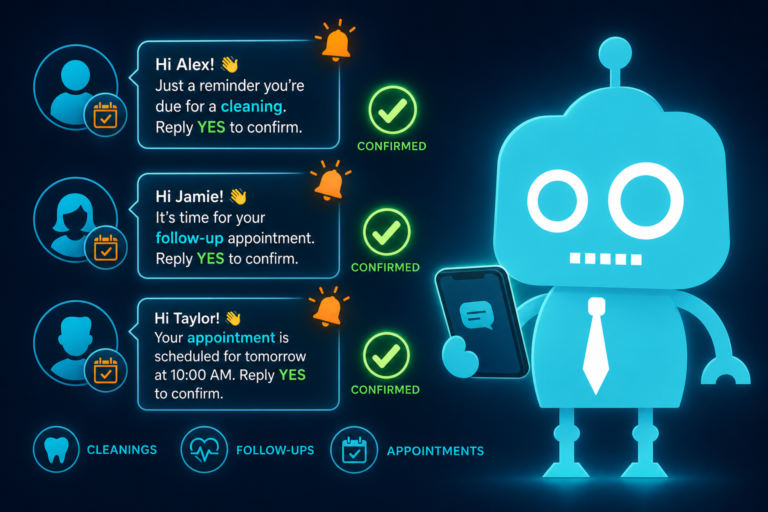
Appointment reminders are one of the simplest ways to reduce churn, but many practices underuse them. A basic “You have an appointment tomorrow” message is helpful, but it does not address common barriers like confusion, anxiety, paperwork, costs, or scheduling conflicts.
Effective dental appointment reminders should be timely, easy to act on, and matched to the appointment type.
Practical Reminder Examples
- New patient exam: Include digital forms, office address, parking details, and what to bring.
- Hygiene visit: Remind the patient of the value of preventive care and offer a quick reschedule link if needed.
- Treatment appointment: Include pre-op instructions, estimated visit length, and payment expectations if appropriate.
- Consultation: Mention photos, records, or questions the patient may want to bring.
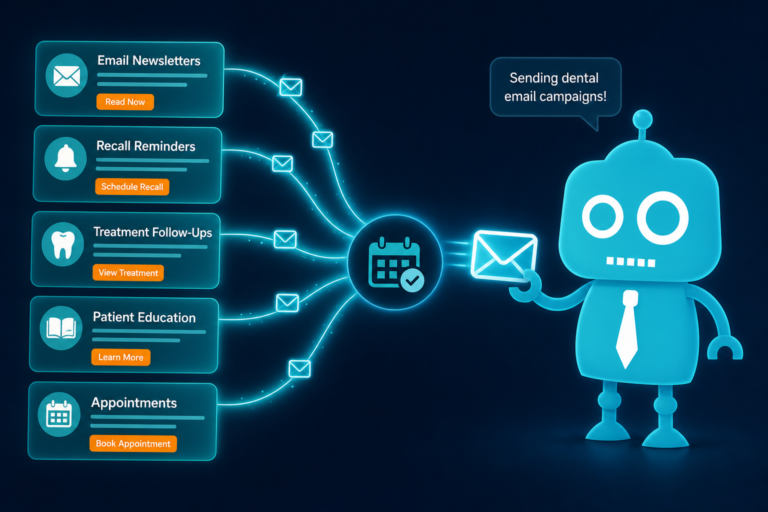
SMS reminders are especially effective because patients usually see text messages quickly. Email is better for longer explanations, forms, educational links, and financial information. Many practices get the best results by using both.
The key is to avoid overloading the front desk. A modern CRM or dental communication platform can automate most reminders while still allowing staff to step in for high-value or high-risk appointments.
Build a Recall System That Re-Engages Patients Before They Disappear
Hygiene recall is one of the biggest patient retention opportunities in a dental office. When recall systems are weak, patients slowly become inactive. They miss one cleaning, then another, and eventually they feel embarrassed or disconnected from the practice.
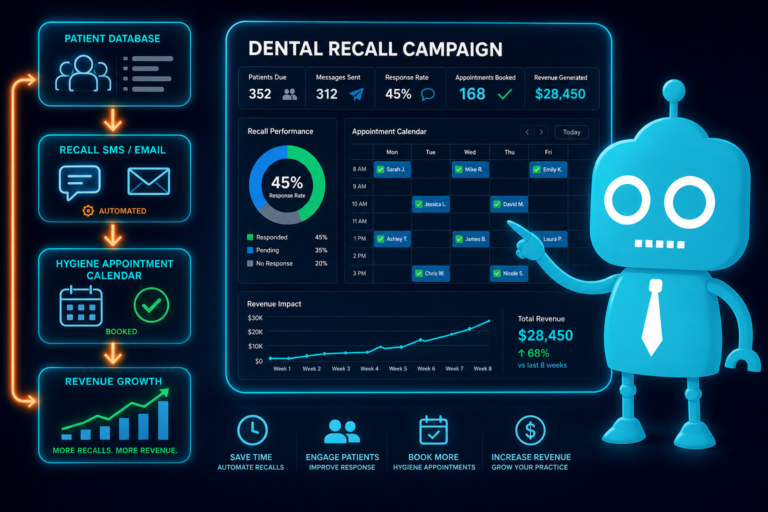
A strong recall system should not rely on one postcard or one phone call. It should use a structured sequence across SMS, email, and personal outreach.
Sample Recall Communication Sequence
- 4 weeks before due date: Email reminder with online scheduling link
- 2 weeks before due date: SMS reminder to book hygiene visit
- Due date: Friendly message explaining the importance of preventive care
- 30 days overdue: Front desk call or personalized text
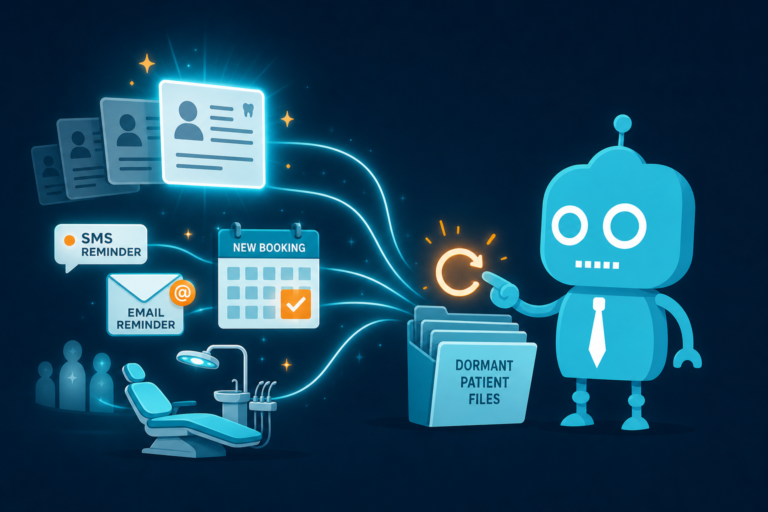
- 90 days overdue: Re-engagement email with available appointment times
- 6 months overdue: “We miss seeing you” message with a simple path to return
Segmentation improves recall performance. A perio maintenance patient should not receive the same message as a healthy adult prophy patient. A patient with a history of cancellations may need a different cadence. A family with multiple children may benefit from block scheduling options.
When your recall system is consistent, your hygiene schedule becomes more stable and your patients are less likely to drift away.
Educate Patients So They Understand Why Care Matters
Patients often delay or avoid dental care because they do not understand the consequences of waiting. Education reduces churn because it builds trust, improves case acceptance, and reinforces the value of returning for ongoing care.
Education should happen in the chair, on your website, through email, through SMS links, and during follow-up conversations. The goal is not to overwhelm patients with clinical details. The goal is to make treatment and prevention easier to understand.
Educational Content That Helps Reduce Churn
- What happens if a cavity is not treated
- Why bleeding gums should not be ignored
- The difference between a crown and a filling
- Why perio maintenance is recommended every 3 to 4 months
- How nightguards protect teeth from grinding damage
- What to expect during dental implant treatment
- How clear aligners work and who may be a good candidate
- Why regular hygiene visits help avoid larger expenses
Your website should support this effort. If a patient receives a treatment plan for a crown, your follow-up email can link to a page on your website explaining crowns, the process, benefits, and what can happen if treatment is delayed. This improves website engagement while helping patients make informed decisions.
Educational follow-up also gives the front desk a better reason to contact patients. Instead of saying, “Are you ready to schedule?” the message can say, “Dr. Smith wanted to make sure you had this information about the crown we discussed. We are happy to answer questions or help you reserve a time.”
Use Review Feedback to Identify Churn Risks
Online reviews are not just a marketing tool. They are a patient retention tool. Reviews reveal what patients appreciate, what frustrates them, and where your patient experience may be causing churn.
Positive reviews can show you what to repeat. For example, if patients frequently mention that your hygienists are gentle or your front desk explains insurance clearly, those are strengths to highlight on your website and in new patient communication.
Negative or neutral feedback can reveal churn risks. Long wait times, confusing bills, rushed explanations, difficulty getting calls returned, or unfriendly check-in experiences can all cause patients to leave quietly.
How to Turn Reviews Into Retention Improvements
- Track recurring themes in Google reviews and internal surveys
- Follow up quickly with unhappy patients when appropriate
- Train the front desk around common communication complaints
- Update website FAQs if patients are confused about insurance, payments, or appointment types
- Use positive review language in website copy and patient emails
A simple post-appointment feedback request can also help catch issues before they become public negative reviews or lost patients. For example, an automated SMS after a visit can ask, “How was your experience today?” Patients who respond positively can be invited to leave a Google review. Patients who respond negatively can be routed to the office manager for follow-up.
Follow Up on Unscheduled Treatment Plans
Unscheduled treatment is one of the most important churn indicators in a dental practice. When a patient leaves with diagnosed treatment but no appointment, the risk of losing that patient increases.
Many patients do not schedule immediately because they need to check their calendar, discuss finances, review insurance, or process the information. Without follow-up, the treatment plan becomes less urgent in the patient’s mind.
A Better Treatment Plan Follow-Up Process
- Send a same-day summary of the recommended treatment
- Include benefits, risks of delaying, and estimated next steps
- Offer financing or phased treatment options when appropriate
- Use SMS for short reminders and email for detailed explanations
- Assign high-value cases to a treatment coordinator for personal follow-up
- Track every unscheduled treatment plan in your CRM or practice management system
For example, a patient diagnosed with a cracked tooth may not understand why a crown is urgent if they are not in pain. A follow-up message can explain that cracked teeth can worsen over time and may become more expensive to treat if the fracture progresses. This helps the patient understand the reason for action without feeling pressured.
Segment treatment follow-up by category. A whitening inquiry, implant consultation, crown recommendation, and periodontal therapy plan should not receive identical messaging. Each treatment has different patient concerns, timelines, and decision factors.
Offer Membership Plans to Keep Uninsured Patients Active
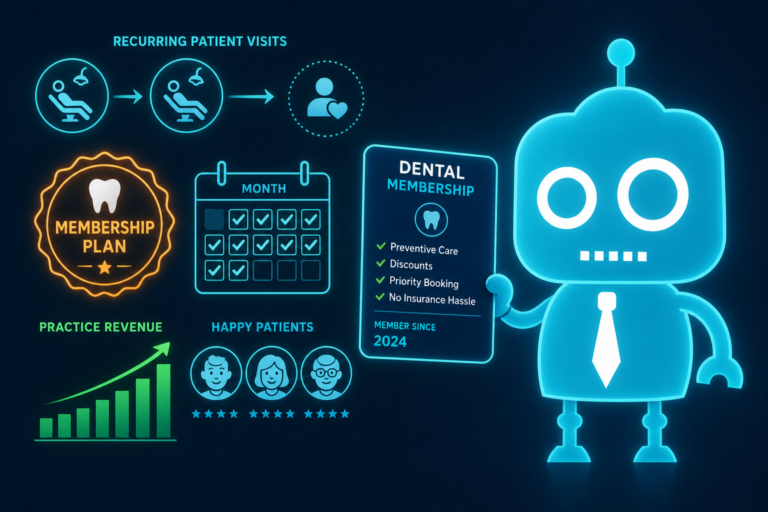
Patients without dental insurance are at higher risk of delaying care or leaving when costs feel uncertain. A dental membership plan can reduce churn by giving uninsured patients a clear, predictable reason to stay connected to your office.
Membership plans typically include preventive services and discounts on additional treatment for an annual or monthly fee. They help patients feel like they belong to the practice, not just like they are paying out of pocket each time they visit.
How Membership Plans Reduce Churn
- Encourage routine hygiene visits
- Make costs easier to understand
- Reduce dependence on insurance limitations
- Create an ongoing relationship with the practice
- Give the front desk a helpful option for uninsured patients
Promotion matters. Your membership plan should be visible on your dental website, mentioned in new patient emails, included in financial conversations, and offered to patients who are marked as uninsured in your CRM.
For example, if a patient indicates on a website form that they do not have dental insurance, your automated follow-up can include a brief note: “No insurance? Ask us about our in-office membership plan designed to make preventive care more affordable.”
Use CRM Segmentation to Personalize Patient Communication
A CRM system helps dental practices manage leads, patient communication, follow-up tasks, and segmented campaigns. While your practice management software stores clinical and scheduling information, a CRM can help organize communication around the patient journey.
This is especially useful for practices investing in new patient acquisition through SEO, Google Ads, social media, direct mail, or website conversion campaigns. If leads are not captured and followed up with properly, potential patients may never schedule. If new patients are not nurtured after the first visit, they may not become long-term patients.
CRM Segments That Help Dental Offices Reduce Churn
- Website leads not yet scheduled: Send fast follow-up and appointment options.
- New patients completed first visit: Send welcome message, review request, and next-step reminders.
- Patients with pending treatment: Send educational content and scheduling prompts.
- Overdue hygiene patients: Send recall campaigns with online booking links.
- Inactive patients: Send reactivation campaigns with a friendly tone.
- Cosmetic leads: Send before-and-after examples, consultation information, and financing details.
- Membership candidates: Send plan details to uninsured or inactive patients.
Segmentation prevents irrelevant messaging. A patient who just completed a crown should not receive the same communication as a patient who never scheduled one. A new implant lead should receive implant-specific education, not a generic newsletter about brushing tips.
The more relevant the message, the more likely patients are to respond.
Automate Follow-Up Without Losing the Human Touch
Automation is essential for reducing churn because front desk teams are already busy answering phones, checking patients in and out, verifying insurance, handling claims, collecting payments, and managing the schedule.
However, automation should support personal communication, not replace it entirely. The best dental offices use automation for consistency and staff involvement for high-value or sensitive situations.
Dental Communication Tasks You Can Automate
- Website form confirmations
- New patient welcome messages
- Appointment reminders
- Digital form requests
- Post-appointment review requests
- Recall reminders
- Unscheduled treatment follow-up
- Membership plan education
- Reactivation campaigns
- No-show and cancellation follow-up
For example, when a website visitor submits a “Request an Appointment” form, an automated SMS can confirm the request immediately while notifying the front desk. If the patient does not schedule within 24 hours, the CRM can trigger a follow-up task or send another message with available appointment times.
For treatment plans, automation can send educational information and reminders, while the treatment coordinator personally calls patients with larger cases. This keeps communication consistent without making patients feel like they are only interacting with software.
Make Your Website Part of the Retention System
Many dental practices think of their website only as a new patient acquisition tool. A modern dental website should also support retention and patient communication.
Your website can help reduce churn by making it easier for patients to take the next step. That includes scheduling, completing forms, learning about treatment, understanding payment options, reading reviews, and contacting the office from a mobile device.
Website Features That Support Patient Retention
- Mobile-friendly appointment request forms
- Click-to-call and click-to-text buttons
- Clear service pages for common treatments
- Membership plan page for uninsured patients
- Patient forms and first-visit information
- Insurance and financing information
- Review links and testimonials
- CRM and SMS/email automation integrations
If a patient receives an automated follow-up about a dental implant consultation, the link should take them to a helpful implant page on your website. If a patient is overdue for hygiene, the recall message should link directly to an easy appointment request form. If a patient is uninsured, the membership plan page should clearly explain benefits and how to join.
Reducing churn requires fewer dead ends. Your website, CRM, and front desk communication should work together.
Track the Right Metrics to Reduce Patient Churn
You cannot improve what you do not measure. Dental practices should track retention-related metrics regularly, not just new patient numbers.
Important Dental Churn and Retention Metrics
- New patients who schedule a second appointment
- Hygiene reappointment percentage
- Recall overdue list by 30, 60, 90, and 180 days
- Unscheduled treatment value
- No-show and cancellation rate
- Website leads that become scheduled patients
- Membership plan enrollment
- Review volume and average rating
- Patient reactivation campaign response rate
These numbers help your team identify where churn is happening. If new patients are not scheduling second visits, improve onboarding and treatment presentation. If hygiene recall is weak, adjust reminder timing and messaging. If many website leads are not scheduling, improve lead response speed and CRM follow-up.
A Practical Churn Reduction Workflow for Dental Offices
Here is a simple workflow your practice can use to start reducing patient churn through communication and segmentation:
- Capture every lead from your website, phone calls, ads, and referral sources.
- Segment patients by status, treatment need, insurance status, and appointment behavior.
- Automate basic communication such as confirmations, reminders, recall, and review requests.
- Assign personal follow-up for high-value treatment, unhappy patients, and repeated cancellations.
- Use your website as the destination for education, scheduling, membership plans, and patient forms.
- Review metrics monthly to identify where patients are dropping off.
- Refine messages based on patient responses, reviews, and front desk feedback.
This approach does not require your team to work harder at every step. It requires better systems, clearer communication, and more relevant messages.
Reduce Churn by Making It Easier for Patients to Stay
Most patients do not leave a dental office because of one single issue. They drift away because follow-up is inconsistent, scheduling feels inconvenient, treatment is unclear, costs feel confusing, or communication does not match their needs.
By improving onboarding, reminders, recall systems, patient education, review feedback, treatment plan follow-up, membership plan promotion, CRM segmentation, and automation, dental practices can keep more patients engaged and active.
The result is a stronger schedule, better patient relationships, higher case acceptance, more reviews, and a better return on every dollar spent on new patient acquisition.
How CreateTheSite.com Helps Dental Practices Improve Communication and Retention
CreateTheSite.com helps dental practices build the digital systems needed to attract, convert, and retain more patients. A modern dental website should do more than look professional. It should support new patient acquisition, website conversion, lead capture, patient communication, and ongoing follow-up.
CreateTheSite.com provides modern website design, secure hosting, mobile optimization, lead capture forms, CRM integrations, SMS and email automation, appointment follow-up tools, and ongoing website support for dental offices.
Whether your practice needs a better website, stronger conversion paths, automated follow-up for new patient leads, or integrations that help your front desk stay organized, CreateTheSite.com can help create a system that supports both growth and retention.
If your dental office is ready to reduce patient churn and turn more website visitors into long-term patients, visit CreateTheSite.com to learn how a better website and smarter communication tools can support your practice.