
How Loyalty & Membership Plans Improve Dental Revenue
For independent dental practices, predictable revenue is often the difference between a stressful month and a stable, growing business. New patient acquisition matters, but long-term profitability usually comes from patients who return, accept preventive care, complete treatment, and refer others.
That is where dental loyalty and membership plans can make a measurable impact.
A well-designed dental membership plan gives uninsured patients a simple way to stay connected to your practice without traditional insurance. Instead of delaying care because they are worried about cost, patients pay a monthly or annual fee that includes preventive services and member-only savings on treatment.
For practice owners, dentists, and office managers, this creates a stronger retention engine, more predictable cash flow, and a better patient experience.
Why Patients Delay Dental Care
Many patients do not avoid the dentist because they do not care about their oral health. They avoid care because the path to scheduling feels uncertain, expensive, or inconvenient.
Common reasons patients delay dental treatment include:
- No dental insurance: Uninsured patients often assume every visit will be expensive.
- Fear of surprise costs: Patients may hesitate if they do not understand what a cleaning, exam, x-ray, filling, or crown will cost.
- Low perceived urgency: If nothing hurts, preventive visits are easy to postpone.
- Confusing insurance rules: Deductibles, waiting periods, exclusions, and annual maximums can create frustration.
- Busy schedules: Patients may intend to book but never follow through unless the process is simple.
- Past negative experiences: Anxiety, embarrassment, or previous billing confusion can keep patients away.
For uninsured patients especially, the default decision is often to wait until something hurts. Unfortunately, delayed care usually turns small problems into larger treatment needs. A missed hygiene visit can become periodontal therapy. A small cavity can become a crown, root canal, or extraction.
A dental membership plan helps shift the patient mindset from “I will go when I have a problem” to “I already belong to this practice, and my preventive care is included.”
Reducing Friction Makes It Easier for Patients to Say Yes
Dental membership plans work because they reduce friction at multiple points in the patient journey. Patients are more likely to schedule, show up, and accept care when the process feels clear and manageable.
Clear Pricing Builds Confidence
Uninsured patients often search online for terms like “affordable dentist near me,” “dentist without insurance,” or “dental cleaning cost.” If your website does not answer their cost concerns, they may move on to another practice that does.
A membership plan gives your office a clear offer to promote:
- Two cleanings per year
- Routine exams
- Necessary x-rays
- Emergency exam benefits
- Discounted restorative treatment
- Optional perio maintenance plans
- Simple monthly or annual pricing
Instead of saying, “Call us for pricing,” your website can say, “No insurance? Our in-house dental membership plan helps make preventive care simple and affordable.”
That message is much stronger for website conversion because it speaks directly to a real patient concern.
Front Desk Teams Get a Better Conversation
Your front desk team is often the first point of contact for uninsured patients. Without a membership plan, the conversation may focus on cost anxiety:
“How much is a cleaning?”
“Do you offer payment plans?”
“I do not have insurance. Can I still come in?”
With a membership plan, your team has a more helpful response:
“Yes, we see many patients without insurance. We offer an in-house membership plan that includes preventive visits and savings on other treatment. I can explain the options and help you schedule your first visit.”
This reduces uncertainty and gives your team a practical tool for converting callers into scheduled patients.
Preventive Care Incentives Increase Patient Engagement
One of the biggest revenue benefits of a dental membership plan is that it encourages patients to return for preventive care. When cleanings and exams are included in the plan, patients are more likely to use them.
That matters because hygiene visits are not just clinical appointments. They are relationship-building opportunities and treatment discovery opportunities.
Preventive Visits Lead to Earlier Diagnosis
Regular recall visits help your clinical team identify issues before they become urgent or complex. This may include:
- Early decay
- Cracked or failing restorations
- Periodontal disease
- Occlusal wear
- Oral cancer concerns
- Cosmetic opportunities
- Implant, bridge, or denture needs
When patients stay on schedule, they are more likely to understand their diagnosis and accept appropriate treatment. This improves oral health outcomes while supporting practice production.
Membership Changes the Psychology of Recall
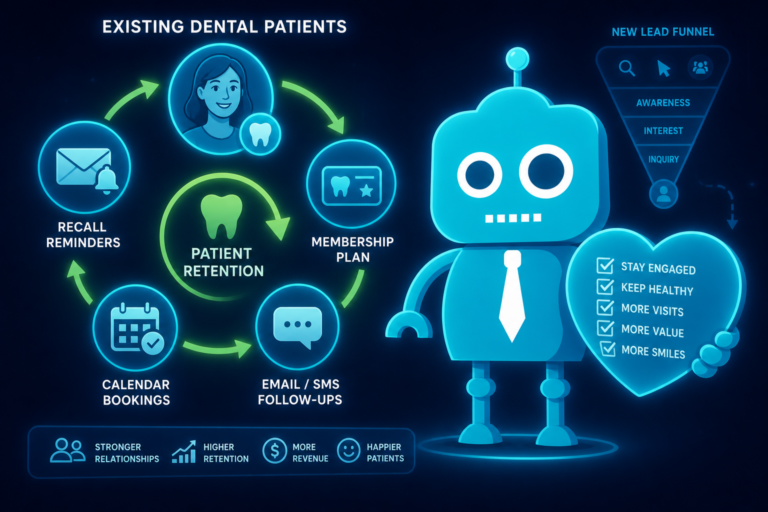
Patients who pay for a membership tend to feel more connected to the practice. They do not see each visit as a separate expense. They see it as a benefit they have already invested in.
That makes recall reminders more effective. Instead of sending a generic message like, “You are due for a cleaning,” your office can send:
“Your membership includes your preventive visit, and you are due this month. Click here to request an appointment.”
This creates a stronger reason to act.
Recurring Revenue Creates More Predictable Cash Flow
Dental practices often deal with revenue swings caused by cancellations, seasonality, insurance delays, and uneven case acceptance. Membership plans help smooth out some of that unpredictability.
When patients pay monthly or annually, your practice gains a recurring revenue stream that is not entirely dependent on same-day treatment volume.
Monthly Membership Revenue Adds Stability
For example, if a practice enrolls 300 patients into a membership plan at $35 per month, that creates $10,500 in monthly recurring revenue before any additional treatment is completed.
That revenue can help support:
- Hygiene department planning
- Staffing decisions
- Marketing budgets
- Technology investments
- Website improvements
- Patient communication systems
The exact numbers depend on your pricing, benefits, and patient base, but the principle is simple: recurring revenue makes business planning easier.
Membership Plans Can Reduce Dependence on Insurance
Many independent practices are looking for ways to reduce reliance on low-reimbursement insurance plans. An in-house membership plan can help attract and retain patients who value your practice but do not have traditional dental insurance.
This does not mean eliminating insurance participation overnight. Instead, a membership plan gives your practice another revenue channel and a clear offer for uninsured patients, retirees, self-employed professionals, small business owners, gig workers, and families without employer-sponsored benefits.
Membership Plans Improve Dental Patient Retention
Patient retention is one of the most important revenue drivers in a dental practice. Acquiring a new patient is valuable, but keeping that patient active for years is far more profitable.
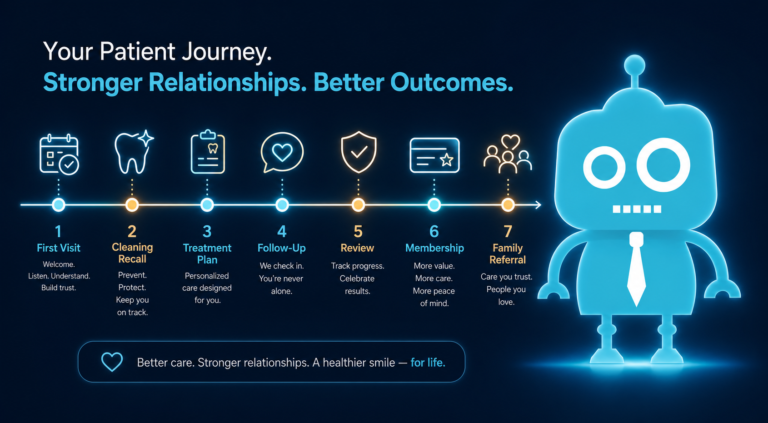
Membership plans support retention because they create an ongoing relationship. Patients are not just visiting when they have pain. They are enrolled, receiving reminders, using benefits, and staying connected to your brand.
Retention Protects Your Marketing Investment
If your practice spends money on SEO, Google Ads, social media, direct mail, or referral campaigns, every new patient has an acquisition cost. If that patient visits once and never returns, your return on investment drops.
A membership plan gives new patients a reason to stay after the first appointment. It can be introduced during online booking, over the phone, at check-in, during treatment presentation, or at checkout.
For example, a new uninsured patient who schedules an emergency exam may not be thinking about long-term care. But after the dentist diagnoses treatment and the front desk explains the membership option, that patient may see a path forward with your practice instead of shopping around.
Membership Helps Reactivate Inactive Patients
Your patient database likely includes people who have not visited in 12, 18, or 24 months. Many of them may be uninsured or unsure what it will cost to come back.
A targeted email or SMS campaign can reintroduce your practice with a specific message:
“If you have been putting off dental care because you do not have insurance, our in-house membership plan may help. It includes preventive visits and savings on treatment.”
This type of campaign is more effective than a generic “We miss you” message because it addresses a specific barrier.
How to Promote Your Dental Membership Plan on Your Website
Your website should be one of your strongest tools for growing membership enrollment. If the plan is only mentioned at the front desk, many potential patients will never know it exists.
To improve website conversion, your membership plan should be easy to find, easy to understand, and easy to act on.
Create a Dedicated Membership Plan Page
A dedicated page allows your dental practice to rank for relevant search terms and answer patient questions in one place.
Your membership page should include:
- A clear headline for uninsured patients
- What is included in the plan
- Monthly or annual pricing, if appropriate
- Benefits for adults, children, and perio patients
- How the plan differs from dental insurance
- Frequently asked questions
- A call-to-action to enroll or request an appointment
- A lead capture form connected to your CRM
SEO-friendly page topics may include “dental membership plan,” “dentist without insurance,” “affordable dental care,” and “in-house dental plan” combined with your city or service area.
Add Calls-to-Action Across Your Website
Do not rely on one page alone. Add membership plan calls-to-action in strategic places, such as:
- Homepage hero section
- New patient page
- Insurance and payment page
- Emergency dentist page
- Dental cleaning page
- Footer navigation
- Online appointment request forms
- Exit-intent or mobile-friendly popups
A simple message can work well:
No insurance? Ask about our in-house dental membership plan.
This message helps convert visitors who may otherwise leave because they assume they cannot afford care.
Use Lead Capture Forms for Membership Inquiries
Your website should make it easy for patients to request more information. A membership lead form can ask for:
- Name
- Phone number
- Email address
- Preferred appointment time
- Whether the patient has insurance
- Interest in individual or family membership
When connected to a CRM system, these leads can automatically trigger follow-up tasks, email sequences, SMS reminders, and front desk notifications. This prevents membership inquiries from getting lost in a general inbox.
Email and SMS Campaigns Can Increase Enrollment
Many dental practices launch a membership plan but fail to promote it consistently. Patients need to hear about the plan more than once, especially if they are not actively thinking about dental care.
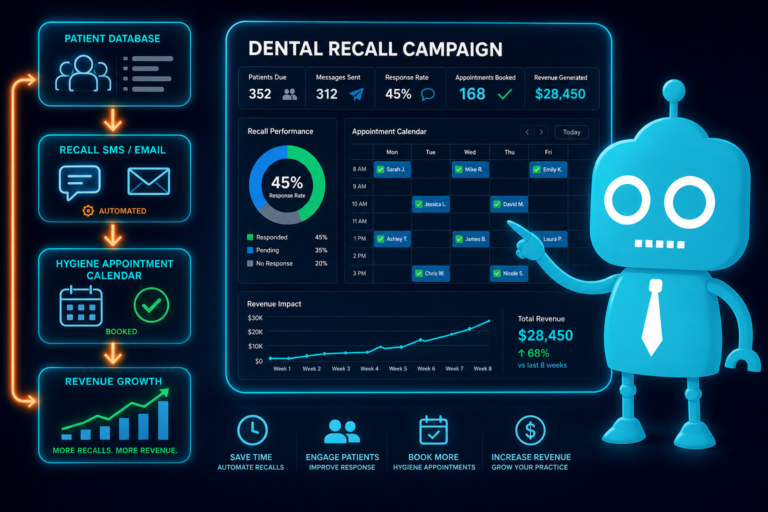
Email and SMS automation can help your practice communicate the value of the plan without adding more manual work for the front desk.
Campaign Ideas for Existing Patients
Your current patient base is the best place to start. Use your practice management software or CRM to identify uninsured patients, inactive patients, and patients who frequently decline treatment because of cost.
Campaign examples include:
- Uninsured patient campaign: Explain the membership plan and invite patients to enroll before their next visit.
- Recall campaign: Remind patients their membership includes preventive care.
- Treatment follow-up campaign: Show how member savings may help with recommended treatment.
- Family campaign: Promote membership options for households without dental insurance.
- Year-end campaign: Encourage patients to start the new year with preventive care already planned.
Use SMS for Timely Action
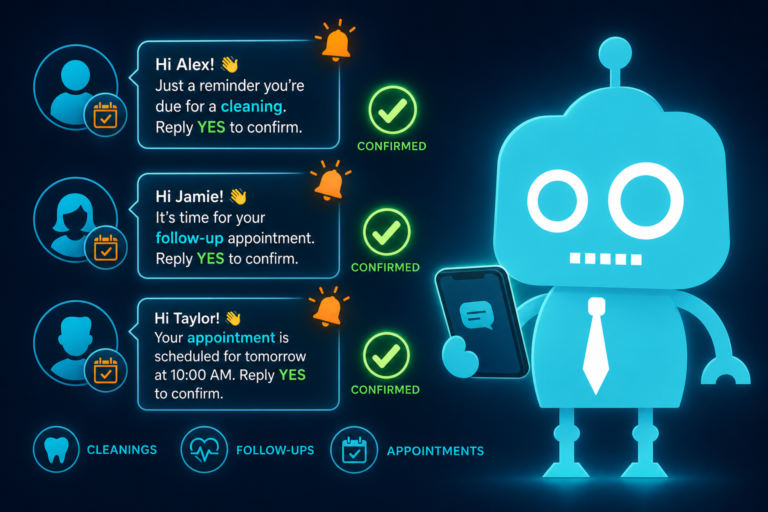
SMS works well for short, action-focused messages. For example:
“Hi Sarah, this is Bright Valley Dental. You are due for a cleaning, and our membership plan can help if you do not have insurance. Reply PLAN for details.”
Or:
“No dental insurance? Our in-house membership plan includes preventive visits and savings on treatment. Tap here to request info.”
Always follow applicable consent and privacy rules when sending SMS or email messages. Make opt-in and opt-out processes clear.
Membership Plans Support Better Reviews and Referrals
Patients who feel cared for, informed, and financially comfortable are more likely to leave positive reviews and refer friends or family. A membership plan can contribute to that experience by making care feel more accessible.
After a successful preventive visit or completed treatment, your office can send an automated review request through your CRM or reputation management system. If the patient mentions affordability, convenience, or the membership plan in their review, that social proof can help attract other uninsured patients.
For example, a review that says, “I do not have dental insurance, but their membership plan made it easy to keep up with cleanings,” can be highly persuasive to similar patients searching online.
Practical Front Desk Tips for Membership Plan Success
Your membership plan should not feel like an afterthought. It should be built into daily operations so the team knows when and how to present it.
Train the Team on Simple Scripts
Give your front desk team clear language they can use with confidence:
“We are not an insurance company, but we do offer an in-house membership plan for patients without dental insurance. It includes preventive care and savings on other services.”
“Many of our uninsured patients choose the plan because it makes routine visits more predictable.”
“I can send you a link with the details and help you schedule your appointment.”
Track Membership Metrics
To understand the impact on dental revenue, track key metrics such as:
- Number of active members
- Monthly recurring revenue
- Annual membership revenue
- Recall compliance among members
- Treatment acceptance among members
- Inactive patient reactivations
- Membership landing page conversion rate
- Email and SMS campaign response rates
These numbers help you refine pricing, benefits, marketing messages, and staff training.
A Strong Membership Plan Starts With a Strong Digital System
A dental membership plan can improve revenue, but it works best when supported by the right digital infrastructure. Patients need to find the plan online, understand the value, submit an inquiry, receive follow-up, schedule easily, and continue receiving reminders.
That requires more than a basic website.
Your practice needs a modern dental website designed for conversion, mobile users, search visibility, lead capture, CRM integration, and automated communication. When your website, forms, CRM, email, SMS, and front desk workflows work together, your membership plan becomes a true growth asset.
Grow Your Dental Membership Plan With CreateTheSite.com
CreateTheSite.com helps dental practices turn their websites into patient acquisition and retention tools. If you want to promote an in-house dental membership plan, attract more uninsured patients, and improve follow-up, your website should make the process simple from the first click.
CreateTheSite.com provides modern website design, secure hosting, mobile optimization, lead capture forms, CRM integrations, SMS and email automation, appointment follow-up systems, and ongoing website support for dental practices.
Whether you are launching a new membership plan or want your current plan to generate more enrollments, CreateTheSite.com can help you build the digital foundation to promote it clearly, capture more leads, and keep patients engaged.
Ready to make your dental website work harder for your practice? Visit CreateTheSite.com to learn how a modern, conversion-focused website can support your membership plan, improve patient retention, and create more predictable revenue.