Why Patient Retention Matters More Than New Leads
New patient leads are important for every dental practice. But if your growth strategy depends mostly on constantly buying more leads, you are building on a fragile foundation.
Durable dental practice growth comes from keeping the patients you already worked hard to attract.
For independent dental practice owners, dentists, and office managers, patient retention is often the difference between a practice that feels busy but unpredictable and one that grows steadily with lower marketing costs, stronger patient relationships, more treatment acceptance, better reviews, and more referrals.
In other words, new leads can start the relationship. Retention is what turns that relationship into long-term revenue.
The Problem With Chasing New Dental Leads Forever
Many dental practices invest in Google Ads, SEO, social media, direct mail, and website redesigns to generate new patient inquiries. Those channels can work well. But if patients visit once and do not return for hygiene, treatment, or family appointments, the practice has to keep replacing them with more paid traffic.
That creates a costly cycle:
- You pay to attract a new patient.
- The patient schedules one appointment.
- They do not return for continuing care.
- The practice pays again to find another new patient.
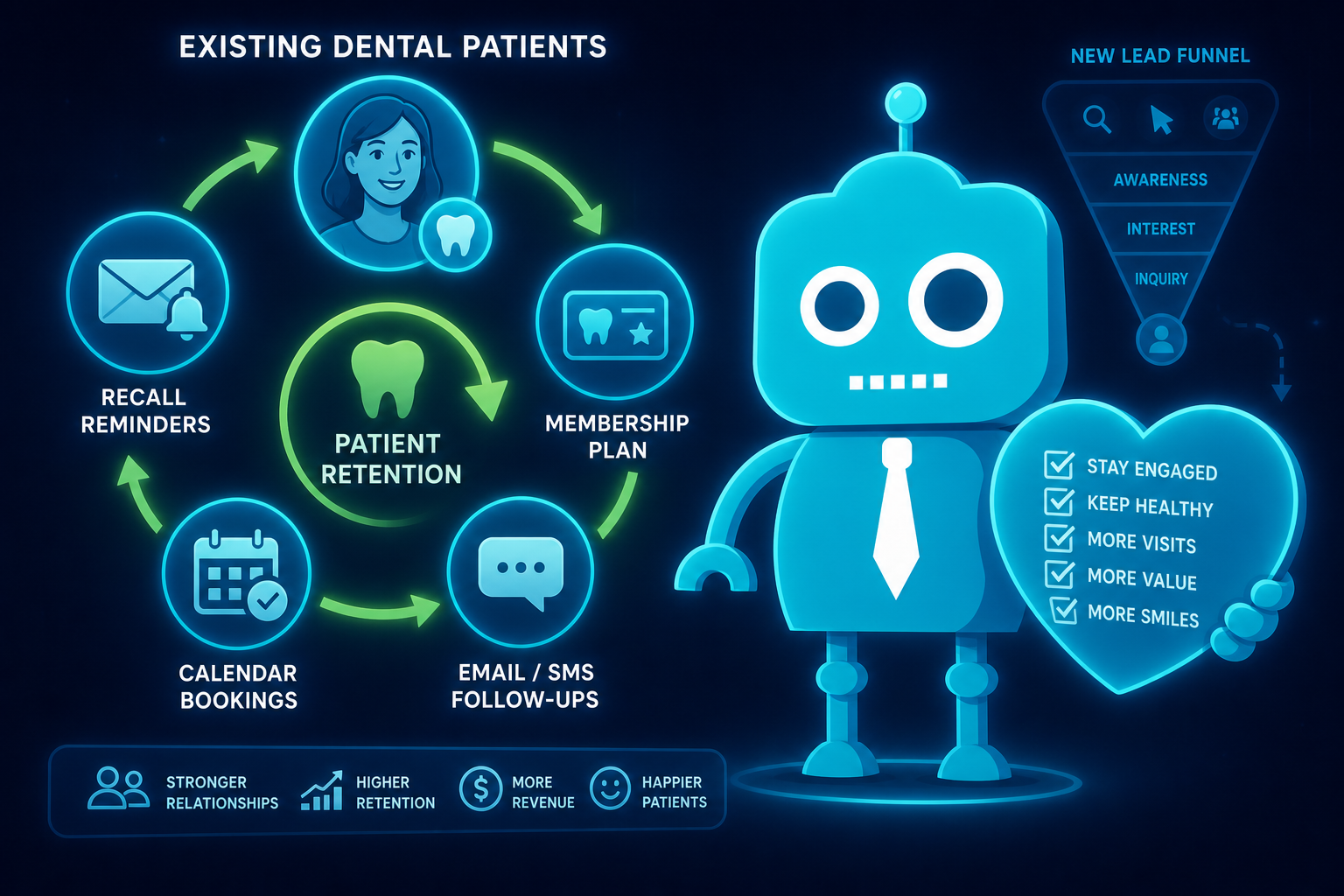
This is why patient retention often matters more than new leads. Retained patients create compounding value. They return, accept treatment, refer others, leave reviews, bring family members, and respond to follow-up communication.
A strong dental marketing strategy should not only ask, “How do we get more new patients?” It should also ask, “How do we make sure the patients we already have keep coming back?”
Patient Lifetime Value Is Where Dental Growth Becomes Durable
Patient lifetime value is the estimated revenue a patient generates during their entire relationship with your dental practice.
A single new patient appointment may be worth a few hundred dollars. But a retained patient may be worth thousands of dollars over several years through hygiene visits, restorative dentistry, cosmetic treatment, periodontal maintenance, emergency care, referrals, and family appointments.
A Practical Example of Patient Lifetime Value
Consider two patients who both find your practice through your website.
Patient A comes in for a new patient exam, cleaning, and X-rays. Then they disappear. The practice earned revenue from one visit, but the relationship ended.
Patient B comes in for the same first visit, returns every six months for hygiene, accepts a crown treatment plan, refers their spouse, schedules their children, and leaves a positive Google review.
The cost to acquire both patients may have been similar. But Patient B is dramatically more valuable because the relationship continues.
This is the core reason retention creates more durable growth than constantly buying new leads. The longer a patient stays engaged, the more valuable your original marketing investment becomes.
Hygiene Visits Are the Foundation of Dental Patient Retention
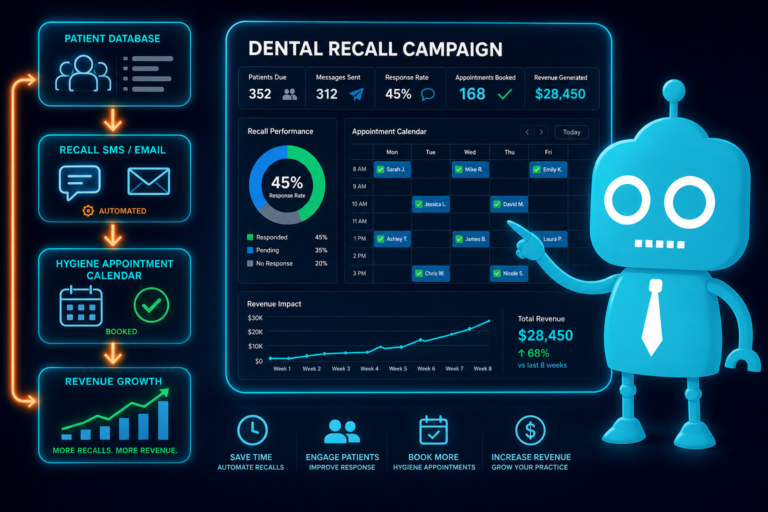
For most dental practices, hygiene is the heartbeat of retention. Recurring hygiene visits keep patients connected to the practice, create consistent production, and uncover treatment opportunities before problems become emergencies.
If patients are not pre-appointed, reminded, and reactivated, they can easily fall out of the schedule. Once they are overdue by 12, 18, or 24 months, it becomes much harder to bring them back.
How to Improve Hygiene Retention
Independent dental practices can improve hygiene retention with a few practical front desk and automation systems:
- Pre-appoint before the patient leaves: Train the team to schedule the next hygiene visit at checkout.
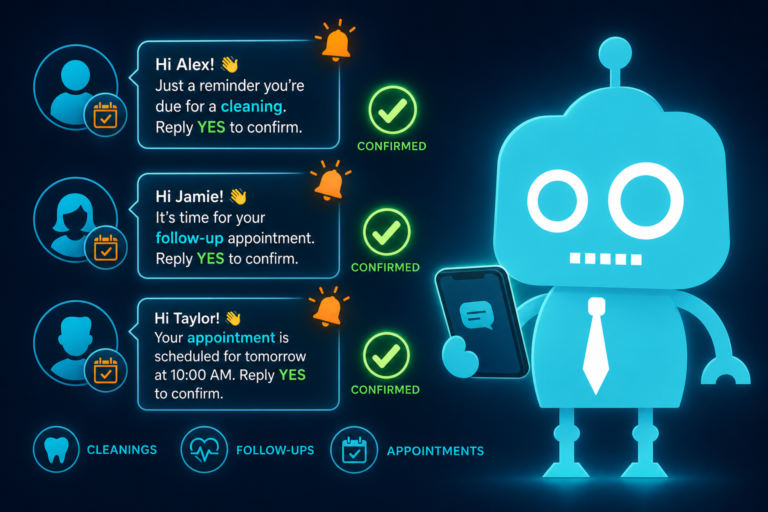
- Use SMS and email reminders: Send automated reminders before upcoming appointments.
- Send overdue recall messages: Use your CRM or patient communication platform to contact patients who are past due.
- Make scheduling easy: Include a clear appointment request form on your website and link to it in email and SMS campaigns.
- Track unscheduled hygiene patients: Review recall reports weekly, not just when the schedule gets light.
A full hygiene schedule is not accidental. It is usually the result of consistent systems, good communication, and a front desk team that treats recall as a growth driver.
Retention Increases Treatment Plan Acceptance
Patients are more likely to accept treatment when they trust the dentist, understand the value of care, and feel supported by the practice team.
That trust is built over time.
A first-time patient may delay treatment because they are unsure, nervous, comparing costs, or not ready to commit. But a retained patient who has had positive experiences with your practice is more likely to move forward with recommended care.
Follow-Up Matters After Treatment Is Presented
Many dental practices lose production because treatment plans are presented once and then forgotten. The dentist explains the need. The patient says they will think about it. The team gets busy. No one follows up.
A simple treatment follow-up system can recover a significant amount of unscheduled dentistry.
For example:
- Send an email with a clear explanation of the recommended treatment.
- Follow up with an SMS reminder a few days later.
- Have the treatment coordinator call patients with larger treatment plans.
- Use your CRM to track unscheduled treatment opportunities.
- Include online appointment request links to reduce friction.
This is where website conversion, CRM integration, and front desk operations work together. Your website should not only attract new patients. It should also help existing patients schedule treatment, request follow-up, ask questions, and re-engage with your office.
Retained Patients Generate Better Referrals
Referrals are one of the highest-quality sources of new patients for dental practices. A referred patient often arrives with more trust because a friend, family member, or coworker already recommended you.
But referrals usually do not come from one-time patients. They come from patients who feel connected to the practice.
Patients are more likely to refer when they:
- Have had several positive visits.
- Trust the dentist’s recommendations.
- Feel the front desk is friendly and organized.
- Can easily schedule appointments.
- Receive helpful reminders and follow-up communication.
- Believe the practice cares about their long-term health.
Make Referrals Easy for Patients
Most happy patients are willing to refer, but they may not think to do it unless prompted.
Dental practices can encourage referrals by adding simple touchpoints:
- Include a “Refer a Friend or Family Member” link in email newsletters.
- Add a referral message to post-appointment follow-up emails.
- Create a referral page on your dental website.
- Train the front desk to mention referrals naturally after positive patient feedback.
- Send SMS campaigns to loyal patients when you are accepting new patients.
Referral growth is a retention benefit. The more loyal patients you have, the more likely they are to introduce others to your practice.
Reviews Improve When Patients Stay Engaged
Online reviews are critical for dental website conversion and local SEO. When a prospective patient compares dentists online, your Google reviews often influence whether they call your office, submit a form, or keep searching.
Retained patients are one of your best sources of strong reviews because they have experienced your practice over time.
A patient who has had multiple positive hygiene visits, successful treatment, friendly front desk interactions, and convenient reminders has more to say than someone who visited once.
Use Automated Review Requests After Positive Visits
Review generation should be simple and consistent. Many practices miss reviews because they rely on verbal requests only.
A better system is to use SMS and email automation after appointments. For example, after a hygiene visit or completed treatment, send a short message thanking the patient and asking them to share their experience.
The message should link directly to your Google review profile. The easier it is, the more likely patients are to act.
Positive reviews then support new patient acquisition by improving trust, increasing website conversions, and strengthening your local search presence.
This is another example of retention and acquisition working together. Happy returning patients create the proof that helps new patients choose you.
Family Appointments Expand the Value of Each Patient Relationship
One retained patient may represent more than one chart. They may be connected to a spouse, children, parents, or extended family members who also need dental care.
Family appointments can significantly increase patient lifetime value while making scheduling more convenient for households.
How to Encourage Family Scheduling
Your team can create more family appointment opportunities with simple systems:
- Ask new patients if other family members need a dental home.
- Offer convenient block scheduling for parents and children.
- Use email campaigns before back-to-school season.
- Send reminders about unused insurance benefits for the whole family.
- Create website pages for family dentistry, children’s dentistry, and preventive care.
Your website should make it clear that your practice welcomes families if that is part of your service model. A parent looking for a dentist may be more likely to schedule if they see that your office can care for both adults and children.
Retention becomes more powerful when one satisfied patient turns into an entire family of long-term patients.
Patient Retention Lowers Marketing Costs
New patient acquisition can be expensive. Pay-per-click ads, SEO campaigns, direct mail, social media advertising, and third-party lead platforms all require ongoing investment.
Those investments can be worthwhile, especially when your website converts visitors into scheduled patients. But if your retention is weak, your marketing costs keep rising because you are always trying to refill the patient base.
Improving retention helps lower the cost of growth because you earn more revenue from patients you already acquired.
Retention Makes Your Marketing More Profitable
Imagine spending money on a website and digital marketing campaign that brings in 50 new patients.
If most of those patients only visit once, the campaign may not produce strong long-term returns.
But if many of those patients return for hygiene, complete treatment, refer family members, and leave reviews, the same campaign becomes much more profitable.
This is why dental marketing should not stop at lead generation. The best dental growth systems connect:
- Modern website design
- Mobile-friendly appointment forms
- Call tracking and lead capture
- CRM integration
- Email and SMS follow-up
- Review requests
- Recall and reactivation campaigns
- Front desk scheduling workflows
When these systems work together, your practice gets more value from every new patient lead and every existing patient relationship.
Email and SMS Retention Systems Keep Patients Connected
Dental patients are busy. They forget appointments, delay treatment, miss recall reminders, and postpone scheduling because life gets in the way.
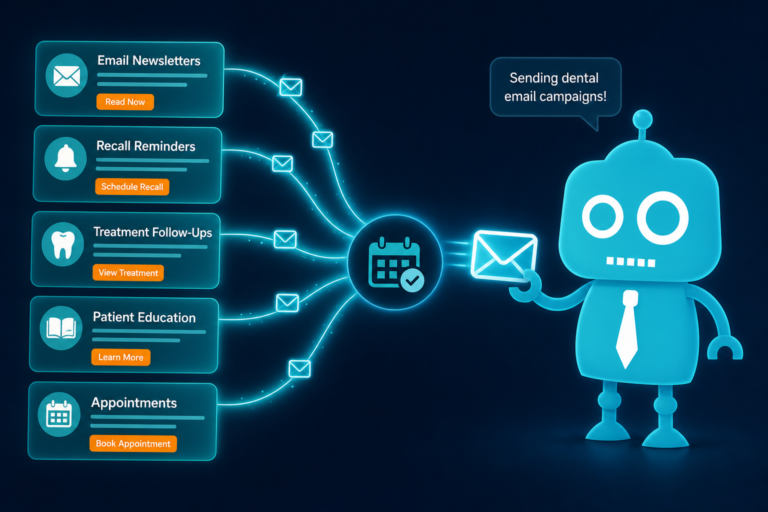
Email and SMS retention campaigns help keep your practice visible and make it easier for patients to take action.
This does not mean overwhelming patients with constant messages. It means sending timely, useful communication that helps them stay on track with their oral health.
Useful Email and SMS Campaigns for Dental Practices
Here are practical retention campaigns that work well for dental offices:
- Appointment reminders: Reduce no-shows and last-minute cancellations.
- Overdue hygiene recall: Bring patients back before they disappear for years.
- Unscheduled treatment follow-up: Remind patients about diagnosed care.
- Post-op instructions: Improve patient experience after procedures.
- Review requests: Encourage happy patients to share feedback.
- Birthday or seasonal messages: Keep the practice relationship warm.
- Insurance benefit reminders: Motivate patients to use remaining benefits before year-end.
- Family scheduling reminders: Encourage parents to schedule multiple family members.
When connected to your CRM or patient communication platform, these campaigns can run consistently without requiring the front desk to manually message every patient.
Automation does not replace personal service. It supports it. The front desk can focus on higher-value conversations while routine reminders and follow-ups happen reliably in the background.
Your Website Should Support Retention, Not Just New Patient Leads
Many dental websites are designed only with new patients in mind. They include service pages, a phone number, a contact form, and maybe a few photos of the office.
Those elements matter. But a modern dental website should also support existing patients.
Retention-Focused Website Features
To improve patient retention, your website should make it easy for patients to:
- Request hygiene appointments.
- Schedule family visits.
- Ask questions about treatment plans.
- Access patient forms.
- Find payment and financing information.
- Read post-treatment instructions.
- Leave a review.
- Refer friends and family.
- Contact the office from a mobile device.
Mobile optimization is especially important. Many patients open reminder texts, email campaigns, and appointment links on their phones. If your website loads slowly, is difficult to navigate, or has forms that are hard to complete, patients may abandon the process.
Strong website conversion is not just about turning strangers into leads. It is also about turning existing patients into scheduled appointments.
Front Desk Operations Are Central to Patient Retention
Technology helps, but retention also depends heavily on front desk execution.
Your front desk team is often responsible for scheduling, reminders, treatment follow-up, patient questions, insurance communication, and first impressions. Even a strong marketing campaign can fail if calls are missed, forms are not followed up on, or unscheduled treatment is not tracked.
Retention Habits for the Dental Front Desk
Here are practical habits that improve retention:
- Respond quickly to website form submissions.
- Call missed appointment requests the same business day.
- Pre-appoint hygiene patients before they leave.
- Keep a weekly list of unscheduled treatment plans.
- Use scripts for overdue recall calls and texts.
- Confirm that patient contact information is current.
- Ask satisfied patients for reviews at the right time.
- Track referral sources in your CRM or practice management system.
Retention improves when your team has a clear process. Without a process, follow-up becomes inconsistent and opportunities slip through the cracks.
New Leads Still Matter, But Retention Makes Them More Valuable
This is not an argument against new patient acquisition. Dental practices still need visibility, search engine optimization, a strong website, and a steady flow of new patient opportunities.
But new leads are only the beginning.
If your practice converts website visitors into appointments and then retains those patients for years, every marketing dollar works harder. If your practice loses patients after one or two visits, you need more and more leads just to maintain production.
The most durable dental growth model combines acquisition and retention:
- Attract new patients through a modern, search-friendly website.
- Convert visitors with clear calls to action and mobile-friendly forms.
- Capture leads in a CRM or patient communication system.
- Follow up quickly with calls, email, and SMS.
- Pre-appoint hygiene visits.
- Track unscheduled treatment.
- Request reviews after positive experiences.
- Encourage referrals and family appointments.
- Reactivate overdue patients before they are lost.
That is how dental practices move from temporary lead generation to sustainable growth.
Build a Dental Growth System That Keeps Patients Coming Back
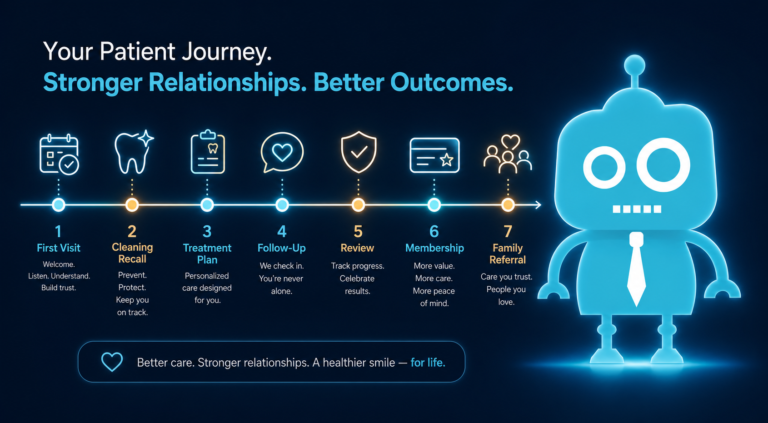
Patient retention is not one tactic. It is the result of many connected systems working together: your website, CRM, front desk workflows, hygiene schedule, treatment follow-up, review requests, referral process, and email/SMS automation.
When those systems are organized, your practice becomes less dependent on constantly buying new leads. You still attract new patients, but you also keep more of them, increase lifetime value, and build a stronger reputation in your local market.
That is the kind of growth that lasts.
How CreateTheSite.com Helps Dental Practices Grow With Better Retention Systems
CreateTheSite.com helps dental practices build modern websites and digital systems that support both new patient acquisition and long-term patient retention.
For independent dental practice owners, dentists, and office managers, CreateTheSite.com can help with:
- Modern dental website design
- Secure website hosting
- Mobile optimization for patients scheduling from their phones
- Lead capture forms for new and existing patients
- CRM integrations
- SMS and email automation
- Appointment follow-up systems
- Review request workflows
- Ongoing website support and updates
Your website should do more than look professional. It should help your practice capture leads, follow up with patients, improve scheduling, support treatment acceptance, and keep patients engaged over time.
If your dental practice is ready for a website and digital system that supports more durable growth, visit CreateTheSite.com to learn how the right website, automation, and support can help your patients keep coming back.