How AI Is Changing Dental Marketing
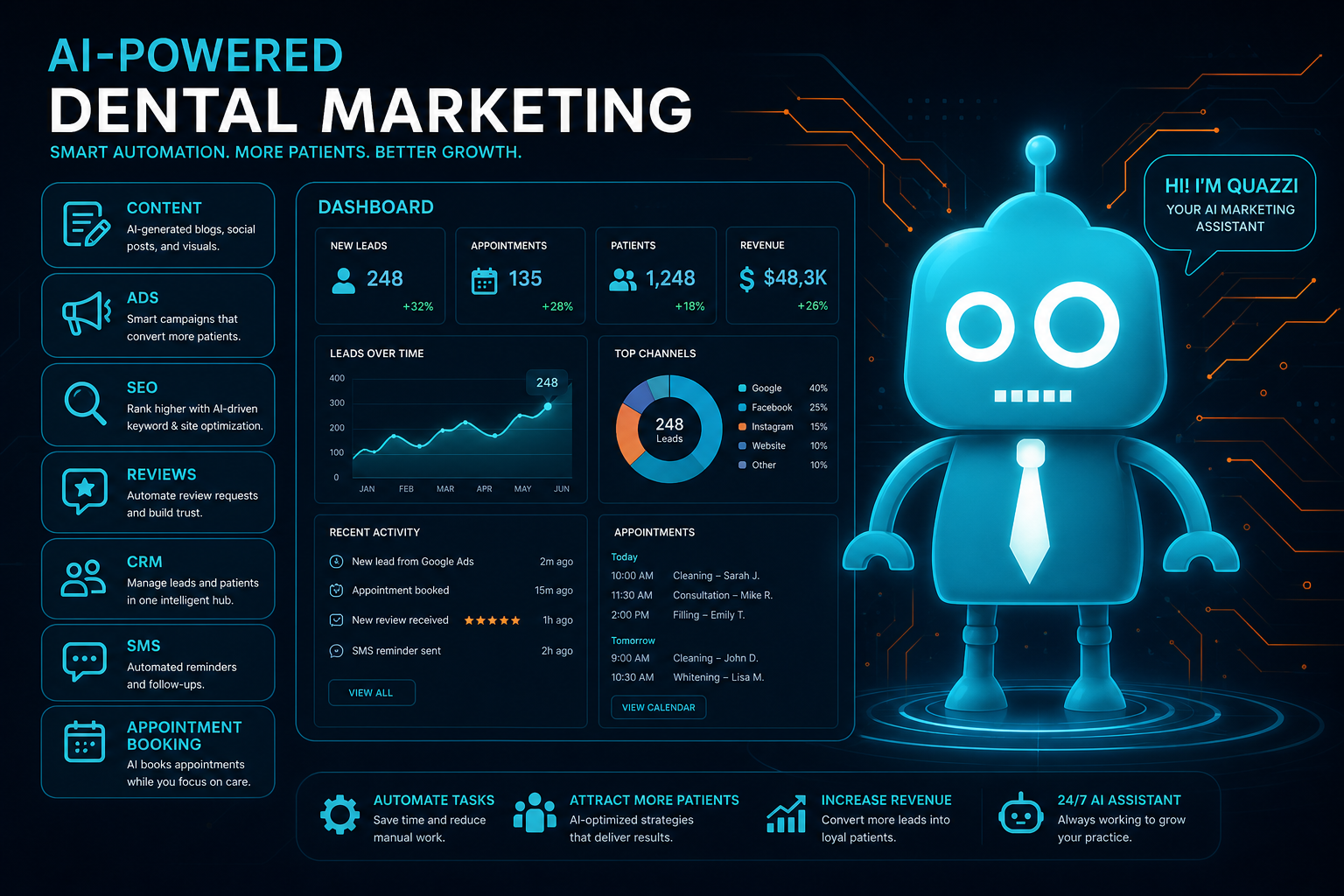
AI is changing dental marketing, but not in the way many practice owners expect. The biggest impact is not flashy ads or gimmicky content. The real shift is happening inside the daily workflows that help dental practices attract, convert, schedule, and retain patients.
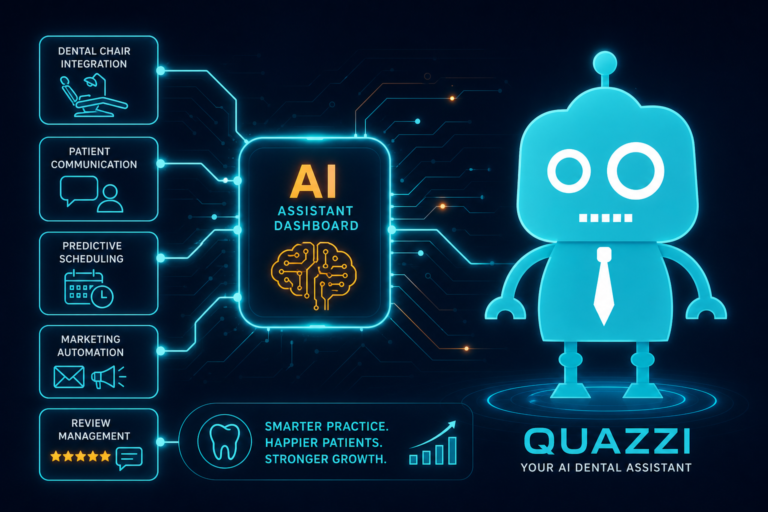
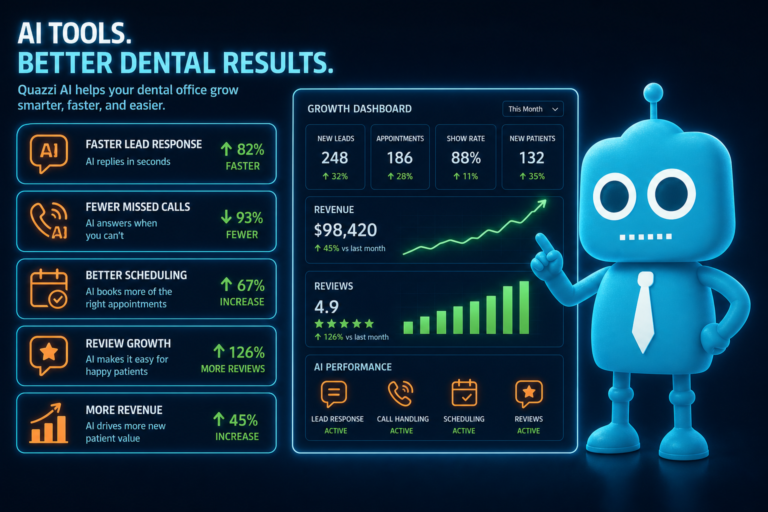
For independent dental practices, AI can improve the systems behind marketing: faster response times, better lead follow-up, smarter scheduling, more consistent patient communication, and stronger front desk support. These workflow improvements directly affect new patient acquisition, website conversion, patient experience, and production.
In other words, AI is not replacing your team. It is helping your team respond faster, stay organized, and avoid letting opportunities slip through the cracks.
Why Workflow Matters in Dental Marketing
Dental marketing is often discussed in terms of websites, SEO, Google Ads, social media, and reviews. Those are important, but they only create opportunities. What happens after a potential patient calls, fills out a form, sends a chat message, or asks a question is just as important.
A strong dental marketing workflow answers questions quickly, captures the right information, follows up consistently, and makes it easy for the patient to schedule. AI helps improve that workflow by reducing manual tasks and helping the office respond at the right time with the right message.
For a busy front desk, this can be the difference between a missed lead and a booked appointment.
AI Receptionists Help Capture More New Patient Calls
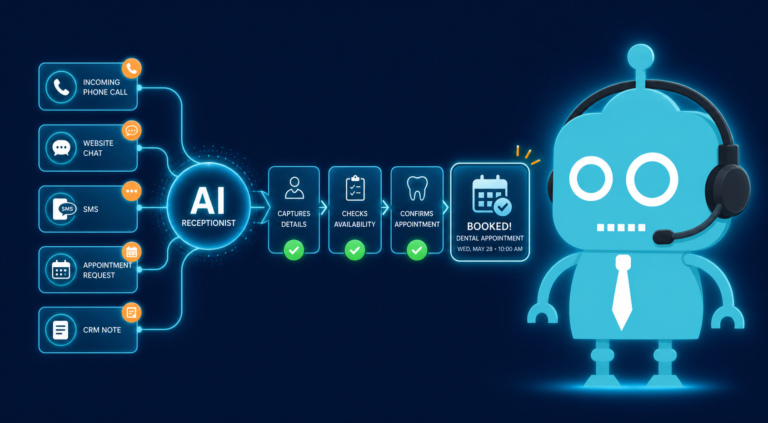
Phone calls are still one of the most valuable conversion points for dental practices. A prospective patient who calls your office is often ready to schedule, but calls can be missed during lunch, after hours, during peak check-in times, or when the front desk is already helping patients in the office.
AI receptionists can help dental offices handle more call volume without overwhelming the team. They can answer common questions, collect patient information, route calls, take messages, and even help start the scheduling process depending on the system being used.
Practical Example
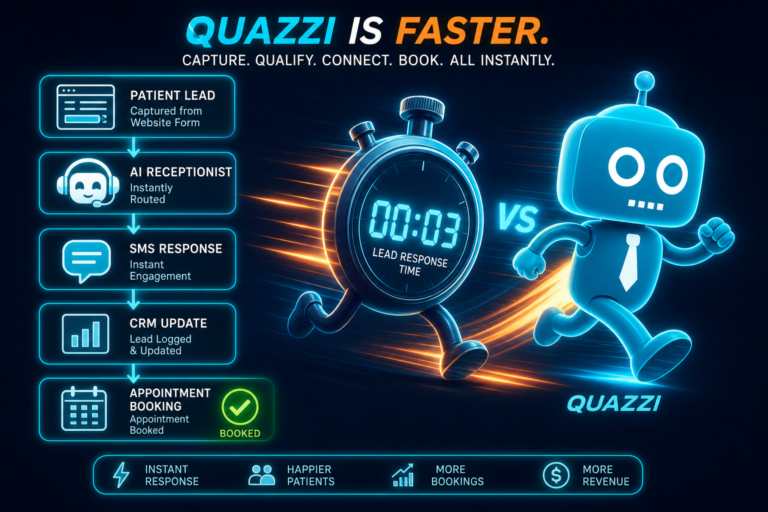
A new patient calls at 7:15 p.m. after searching for “dentist near me” on their phone. Instead of reaching voicemail, an AI receptionist answers, asks whether they are a new or existing patient, collects their name and contact information, identifies the reason for the visit, and sends the details to the practice’s CRM or front desk inbox.
The next morning, the team has a qualified lead with context instead of a vague missed call notification.
Chatbots Improve Dental Website Conversion
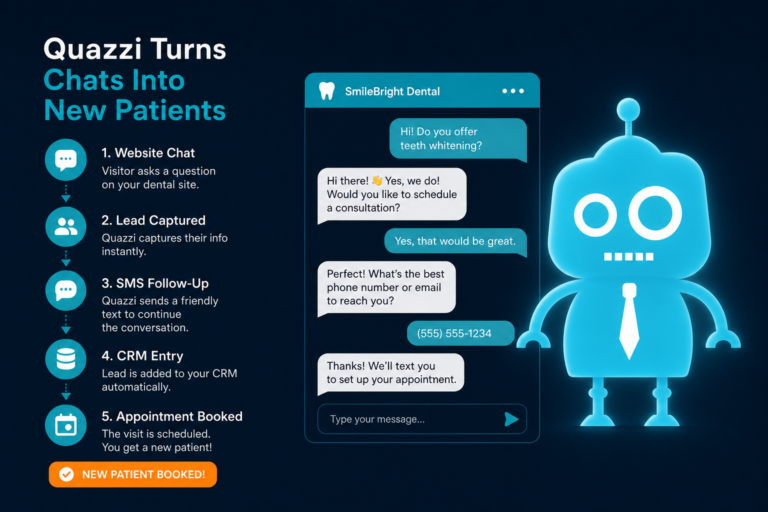
Your dental website should do more than look professional. It should help visitors take action. AI chatbots can support website conversion by answering common questions and guiding visitors toward booking, calling, or submitting a form.
For dental practices, chatbot conversations often involve questions about insurance, emergency appointments, Invisalign, implants, cleanings, sedation, pediatric visits, whitening, and financing. A chatbot can provide helpful direction while collecting lead information for follow-up.
What a Dental Chatbot Can Do
- Answer frequently asked questions about services, insurance, and office hours
- Guide emergency patients to call or request the earliest available appointment
- Collect name, phone number, email, and reason for visit
- Send form submissions into a CRM or practice management workflow
- Trigger SMS or email follow-up when someone does not book immediately
The key is to use chatbots as a conversion assistant, not as a replacement for human care. Patients still want a friendly dental team. AI simply helps keep the conversation moving when the team is unavailable or busy.
Lead Qualification Helps the Front Desk Prioritize Follow-Up
Not every website lead has the same urgency or value. Someone asking about a toothache today needs a different response than someone researching veneers for next year. AI can help qualify leads by identifying intent, urgency, service interest, location, insurance status, and preferred appointment times.
This helps the front desk focus on the most time-sensitive opportunities first.
Examples of Dental Lead Qualification
- Emergency lead: “I have swelling and pain. Do you have appointments today?”
- High-value cosmetic lead: “I want to learn about Invisalign or veneers.”
- New patient hygiene lead: “I need a cleaning and exam.”
- Insurance-based lead: “Do you accept Delta Dental?”
- Price-shopping lead: “How much is a crown without insurance?”
With AI-supported lead qualification, these inquiries can be tagged, routed, and followed up with more effectively. Instead of treating every form submission the same, the practice can respond based on patient need and likelihood to schedule.
Personalized Follow-Up Keeps Prospective Patients Engaged
Many dental leads do not schedule on the first interaction. They may fill out a form during work, ask a question after hours, or hesitate because of cost, anxiety, insurance, or timing. Personalized follow-up helps bring those patients back into the scheduling process.
AI can support personalized SMS and email follow-up by using information from the patient’s original inquiry. A patient who asked about Invisalign should not receive the same message as a patient looking for an emergency appointment.
Practical Follow-Up Examples
- Emergency dentistry: “Hi Sarah, we received your request about tooth pain. Our team can help you find the earliest available appointment. Would you prefer a call or text?”
- Invisalign: “Hi Mark, thanks for asking about Invisalign. We offer consultations to review your smile goals and treatment options. Would you like help finding a convenient time?”
- New patient cleaning: “Hi Ashley, we received your new patient appointment request. We would be happy to help you schedule a cleaning and exam. Do mornings or afternoons work better?”
Better follow-up improves conversion because it feels relevant. It also reduces the burden on the front desk by automating the first few touchpoints.
Predictive Scheduling Can Reduce Gaps and Improve Production
Scheduling is one of the most important operational areas in a dental practice. AI can help identify patterns in cancellations, no-shows, hygiene openings, treatment acceptance, and patient preferences.
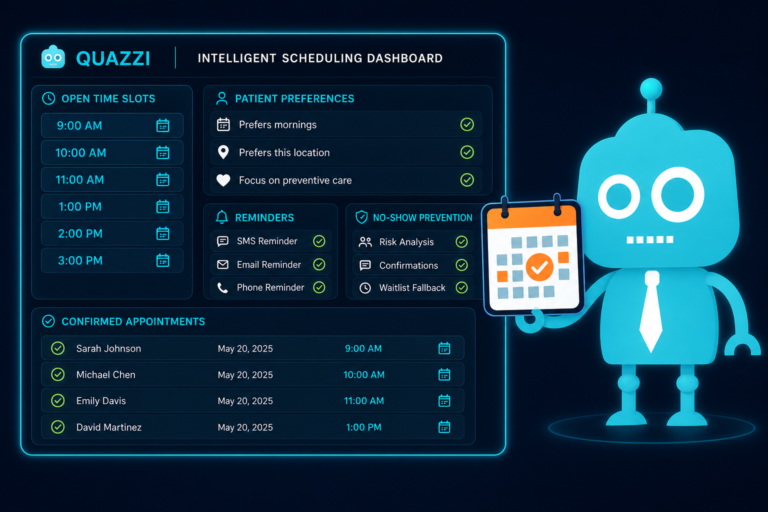
Predictive scheduling uses data to help the office make smarter decisions about appointment reminders, reactivation campaigns, waitlists, and open chair time.
How Predictive Scheduling Helps Dental Offices
- Identify patients who are more likely to cancel or no-show
- Send additional reminders to higher-risk appointments
- Fill last-minute openings with patients from a waitlist
- Reactivate overdue hygiene patients with timely messages
- Recommend better appointment times based on patient behavior
For example, if your system notices that certain appointment types or time slots have a higher no-show rate, your team can adjust reminder timing, confirmation workflows, or scheduling policies. This turns marketing automation into production support.
Review Response Support Protects and Strengthens Your Reputation
Online reviews play a major role in dental marketing. Patients often compare dentists on Google before making a decision. A strong review profile can improve trust, local SEO, and website conversion.
AI can help dental practices respond to reviews more consistently by drafting professional, HIPAA-conscious responses. This is especially useful for busy office managers who know reviews matter but do not always have time to write responses from scratch.
Important Note About Dental Review Responses
Dental practices should never confirm that someone is a patient or mention treatment details in a public review response. AI can help create safe, general responses, but the final message should always be reviewed by a trained team member.
Example of a Safe Review Response
“Thank you for your kind feedback. Our team works hard to provide a comfortable and positive experience, and we appreciate you taking the time to share your thoughts.”
For negative reviews, AI can help create calm, professional responses that avoid defensiveness and encourage the reviewer to contact the office directly.
AI Supports Smarter Dental Content Planning
Content marketing is still important for dental SEO, but many practices struggle to plan topics consistently. AI can help identify useful content ideas based on patient questions, service pages, local search opportunities, and seasonal trends.
Instead of writing random blog posts, practices can build content around real patient needs and high-intent searches.
Dental Content Ideas AI Can Help Organize
- “What to Do If You Chip a Tooth”
- “How Often Should You Get a Dental Cleaning?”
- “Invisalign vs. Braces: What Patients Should Know”
- “Signs You May Need a Root Canal”
- “How Dental Implants Work”
- “What to Expect at Your First Dental Visit”
AI can also help organize content calendars, summarize common patient questions, suggest internal links, and repurpose educational topics into email newsletters or social media posts. The best results still come from combining AI efficiency with the dentist’s expertise and the practice’s unique voice.
CRM Automation Connects Marketing to Real Follow-Up
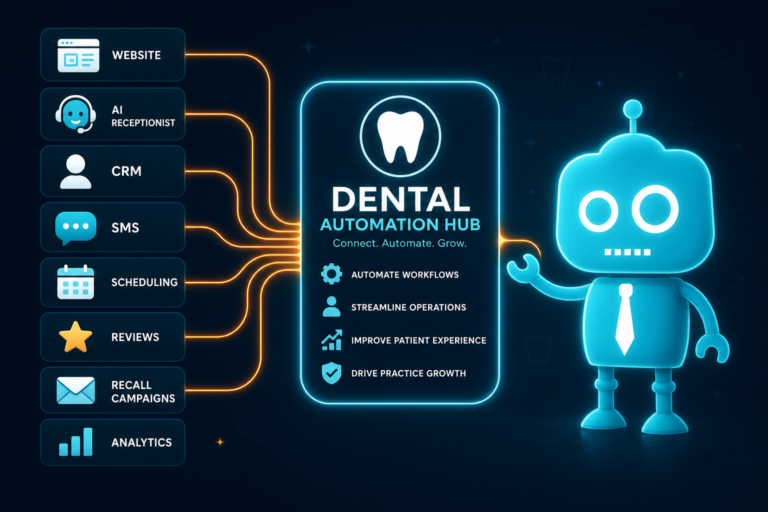
A dental CRM system helps manage leads, patient communication, follow-up tasks, and campaign tracking. AI becomes especially useful when connected to a CRM because it can help automate workflows across website forms, calls, chats, SMS, and email.
Without CRM automation, leads often end up scattered across inboxes, voicemails, spreadsheets, and sticky notes. That makes it easy for potential patients to fall through the cracks.
CRM Workflows AI Can Improve
- Automatically create a lead when a website form is submitted
- Tag leads by service interest, such as implants, Invisalign, emergency, or general dentistry
- Assign follow-up tasks to the front desk
- Send SMS and email reminders if the patient has not scheduled
- Track which marketing sources generate booked appointments
- Notify the team when a high-priority lead comes in
For independent dental practices, this is one of the most practical uses of AI in marketing. It creates a clearer path from “interested website visitor” to “scheduled new patient.”
Patient Communication Becomes More Timely and Consistent
Patients expect convenient communication. They want reminders, confirmations, answers, and follow-up without always needing to make a phone call. AI-supported communication helps dental practices stay responsive through SMS, email, website chat, and automated reminders.
This is especially valuable for front desk operations. Your team may be excellent on the phone, but they cannot manually follow up with every unscheduled lead, overdue patient, treatment plan, and appointment reminder all day long.
Examples of AI-Supported Patient Communication
- Appointment confirmation texts
- New patient welcome emails
- Post-visit follow-up messages
- Unscheduled treatment reminders
- Overdue hygiene recall campaigns
- Reactivation messages for inactive patients
- Review request messages after completed appointments
The goal is not to make communication feel robotic. The goal is to make sure important messages are sent on time, written clearly, and personalized enough to be useful.
AI Helps Dental Teams Move Faster Without Losing the Human Touch
The best dental marketing still depends on trust. Patients want to feel heard, respected, and cared for. AI does not replace that relationship. It supports the systems that make better patient experiences possible.
When AI handles repetitive tasks, your team can focus on higher-value conversations: helping anxious patients, explaining payment options, presenting treatment clearly, and creating a welcoming office experience.
Where AI Fits Best in a Dental Practice
- Capturing leads after hours
- Reducing missed calls and missed form submissions
- Helping the front desk prioritize urgent inquiries
- Automating routine follow-up
- Improving review response consistency
- Supporting website conversion
- Keeping patient communication organized
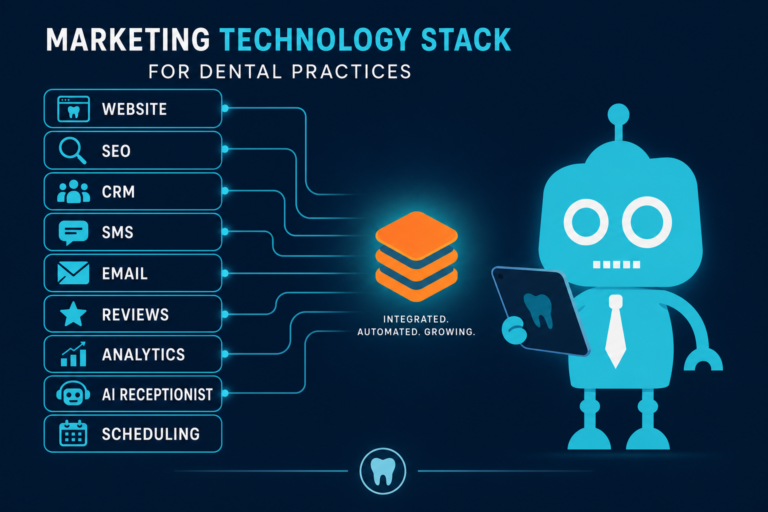
AI is most effective when it is connected to the right website, CRM, forms, automation tools, and front desk processes. Without that foundation, even the best AI tools can create more noise than value.
How Dental Practices Can Start Using AI in Marketing
You do not need to overhaul your entire practice overnight. A practical approach is to start with the workflows that have the clearest impact on new patient acquisition and patient communication.
Start With These Questions
- Are we missing calls during busy hours or after hours?
- Do website form submissions receive immediate follow-up?
- Are leads tracked in a CRM or scattered across multiple places?
- Do we have automated SMS and email follow-up for new patient inquiries?
- Are we consistently requesting and responding to reviews?
- Can our website guide visitors toward scheduling quickly?
- Are overdue hygiene patients and unscheduled treatment plans being followed up on?
The answers will show where AI can make the biggest difference. For many dental practices, the first priority is not more traffic. It is converting more of the traffic, calls, and inquiries they already have.
The Future of Dental Marketing Is More Operational
AI is making dental marketing more connected to operations. A practice’s website, CRM, phone system, chat tools, review platform, and patient communication workflows all influence marketing results.
This means successful dental marketing is no longer just about attracting clicks. It is about building a system that captures interest, responds quickly, follows up intelligently, and makes scheduling easy.
Independent dental practices that adopt AI thoughtfully can compete more effectively by improving speed, consistency, and patient experience without adding unnecessary complexity to the team’s day.
Build a Smarter Dental Marketing Workflow With CreateTheSite.com
AI works best when your digital foundation is built correctly. Your dental website should be fast, mobile-friendly, easy to update, and designed to convert visitors into scheduled patients. Your forms, CRM, SMS, email automation, and follow-up systems should work together instead of creating extra work for your front desk.
CreateTheSite.com helps dental practices build modern marketing systems that support real workflow improvements. Services include professional dental website design, secure hosting, mobile optimization, lead capture forms, CRM integrations, SMS and email automation, appointment follow-up, and ongoing website support.
If your practice wants a better website and a smarter system for capturing and following up with new patient leads, CreateTheSite.com can help you create a practical, modern online presence that supports both marketing and front desk operations.
Visit CreateTheSite.com to learn how your dental practice can turn more website visitors into real patient opportunities.