How Automation Is Reshaping Dental Offices
Automation is no longer just a “nice-to-have” for dental practices. It is becoming one of the most practical ways independent dental offices improve communication, reduce front desk overload, convert more website visitors into patients, and keep the schedule full.
For practice owners, dentists, and office managers, the biggest opportunity is not replacing people. It is helping your team communicate faster, follow up consistently, and spend less time on repetitive administrative tasks.
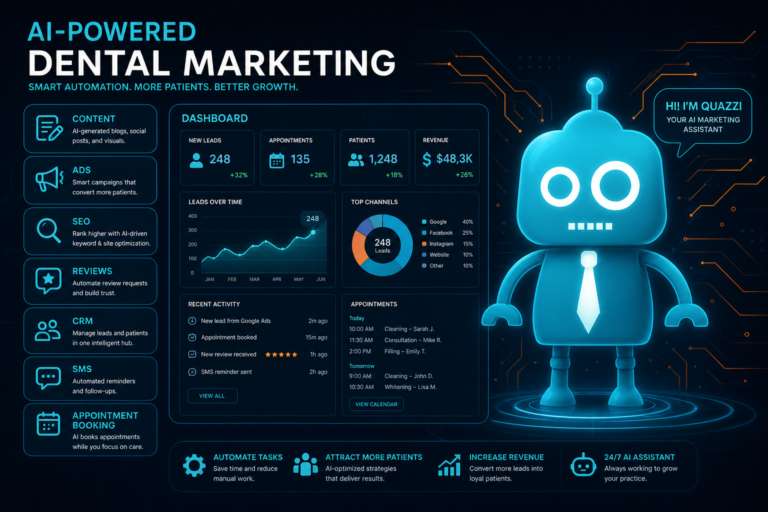
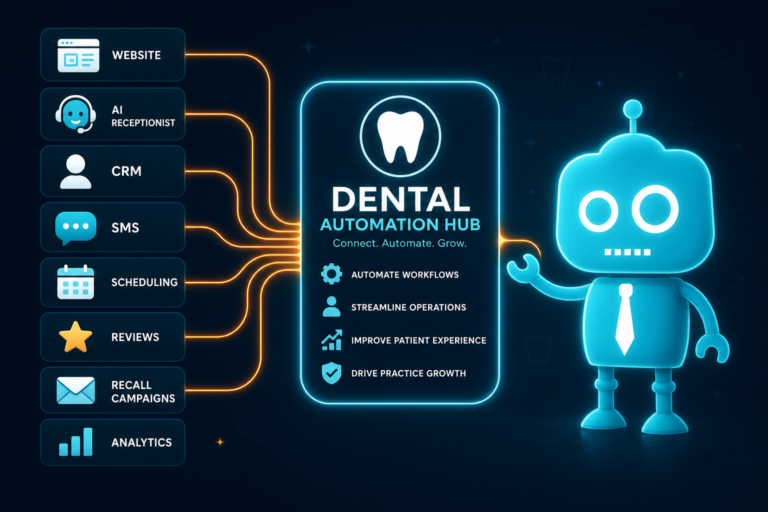
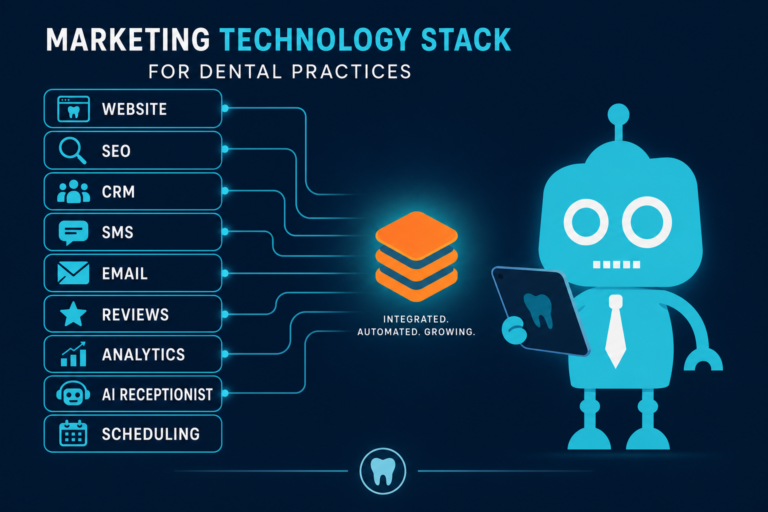
From online scheduling and SMS reminders to missed call recovery, review requests, recall campaigns, CRM workflows, and AI reception, automation is reshaping dental offices by making patient communication more efficient and reliable.
Why Dental Office Automation Matters More Than Ever
Most dental offices are busy, but not always efficient. The front desk may be answering calls, checking insurance, confirming appointments, collecting balances, responding to website inquiries, and trying to keep hygiene chairs full at the same time.
Meanwhile, patients expect quick responses. A potential new patient who submits a website form or calls after hours may contact another practice if they do not hear back quickly. Existing patients expect reminders, easy scheduling, and convenient digital communication.
Automation helps close those gaps.
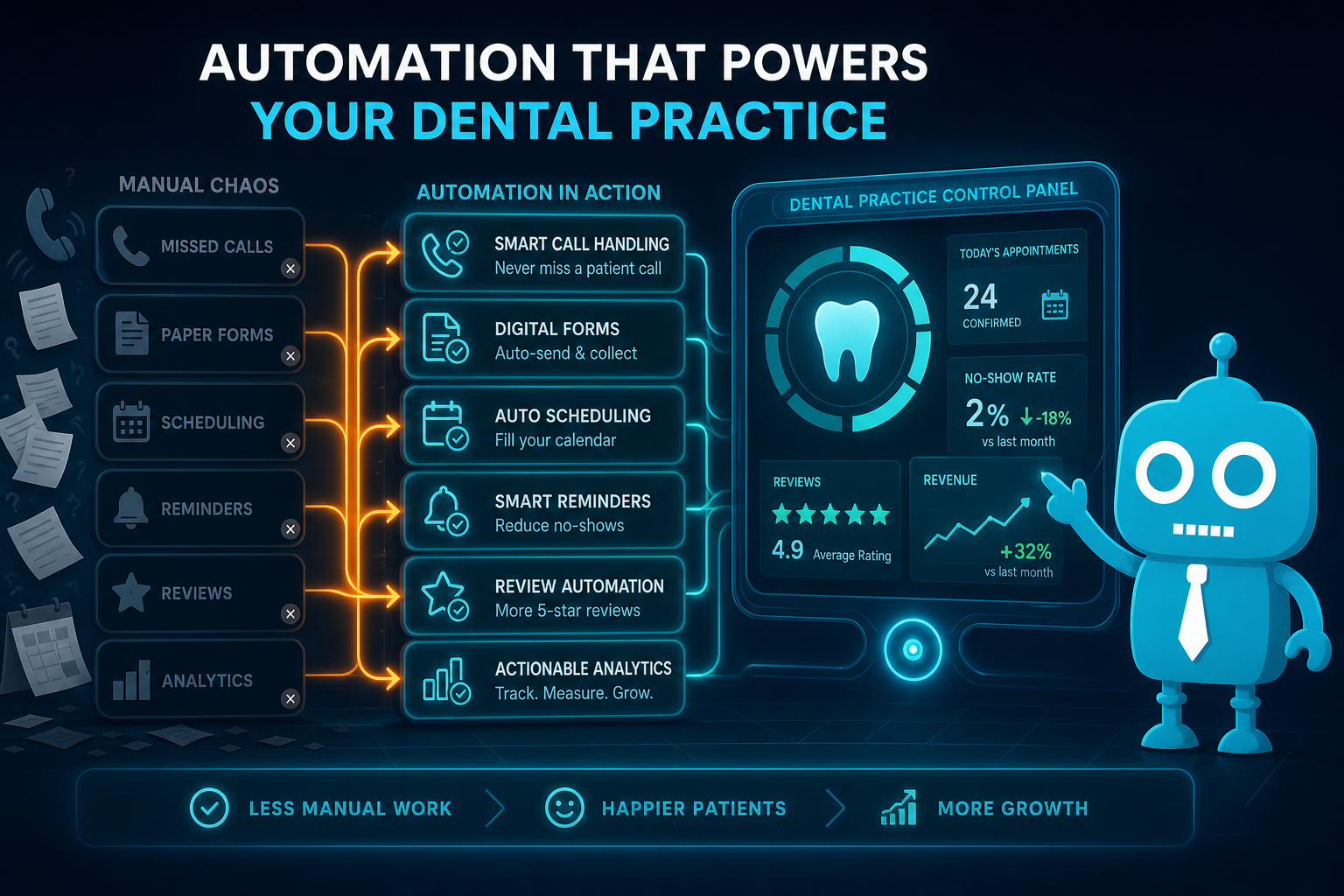
Instead of relying entirely on manual follow-up, dental practices can use automated systems to:
- Respond to new patient leads faster
- Reduce no-shows and last-minute cancellations
- Recover missed calls
- Reactivate overdue patients
- Request more Google reviews
- Track marketing and website performance
- Improve front desk productivity
The result is better communication, stronger patient relationships, and a more efficient dental office.
Online Scheduling Turns Website Visitors Into Appointments
Your dental website should do more than explain your services. It should help patients take action.
Online scheduling allows patients to request or book appointments directly from your website, often without needing to call during office hours. This is especially important for new patient acquisition because many people search for a dentist during evenings, weekends, or lunch breaks.
How Online Scheduling Improves Conversion
When a patient lands on your website from Google, a paid ad, or a local search result, they may be ready to schedule. If the only option is to call, some visitors will leave and continue comparing other offices.
Adding online scheduling or appointment request forms gives patients a low-friction next step.
For example, a patient searching for “emergency dentist near me” may not want to leave a voicemail. A prominent “Request an Appointment” button with a mobile-friendly form can capture that lead immediately.
Best Practices for Dental Online Scheduling
- Place appointment buttons in the website header, homepage, and service pages
- Make forms short and mobile-friendly
- Ask for only essential information upfront
- Send an instant confirmation message after submission
- Route new requests into a CRM or follow-up system
Even if your practice does not offer real-time booking, automated appointment request forms can still improve website conversion and help your front desk follow up more efficiently.
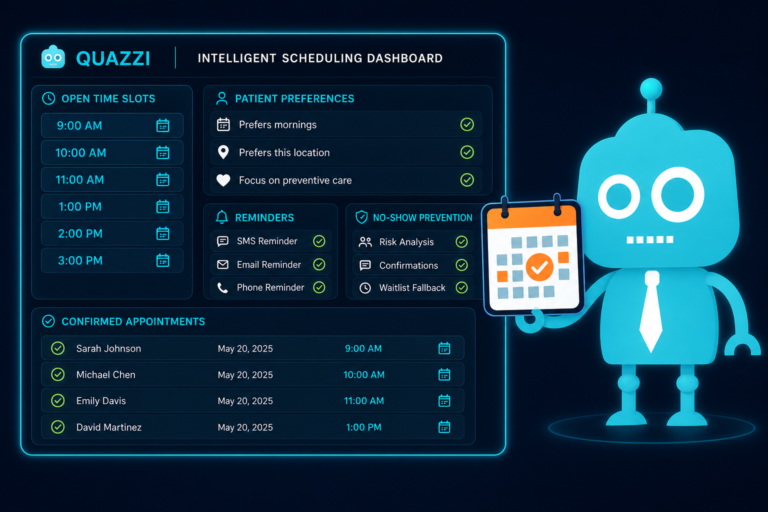
SMS Reminders Reduce No-Shows and Save Front Desk Time
No-shows and late cancellations disrupt production, create gaps in the schedule, and add stress for the team. SMS reminders are one of the simplest and most effective automation tools for dental practices.
Text messages are quick, familiar, and easy for patients to respond to. Compared to phone calls and voicemails, SMS reminders are more likely to be seen and confirmed.
Practical SMS Reminder Examples
A dental office can use automated SMS reminders for:
- Appointment confirmations
- Same-day appointment reminders
- Pre-appointment instructions
- Medical history form reminders
- Post-op care instructions
- Payment or balance reminders, where appropriate
For example, a hygiene patient may receive a text three days before the appointment asking them to confirm by replying “C.” If they do not respond, the system can send another reminder or alert the front desk for manual follow-up.
This keeps communication consistent without requiring your team to manually call every patient on the schedule.
Lead Follow-Up Helps Convert More New Patients
Many dental practices invest in SEO, Google Ads, social media, or website redesigns to attract new patients. But leads are often lost because follow-up is too slow or inconsistent.
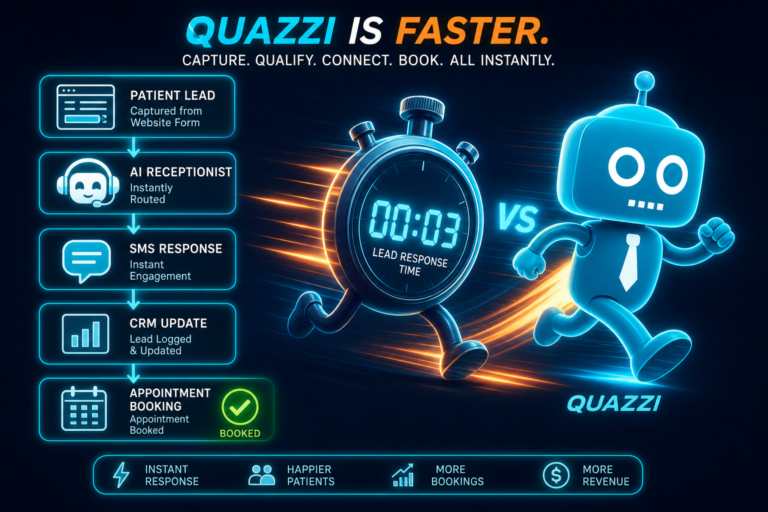
If someone fills out a form for dental implants, Invisalign, emergency dentistry, or a new patient appointment, the first few minutes matter. Automation can make sure every lead receives an immediate response.
Why Speed-to-Lead Matters in Dentistry
Patients often contact multiple offices when searching for a dentist. The practice that responds first and communicates clearly often has the advantage.
An automated lead follow-up workflow may include:
- An instant SMS confirming the request was received
- An automated email with helpful next steps
- A task for the front desk to call the lead
- A second SMS if the patient does not respond
- A reminder for the team to follow up again the next day
For example, if a patient submits a website form asking about dental implants, the system can immediately send a text: “Hi Sarah, thanks for contacting Bright Smile Dental about dental implants. Our team will reach out shortly. You can also reply here with any questions.”
That simple message reassures the patient and keeps your practice top of mind.
Review Requests Build Trust and Improve Local SEO
Online reviews play a major role in new patient decisions. When someone searches for a dentist nearby, they often compare Google ratings, review count, and recent patient feedback before choosing where to call.
Automated review requests help dental practices consistently ask happy patients for feedback without making the process awkward or time-consuming.
When to Send Review Requests
Good timing matters. Review requests are most effective when sent shortly after a positive patient experience.
Examples include:
- After a successful new patient visit
- After cosmetic treatment is completed
- After a patient compliments the team
- After a child has a great first dental visit
- After a same-day emergency patient receives relief
An automated SMS or email can include a short message and a direct link to your Google Business Profile review page.
Example Review Request Message
“Hi Michael, thank you for visiting our office today. We’re glad we could help. If you had a great experience, would you mind sharing a quick Google review? It helps other local patients find our practice.”
This type of automation supports reputation management and local SEO while keeping the request personal and patient-friendly.
Recall Campaigns Keep Hygiene Schedules Full
Recall is one of the most important systems in a dental practice. Yet many offices have hundreds or even thousands of overdue patients sitting in their practice management software.
Automated recall campaigns help bring those patients back without requiring the front desk to manually call every person on the list.
How Automated Recall Campaigns Work
A recall campaign can segment patients based on when they are due or overdue for hygiene, periodontal maintenance, exams, or follow-up care.
For example:
- Patients due in 30 days receive a friendly reminder
- Patients overdue by 3 months receive a stronger follow-up
- Patients overdue by 12 months receive a reactivation message
- Patients with unscheduled treatment receive a separate treatment follow-up
These messages can be sent by SMS, email, or both, depending on patient preferences and compliance requirements.
Example Recall Message
“Hi Jessica, you’re due for your dental cleaning at Bright Smile Dental. We have openings next week and would be happy to help you schedule. Reply here or call us at 555-123-4567.”
Small improvements in recall can make a significant difference in hygiene production, patient retention, and long-term treatment acceptance.
Missed Call Recovery Captures Opportunities That Would Otherwise Be Lost
Missed calls are one of the most overlooked sources of lost revenue in dental offices. A missed call could be a new patient, an emergency case, a treatment inquiry, or an existing patient trying to schedule.
Even the best front desk team misses calls during busy periods. Automation helps recover those missed opportunities.
How Missed Call Text-Back Works
When a call goes unanswered, an automated SMS can be sent immediately.
For example:
“Hi, sorry we missed your call. This is Bright Smile Dental. How can we help you today?”
This simple text can start a conversation before the patient calls another practice. It is especially useful during lunch hours, high call volume, or after-hours inquiries.
Why It Matters for New Patient Acquisition
Dental patients often act quickly when they have pain, a broken tooth, or a cosmetic concern. If your office misses the call and does not follow up, that patient may move on.
Missed call recovery gives your practice a second chance to capture the lead and schedule the appointment.
AI Reception Supports the Front Desk Without Replacing It
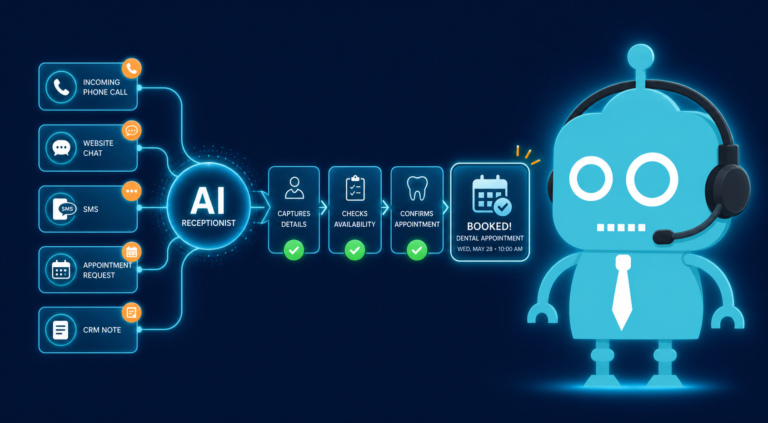
AI reception is becoming more common in dental practices because it can handle basic communication tasks, answer common questions, and support after-hours inquiries.
For independent dental offices, the goal is not to remove the human touch. The goal is to make sure patients receive timely responses and your staff is not overwhelmed by repetitive tasks.
What AI Reception Can Help With
AI reception tools may assist with:
- Answering frequently asked questions
- Capturing new patient information
- Routing appointment requests
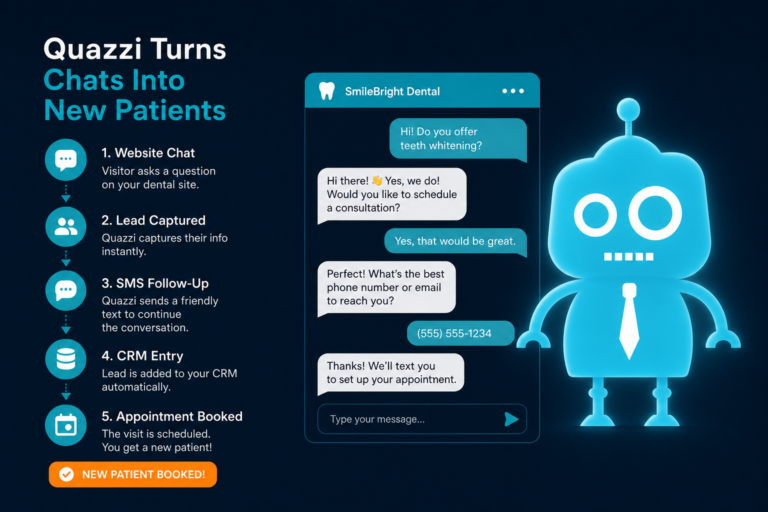
- Responding to after-hours website chats
- Helping patients understand next steps
- Notifying the team when human follow-up is needed
For example, a patient visiting your website at 9:30 p.m. may ask, “Do you accept new patients?” An AI chat or reception tool can answer, collect contact information, and send the lead into your CRM for follow-up the next morning.
This improves patient experience while protecting your front desk from unnecessary interruptions.
CRM Workflows Bring Order to Dental Lead Management
A customer relationship management system, or CRM, helps dental practices track leads, follow-ups, patient inquiries, and communication history. While practice management software is essential for clinical and scheduling operations, a CRM can be especially useful for marketing, new patient acquisition, and website lead management.
Without a CRM, leads may live in email inboxes, sticky notes, voicemail, website form notifications, and spreadsheets. That makes it easy for potential patients to fall through the cracks.
How Dental CRM Workflows Improve Efficiency
CRM workflows can automatically organize and trigger follow-up based on patient actions.
For example:
- A website form submission creates a new lead record
- The lead is tagged as “Dental Implant Inquiry” or “New Patient Request”
- An SMS and email are sent automatically
- A front desk task is created
- If there is no response, another follow-up is scheduled
- Once scheduled, the lead is moved to “Appointment Booked”
This gives office managers visibility into what is happening with every inquiry. It also helps practice owners understand whether marketing dollars are turning into actual appointments.
Useful Dental CRM Pipeline Stages
A simple CRM pipeline for a dental office might include:
- New Lead
- Contacted
- Needs Follow-Up
- Appointment Requested
- Appointment Scheduled
- Completed Visit
- Did Not Schedule
- Reactivation Opportunity
This structure helps the team prioritize follow-up and measure conversion from website visitor to scheduled patient.
Reporting Shows What Is Working and What Needs Attention
Automation is most powerful when paired with clear reporting. Dental practices need to know where leads are coming from, how quickly the team responds, how many appointments are scheduled, and which campaigns are producing results.
Good reporting turns guesswork into actionable decisions.
Important Reports for Dental Practices
Useful automation and CRM reports may include:
- Website form submissions
- Phone call volume
- Missed calls
- New patient lead sources
- Lead response time
- Appointment request conversion rate
- SMS reminder confirmation rates
- Recall campaign performance
- Review request results
- Google Business Profile and website traffic trends
For example, reporting may show that implant consultation forms are coming in, but only half are being contacted within one business day. That insight gives the office manager a specific operational issue to fix.
Or the data may show that missed call text-back is converting several callers per month into scheduled appointments. That proves the value of a system that might otherwise go unnoticed.
Automation Creates a Better Patient Experience
Dental automation is often discussed in terms of efficiency, but it also improves the patient experience.
Patients appreciate:
- Fast responses
- Easy scheduling options
- Helpful reminders
- Clear instructions
- Convenient text and email communication
- Less phone tag
When communication feels smooth, patients are more likely to trust the practice, show up for appointments, accept treatment, and refer friends or family.
For the team, automation reduces repetitive tasks and creates more time for high-value conversations. Instead of manually chasing every confirmation or recall patient, the front desk can focus on patient care, scheduling strategy, financial conversations, and in-office experience.
Where Dental Practices Should Start With Automation
Automation does not need to happen all at once. In fact, the best approach is usually to start with the areas that create the biggest communication gaps.
Start With These High-Impact Systems
- Website lead capture: Make sure every website visitor has a clear way to request an appointment.
- SMS reminders: Reduce no-shows and manual confirmation calls.
- Lead follow-up: Respond instantly to new patient inquiries.
- Missed call recovery: Text callers when your team cannot answer.
- Review requests: Build reputation and local SEO over time.
- Recall campaigns: Bring overdue patients back into the schedule.
- CRM workflows: Track every lead from inquiry to appointment.
- Reporting: Measure what is working and where leads are being lost.
Once these systems are in place, your dental office can continue refining workflows based on real data and team feedback.
The Future of Dental Office Automation Is Communication-First
The most successful dental practices will not be the ones that automate everything just for the sake of technology. They will be the ones that use automation to communicate better.
That means faster responses to new patients, fewer missed opportunities, better recall systems, more consistent reviews, and clearer visibility into front desk performance.
For independent dental practices, automation can be a major advantage. It helps smaller teams operate with the consistency of a larger organization while still keeping the personal touch patients expect from a local dental office.
Modernize Your Dental Website and Automation With CreateTheSite.com
If your dental website is outdated, difficult to update, slow on mobile, or not connected to your follow-up systems, you may be losing new patient opportunities every month.
CreateTheSite.com helps dental practices build modern websites that support real front desk operations and patient communication. Our services include dental website design, secure hosting, mobile optimization, lead capture forms, CRM integrations, SMS and email automation, appointment follow-up, and ongoing website support.
Whether you need a better new patient website, a stronger conversion strategy, or automated workflows that help your team follow up faster, CreateTheSite.com can help you create a system that works for your practice.
Your website should not just look professional. It should help patients schedule, help your team communicate, and help your practice grow.
Ready to improve your dental website and automate patient follow-up? Visit CreateTheSite.com to learn how we can help your practice turn more website visitors into scheduled patients.