
How Chatbots Help Dental Practices Capture More Leads
Your dental practice website should do more than look professional. It should help turn visitors into new patient opportunities.
Many independent dental practices invest in SEO, Google Ads, social media, and referrals to bring people to their website. But once a potential patient lands there, the next step is critical. If they have a question, cannot find the right service, or visit after hours, they may leave without calling or booking.
This is where a dental chatbot can become a powerful website conversion tool.
A chatbot is not just a pop-up window. When designed properly, it helps guide website visitors, answer common questions, collect contact information, route urgent requests, and trigger follow-up through your CRM, email, or SMS system. For dental practices focused on new patient acquisition, it can help capture leads that would otherwise be lost.
Why Dental Practice Websites Lose Potential Patients
Most dental websites receive visitors with different levels of intent. Some are ready to schedule. Others are comparing practices, checking insurance information, researching treatment options, or looking for emergency dental help.
The problem is that many visitors leave before taking action.
Common reasons include:
- They cannot quickly find answers about services, insurance, or availability.
- They visit outside office hours and do not want to leave a voicemail.
- They are not ready to call but would fill out a short form.
- They need help choosing between services like implants, veneers, Invisalign, or emergency care.
- They are browsing on mobile and want a fast, simple next step.
A dental chatbot helps reduce these conversion barriers. It gives visitors an immediate path forward, even when your front desk is busy or your office is closed.
Chatbots Answer Common Dental Questions Instantly
Dental patients often have practical questions before they are willing to schedule. If your website does not answer those questions clearly, visitors may return to Google and contact another practice.
A chatbot can answer common questions such as:
- Do you accept new patients?
- Do you take my insurance?
- Do you offer emergency appointments?
- How much does a dental cleaning cost without insurance?
- Do you offer Invisalign or clear aligners?
- Can I schedule a consultation for dental implants?
- Where is your office located?
- What are your hours?
- Do you offer payment plans or financing?
For example, a visitor may land on your dental implant page after searching “dental implants near me.” Instead of forcing them to read every section, a chatbot can ask:
“Are you interested in a dental implant consultation, pricing information, or financing options?”
That simple prompt helps the visitor move from browsing to taking action.
Chatbots Capture After-Hours Dental Website Visitors
Many high-intent dental searches happen outside normal business hours. A parent may look for a family dentist after work. A patient with a toothache may search for emergency dental care late at night. Someone considering cosmetic dentistry may browse options on the weekend.
If your website only offers a phone number during office hours, you may miss these leads.
A chatbot can capture after-hours visitors by offering simple options like:
- Request an appointment
- Ask about insurance
- Get help with a dental emergency
- Request a consultation
- Receive a call back when the office opens
This allows your practice to collect the visitor’s name, phone number, email address, preferred appointment time, and reason for contacting the office.
Instead of relying on the visitor to remember to call the next morning, your front desk team can start the day with a list of new patient leads ready for follow-up.
Chatbots Collect Contact Information Without Creating Friction
Traditional contact forms are useful, but they can feel static. A chatbot creates a more conversational experience that feels easier for many website visitors, especially on mobile devices.
Rather than presenting a long form all at once, a chatbot can ask one question at a time:
- “What type of appointment are you looking for?”
- “Are you a new or existing patient?”
- “What is the best phone number to reach you?”
- “Do you prefer a call or text?”
- “What day works best for you?”
This approach reduces friction because the visitor does not feel overwhelmed. It also helps your front desk receive more useful information before reaching out.
Example: New Patient Lead Capture
A website visitor clicks the chatbot and selects “New Patient Appointment.” The chatbot asks if they need a cleaning, exam, cosmetic consultation, emergency visit, or another service. It then collects their contact details and sends the information to your office.
Your team now knows who the lead is, what they need, and how to follow up. That is much more valuable than a missed call or an incomplete form submission.
Chatbots Help Route Urgent Dental Requests
Urgent dental situations require fast handling. A patient with swelling, severe pain, a broken tooth, or a knocked-out tooth may not have time to browse your entire website.
A chatbot can help identify urgent requests and route them appropriately.
For example, the chatbot can ask:
- “Are you experiencing severe pain?”
- “Is there swelling or bleeding?”
- “Did you break or knock out a tooth?”
- “Would you like to request the soonest available emergency appointment?”
Based on the answers, the chatbot can display emergency instructions, provide the office phone number, encourage the patient to call immediately, or send an urgent lead notification to your team.
This is especially helpful for practices that offer emergency dentistry and want to convert emergency-related website traffic into real appointments.
Chatbots Help Patients Choose the Right Dental Service
Many patients do not know exactly what service they need. They may search for “fix chipped tooth,” “replace missing tooth,” “straighten teeth,” or “teeth whitening near me” without knowing which treatment is appropriate.
A chatbot can guide visitors toward relevant service pages or consultation options.
Cosmetic Dentistry Example
A visitor clicks the chatbot and selects “I want to improve my smile.” The chatbot can offer choices such as:
- Whiten my teeth
- Fix chips or cracks
- Straighten my teeth
- Replace missing teeth
- Get a smile makeover consultation
From there, the chatbot can guide them to veneers, bonding, whitening, Invisalign, dental implants, or a cosmetic consultation request.
Restorative Dentistry Example
If a visitor says they have a missing tooth, the chatbot can ask whether they want information about dental implants, bridges, dentures, or a consultation. This helps the patient understand their options while moving them closer to scheduling.
For dental practices, this is valuable because service-specific leads are often higher quality. Someone requesting an implant consultation, Invisalign consult, or emergency appointment is typically more actionable than a general website inquiry.
Chatbots Reduce Friction on Mobile Dental Websites
A large percentage of dental website traffic comes from mobile devices. Patients may be searching from their car, couch, workplace, or while dealing with discomfort. If your site is difficult to navigate on a phone, they may leave quickly.
A chatbot can create a simple mobile-friendly path to conversion.
Instead of making visitors search through menus, scroll through long pages, or tap small buttons, the chatbot can offer clear next steps:
- Schedule an appointment
- Ask about insurance
- Request emergency care
- Get directions
- Text the office
- Request a call back
This is not about replacing your website content. It is about making that content easier to act on.
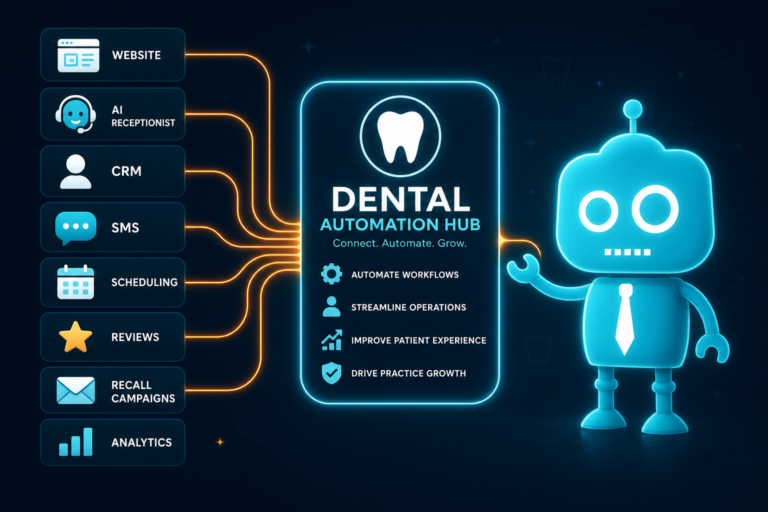
Chatbots Can Connect to Your Dental CRM
A chatbot becomes much more powerful when it connects to your CRM or lead management system.
Without CRM integration, chatbot submissions may sit in an inbox or require manual entry. That creates delays and increases the risk of missed opportunities. With CRM integration, new leads can be automatically organized, tagged, and assigned for follow-up.
For example, a chatbot lead can be sent into your CRM with details such as:
- Name
- Phone number
- Email address
- Service interest
- New or existing patient status
- Preferred appointment time
- Insurance question
- Urgency level
- Source page, such as dental implants, emergency dentistry, or Invisalign
This gives your front desk or treatment coordinator better context before they contact the patient.
Why CRM Integration Matters for Dental Lead Conversion
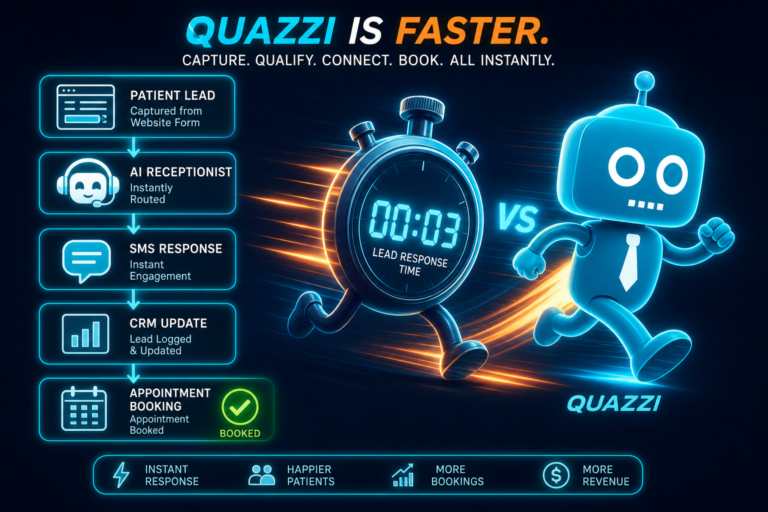
Speed matters. If a potential patient contacts three dental practices, the one that responds quickly and professionally often has the advantage.
A CRM helps your team avoid missed follow-ups by tracking every lead from first contact to scheduled appointment. It can also show which website pages, ads, or campaigns are generating the best new patient opportunities.
Chatbots Support SMS and Email Follow-Up
Many dental leads do not schedule immediately. They may ask about insurance, compare treatment costs, or wait until they can check their calendar. SMS and email automation help keep your practice in front of them.
When a chatbot connects to SMS and email follow-up, your practice can automatically send messages such as:
- “Thanks for contacting our office. We received your request and will follow up shortly.”
- “Here is a link to request an appointment.”
- “Would you like to schedule your dental implant consultation?”
- “Our team can help verify your insurance benefits before your visit.”
- “We noticed you requested emergency dental care. Please call us now if you need immediate assistance.”
SMS follow-up can be especially effective because many patients respond faster to text messages than phone calls or emails. This can reduce phone tag for your front desk and improve appointment conversion rates.
Chatbots Help Your Front Desk Stay Focused
Your front desk team handles calls, check-ins, insurance questions, scheduling, patient forms, billing questions, and treatment coordination. A chatbot can reduce repetitive website inquiries so your team can focus on higher-value conversations.
For example, instead of answering the same questions all day about hours, location, parking, insurance, and services, your chatbot can handle basic information and collect lead details.
This does not replace human communication. It supports it.
The best dental chatbot strategy gives your team better-prepared leads. When your front desk calls back, they already know what the patient needs and can have a more productive conversation.
Chatbots Can Improve Review and Reputation Workflows
While lead capture is the primary purpose, chatbot and automation systems can also support reputation management when connected to the right follow-up process.
For example, after an appointment, your practice can use SMS or email automation to send a friendly review request. Positive reviews help improve trust, support local SEO, and make future website visitors more likely to contact your office.
A strong conversion system does not stop when someone submits a form. It connects the full patient journey: website visit, chatbot interaction, CRM entry, appointment follow-up, visit completion, and review request.
What a Good Dental Chatbot Should Include
Not every chatbot is helpful. A poorly planned chatbot can frustrate visitors or collect information without creating a clear next step.
For dental practices, an effective chatbot should be simple, practical, and aligned with front desk operations.
Important Features to Include
- Service-based options: Cleaning, emergency care, implants, Invisalign, cosmetic dentistry, crowns, dentures, and more.
- New patient prompts: Ask whether the visitor is new or existing so your team can respond appropriately.
- Contact collection: Name, phone, email, and preferred contact method.
- Urgency routing: Identify emergency requests and direct them quickly.
- Insurance questions: Capture insurance-related inquiries without overcomplicating the conversation.
- CRM integration: Send leads into your system automatically.
- SMS/email follow-up: Confirm submissions and encourage the next step.
- Mobile optimization: Make the chatbot easy to use on phones.
- Clear handoff to the office: Let visitors know when and how your team will respond.
Practical Chatbot Flows for Dental Practices
Here are a few examples of chatbot flows that can help dental practices capture more leads from their website.
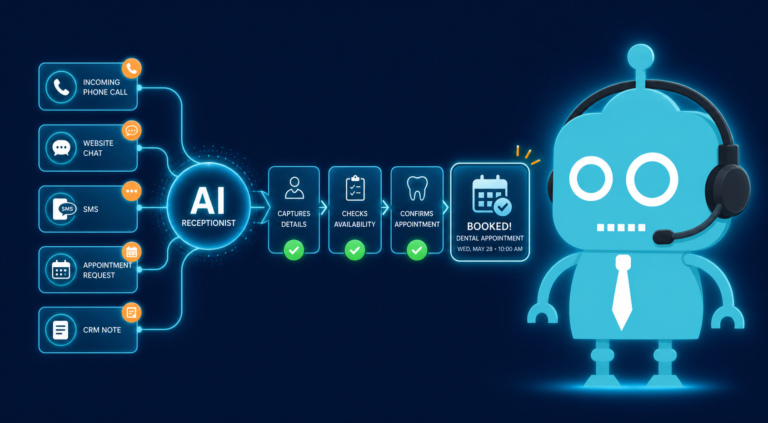
New Patient Appointment Flow
- Visitor selects “I’m a new patient.”
- Chatbot asks what type of appointment they need.
- Visitor chooses cleaning, exam, emergency, cosmetic consult, implant consult, or other.
- Chatbot collects contact information.
- Lead is sent to the CRM and front desk.
- Automated SMS confirms the request.
Emergency Dental Flow
- Visitor selects “I need emergency dental help.”
- Chatbot asks about pain, swelling, broken tooth, or lost filling/crown.
- Chatbot displays urgent instructions and office contact options.
- Lead is tagged as urgent in the CRM.
- Front desk receives a priority notification.
Dental Implant Consultation Flow
- Visitor lands on the dental implants page.
- Chatbot asks if they want to replace one tooth, multiple teeth, or explore full-arch options.
- Chatbot offers consultation request and financing information.
- Visitor submits contact details.
- Follow-up email provides next steps and encourages scheduling.
Insurance Question Flow
- Visitor asks if the practice accepts their insurance.
- Chatbot collects carrier name and contact details.
- Front desk receives the request for verification.
- Automated message tells the visitor the office will follow up.
How Chatbots Fit Into a Dental Website Conversion Strategy
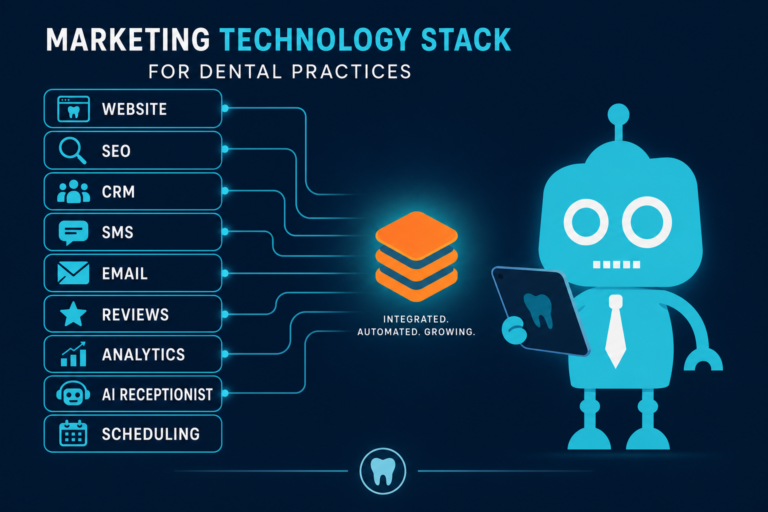
A chatbot works best when it is part of a complete dental website conversion system.
That system should include:
- Fast, mobile-friendly website design
- Clear service pages for high-value treatments
- Strong calls to action
- Visible phone number and appointment buttons
- Lead capture forms
- Chatbot assistance
- CRM integration
- SMS and email automation
- Appointment reminders and follow-up workflows
- Review generation support
The goal is not just more website traffic. The goal is more qualified patient inquiries and more scheduled appointments.
Common Mistakes to Avoid With Dental Chatbots
Chatbots can improve lead capture, but only if they are set up thoughtfully. Avoid these common mistakes:
- Making the chatbot too complicated: Keep options simple and focused on patient needs.
- Asking too many questions upfront: Collect essential information first, then follow up.
- Failing to route urgent requests: Emergency dental inquiries should be easy to identify.
- No CRM connection: Leads should not get buried in a general inbox.
- No follow-up automation: A lead capture tool is only useful if your team responds quickly.
- Using generic language: Dental patients need specific options related to services, insurance, scheduling, and urgency.
Turn More Dental Website Visitors Into Patient Leads
A dental chatbot is not a replacement for your front desk, your clinical team, or a well-designed website. It is a conversion tool that helps your website do its job better.
By answering common questions, capturing after-hours visitors, collecting contact information, routing urgent requests, helping patients choose services, and connecting to CRM, SMS, and email systems, a chatbot can help your practice turn more website visits into real patient opportunities.
For independent dental practices, this can make a measurable difference. Every missed inquiry could be a new patient, an emergency appointment, an Invisalign consult, a dental implant case, or a long-term family relationship.
Get a Dental Website Built to Capture More Leads With CreateTheSite.com
If your dental website is not converting visitors into patient inquiries, CreateTheSite.com can help.
CreateTheSite.com works with dental practices to build modern, mobile-optimized websites designed for new patient acquisition and better front desk workflows. Services include website design, secure hosting, mobile optimization, lead capture forms, CRM integrations, SMS and email automation, appointment follow-up systems, and ongoing website support.
Whether you want to add chatbot-style lead capture, improve your appointment request process, connect your website to your CRM, or create automated follow-up for new patient inquiries, CreateTheSite.com can help you build a website that works harder for your practice.
Your website should not just look good. It should help bring more patients through the door.
Visit CreateTheSite.com to learn how a better dental website conversion system can help your practice capture more leads and follow up faster.