
What Dental Practices Should Know About Marketing Technology
Marketing technology can help dental practices attract more new patients, improve follow-up, and reduce front desk workload. But for many independent dental offices, it can also become confusing fast.
There are website platforms, hosting plans, SEO tools, call tracking numbers, CRMs, online scheduling systems, review software, email platforms, SMS tools, AI receptionists, and analytics dashboards. Each one promises growth. Not all of them make daily operations easier.
The goal of dental marketing technology should be simple: help the right patients find your practice, contact you easily, schedule care, and stay connected without overwhelming your team.
This guide explains the most important marketing technology tools dental practices should understand and how they fit together to support new patient acquisition, website conversion, and front desk efficiency.
Marketing Technology Should Simplify Patient Acquisition
A modern dental practice does not need a complicated tech stack. It needs a practical system that supports the patient journey.
That journey usually looks like this:
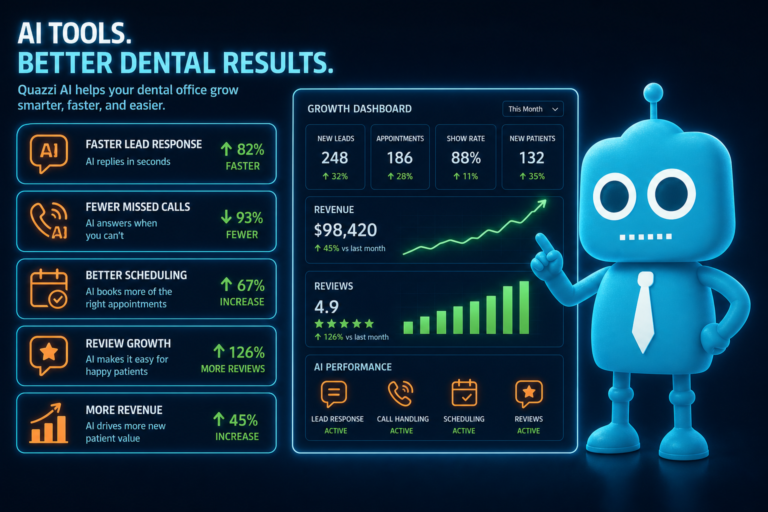
- A patient searches for a dentist on Google
- They find your website or Google Business Profile
- They review your services, location, insurance information, and reviews
- They call, fill out a form, or request an appointment online
- Your team follows up quickly
- The patient schedules and shows up
- After the visit, they receive follow-up communication and review requests
Marketing technology should make each step smoother. If a tool creates extra work, adds duplicate data entry, or confuses patients, it may be hurting more than helping.
1. Your Dental Website Is the Center of Your Marketing System
Your website is often the first real impression a potential patient has of your practice. It should do more than look attractive. It should convert visitors into phone calls, appointment requests, and new patient opportunities.
What a Dental Website Needs to Do
A strong dental website should clearly answer the questions patients care about before they book:
- Where is the practice located?
- What services are offered?
- Does the office treat families, kids, emergencies, cosmetic cases, or implants?
- Is the practice accepting new patients?
- What insurance or payment options are available?
- How can a patient schedule quickly?
For example, a patient searching for “emergency dentist near me” is usually not looking to read a long history of the practice. They want to know if you can help, when you are open, where you are located, and how to contact you immediately.
Website Conversion Matters
A dental website should include clear conversion points throughout the site, such as:
- Click-to-call buttons on mobile
- Prominent “Request Appointment” buttons
- Short new patient forms
- Online scheduling links
- Emergency dental contact options
- Trust signals such as reviews, doctor bios, and before-and-after examples where appropriate
If your website gets traffic but few calls or form submissions, the issue may not be your marketing spend. The issue may be that your website is not designed to convert dental patients.
2. Hosting Affects Speed, Security, and Patient Trust
Website hosting is often overlooked, but it plays an important role in dental marketing performance. Hosting affects how fast your website loads, how reliable it is, and how secure it feels to visitors.
Why Hosting Matters for Dental Practices
Patients expect your website to load quickly, especially on mobile. If pages are slow, they may return to Google and choose another dentist.
Good hosting also supports:
- Fast page speed
- SSL security
- Website uptime
- Regular backups
- Protection from malware and technical issues
- Reliable performance during traffic spikes
For dental practices running paid ads, SEO campaigns, or online scheduling, poor hosting can quietly reduce results. If potential patients cannot load the site or submit a form, the marketing investment is wasted.
3. SEO Helps Patients Find Your Practice When They Are Searching
Search engine optimization, or SEO, helps your dental practice appear when patients search for services you provide. For independent dental practices, local SEO is especially important.
Dental SEO Should Be Service and Location Focused
Patients rarely search only for “dentist.” They often search for specific needs, such as:
- “family dentist in [city]”
- “emergency dentist near me”
- “dental implants in [city]”
- “Invisalign dentist near me”
- “teeth whitening dentist [city]”
- “pediatric dentist near [neighborhood]”
Your website should have well-structured pages for your core services and location. A single generic services page is usually not enough if you want to rank for competitive treatments.
SEO Is Not Just Keywords
Effective dental SEO also includes:
- Fast website performance
- Mobile-friendly design
- Clear page structure
- Optimized title tags and meta descriptions
- Internal links between related services
- High-quality local content
- Consistent practice name, address, and phone number
- Positive patient reviews
The best SEO strategy is not about tricking Google. It is about making your practice easier to understand, easier to trust, and easier to contact.
4. Google Business Profile Is Critical for Local Dental Searches
Your Google Business Profile is one of the most important marketing assets for a dental practice. It can appear in Google Maps, local search results, and “near me” searches.
What to Optimize on Your Google Business Profile
A complete and accurate profile helps patients make quick decisions. Important elements include:
- Correct practice name, address, and phone number
- Accurate office hours and holiday hours
- Primary and secondary categories
- Service listings
- High-quality photos of the office and team
- Appointment link
- Review responses
- Regular updates or posts when relevant
For example, if your practice offers same-day emergency appointments, your profile should make that clear. Patients making urgent decisions often call directly from Google without visiting your website first.
Your Google Profile and Website Should Work Together
Your Google Business Profile should link to a website that matches the patient’s intent. If someone clicks from your profile looking for dental implants, emergency dentistry, or new patient information, your website should make the next step obvious.
5. Call Tracking Shows Which Marketing Efforts Produce Phone Calls
Phone calls are still one of the most important conversion points for dental practices. Many patients prefer to call before scheduling, especially for urgent needs, insurance questions, or treatment-specific concerns.
Call tracking helps you understand where those calls are coming from.
How Call Tracking Helps Dental Offices
With call tracking, your practice can see whether calls came from sources such as:
- Google organic search
- Google Ads
- Google Business Profile
- Facebook or Instagram campaigns
- Referral websites
- Specific landing pages
This helps office managers and practice owners make better marketing decisions. If emergency dentistry ads are generating calls but implant ads are not, you can adjust the budget or improve the implant landing page.
Call Quality Matters Too
Tracking call volume is helpful, but call quality is just as important. A dental practice should know:
- How many calls were answered
- How many were missed
- Which calls were new patient opportunities
- Which calls resulted in scheduled appointments
- What common questions patients asked
If your marketing is generating calls but the schedule is not filling, the issue may be front desk capacity, scripting, availability, or follow-up.
6. A CRM Helps Manage New Patient Leads
A CRM, or customer relationship management system, helps track leads and patient communication. In a dental practice, it can be especially useful for managing appointment requests, website forms, calls, and follow-up tasks.
Why Dental Practices Need Lead Management
Many dental offices lose new patient opportunities because inquiries are handled manually. A form submission comes in by email, a voicemail is left during lunch, or a patient asks a question through a website form. If the team is busy, follow-up may be delayed or forgotten.
A CRM can help organize:
- New patient inquiries
- Missed call follow-ups
- Appointment requests
- Treatment consultation leads
- Pending insurance or payment questions
- Patients who need to be reactivated
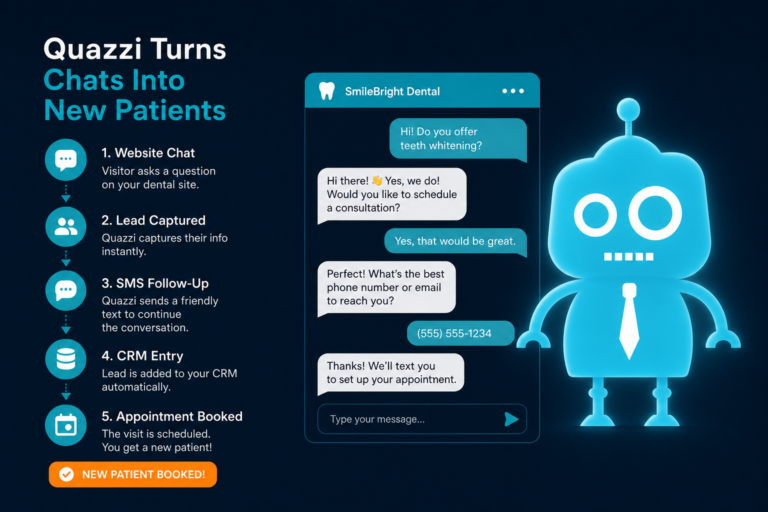
For example, if a patient fills out a form asking about dental implants, the CRM can create a lead, notify the team, trigger a follow-up text, and track whether the consultation was scheduled.
A CRM Should Support the Front Desk, Not Replace It
The purpose of a CRM is not to make the office more complicated. It should reduce sticky notes, scattered emails, and missed opportunities. The best CRM setup for a dental office is simple enough for the team to actually use every day.
7. SMS and Email Automation Improve Follow-Up
Speed matters when a potential patient contacts your practice. If someone submits an appointment request and does not hear back quickly, they may contact another dentist.
SMS and email automation can help your team respond faster and stay consistent.
Practical Uses for SMS and Email Automation
Dental practices can use automation for:
- Confirming that an appointment request was received
- Following up with missed calls
- Sending new patient paperwork links
- Reminding patients about appointments
- Following up after consultations
- Reactivating overdue hygiene patients
- Sending post-visit care instructions
- Requesting reviews after successful appointments
For example, when a patient requests an appointment on your website, they can immediately receive a text that says your team received the request and will follow up shortly. That simple message reassures the patient and reduces the chance they keep searching.
Automation Should Still Feel Human
Patients can tell when messages feel cold or generic. Dental communication should be clear, warm, and helpful. Automation should handle repetitive tasks while giving your team more time for personal conversations.
8. AI Receptionists Can Help With Missed Calls and After-Hours Inquiries
AI receptionists are becoming more common in dental marketing and front desk operations. They can answer basic questions, collect patient information, route inquiries, and support after-hours communication.
Where AI Receptionists Can Be Useful
AI receptionists can help with:
- After-hours appointment requests
- Missed call responses
- Basic service questions
- Insurance and payment information intake
- Emergency dental inquiry triage
- New patient lead capture
For a busy dental office, this can reduce the number of opportunities lost when the front desk is on another call, helping a patient in person, or closed for the day.
AI Should Be Implemented Carefully
AI should not create confusion for patients or make clinical promises. It should be used to collect information, answer basic operational questions, and help patients take the next step.
For example, an AI receptionist can gather a patient’s name, phone number, preferred appointment time, and reason for visit. It should not diagnose pain or recommend treatment. That should remain with the dental team.
9. Online Scheduling Reduces Friction for New Patients
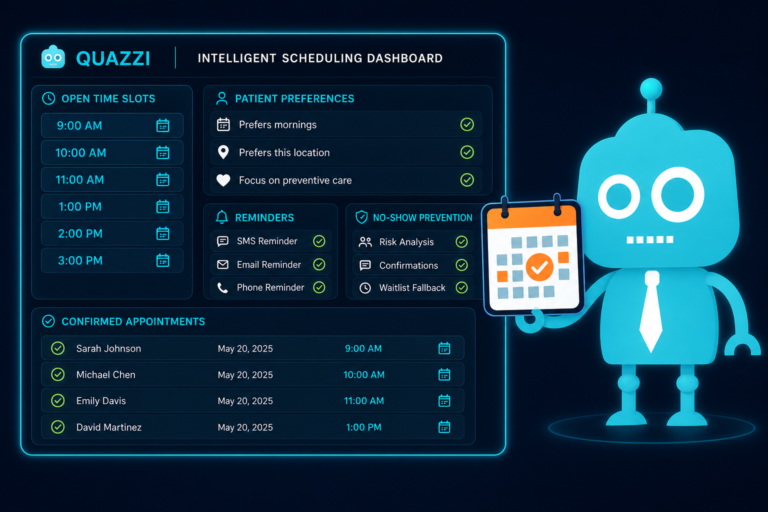
Online scheduling can make it easier for patients to book appointments without calling the office. This is especially helpful for patients searching outside office hours or those who prefer digital communication.
When Online Scheduling Works Well
Online scheduling is useful for:
- New patient exams
- Hygiene appointments
- Consultations
- Emergency appointment requests
- Cosmetic dentistry consultations
- Clear aligner consultations
The key is to decide how much access patients should have. Some practices allow direct booking. Others prefer request-based scheduling, where the patient selects preferred times and the front desk confirms.
Make Scheduling Easy on Mobile
Most dental searches happen on mobile devices. If your scheduling process requires too many steps, account creation, or unclear instructions, patients may abandon it.
A good online scheduling experience should be simple, mobile-friendly, and connected to your follow-up process.
10. Analytics Help You See What Is Actually Working
Analytics are important, but they should be understandable. Dental practices do not need endless dashboards. They need clear answers to practical questions.
What Dental Marketing Analytics Should Show
Your analytics should help you understand:
- How many people visit your website
- Which pages generate calls or forms
- Which services attract the most interest
- Where new patient leads come from
- How many calls are missed
- How many appointment requests convert
- Which campaigns produce actual patient opportunities
For example, if your dental implant page gets traffic but no consultation requests, you may need a stronger call to action, better patient education, more trust signals, or a simpler form.
Track Actions, Not Just Traffic
Website traffic alone does not grow a practice. Calls, forms, scheduled appointments, and kept appointments matter more.
Instead of focusing only on page views, dental practices should track conversion actions such as:
- Phone calls
- Click-to-call taps
- Appointment requests
- Online scheduling starts
- Form submissions
- Review clicks
This gives a clearer picture of whether marketing technology is supporting real growth.
11. Review Automation Helps Build Trust Consistently
Patient reviews are one of the most powerful factors in dental marketing. Before choosing a dentist, many patients compare star ratings, review volume, review recency, and comments about the office experience.
Why Reviews Matter for Dental Practices
Reviews influence whether patients trust your practice enough to call or schedule. They also support local SEO and Google Business Profile performance.
Patients often look for comments about:
- Friendly staff
- Gentle care
- Clear explanations
- Clean office environment
- Help with dental anxiety
- Emergency availability
- Billing and insurance support
A strong review profile can help a smaller independent practice compete against larger dental groups.
How Review Automation Works
Review automation can send a text or email after a completed appointment asking the patient to share feedback. This makes review generation more consistent without relying on the front desk to remember every time.
For example, after a new patient exam or completed treatment visit, the system can automatically send a polite review request with a direct link to your Google Business Profile.
Keep Review Requests Ethical and Simple
Review requests should be honest and compliant with platform guidelines. Do not pressure patients or offer incentives for positive reviews. Instead, make it easy for satisfied patients to share their experience.
How These Tools Should Work Together
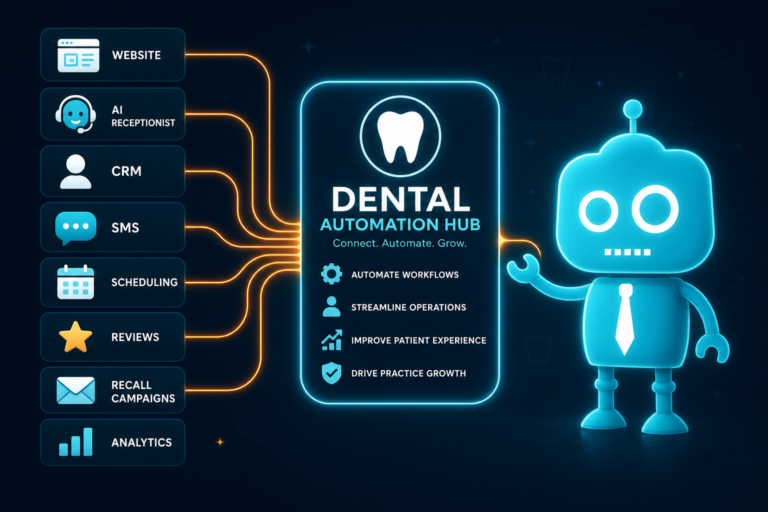
The real value of marketing technology comes from connecting the pieces. A dental practice should avoid having a website, CRM, scheduling tool, review platform, and email system that all operate separately with no clear workflow.
A Simple Dental Marketing Technology Workflow
Here is an example of how a streamlined system can work:
- A patient searches “emergency dentist near me.”
- They find your Google Business Profile or emergency dentistry page.
- They click to call or submit a short appointment request form.
- Call tracking records the source.
- The CRM captures the lead.
- The patient receives an automated SMS confirmation.
- The front desk follows up and schedules the appointment.
- After the visit, the patient receives care instructions and a review request.
- Analytics show which source generated the appointment.
This is how marketing technology should feel: connected, useful, and manageable.
Common Mistakes Dental Practices Make With Marketing Technology
Technology can help a practice grow, but only if it is implemented with the right strategy. Here are common mistakes to avoid.
Using Too Many Disconnected Tools
If every tool has its own login, dashboard, and workflow, your team may stop using them. Choose systems that integrate well and support your actual front desk process.
Focusing on Design but Ignoring Conversion
A beautiful website is not enough. It needs clear calls to action, fast mobile performance, service-specific pages, and lead capture forms that are easy to complete.
Not Tracking Calls
If the phone is your main source of new patient inquiries, you need to know which marketing channels are making it ring and whether those calls are being answered.
Letting Leads Sit Too Long
New patient inquiries are time-sensitive. Automated confirmations, CRM reminders, and missed call follow-up can help prevent lost opportunities.
Ignoring the Front Desk Experience
Marketing does not end when the phone rings. If the front desk is overloaded, undertrained, or missing calls, patient acquisition will suffer. Technology should reduce pressure on the team, not add to it.
What to Look for in Dental Marketing Technology
Before adding a new tool, ask whether it helps your practice do at least one of the following:
- Attract more qualified new patient inquiries
- Improve website conversion
- Reduce missed calls or missed follow-ups
- Make scheduling easier
- Improve patient communication
- Support review growth
- Show clearer marketing performance
- Save time for the front desk
If a tool does not clearly support patient acquisition, retention, or office efficiency, it may not be necessary.
The Best Marketing Technology Feels Simple
Independent dental practices do not need to chase every new software trend. They need a dependable marketing foundation that helps patients find the practice, understand services, request appointments, and stay connected.
The best setup is usually not the most complicated. It is the one your team can use consistently.
Start with the essentials: a modern website, reliable hosting, strong local SEO, an optimized Google Business Profile, clear lead capture, call tracking, CRM follow-up, patient communication automation, online scheduling, analytics, and review generation.
When these tools work together, marketing technology becomes less overwhelming and more valuable. It helps your practice grow while giving your team a clearer, easier process for handling new patient opportunities.
Build a Simpler Dental Marketing System With CreateTheSite.com
If your dental practice needs a better website and a more organized approach to patient acquisition, CreateTheSite.com can help.
CreateTheSite.com works with dental practices to build modern, mobile-optimized websites designed to support new patient growth. That includes clean website design, reliable hosting, fast performance, lead capture forms, CRM integrations, SMS and email automation, appointment follow-up, and ongoing website support.
Instead of adding more disconnected tools to your practice, CreateTheSite.com helps create a streamlined digital foundation that supports your front desk, improves website conversion, and makes it easier for patients to take the next step.
If you want your dental marketing technology to feel simpler, more connected, and more focused on real patient acquisition, visit CreateTheSite.com to learn how a modern dental website and support system can help your practice grow.