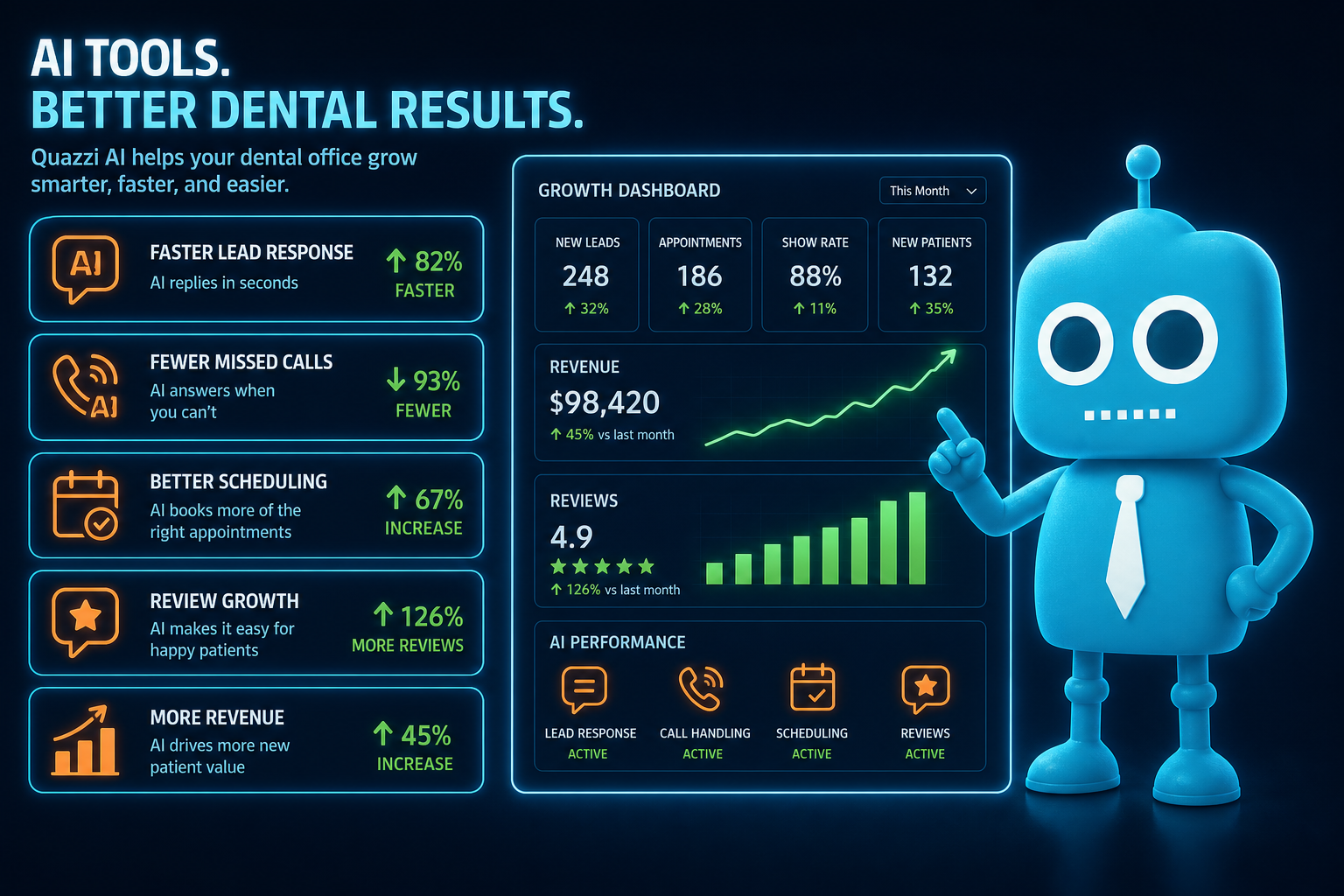
Why Dental Practices Are Investing in AI
Dental practices are not investing in AI simply because it is trendy. They are investing because the business side of dentistry has become harder to manage with manual systems alone.
Independent dental practice owners, dentists, and office managers are facing staff shortages, rising patient expectations, more competition, and higher marketing costs. At the same time, potential patients expect fast responses, easy scheduling, mobile-friendly websites, and clear communication before they ever sit in the chair.
AI is becoming a practical tool for solving these business problems. When used correctly, it can help dental practices capture more leads, respond faster, reduce front desk pressure, improve scheduling, and make marketing dollars work harder.
AI Is Becoming a Business Tool for Dental Practices
For many dental offices, the first conversation about AI starts with clinical technology. But the most immediate impact is often on operations and patient acquisition.
Dental practices depend on a steady flow of new patients, efficient scheduling, strong patient communication, and consistent follow-up. When these areas are handled manually, opportunities can slip through the cracks.
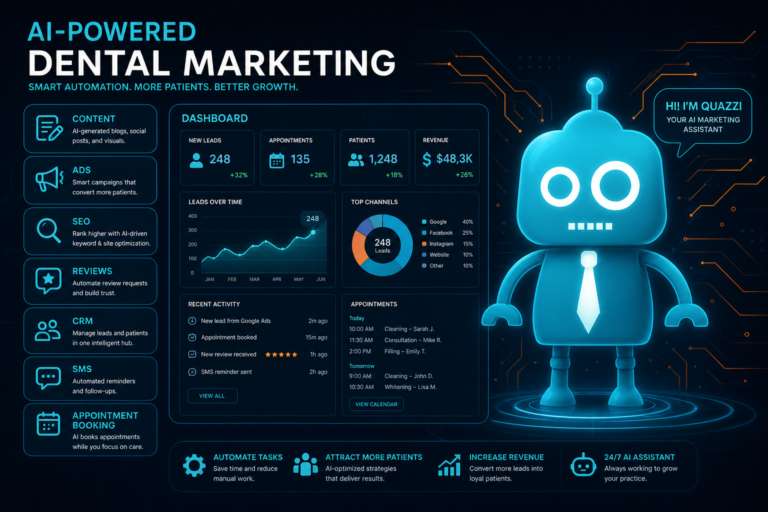
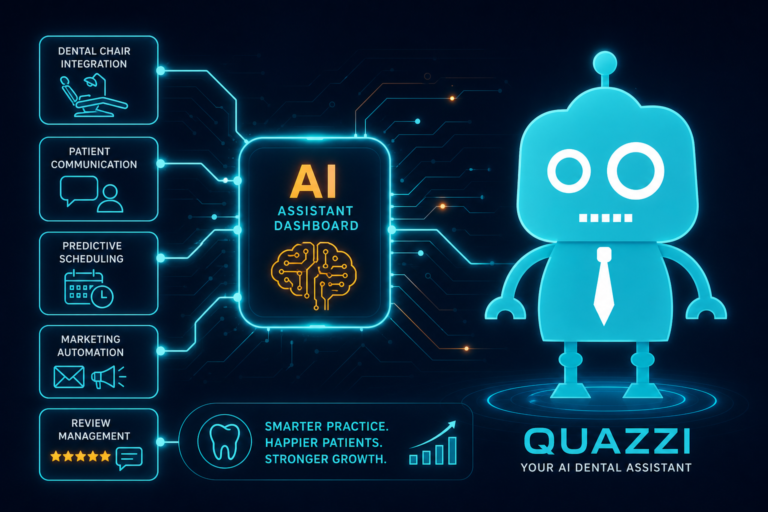
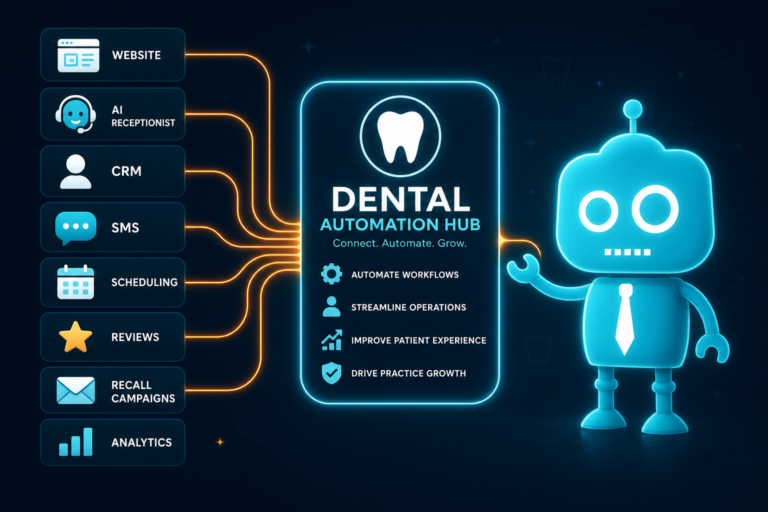
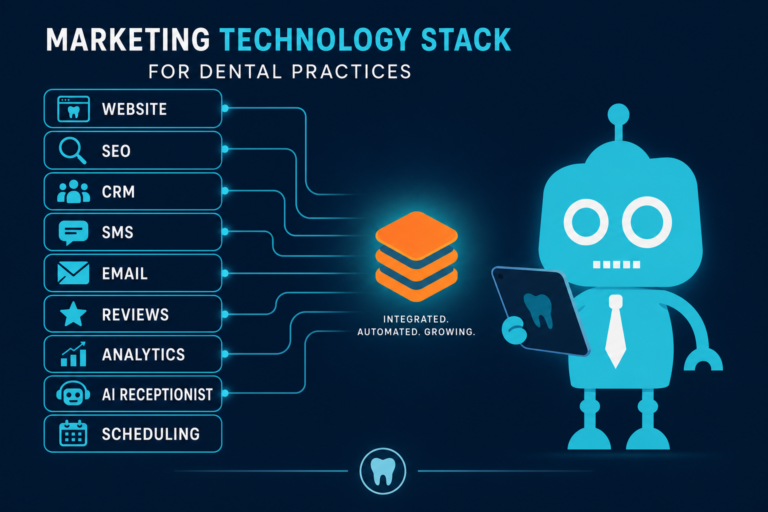
AI-powered tools can support the business side of the practice by helping with:
- Lead response from website forms and phone inquiries
- SMS and email follow-up
- Appointment reminders and confirmations
- Review requests
- Marketing campaign tracking
- CRM organization
- After-hours patient inquiries
- Website conversion improvements
The goal is not to replace the front desk. The goal is to help the front desk focus on higher-value tasks while fewer leads and patients are missed.
Staff Shortages Are Pushing Practices Toward Automation
Many dental practices are operating with lean administrative teams. Hiring experienced front desk staff can be difficult, and turnover creates gaps in patient communication.
When the front desk is busy checking patients in, answering insurance questions, collecting payments, and handling treatment plan discussions, new patient inquiries may not receive immediate attention.
How AI Helps with Front Desk Workload
AI and automation can help by handling repetitive communication tasks such as:
- Sending confirmation messages
- Following up with website form submissions
- Routing new patient inquiries into a CRM
- Sending missed call text-backs
- Triggering appointment reminder sequences
- Requesting reviews after completed visits
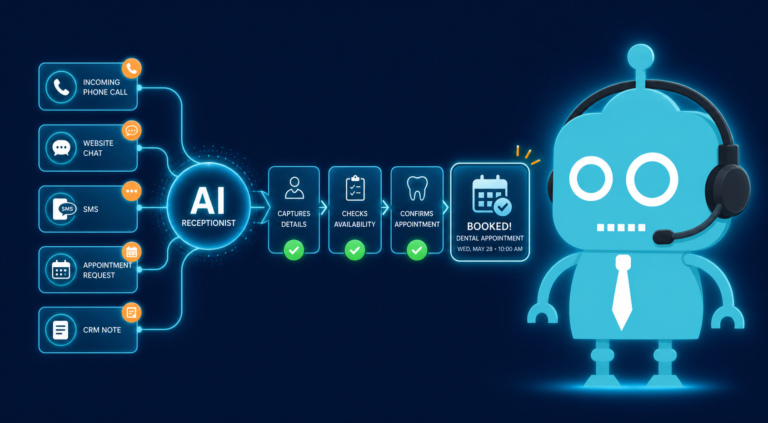
For example, if a potential patient submits a form for a dental implant consultation, an automated system can immediately send a text message confirming the request and asking preferred appointment times. That lead can also be added to the practice CRM so the team can follow up without manually copying information from an email inbox.
This kind of support can make a small team feel more organized and responsive without adding another full-time employee.
Faster Lead Response Can Increase New Patient Appointments
Speed matters in dental marketing. When someone searches for “dentist near me,” “emergency dentist,” “Invisalign provider,” or “dental implants,” they are often comparing multiple practices at once.
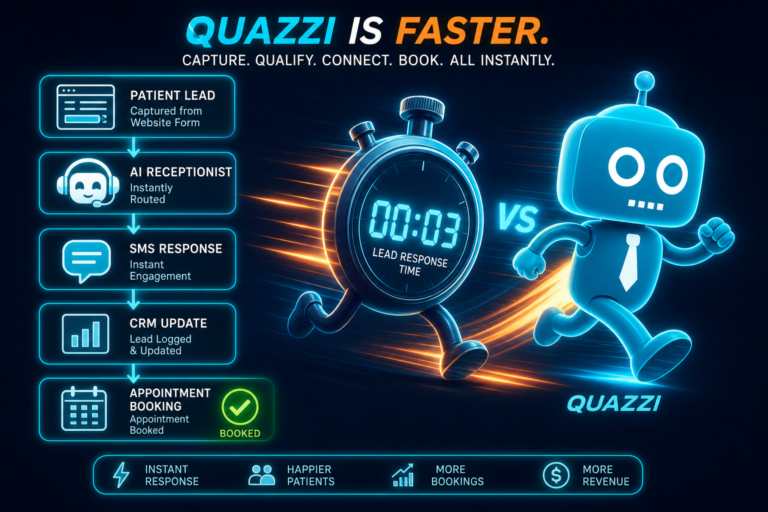
If a prospective patient fills out a form on your website and waits until the next day for a response, they may already have booked elsewhere.
AI Helps Reduce Response Time
AI-assisted lead response tools can help dental practices contact new inquiries within seconds instead of hours. This can include:
- Instant SMS replies after form submissions
- Automated email confirmations
- Chat tools that answer common questions
- Missed call text-back automation
- CRM alerts for the front desk team
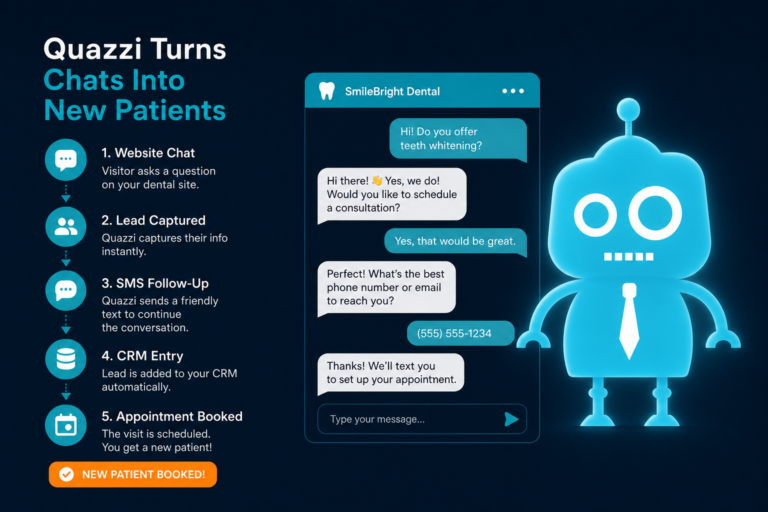
A practical example: a patient visits your website during lunch and asks about teeth whitening. Instead of the inquiry sitting unread until the end of the day, an automated response can thank them, provide basic next steps, and invite them to schedule a consultation.
This does not replace the personal touch. It creates a faster first touch, which often determines whether the patient continues with your practice.
Better Scheduling Improves Production and Patient Flow
Scheduling is one of the most important operational areas in a dental practice. A poorly managed schedule can lead to open chair time, rushed appointments, frustrated patients, and lost revenue.
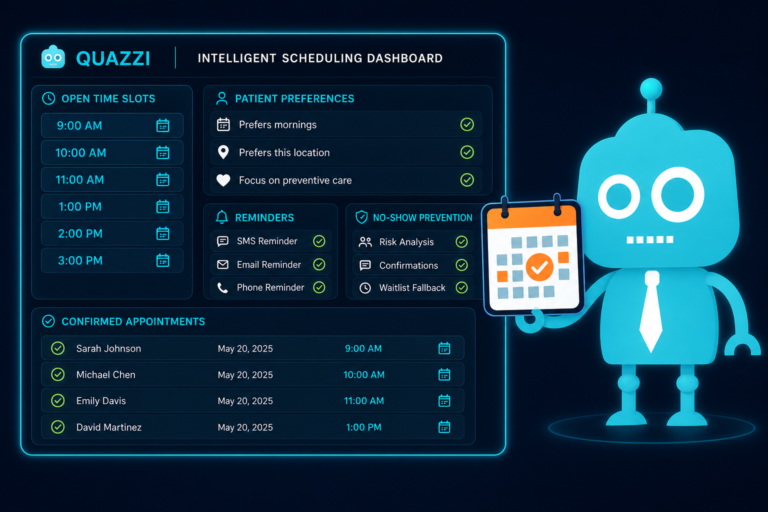
AI and automation can help improve scheduling by making the process more consistent and easier for patients.
Practical Scheduling Improvements
Dental practices can use AI-supported systems to:
- Send automated appointment reminders
- Confirm appointments by text or email
- Follow up with patients who have not scheduled treatment
- Send recall reminders for hygiene visits
- Re-engage inactive patients
- Notify patients when earlier appointment times become available
For office managers, this can reduce the amount of time spent manually calling patients. For practice owners, it can help protect production by reducing no-shows and keeping the hygiene schedule full.
For patients, it creates a more convenient experience. They can confirm by text, respond when they have time, and receive reminders through the channels they already use.
Patient Expectations Have Changed
Patients compare dental practices to the other businesses they interact with every day. They are used to online booking, text updates, quick confirmations, mobile-friendly websites, and simple digital forms.
If your website is outdated, your contact form is hard to use, or your office takes too long to respond, patients may assume the rest of the experience will feel outdated too.
AI Supports a More Modern Patient Experience
Modern dental websites and communication systems can use AI and automation to create a smoother path from website visitor to scheduled patient.
This may include:
- Mobile-optimized lead capture forms
- Automated responses after form submissions
- Personalized email follow-up
- Text reminders before appointments
- Clear next steps for new patient paperwork
- Automated review requests after visits
These details matter because convenience can influence decision-making. A patient may choose the practice that makes it easiest to ask a question, schedule a visit, and understand what happens next.
After-Hours Inquiries Are Too Valuable to Miss
Many dental website visitors are not searching during office hours. They may be looking for a new dentist after work, comparing cosmetic options in the evening, or trying to find emergency dental care on the weekend.
If your practice only responds during business hours, after-hours inquiries may turn into missed opportunities.
AI Can Keep the Conversation Moving
AI-powered chat, automated text replies, and smart website forms can help practices respond even when the office is closed.
For example:
- A parent looking for a family dentist at 9:00 p.m. receives an immediate confirmation after submitting a form.
- A patient with a broken tooth sees clear emergency instructions and submits a request for the next available appointment.
- A cosmetic dentistry lead receives an automated email with consultation information and a link to request a call.
The practice team can then follow up the next business day with context already captured in the CRM. This creates a better experience for the patient and a more organized workflow for the office.
Marketing Efficiency Is More Important Than Ever
Dental marketing costs have increased. Paid search, local SEO, social media ads, and direct mail can all generate interest, but practices need systems that convert that interest into scheduled appointments.
AI helps practices get more value from existing marketing efforts by improving follow-up and conversion.
Where AI Improves Dental Marketing ROI
AI and automation can support marketing efficiency by:
- Responding instantly to website leads
- Segmenting leads by service interest, such as implants, Invisalign, emergency care, or hygiene
- Sending targeted follow-up emails and texts
- Tracking which campaigns generate booked appointments
- Identifying where leads drop off
- Improving calls-to-action on the website
For example, a dental implant lead should not receive the same follow-up message as someone asking about a routine cleaning. A CRM with automation can help organize leads based on interest and send more relevant communication.
This makes marketing more measurable and less dependent on guesswork.
Reporting Helps Practice Owners Make Better Decisions
Many dental practices spend money on marketing without clear reporting. They may know how many website visits they received, but not how many became form submissions, calls, consultations, or completed treatments.
AI-supported reporting and CRM systems can help connect the dots.
Useful Reports for Dental Practices
Practice owners and office managers can benefit from reports that show:
- How many new leads came from the website
- Which services generated the most inquiries
- How quickly leads were contacted
- How many leads scheduled appointments
- Which marketing channels produced the best results
- How many patients responded to recall campaigns
- How many review requests converted into new reviews
This information helps practices make smarter decisions. If implant leads are converting well, the practice may invest more in implant landing pages or ads. If emergency dental leads are being missed after hours, the practice may improve automated response systems.
Good reporting turns AI from a buzzword into a management tool.
AI Supports Better Patient Communication
Clear communication is one of the biggest factors in patient satisfaction. Patients want to know what to expect, when to arrive, how to prepare, and how to reach the office if something changes.
AI and automation can help make communication more consistent.
Examples of Patient Communication Automation
Dental practices can use automated SMS and email workflows for:
- New patient welcome messages
- Appointment confirmations
- Pre-visit instructions
- Post-treatment follow-up
- Unscheduled treatment reminders
- Hygiene recall campaigns
- Review requests
- Reactivation campaigns for inactive patients
For example, after a crown appointment, a patient can receive a follow-up message with care instructions and a reminder to call if they experience discomfort. After a successful visit, the system can send a review request at the right time.
This improves the patient experience while reducing the number of manual tasks for the team.
Online Reviews and Reputation Management Benefit from AI
Reviews play a major role in new patient acquisition. Before calling a dental office, many patients compare Google reviews, star ratings, and recent patient comments.
Even practices that provide excellent care often struggle to ask for reviews consistently. The front desk may be too busy, or the request may be forgotten at checkout.
Automated Review Requests Create Consistency
AI-assisted systems and automation can help send review requests after completed appointments. These messages can be delivered by SMS or email and can direct satisfied patients to the practice’s preferred review platform.
This helps practices build a stronger online reputation over time. More recent reviews can also support local SEO and improve trust when new patients compare providers.
The key is to make the process simple, timely, and compliant with applicable review platform guidelines.
Competitive Advantage Matters in Local Dental Markets
Most dental practices compete in a local market where patients have multiple options. A modern website, fast response time, strong reviews, and convenient communication can make a practice stand out before the patient ever calls.
AI gives independent practices a way to compete more effectively without needing a large corporate administrative team.
Where Independent Practices Can Compete More Effectively
AI-supported systems can help smaller practices improve:
- Website conversion rates
- Lead follow-up speed
- Patient recall consistency
- Review generation
- Marketing attribution
- Appointment confirmation rates
- New patient communication
This does not mean every practice needs every AI tool available. The best approach is to identify the biggest bottleneck first. For many practices, that bottleneck is lead capture and follow-up. For others, it may be scheduling, recall, or reporting.
The advantage comes from using the right systems in the right places.
What Dental Practices Should Consider Before Investing in AI
AI works best when it is connected to a clear business goal. Before investing in new tools, dental practices should ask practical questions.
Questions to Ask
- Are website leads being answered quickly?
- How many missed calls are turning into missed patients?
- Is the front desk overwhelmed with repetitive communication?
- Are new patient inquiries tracked in a CRM?
- Are recall and reactivation campaigns consistent?
- Can the practice measure which marketing efforts generate appointments?
- Is the website designed to convert mobile visitors?
- Are review requests being sent consistently?
If the answer to several of these questions is “no,” AI and automation may be useful. The most successful practices do not adopt technology just to have it. They use it to solve specific operational and marketing problems.
The Real Reason Dental Practices Are Investing in AI
The real reason dental practices are investing in AI is simple: it helps the business run more efficiently.
AI can help practices respond faster, capture more leads, improve scheduling, communicate more consistently, and understand marketing performance. These are not abstract benefits. They directly affect new patient acquisition, production, patient satisfaction, and team workload.
For independent dental practices, AI is not about replacing personal relationships. It is about making sure those relationships start sooner, continue smoothly, and are supported by reliable systems.
Build a Dental Website and Follow-Up System That Works Smarter
Your website is often the first place patients interact with your practice. If it is slow, outdated, difficult to use on mobile, or disconnected from your follow-up process, your practice may be losing opportunities every month.
CreateTheSite.com helps dental practices build modern online systems that support growth, patient communication, and front desk efficiency.
Our services include:
- Modern dental website design
- Secure website hosting
- Mobile optimization
- Lead capture forms for new patient inquiries
- CRM integrations
- SMS and email automation
- Appointment follow-up workflows
- Ongoing website support
Whether your practice wants to improve new patient conversion, respond to leads faster, streamline follow-up, or modernize an outdated website, CreateTheSite.com can help you put the right foundation in place.
If you are ready to make your dental website work harder for your practice, visit CreateTheSite.com to learn how we can help.