The Future of AI in Dentistry
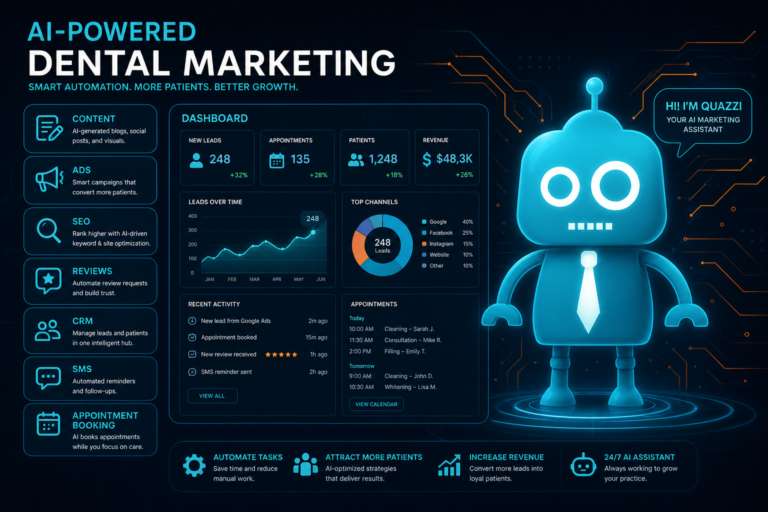
Artificial intelligence is no longer a far-off concept for large dental groups or tech-forward startups. AI is already changing how independent dental practices diagnose conditions, communicate with patients, respond to leads, manage schedules, automate marketing, and improve front desk operations.
For dentists, practice owners, and office managers, the real opportunity is not just “AI in the operatory.” The future of AI in dentistry is both clinical and business-side transformation. The practices that benefit most will be the ones that use AI to improve patient care while also making the practice easier to run, easier to find online, and easier for patients to contact.
This article explains where AI is heading in dentistry, what it can do now, and how independent practices can use it responsibly without losing the human touch patients expect.
AI in Dentistry Is More Than Clinical Technology
When many dentists think about AI, they think of radiograph analysis, caries detection, periodontal charting support, or treatment planning. Those tools are important, but they are only one part of the bigger picture.
AI is also becoming a practical tool for:
- Responding to new patient inquiries faster
- Automating appointment reminders and follow-up messages
- Improving website conversion rates
- Helping front desk teams manage phone calls, texts, and emails
- Identifying marketing opportunities
- Tracking production, case acceptance, and patient retention trends
- Educating patients before and after appointments
- Collecting reviews and improving local SEO
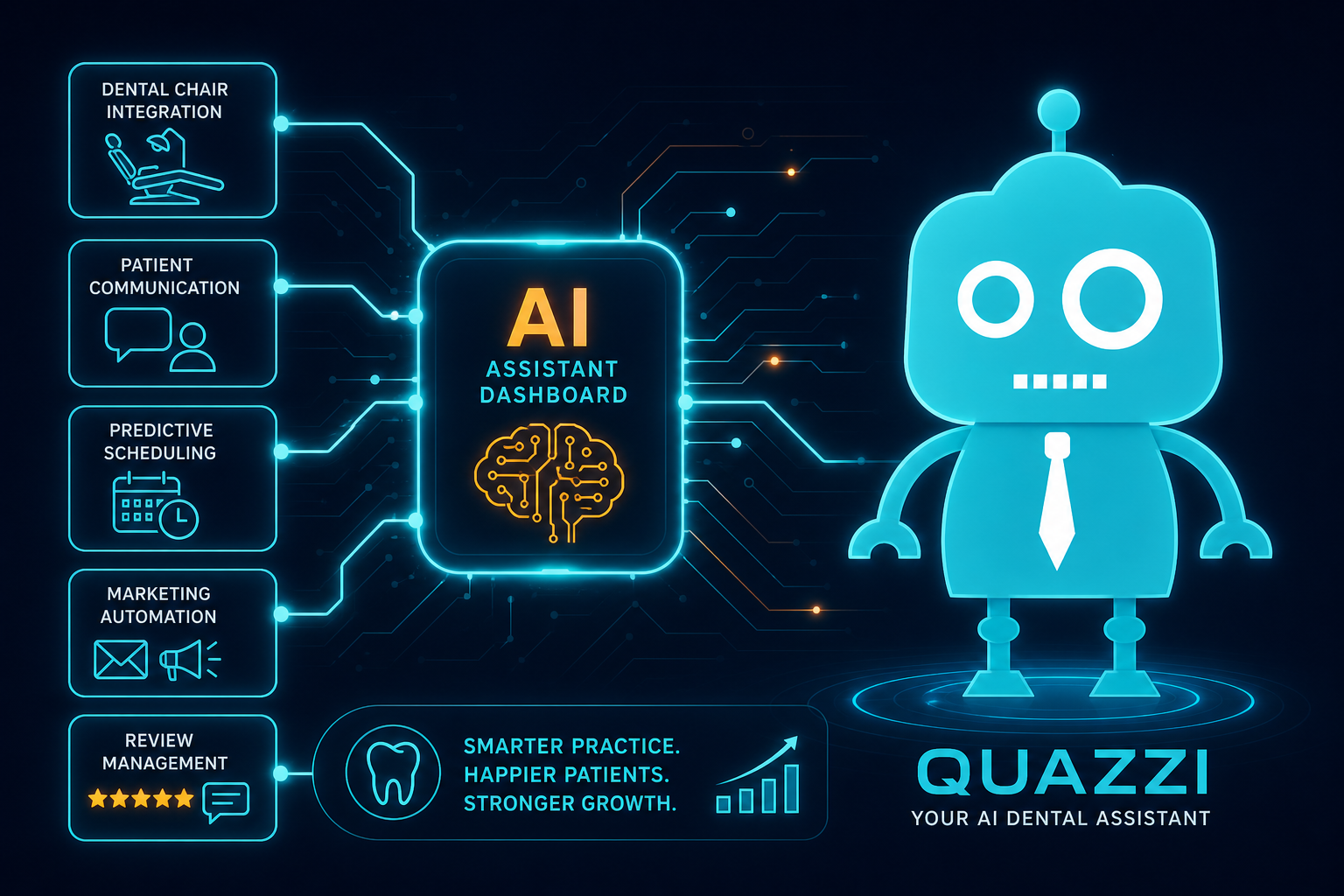
In other words, AI can support both better dentistry and better practice management.
AI Diagnostics: Supporting More Consistent Clinical Decisions
AI diagnostics are one of the most visible uses of artificial intelligence in dentistry. These systems can analyze dental radiographs and help identify potential concerns such as caries, bone loss, calculus, periapical radiolucencies, and other findings that may require further evaluation.
For an independent dental practice, the value is not that AI “replaces” the dentist. It does not. The value is that AI can act as a second set of eyes, helping clinicians review images more consistently and communicate findings more clearly with patients.
Practical example: AI-assisted radiograph review
A dentist reviewing bitewings may use AI software to highlight possible interproximal decay. The dentist still makes the diagnosis, considers the patient’s history, evaluates the clinical exam, and decides on treatment. However, the AI overlay can help make the conversation easier for the patient to understand.
Instead of saying, “There may be decay starting here,” the dentist can show a visual indicator on the X-ray and explain the next step. This can improve trust, increase case acceptance, and help patients feel more involved in their care.
How AI diagnostics can help dental practices
- Improve consistency in radiographic review
- Support patient education with visual aids
- Help newer providers build confidence
- Create clearer documentation
- Strengthen treatment presentations
The key is proper implementation. AI diagnostic tools should be used as clinical support, not as automatic decision-makers.
AI Patient Communication: Faster, More Personalized, More Consistent
Patient communication is one of the biggest areas where AI can help dental practices immediately. Many offices lose opportunities not because the care is lacking, but because communication is inconsistent.
Missed calls, delayed email replies, unanswered website form submissions, and slow follow-up can cost a practice thousands of dollars in lost treatment and new patient revenue.
AI-powered communication tools can help practices respond faster and keep conversations moving.
Examples of AI-supported patient communication
- Automatically replying to website inquiries
- Sending personalized SMS appointment reminders
- Following up with unscheduled treatment patients
- Answering common questions about insurance, services, and office hours
- Sending post-op instructions after procedures
- Checking in after extractions, implants, or cosmetic appointments
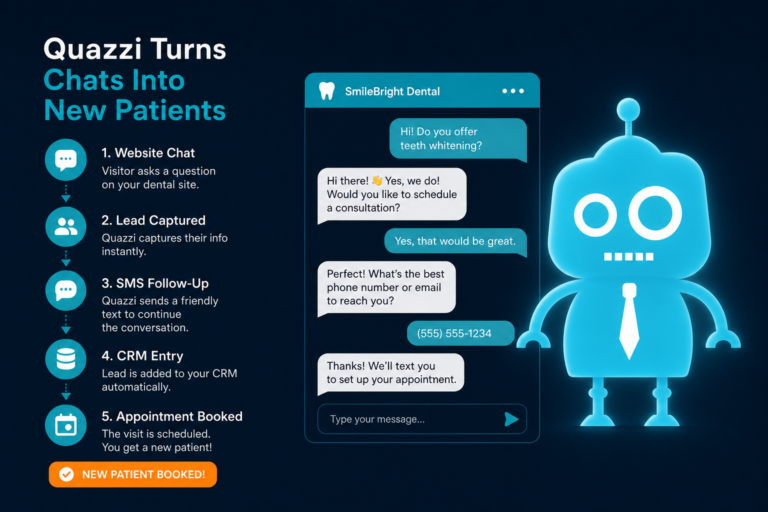
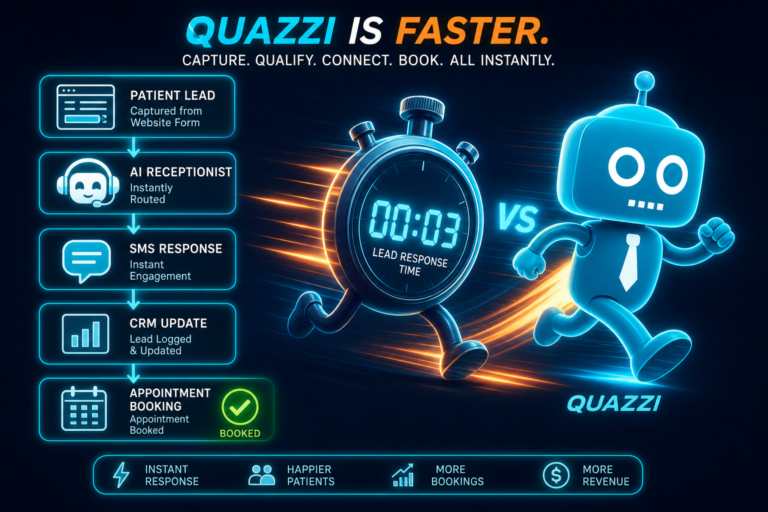
For example, if a patient fills out a website form asking about dental implants, an AI-assisted CRM workflow can immediately send a text message thanking them, provide a link to schedule a consultation, and notify the front desk team to follow up by phone.
This kind of response feels professional and helpful. It also prevents leads from going cold.
AI Scheduling: Reducing Gaps and Improving Front Desk Efficiency
Scheduling is one of the most complicated parts of running a dental office. A productive schedule has to balance provider availability, procedure length, room capacity, hygiene recall, emergencies, cancellations, and patient preferences.
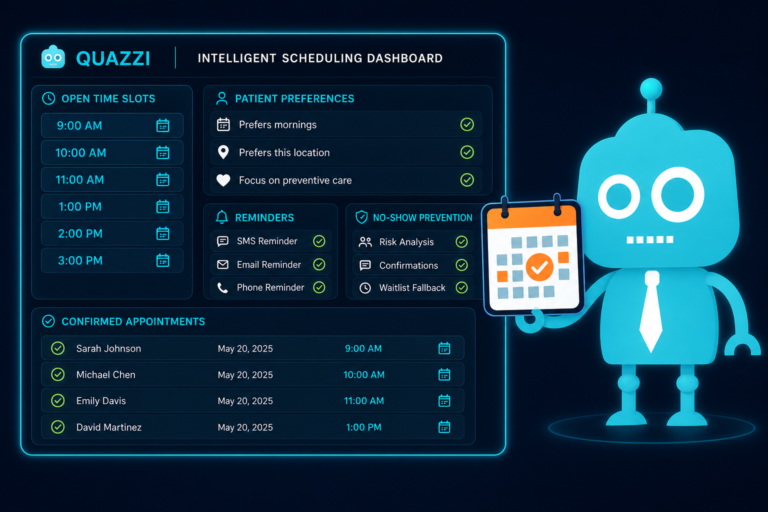
AI scheduling tools can help dental offices reduce manual work and make smarter decisions about filling the calendar.
How AI can improve dental scheduling
- Identify openings that match specific appointment types
- Suggest patients to contact when cancellations occur
- Automate confirmation messages
- Help reduce no-shows with reminder sequences
- Prioritize high-value unscheduled treatment opportunities
- Support online booking for new patient exams or consultations
For instance, if a hygiene appointment cancels for tomorrow at 10:00 a.m., AI can help identify patients due for recall who typically prefer morning appointments. The system can send a text offering the opening, allowing the patient to confirm without requiring a long phone call.
This does not eliminate the need for a skilled scheduling coordinator. It gives the coordinator better tools and faster options.
AI Lead Response: Turning Website Visitors Into New Patients
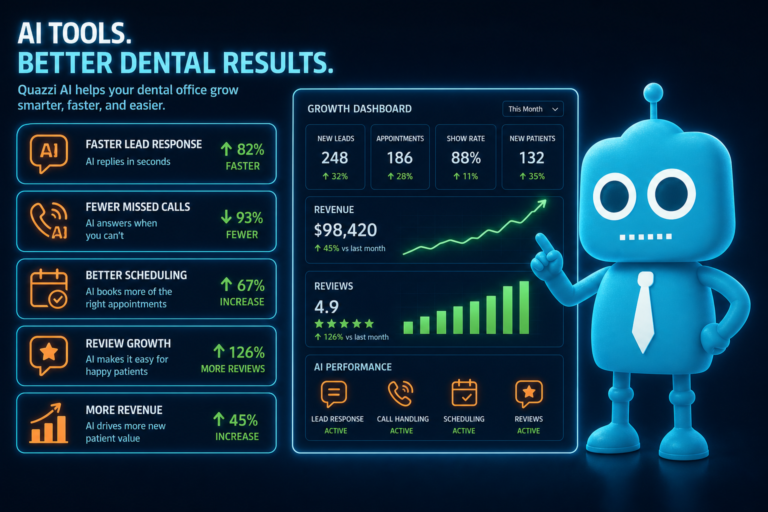
New patient acquisition is one of the most important business-side applications of AI in dentistry. Many practices invest in SEO, Google Ads, social media, and website design, but then lose leads because response time is too slow.
Modern patients often contact multiple dental offices before choosing one. If your practice responds hours later, another office may have already scheduled the appointment.
Why lead response speed matters
When someone submits a form for Invisalign, emergency dentistry, implants, veneers, or a new patient exam, they are often ready to take action. AI can help your practice respond instantly, even if the front desk is busy, closed for lunch, or helping patients in the office.
Dental lead response examples
- A patient requests an emergency appointment through the website and receives an immediate SMS asking about pain level and availability.
- A prospective Invisalign patient submits a form and receives a link to schedule a consultation.
- A dental implant lead receives an educational email explaining the consultation process and financing options.
- The office manager receives a CRM notification that a high-intent lead needs a call back.
This is where AI, CRM systems, and SMS/email automation work together. The goal is not to spam patients. The goal is to create a fast, helpful, organized response process that supports the front desk and improves conversion.
AI Marketing Automation for Dental Practices
Marketing automation is another area where AI can create measurable improvements for dental practices. Most offices already know they should follow up with leads, send recall messages, request reviews, and stay in touch with existing patients. The challenge is doing it consistently.
AI-powered marketing automation can help dental practices deliver the right message to the right patient at the right time.
Marketing automation workflows for dentists
- New patient inquiry workflow: Sends an instant text and email after a website form submission.
- Unscheduled treatment workflow: Follows up with patients who have pending treatment plans.
- Recall reactivation workflow: Contacts patients overdue for hygiene visits.
- Review request workflow: Sends a review link after completed appointments.
- Cosmetic dentistry nurture workflow: Educates leads about veneers, whitening, bonding, or Invisalign.
- Post-op care workflow: Sends instructions and check-ins after surgical or restorative procedures.
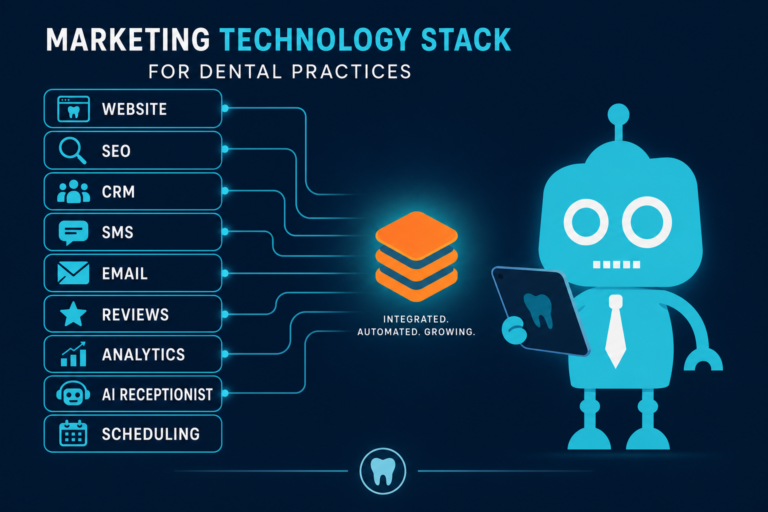
These systems can be connected to a dental CRM, website forms, online scheduling tools, and sometimes practice management software depending on the integration.
AI and dental SEO
AI can also support marketing strategy by helping identify content opportunities for dental websites. For example, if your practice wants more dental implant patients, AI-assisted analysis can help determine what questions local patients are searching for, such as:
- “How much do dental implants cost?”
- “Am I a candidate for dental implants?”
- “Dental implants vs dentures”
- “How long does a dental implant take?”
Your practice can then create educational pages, blog articles, FAQs, and landing pages that answer those questions clearly. When combined with strong website design, local SEO, and lead capture forms, this can help turn search traffic into scheduled consultations.
Practice Analytics: Better Decisions From Better Data
Dental practices collect a significant amount of data, but many offices do not have time to analyze it. AI-powered analytics can help practice owners and office managers see patterns that may otherwise be missed.
Important dental practice analytics to monitor
- New patient leads by source
- Website form conversion rates
- Phone call volume and missed calls
- Appointment request response time
- Case acceptance rates
- Unscheduled treatment value
- Hygiene recall effectiveness
- No-show and cancellation trends
- Review volume and average rating
- Marketing return on investment
For example, AI analytics may show that implant leads from Google Ads convert well when contacted within five minutes, but poorly when contacted the next day. That insight can lead to a better workflow: instant SMS response, automated email education, and a same-day front desk call.
Another example: analytics may reveal that many patients visit your “Emergency Dentist” page on mobile devices after office hours. That could justify adding an AI receptionist, online booking option, or emergency contact workflow to capture more patients when the office is closed.
AI Receptionists: Supporting the Front Desk Without Replacing the Team
The dental front desk is one of the busiest areas in any practice. Team members are often answering phones, checking patients in and out, verifying insurance, collecting payments, scheduling treatment, responding to texts, and handling last-minute changes.
AI receptionists can help by managing routine communication tasks and reducing the number of missed opportunities.
What an AI receptionist can do for a dental office
- Answer common questions about hours, location, services, and insurance participation
- Capture new patient information
- Route urgent dental concerns to the right team member
- Help patients request appointments
- Send confirmations and reminders
- Respond after hours
- Reduce missed calls and voicemail delays
An AI receptionist can be especially useful for practices that receive a high volume of calls from new patients, emergency patients, or marketing campaigns. It can also help smaller practices that do not have a large administrative team.
However, it should be implemented carefully. Patients still need access to real people, especially for complex insurance questions, treatment concerns, billing issues, and emotional situations. The best approach is a hybrid model: AI handles routine first-response tasks while the human team handles relationship-based communication.
AI Patient Education: Helping Patients Understand Their Options
Patient education is central to case acceptance. Patients are more likely to move forward with care when they understand the problem, the risks of waiting, the treatment options, and the expected outcome.
AI can support patient education by helping practices deliver clear, consistent information across multiple channels.
Examples of AI-assisted patient education
- Personalized follow-up emails after consultations
- Educational SMS links about recommended procedures
- Website FAQs for high-value services
- Chat tools that answer basic service questions
- Post-op instructions tailored to the procedure
- Video script generation for dentists explaining common treatments
For example, after a patient receives a treatment plan for a crown, the practice can send a short educational email explaining why crowns are recommended, what the appointment involves, how long the restoration may last, and what could happen if the tooth is left untreated.
This does not replace the dentist’s explanation. It reinforces it. Many patients forget details after an appointment, especially if they are nervous or surprised by the cost. Automated education can help them revisit the information later and make a more confident decision.
AI, Reviews, and Online Reputation Management
Online reviews play a major role in new patient acquisition. Patients often compare dental practices based on Google reviews before calling or submitting a website form.
AI can help practices manage review generation and reputation workflows more consistently.
How AI can support dental review growth
- Automatically send review requests after completed appointments
- Identify happy patients who are more likely to leave positive feedback
- Notify the team when a negative review needs attention
- Help draft professional review responses for approval
- Track review trends over time
For example, after a new patient completes a great first visit, the system can send a polite text with a direct Google review link. If a patient reports a concern in a satisfaction survey, the system can alert the office before asking for a public review.
This creates a more thoughtful reputation management process and helps protect the practice’s online presence.
AI and Dental Website Conversion
Your dental website is often the first impression a new patient has of your practice. AI can help improve how that website performs, but only if the site has the right foundation.
A modern dental website should be fast, mobile-friendly, easy to navigate, and designed to convert visitors into appointment requests. AI can enhance that experience through smart forms, chat tools, automated follow-up, and CRM integration.
Website conversion features that work well with AI
- Clear “Request an Appointment” buttons
- Mobile-friendly contact forms
- Click-to-call buttons
- Service-specific landing pages
- Emergency dental appointment forms
- CRM-connected lead capture
- Instant SMS and email follow-up
- Online scheduling options
- Review and testimonial sections
For example, a visitor who lands on a dental implants page should not have to search for a phone number or fill out a long generic form. A strong conversion path might include a short consultation request form, an automated confirmation text, an educational implant email, and a CRM task for the front desk to call the lead.
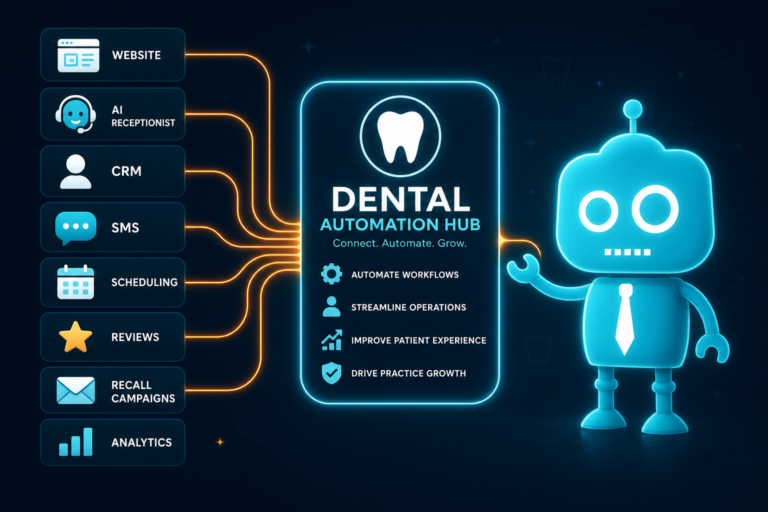
This is where AI becomes practical. It connects the website, marketing, and front desk into one smoother patient acquisition system.
Ethical Use of AI in Dentistry
As AI becomes more common in dental practices, ethical use is essential. Dentists and practice owners must be thoughtful about accuracy, privacy, transparency, and human oversight.
Human oversight must remain central
AI should support clinical and administrative decisions, not replace professional judgment. A dentist must remain responsible for diagnosis, treatment planning, informed consent, and patient care decisions.
Similarly, AI tools used for scheduling, lead response, and communication should be monitored by the practice team. Automated messages should be reviewed for accuracy, tone, and compliance with office policies.
Patient privacy and data security matter
Dental practices must be careful when using AI tools that involve patient information. Any system connected to patient data, forms, communication, or records should be evaluated for privacy, security, and compliance requirements.
Before adopting an AI tool, practice owners should ask:
- What patient data does this tool collect?
- Where is the data stored?
- Who has access to it?
- Does the vendor support HIPAA-compliant workflows where required?
- Can the practice review and control automated messages?
- Is there a clear process for human escalation?
Transparency builds trust
Patients do not need a technical explanation of every AI tool used in the practice, but transparency is important. If an AI chatbot, virtual receptionist, or automated messaging system is being used, it should be clear enough that patients understand when they are interacting with automation and how to reach a real team member.
AI works best when it improves convenience without making the practice feel impersonal.
How Independent Dental Practices Should Prepare for the Future of AI
The future of AI in dentistry will favor practices that combine strong clinical care with strong systems. You do not need to adopt every new tool at once. The smarter approach is to identify the biggest bottlenecks in your practice and apply AI where it can create measurable improvement.
Start with these practical questions
- Are new patient leads being answered quickly?
- How many calls are missed during busy hours?
- Do website forms connect to a CRM or get buried in email?
- Are appointment reminders reducing no-shows?
- Are unscheduled treatment patients being followed up with consistently?
- Is your website converting mobile visitors into appointment requests?
- Are review requests being sent automatically?
- Can your front desk easily track leads from website, phone, ads, and referrals?
If the answer to several of these questions is “no,” AI and automation may be able to help your practice grow without overwhelming your team.
The Future Is a More Connected Dental Practice
The future of AI in dentistry is not about replacing dentists, hygienists, treatment coordinators, or front desk teams. It is about creating a more connected, responsive, and efficient practice.
Clinically, AI can help dentists interpret data, communicate findings, and educate patients. Operationally, AI can help dental offices respond to leads faster, fill schedules, automate follow-up, track marketing performance, and support the front desk.
For independent dental practices, this creates a major opportunity. Larger dental organizations often have more resources, but smaller practices can move faster, personalize the patient experience, and implement smart systems that make a real difference.
The practices that thrive will be the ones that use AI thoughtfully: with human oversight, ethical standards, and a clear focus on patient care.
Build an AI-Ready Dental Website With CreateTheSite.com
AI works best when your digital foundation is strong. If your dental website is outdated, slow, difficult to use on mobile, or disconnected from your front desk workflow, even the best automation tools will have limited impact.
CreateTheSite.com helps dental practices build modern websites designed for today’s patient journey. That includes professional website design, reliable hosting, mobile optimization, lead capture forms, CRM integrations, SMS/email automation, appointment follow-up, and ongoing website support.
Whether your practice wants to improve new patient acquisition, convert more website visitors, automate lead response, or create a smoother front desk workflow, CreateTheSite.com can help you put the right digital systems in place.
Your website should do more than look good. It should help patients find you, trust you, contact you, and schedule. If your dental practice is ready for a more modern, AI-ready online presence, CreateTheSite.com is a smart place to start.