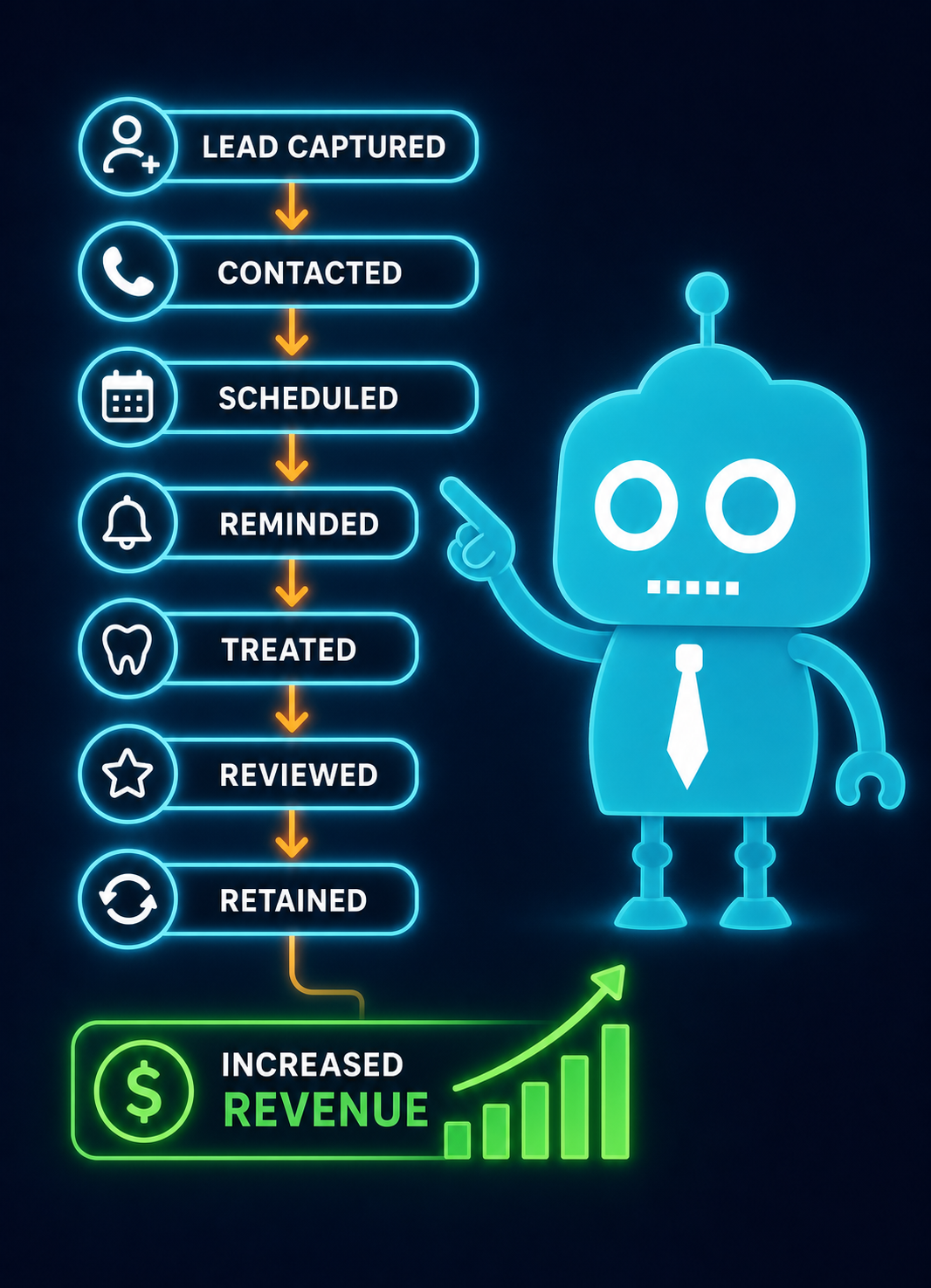
How Better Processes Increase Dental Revenue
Most dental practices do not need more chaos to grow. They need fewer leaks.
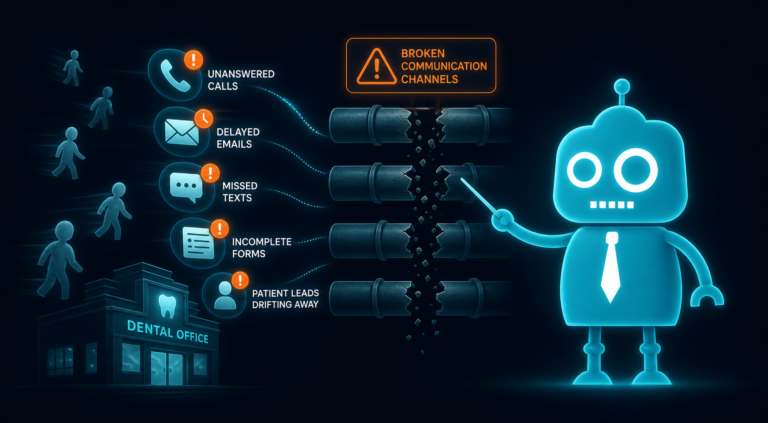
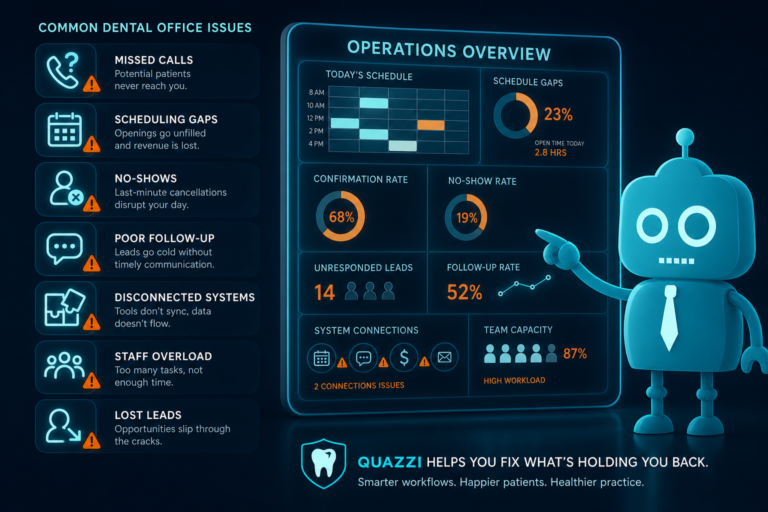
Revenue often slips away through slow response times, missed calls, weak follow-up, inconsistent scheduling, no-shows, unsent recall reminders, and leads that never make it into the appointment book. These are not clinical problems. They are process problems.
For independent dental practice owners, dentists, and office managers, improving revenue is not always about spending more on advertising or adding more services. Often, the fastest path to growth is building better systems that help your team respond faster, schedule smarter, follow up consistently, and track what is actually happening.
Better processes increase dental revenue by reducing leakage and improving consistency across every step of the patient journey.
Where Dental Practices Lose Revenue Without Realizing It
Revenue leakage happens when a potential or existing patient is interested, but the practice does not convert that interest into a completed appointment or accepted treatment plan.
Common examples include:
- A new patient submits a website form but does not receive a response until the next day.
- A missed call never receives a call back.
- A hygiene patient leaves without scheduling their next visit.
- A treatment plan is presented but no follow-up is sent.
- A patient cancels and is never reactivated.
- A happy patient leaves the office but is never asked for a review.
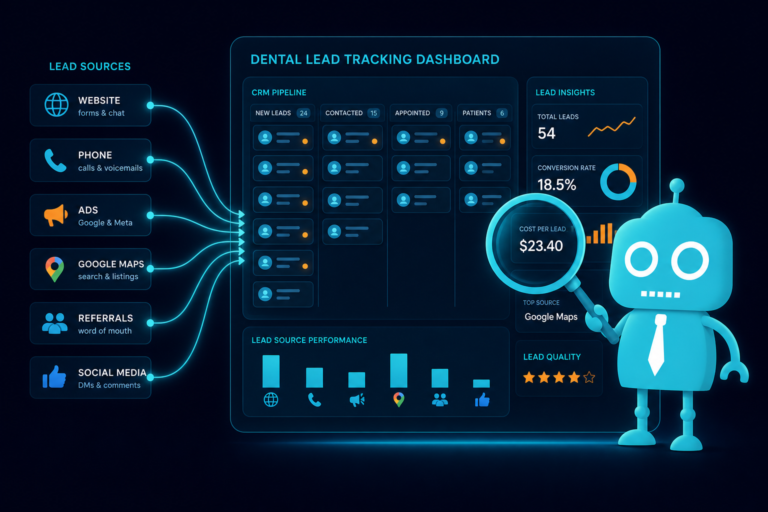
- Marketing leads are not tracked, so the practice does not know what is working.
Each individual leak may seem small. But across a month or a year, these missed opportunities can represent tens of thousands of dollars in lost production.
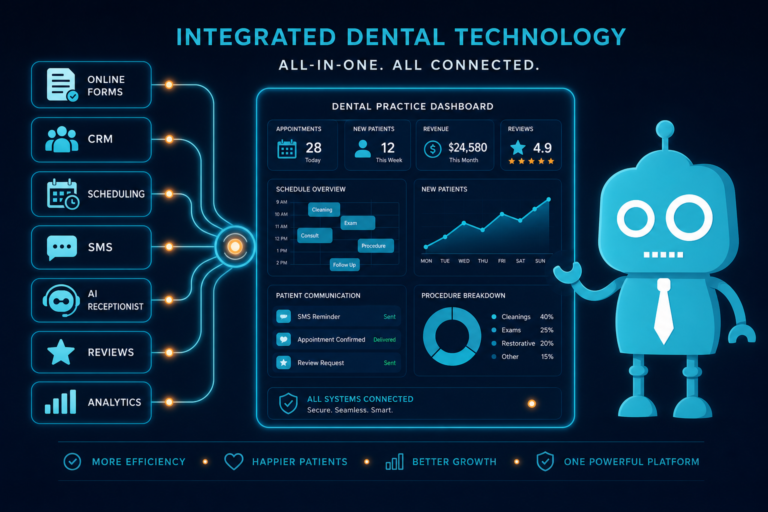
The solution is not asking the front desk to “try harder.” The solution is building repeatable processes supported by the right website, CRM, automation, communication tools, and tracking systems.
Faster Response Turns More Dental Leads Into Appointments
Speed matters when a prospective patient contacts your dental office. If someone is searching for an emergency dentist, dental implants, Invisalign, cosmetic dentistry, or a new family dentist, they are often contacting multiple practices.
The practice that responds first has a major advantage.
Why Response Time Affects Dental Revenue
A slow response creates friction. The patient may assume the office is too busy, disorganized, or unavailable. Even if your clinical care is excellent, the patient’s first impression is based on how easy it is to reach you.
Better processes help ensure every inquiry is handled quickly, whether it comes from:
- A website contact form
- A new patient appointment request
- A phone call
- A Google Business Profile message
- A Facebook or Instagram ad
- An email campaign
Practical Example
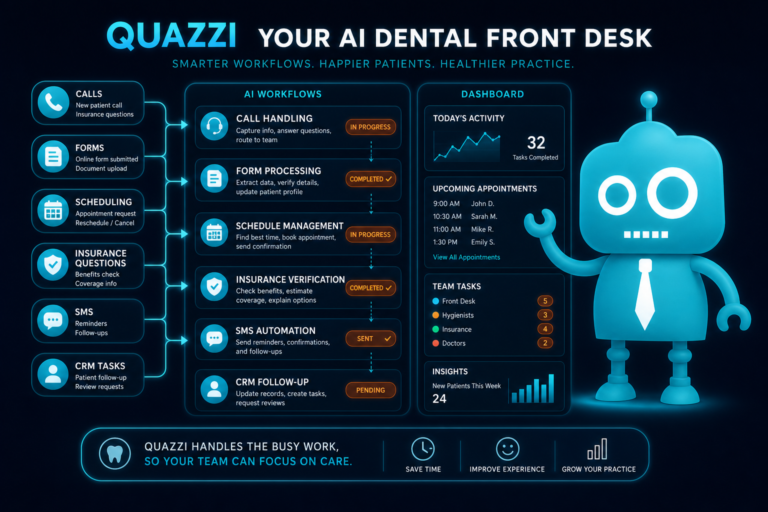
Instead of relying on someone to manually check website form submissions throughout the day, a dental practice can route every new lead into a CRM system. The system can instantly notify the front desk, send an automated confirmation text or email to the patient, and create a follow-up task.
This process reduces the chance of a lead being forgotten and increases the likelihood of converting that inquiry into a scheduled appointment.
Better Scheduling Increases Production and Reduces Gaps
Scheduling is one of the biggest revenue drivers in a dental practice. A full schedule is not always a productive schedule. The goal is to create a schedule that supports strong production, efficient provider time, and a better patient experience.
How Scheduling Processes Improve Revenue
Better scheduling processes help the office:
- Book high-value procedures at the right times
- Reduce unproductive gaps in the day
- Protect time for emergency appointments
- Balance hygiene and doctor production
- Prevent the front desk from overbooking or underbooking
- Make it easier for new patients to schedule quickly
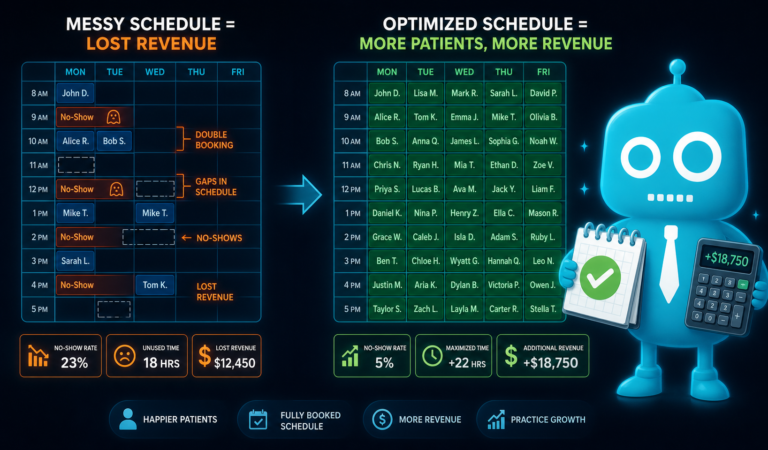
When scheduling is inconsistent, the practice may appear busy but still underperform financially. For example, a doctor’s day filled with low-production visits may leave little room for crown, implant, aligner, or cosmetic cases.
Practical Example
An office manager can create scheduling templates for different appointment types, such as new patient exams, hygiene visits, emergency visits, consultations, and treatment appointments. These templates help the front desk schedule consistently instead of making judgment calls under pressure.
When combined with online appointment requests and CRM follow-up, scheduling becomes easier for both patients and staff.
Fewer No-Shows Protect Daily Revenue
No-shows and last-minute cancellations directly affect dental revenue. Once chair time is lost, it is difficult to recover that production the same day.
Many practices accept no-shows as a normal part of operations, but better processes can reduce them significantly.
Automated Reminders Reduce Missed Appointments
SMS and email reminders help patients remember their appointments and confirm in advance. A strong reminder process might include:
- An appointment confirmation sent when the visit is booked
- A reminder one week before the appointment
- A reminder 48 hours before the appointment
- A same-day reminder for certain appointment types
- Simple instructions for confirming, rescheduling, or calling the office
Text messaging is especially effective because patients are more likely to see and respond to SMS than voicemail or email.
Practical Example
If a patient does not confirm within a set timeframe, the system can notify the front desk to call them. This allows the team to identify potential cancellations earlier and fill openings from a short-call list.
The result is fewer empty chairs and more predictable production.
Stronger Recall Keeps the Hygiene Schedule Full
Recall is one of the most important revenue systems in a dental practice. Hygiene visits support preventive care, patient retention, diagnosis, treatment planning, and long-term practice growth.
When recall is inconsistent, patients drift away. They may not intentionally leave the practice, but without reminders and easy scheduling options, they delay care or choose another provider later.
Recall Leakage Is Expensive
Every overdue hygiene patient represents more than a missed cleaning. They also represent potential missed exams, X-rays, periodontal therapy, restorative treatment, whitening, aligner consultations, and referrals.
A stronger recall process can include:
- Pre-appointing hygiene patients before they leave
- Automated SMS and email recall reminders
- Monthly overdue patient reports
- Dedicated front desk call blocks for reactivation
- Website forms that make returning patients easy to schedule
Practical Example
A patient who is six months overdue can receive a friendly text with a direct link to request an appointment. If they do not respond, the CRM can create a task for the front desk to follow up by phone.
This keeps recall from depending on memory or manual spreadsheets.
Treatment Follow-Up Improves Case Acceptance
Many patients do not accept treatment immediately. They may need to check their calendar, discuss finances, review insurance, talk with a spouse, or simply think about it.
If the practice does not follow up, treatment plans often go cold.
Why Follow-Up Matters After the Diagnosis
Patients are more likely to accept treatment when they understand the importance, feel supported, and receive timely communication. A consistent follow-up process helps prevent recommended care from being forgotten.
This is especially important for higher-value procedures such as:
- Dental implants
- Invisalign or clear aligners
- Cosmetic dentistry
- Crowns and bridges
- Veneers
- Full-mouth rehabilitation
- Periodontal therapy
Practical Example
After a consultation, the treatment coordinator can use a CRM to schedule follow-up reminders. The patient may receive an educational email, a financing options message, and a personal call from the office.
This type of process does not pressure the patient. It helps them make an informed decision and makes it easier to move forward.
More Reviews Increase Trust and New Patient Conversion
Online reviews are a major factor in dental marketing and new patient acquisition. Patients often compare dentists based on Google reviews before calling or booking online.
A practice with strong reviews, recent feedback, and professional responses will usually convert more website visitors into appointments.
Review Requests Should Be a Process, Not an Afterthought
Many happy patients are willing to leave a review, but they need to be asked at the right time and given a simple way to do it.
A better review process might include:
- Identifying satisfied patients before they leave the office
- Sending an SMS review request shortly after the visit
- Including a direct link to the Google review page
- Monitoring new reviews regularly
- Responding professionally to feedback
Practical Example
After a successful new patient visit, whitening appointment, implant consultation, or completed cosmetic case, the office can send a short text thanking the patient and inviting them to share their experience.
This simple process can steadily increase positive reviews, which improves local SEO, strengthens trust, and helps more website visitors choose your practice.
Lead Conversion Improves Website ROI
A dental website should do more than look professional. It should convert visitors into leads and appointments.
If your practice is investing in SEO, Google Ads, social media, mailers, or referral campaigns, your website needs strong conversion processes. Otherwise, traffic may increase without a matching increase in scheduled patients.
Website Conversion Elements That Reduce Leakage
A high-converting dental website should make it easy for patients to take action. Important elements include:
- Clear “Request an Appointment” buttons
- Mobile-friendly design
- Fast page load speed
- Clickable phone numbers
- Simple lead capture forms
- Service pages for high-value treatments
- Trust signals such as reviews, photos, credentials, and financing options
- CRM integration for immediate follow-up
Practical Example
A patient searching for “dental implants near me” lands on your implant page. The page explains the procedure, shows patient-focused benefits, includes reviews, answers common questions, and offers a simple consultation request form.
Once submitted, the form automatically enters the CRM, sends a confirmation to the patient, and alerts the front desk. That is a revenue process, not just a website feature.
Better Tracking Shows What Is Working
Dental practices cannot improve what they do not track. Without clear reporting, it is difficult to know where leads are coming from, how many are converting, and where revenue is leaking.
Important Metrics for Dental Practice Growth
Useful tracking can include:
- Website form submissions
- Phone calls from the website
- New patient appointment requests
- Lead source by campaign
- Appointment conversion rate
- No-show and cancellation rates
- Recall reactivation numbers
- Treatment follow-up outcomes
- Review request performance
When these numbers are visible, office managers and practice owners can make better decisions.
Practical Example
If Google Ads are generating leads but few appointments, the issue may be front desk follow-up, landing page messaging, call handling, or form response time. If SEO traffic is increasing but appointment requests are flat, the website may need stronger calls to action or better mobile optimization.
Tracking helps you fix the right problem instead of guessing.
Staff Efficiency Helps the Front Desk Focus on Patients
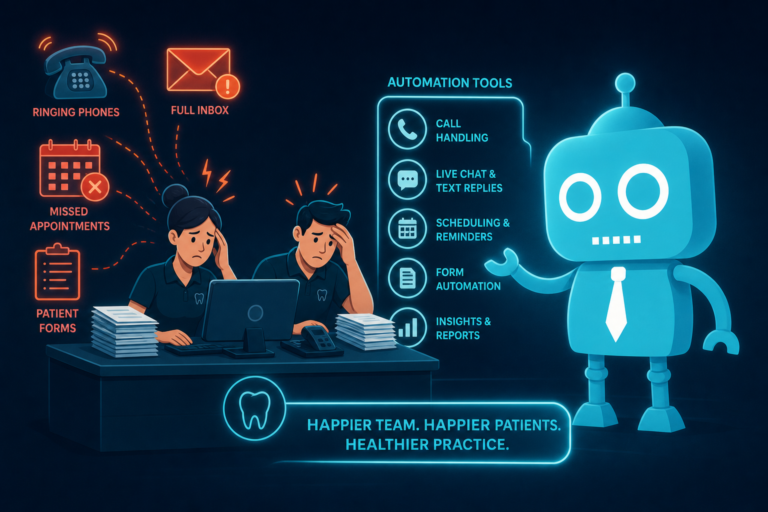
The front desk is often responsible for phones, scheduling, insurance questions, patient check-in, checkout, payments, recall, treatment follow-up, reviews, and new patient inquiries. Without clear processes, the team becomes reactive and overwhelmed.
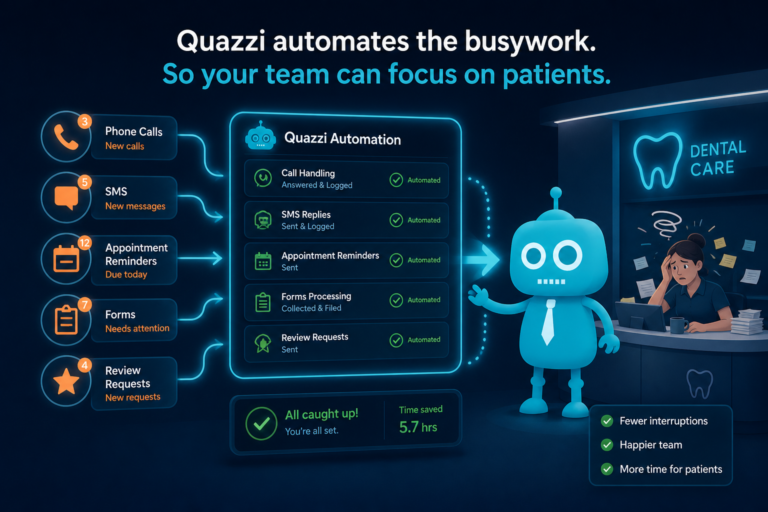
Better systems reduce repetitive manual work and help staff focus on higher-value conversations.
Automation Supports the Team
Automation does not replace the human touch in a dental office. It supports it.
SMS and email automation can handle routine communication such as:
- Appointment confirmations
- Reminder messages
- Recall notices
- New patient form reminders
- Review requests
- Post-appointment follow-up
- Treatment consultation follow-up
This gives the front desk more time to answer calls, help patients understand next steps, schedule treatment, and create a better patient experience.
Practical Example
Instead of manually sending the same reminder emails every day, the office can use automation to deliver consistent messages. Staff can then focus on patients who need personal attention, such as unscheduled treatment patients, overdue recall patients, or new leads who have not responded.
Consistency Creates Predictable Dental Revenue
The biggest advantage of better processes is consistency.
A practice that responds quickly only when the front desk has time will lose opportunities. A practice that follows up with treatment plans only when someone remembers will lose production. A practice that asks for reviews only occasionally will struggle to build social proof.
Consistent systems create consistent results.
When the patient journey is supported from website visit to appointment request, scheduling, reminders, treatment follow-up, recall, and reviews, the practice captures more of the revenue it has already earned the opportunity to receive.
How to Start Improving Your Dental Practice Processes
You do not need to fix everything at once. Start by identifying the biggest leaks in your current process.
Ask These Questions
- How quickly do we respond to new website leads?
- Do missed calls always receive a follow-up?
- Are new patient appointment requests tracked in a CRM?
- Do we have automated SMS and email reminders?
- How many patients are overdue for hygiene?
- Do we follow up on unscheduled treatment plans?
- Are we consistently requesting Google reviews?
- Can we see which marketing sources produce real appointments?
- Is our website designed to convert mobile visitors?
The answers will show where revenue is leaking and where better processes can create immediate improvement.
Better Processes Do Not Just Increase Revenue. They Improve the Patient Experience.
Patients notice when a dental practice is easy to contact, organized, responsive, and consistent. They appreciate reminders, simple scheduling, helpful follow-up, and clear communication.
That better experience leads to more appointments, stronger retention, higher treatment acceptance, more reviews, and more referrals.
In other words, the same processes that increase dental revenue also make the practice easier to run and easier for patients to choose.
Build a Better Dental Website and Follow-Up System With CreateTheSite.com
If your dental practice is losing leads through slow follow-up, outdated website design, weak mobile performance, or disconnected systems, CreateTheSite.com can help.
CreateTheSite.com works with dental practices to build modern websites and digital processes that support new patient acquisition and reduce revenue leakage. Services include professional dental website design, secure hosting, mobile optimization, lead capture forms, CRM integrations, SMS and email automation, appointment follow-up, and ongoing website support.
The goal is not just to make your website look better. It is to help your practice respond faster, convert more visitors, strengthen follow-up, and create a more consistent patient journey from first click to scheduled appointment.
If you want a dental website and support system built around growth, efficiency, and better patient communication, visit CreateTheSite.com to learn how the right processes can help your practice capture more of the revenue it is already generating opportunities for.