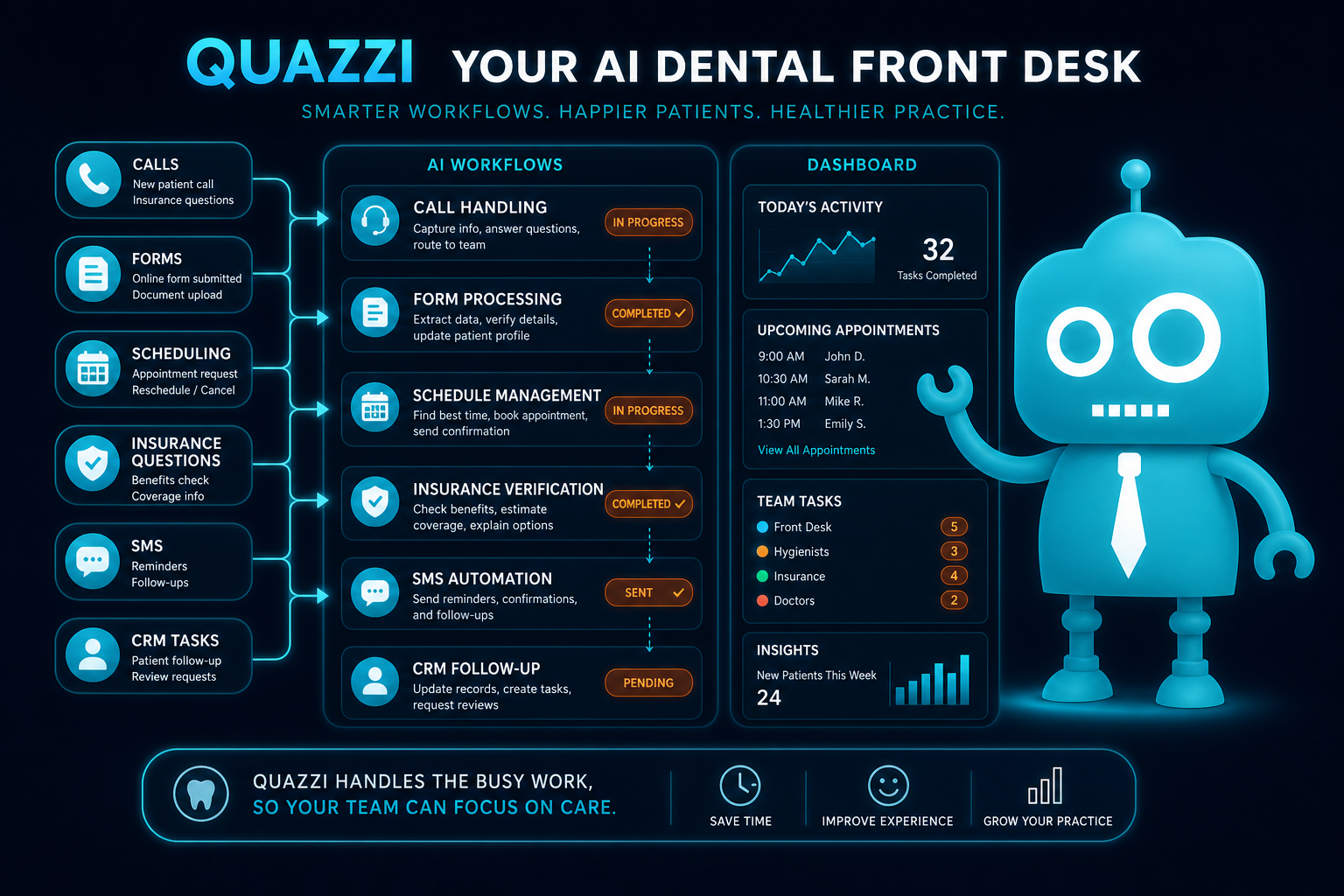
Why Front Desk Efficiency Matters in Dental Practices
In most dental practices, the front desk is viewed as an administrative area. Patients check in, phones ring, insurance questions get answered, and appointments are scheduled.
But for a growth-focused dental practice, the front desk is much more than a reception area. It is the conversion center of the practice.
Every new patient inquiry, website form submission, phone call, missed call, insurance question, reschedule request, and follow-up opportunity passes through the front desk. That means front desk efficiency directly affects new patient acquisition, patient experience, case acceptance, online reviews, and revenue.
For independent dental practice owners, dentists, and office managers, improving front desk operations is not just about being more organized. It is about converting more interest into booked appointments while reducing stress on your team.
The Front Desk Is Where Dental Marketing Becomes Revenue
Your dental website, Google Business Profile, SEO, paid ads, social media, and patient reviews all have one major goal: to generate patient interest.
But interest does not become revenue until someone books an appointment and shows up.
That conversion often happens through your front desk.
For example:
- A potential patient finds your website and submits a request for a cleaning.
- A parent calls after searching “family dentist near me.”
- A patient asks if you accept their insurance before scheduling.
- Someone clicks “Request Appointment” from a mobile phone during lunch.
- A prospective implant patient leaves a voicemail after business hours.
Each of these moments is a conversion opportunity. If the response is fast, helpful, and organized, the practice has a strong chance of booking the patient. If the response is delayed, rushed, or missed completely, that patient may call the next dental office in the search results.
First Impressions Start Before the Patient Walks In
Many dental practices think the first impression begins when a patient arrives at the office. In reality, it starts much earlier.
It may begin when the patient visits your website, reads your reviews, fills out a contact form, or calls your office for the first time.
Your front desk team shapes that first impression through:
- How quickly the phone is answered
- The tone and confidence of the conversation
- How clearly insurance and appointment questions are handled
- How easy it is to schedule
- How promptly online inquiries are followed up
A patient who is nervous, in pain, or comparing providers wants to feel reassured. A calm, knowledgeable front desk can turn uncertainty into trust.
Practical example: the new patient phone call
A prospective patient calls and says, “I haven’t been to the dentist in a few years. I’m looking for a new office.”
A rushed response might sound like:
“Okay, what insurance do you have?”
A conversion-focused response might sound like:
“We’d be happy to help. Many of our new patients are in the same situation, and we’ll make the visit comfortable. Are you looking for a cleaning and exam, or is there a specific concern you’d like the doctor to look at?”
The second response builds confidence, gathers useful information, and moves the patient toward scheduling.
Phone Handling Is Still Critical for Dental Practices
Even with online scheduling and website forms, phone calls remain one of the most important conversion channels for dental practices.
Patients often call when they are ready to act. They may have a toothache, need a crown consultation, want a second opinion, or be searching for a dentist that accepts their insurance.
Strong dental phone handling includes:
- Answering quickly when possible
- Using a warm, professional greeting
- Asking the right questions without making the call feel like an interrogation
- Guiding the patient toward a specific appointment time
- Capturing accurate contact information
- Confirming next steps before ending the call
For new patient acquisition, the goal is not just to answer questions. The goal is to help the caller take the next step and book an appointment.
Turn questions into appointments
If a caller asks, “How much is a cleaning?” the front desk can answer the question while still moving toward conversion.
For example:
“The cost can depend on the type of cleaning needed, especially if it has been a while since your last visit. The best first step is a new patient exam so the doctor and hygienist can evaluate your gums and teeth. We have an opening Tuesday at 10:00 or Thursday at 2:30. Which works better?”
This approach is helpful, accurate, and scheduling-focused.
Scheduling Efficiency Affects Production and Patient Experience
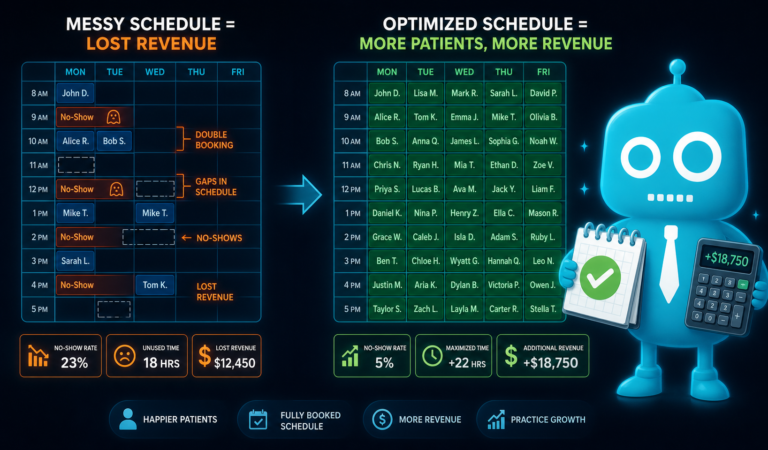
Scheduling is one of the most important front desk responsibilities in a dental practice. An inefficient schedule can create stress for the clinical team, frustration for patients, and lost production for the practice.
Efficient scheduling helps with:
- Filling high-value appointment slots
- Reducing gaps in the schedule
- Managing provider and hygienist availability
- Balancing emergency visits with planned treatment
- Improving patient flow throughout the day
- Reducing last-minute cancellations and no-shows
The front desk should not have to rely on memory, sticky notes, or disconnected systems to manage scheduling. A modern dental practice needs clear processes and technology support.
Website conversion and scheduling must work together
If your website has a “Request Appointment” button, the front desk needs a reliable process for handling those requests.
For example:
- Where does the form submission go?
- Who receives the notification?
- How quickly is the patient contacted?
- Is the lead added to a CRM?
- Are automated SMS or email follow-ups triggered?
- Is there a way to track whether the request became a booked appointment?
A website form that sends an email to a crowded inbox is not enough. To improve dental website conversion, appointment requests need to be captured, tracked, and followed up consistently.
Insurance Questions Can Make or Break New Patient Conversion
Insurance is one of the most common reasons patients contact a dental office before booking.
Questions may include:
- “Do you take my insurance?”
- “Are you in-network?”
- “What will my cleaning cost?”
- “Does my plan cover crowns?”
- “Can you check my benefits before I come in?”
How the front desk handles these questions affects whether the patient schedules or keeps searching.
The goal is to be helpful without overpromising. Insurance can be complex, and benefit estimates are not guarantees. Still, patients want clarity and confidence.
A better way to answer insurance questions
Instead of saying, “You’ll have to call your insurance company,” a more helpful response might be:
“We can help you review your benefits and give you an estimate based on the information your insurance provides. Coverage varies by plan, but we’ll do our best to explain your options before treatment. Let’s get your appointment scheduled, and we can collect your insurance details ahead of time.”
This keeps the conversation moving while reducing patient uncertainty.
Follow-Up Is Where Many Dental Practices Lose Opportunities
Not every patient books on the first contact. Some patients need to check their schedule, talk to a spouse, compare insurance details, or think about treatment.
Without a follow-up system, these opportunities often disappear.
Dental front desk follow-up should include:
- New patient inquiries that did not schedule
- Missed calls and voicemails
- Website form submissions
- Unscheduled treatment plans
- Cancelled appointments that need rescheduling
- Patients due for hygiene recare
- Review requests after completed visits
Follow-up does not have to feel pushy. In dentistry, effective follow-up is often simply helpful communication at the right time.
Practical example: unscheduled treatment follow-up
A patient receives a treatment plan for a crown but leaves without scheduling. A front desk follow-up message could say:
“Hi Sarah, this is Green Valley Dental. Dr. Miller recommended scheduling your crown to help protect the tooth before it worsens. We have openings next Wednesday and Friday. Would you like us to reserve one for you?”
This message is specific, relevant, and action-oriented.
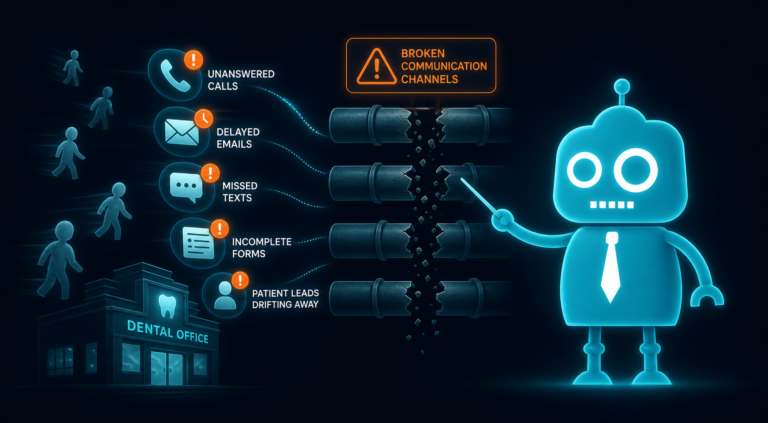
Missed Calls Are Missed Conversion Opportunities
Missed calls are one of the most overlooked sources of lost revenue in dental practices.
A missed call may be:
- A new patient ready to schedule
- An emergency patient looking for same-day care
- A patient asking about insurance
- A parent trying to book appointments for multiple children
- A cosmetic dentistry lead interested in veneers or whitening
If that caller does not receive a quick response, they may call another practice immediately.
This is especially important for mobile search. When someone searches “dentist near me” and taps to call, they are often ready to choose a provider. If the call is missed, your marketing investment may be wasted.
How dental practices can reduce missed call losses
To protect new patient opportunities, practices should consider:
- Call tracking for marketing campaigns
- Missed call text-back automation
- Voicemail-to-email notifications
- Clear responsibility for call-backs
- CRM tracking for every new patient inquiry
- After-hours appointment request forms
A simple automated text can make a major difference:
“Thanks for calling Bright Smile Dental. We’re sorry we missed you. Reply here or request an appointment online, and our team will follow up shortly.”
This keeps the conversation alive even when the team is busy helping patients in the office.
Lead Tracking Helps You Understand What Is Actually Working
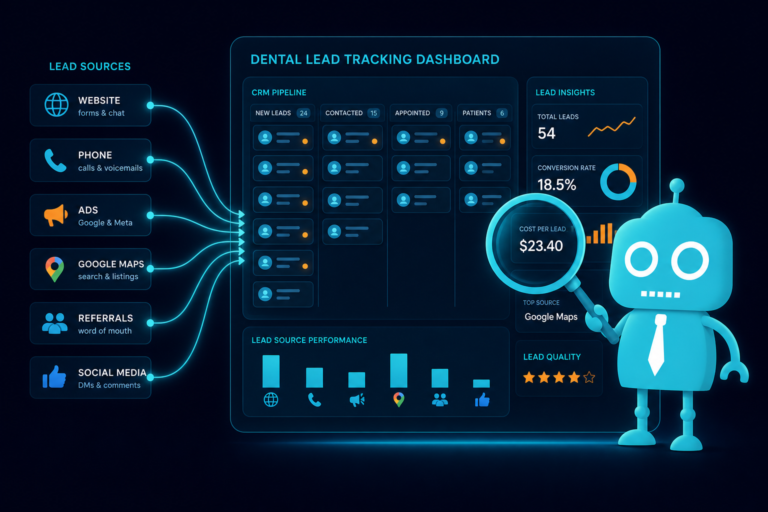
Many dental practices invest in marketing but do not have a clear system for tracking leads from first contact to booked appointment.
Without lead tracking, it is difficult to answer important questions:
- How many new patient inquiries came from the website?
- How many calls came from Google Business Profile?
- How many form submissions became appointments?
- How many leads were missed or never followed up?
- Which services generate the most inquiries?
- Which marketing campaigns produce actual patients?
This is where CRM systems can help dental practices improve front desk efficiency and marketing performance.
Using a CRM in a dental practice
A CRM, or customer relationship management system, helps track patient inquiries and communication. For dental practices, a CRM can be used to manage leads before they become active patients in the practice management system.
A dental CRM workflow might include:
- Website form submission enters the CRM automatically
- Lead source is recorded, such as SEO, Google Ads, or Facebook
- Front desk receives an alert to call the patient
- Automated SMS and email messages are sent if there is no response
- Status is updated from “new lead” to “scheduled”
- Office manager reviews conversion rates each month
This gives practice owners and office managers better visibility into the patient acquisition process.
Automation Supports the Front Desk Without Replacing the Human Touch
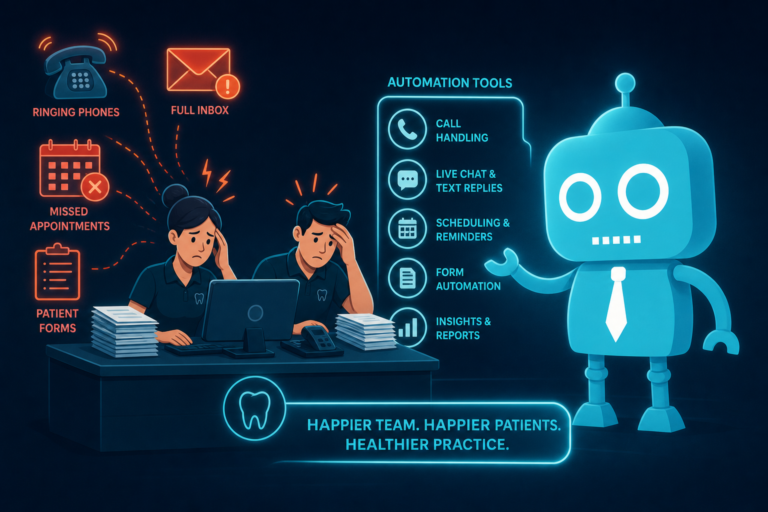
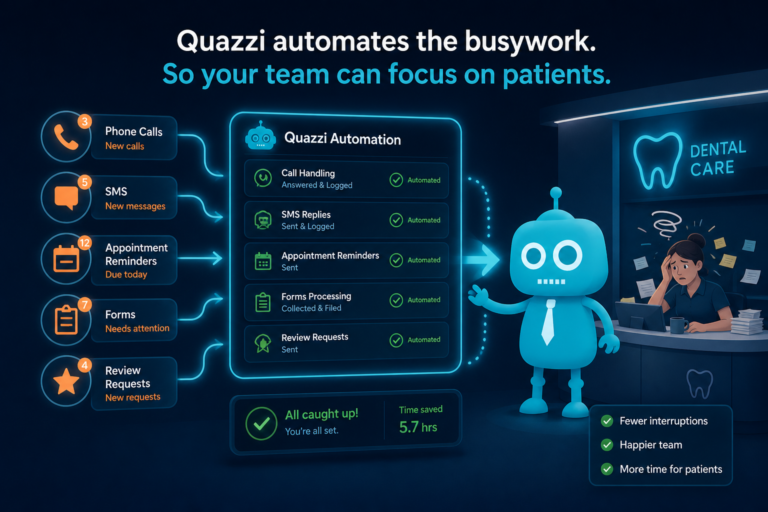
Automation is not about removing personal service from dentistry. It is about helping the front desk stay consistent, responsive, and less overwhelmed.
Dental practices can use SMS and email automation for:
- Appointment confirmations
- New patient form reminders
- Missed call responses
- Website inquiry follow-up
- Incomplete appointment request follow-up
- Post-visit review requests
- Recare reminders
- Unscheduled treatment reminders
Automation is especially useful because patients often contact dental offices outside traditional business hours. A patient may fill out a website form at 9:30 p.m. after finally deciding to schedule. If they receive an immediate confirmation text or email, they know the request was received.
Example: automated website inquiry follow-up
When a patient submits a request through your dental website, an automated email could say:
“Thank you for contacting Oak Ridge Dental. We received your appointment request and will follow up during business hours. If you are experiencing dental pain or need urgent care, please call our office directly at the number below.”
An SMS message could follow:
“Hi, this is Oak Ridge Dental. Thanks for reaching out. Our team will contact you soon to help schedule your visit.”
This creates immediate reassurance and reduces the chance that the patient contacts another office.
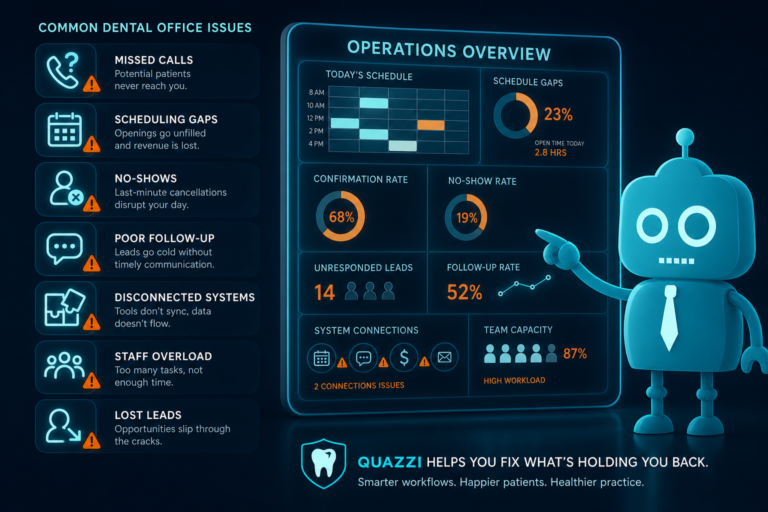
Reducing Staff Overload Improves Patient Service
Dental front desk teams are often responsible for far more than patients realize. They may be answering phones, checking patients in and out, verifying insurance, collecting payments, managing schedules, responding to emails, handling forms, and supporting the clinical team.
When the front desk is overloaded, conversion suffers.
Common signs of staff overload include:
- Calls going to voicemail during business hours
- Delayed responses to website inquiries
- Patients waiting at check-in or check-out
- Inconsistent follow-up on treatment plans
- Unclear ownership of new patient leads
- Frequent scheduling errors
- Team burnout and turnover
Efficiency is not about pushing the team harder. It is about designing better systems.
Ways to reduce front desk workload
Independent dental practices can reduce overload by improving both workflow and technology.
- Use online forms: Let patients complete intake paperwork before the visit.
- Add clear website calls-to-action: Make it easy to request an appointment without calling.
- Use SMS reminders: Reduce manual confirmation calls.
- Integrate lead forms with a CRM: Avoid lost inquiries in email inboxes.
- Create call scripts: Help the team handle common questions confidently.
- Track missed calls: Make sure every potential patient receives a follow-up.
- Automate review requests: Build reputation without adding manual tasks.
When systems support the team, the front desk can focus on higher-value conversations and better patient care.
Front Desk Efficiency Improves Online Reviews
Patient reviews are not based only on clinical care. They are often shaped by the entire experience, including scheduling, communication, wait times, billing clarity, and follow-up.
A patient may leave a positive review because:
- The office answered quickly when they had a toothache
- The front desk explained insurance clearly
- Appointment reminders were helpful
- Check-in was simple
- The team followed up after treatment
On the other hand, a poor front desk experience can damage the practice’s reputation even if the clinical care was excellent.
Efficient front desk operations help create smoother patient experiences, which can lead to stronger reviews, better local SEO, and more new patient inquiries.
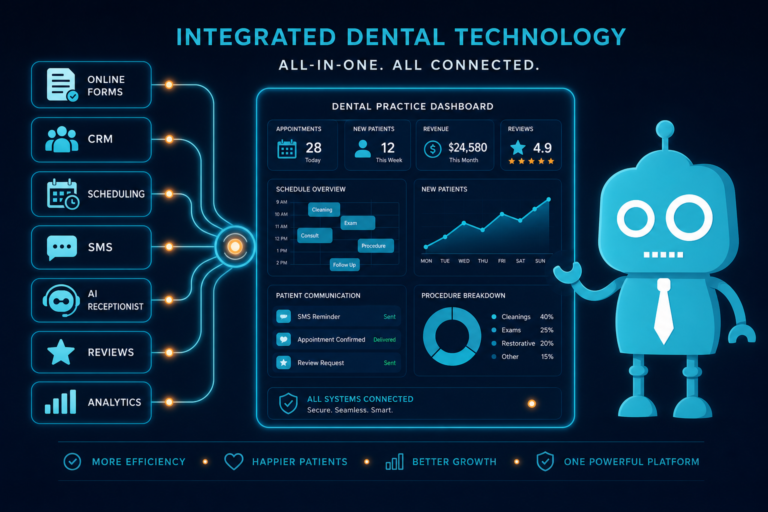
Your Website and Front Desk Should Work as One System
A modern dental website should not function like a digital brochure. It should support the front desk and help convert visitors into patients.
That means your website should include:
- Prominent click-to-call buttons on mobile
- Clear “Request Appointment” forms
- Service pages for high-value treatments
- Insurance and payment information
- Patient review highlights
- Fast page load speed
- Mobile-friendly design
- CRM and automation integrations
When a patient visits your website, they should quickly understand who you help, what services you provide, how to contact you, and why they should choose your practice.
When that patient takes action, the front desk should receive the inquiry in a system that makes follow-up easy.
Example: a better new patient workflow
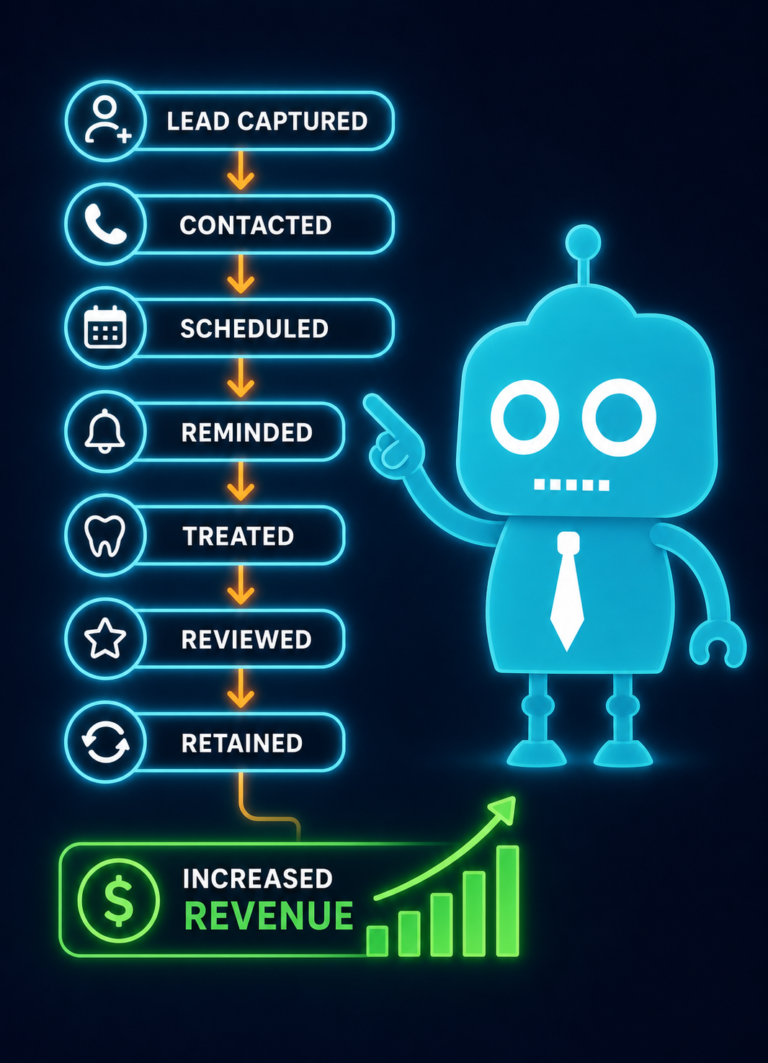
Here is what a conversion-focused workflow can look like:
- A patient searches for a local dentist and visits your website.
- They read your reviews and view your new patient page.
- They submit a mobile-friendly appointment request form.
- The form automatically sends the lead to your CRM.
- The front desk receives an alert with the patient’s contact details and requested service.
- The patient receives an automated confirmation email or text.
- The front desk follows up and schedules the appointment.
- The CRM tracks the lead as converted.
- After the visit, the patient receives an automated review request.
This type of system improves conversion while reducing manual work.
What Dental Practice Owners Should Measure
To improve front desk efficiency, dental practice owners and office managers should track the numbers that connect marketing, operations, and revenue.
Useful metrics include:
- New patient phone calls per month
- Website form submissions
- Missed calls
- Average response time to new inquiries
- Lead-to-appointment conversion rate
- No-show and cancellation rates
- Unscheduled treatment follow-up rate
- Review request and review completion rate
- New patient sources
These metrics help identify where opportunities are being lost. For example, if website traffic is strong but appointment requests are low, the website may need better conversion design. If appointment requests are high but bookings are low, the follow-up process may need improvement.
Front Desk Efficiency Is a Growth Strategy
For dental practices, front desk efficiency is not just an operational issue. It is a growth strategy.
The front desk influences how many new patients schedule, how smoothly the day runs, how well treatment is followed up, and how patients feel about the practice.
When your front desk is supported by strong systems, modern website design, CRM tracking, and SMS/email automation, your practice can convert more opportunities without overwhelming your team.
The result is a better experience for patients, a more manageable workload for staff, and a more predictable path for practice growth.
Build a Dental Website That Supports Your Front Desk
Your front desk should not have to carry the entire burden of patient conversion alone. Your website, lead capture forms, CRM, and automation tools should work together to support your team.
CreateTheSite.com helps dental practices build modern, conversion-focused websites designed to turn visitors into patient inquiries. Our services include professional dental website design, secure hosting, mobile optimization, lead capture forms, CRM integrations, SMS and email automation, appointment follow-up workflows, and ongoing website support.
Whether you want to improve new patient acquisition, reduce missed opportunities, streamline follow-up, or make your website more useful for your front desk team, CreateTheSite.com can help you create a stronger digital foundation for your practice.
Ready to make your dental website work harder for your front desk? Visit CreateTheSite.com to learn how we can help your practice capture more leads, improve follow-up, and support long-term growth.