Why Staffing Issues Hurt Dental Patient Growth
Most dental practice owners think of staffing shortages as an operations problem. The schedule gets stressful, the phones ring nonstop, the front desk feels overwhelmed, and the team struggles to keep up.
But staffing issues do more than create internal pressure. They directly damage your marketing performance.
If your dental website is generating calls, form submissions, appointment requests, and new patient inquiries, but your team cannot respond quickly or consistently, your marketing dollars are leaking out of the practice. The problem may not be your ads, your SEO, or your website traffic. The problem may be that your front desk does not have enough support to convert interest into booked appointments.
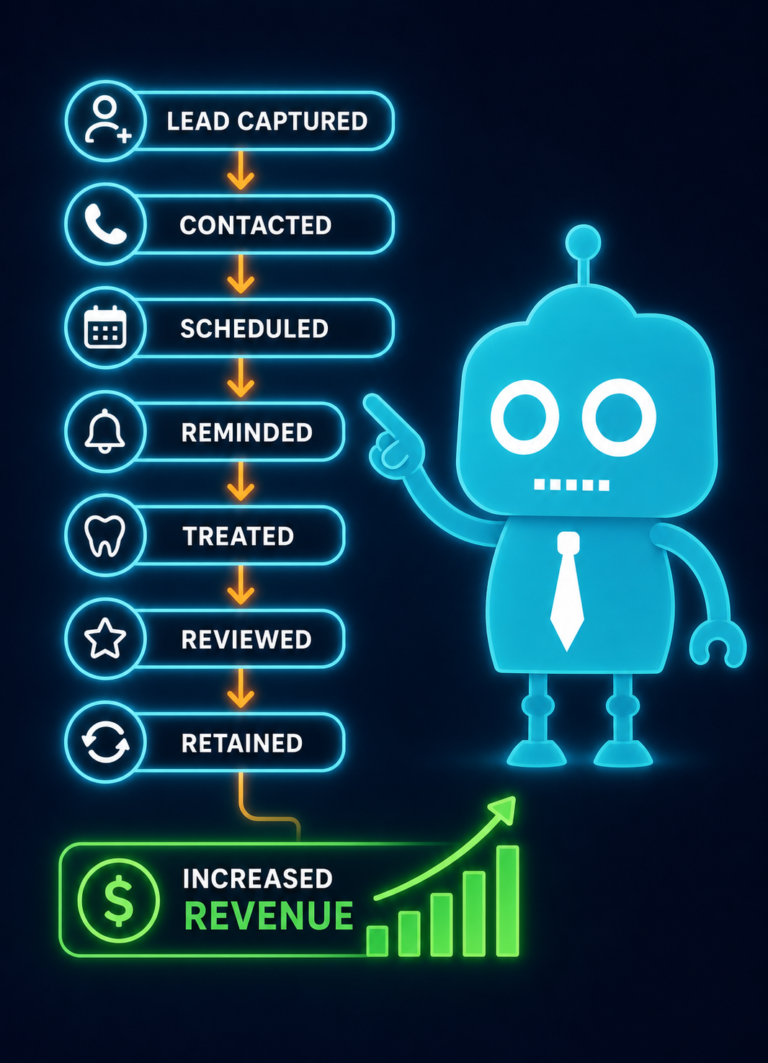
For independent dental practices, new patient growth depends on the entire patient acquisition process: website conversion, phone handling, follow-up, scheduling, reviews, and tracking. When staffing is stretched thin, every part of that process suffers.
Staffing Shortages Create a Marketing Conversion Problem
Marketing does not stop when someone clicks your website or calls your office. In dentistry, marketing success is measured by booked appointments, completed visits, accepted treatment, and long-term patient relationships.
That means your front desk is a critical part of your marketing system.
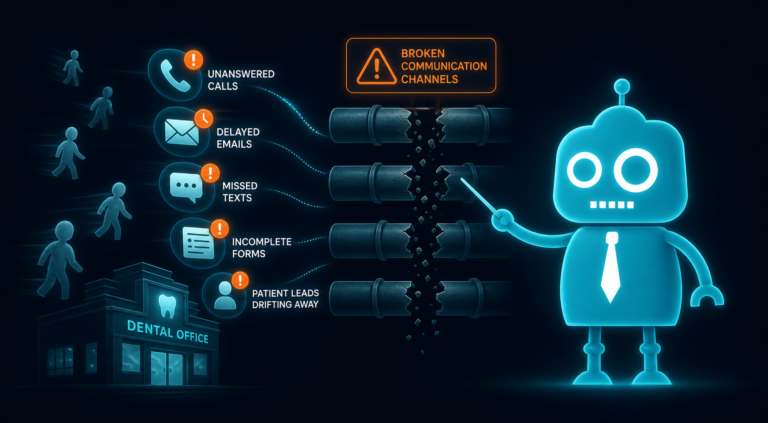
A potential patient may find your practice through Google, visit your website, read your reviews, and decide to call. If that call goes unanswered, the marketing effort failed at the final step. If they submit a form and do not hear back until the next day, they may have already scheduled with another practice.
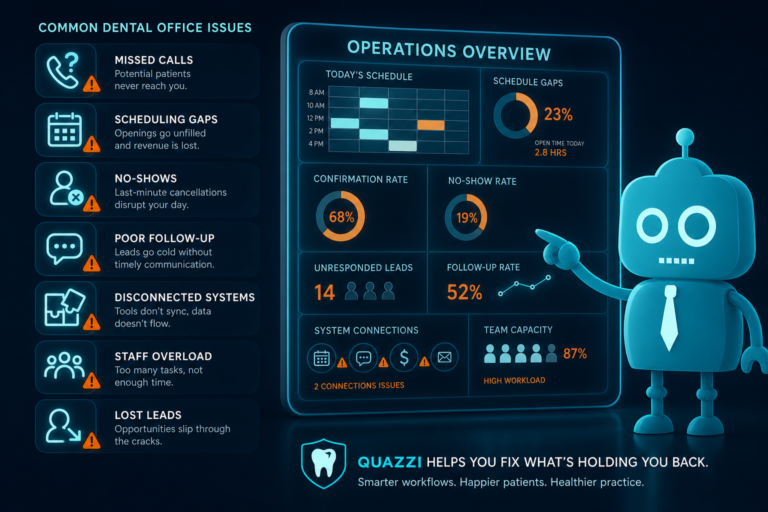
Staffing issues reduce your ability to respond, follow up, track leads, request reviews, and keep the schedule full. This is why many dental practices feel like they are spending more on marketing but not seeing enough patient growth.
Missed Calls Mean Missed New Patients
Phone calls are still one of the highest-intent lead sources for dental practices. When someone calls your office, they are often ready to schedule, ask about insurance, request emergency care, or compare your availability against another provider.
But when the front desk is short-staffed, calls get missed.
This often happens during:
- Morning rushes when patients are checking in
- Lunch hours when coverage is limited
- End-of-day checkout and payment conversations
- High-volume hygiene scheduling days
- Emergency call spikes
- Times when one team member is out sick or on vacation
For a dental practice, a missed call is rarely just a missed conversation. It can be a missed exam, missed cleaning, missed emergency appointment, missed implant consultation, or missed family of new patients.
Practical example
A parent searches “family dentist near me,” clicks your website, likes what they see, and calls from their mobile phone. The front desk is helping a patient understand a treatment estimate, so the call goes to voicemail. The parent does not leave a message. They tap back to Google and call the next dental office.
Your website did its job. Your local SEO did its job. Your staff simply did not have enough capacity at that moment to capture the opportunity.
Slow Follow-Up Lowers Website Conversion
Dental websites often include appointment request forms, contact forms, emergency dental forms, implant consultation forms, and new patient special forms. These forms can be excellent lead capture tools, but only if your practice responds quickly.
Speed matters. A new patient lead is warmest within the first few minutes. If your office waits hours or a full business day to respond, the patient may lose interest or book elsewhere.
Slow follow-up usually happens when the team is already overloaded. The front desk may intend to call back but gets pulled into insurance verification, hygiene recalls, checkout, patient questions, and provider schedule changes.
The result is a quiet marketing problem: your website appears to be generating leads, but fewer of those leads become appointments.
What slow follow-up looks like in a dental office
- A website form submission sits in an email inbox for three hours
- A voicemail from a potential patient is returned the next afternoon
- An implant consultation request receives only one call attempt
- A new patient asks about availability by email but never receives a response
- An emergency dental lead is not contacted until the urgent need has passed
Every delay reduces the chance of converting that lead into a scheduled patient.
A Burned-Out Front Desk Cannot Consistently Convert Leads
Your front desk team is often responsible for answering phones, greeting patients, checking insurance, collecting payments, managing cancellations, filling openings, handling treatment questions, coordinating records, and supporting the clinical team.
When that team is burned out, new patient conversion suffers.
This does not mean your team is doing a poor job. It means they are being asked to manage too many high-value tasks at once. Even experienced dental administrators can struggle when the call volume, patient flow, and follow-up workload exceed capacity.
Burnout can affect marketing performance in subtle but important ways:
- Calls feel rushed instead of welcoming
- New patient questions are answered with minimal detail
- Insurance conversations become reactive instead of reassuring
- Follow-up calls are skipped during busy days
- Online inquiries are treated as low priority
- Opportunities are not entered into the CRM or practice management system
Patients can sense when an office feels overwhelmed. A calm, helpful, organized front desk builds trust before the patient ever sits in the chair.
Inconsistent Review Requests Weaken Local SEO and Trust
Online reviews are one of the most important marketing assets for a dental practice. They influence local SEO visibility, Google Business Profile performance, click-through rates, and patient trust.
But review generation requires consistency.
When staffing is tight, review requests are often one of the first tasks to disappear. The front desk may remember to ask happy patients on some days but forget during busy periods. Hygienists may mention reviews occasionally, but there is no reliable system. The practice may send review links manually when someone has time.
This inconsistency can slow patient growth.
Why reviews matter for dental marketing
- Patients compare star ratings before calling
- Recent reviews make the practice look active and trusted
- Positive reviews help reduce anxiety for nervous patients
- Reviews support Google Maps visibility
- Service-specific reviews can help promote implants, Invisalign, cosmetic dentistry, emergency dentistry, and family care
If your competitors are steadily collecting reviews and your practice is not, staffing issues may be weakening your online reputation even if your clinical care is excellent.
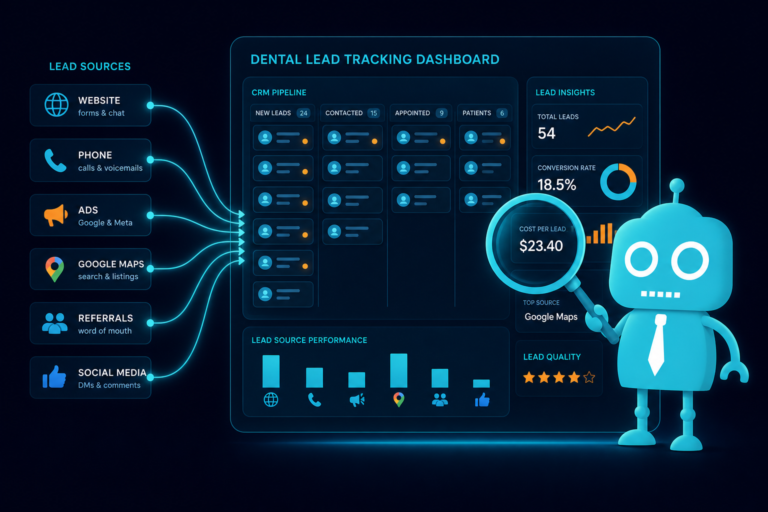
Poor Lead Tracking Makes Marketing Decisions Harder
Many dental practices do not have a clear picture of where new patient leads come from or what happens after the first contact. This becomes even worse when the front desk is understaffed.
Without proper lead tracking, you may not know:
- How many website leads turned into appointments
- How many calls were missed
- Which campaigns produced quality patients
- How many new patient inquiries were lost due to slow response
- Which services generated the most interest
- Whether your CRM system is being used consistently
This creates a dangerous situation. A practice may assume that marketing is not working when the real issue is lead handling. Or the practice may continue spending money on campaigns without knowing which ones actually produce booked appointments.
Good marketing requires good data. If your staff does not have time to log calls, update lead stages, tag lead sources, or document follow-up attempts, your reporting becomes unreliable.
Example of a lead tracking gap
Your dental implant landing page generates 18 form submissions in a month. Six are contacted, four are scheduled, three show up, and one accepts treatment. But if the other 12 leads were never properly tracked, the practice may only see one implant case and assume the campaign underperformed.
In reality, the marketing may have worked. The follow-up system did not.
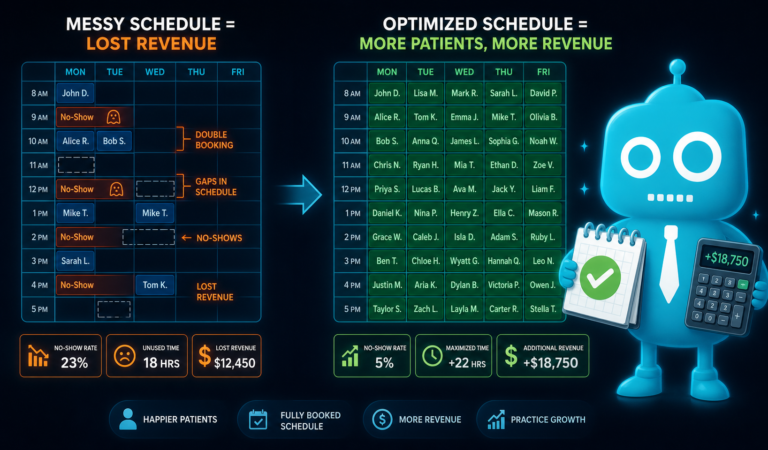
Scheduling Bottlenecks Reduce New Patient Growth
Even when a lead is interested, scheduling friction can stop the appointment from happening.
Dental scheduling is complex. The front desk must consider provider availability, hygiene columns, procedure length, insurance details, emergency slots, new patient protocols, family block scheduling, and cancellations. When the team is overwhelmed, the scheduling process can become slow or rigid.
Common scheduling bottlenecks include:
- Long hold times while staff checks availability
- Limited new patient appointment options
- No fast way to offer openings by text
- Delayed responses to online appointment requests
- Patients waiting for callbacks to confirm times
- Difficulty filling last-minute cancellations
Patients expect convenience. If they cannot quickly find a time that works, they may keep searching.
How scheduling affects website conversion
A modern dental website can create strong interest with clear service pages, mobile-friendly design, patient reviews, and easy appointment forms. But if the scheduling process after submission is slow, the website conversion rate drops.
The goal is not only to generate leads. The goal is to reduce friction from website visit to confirmed appointment.
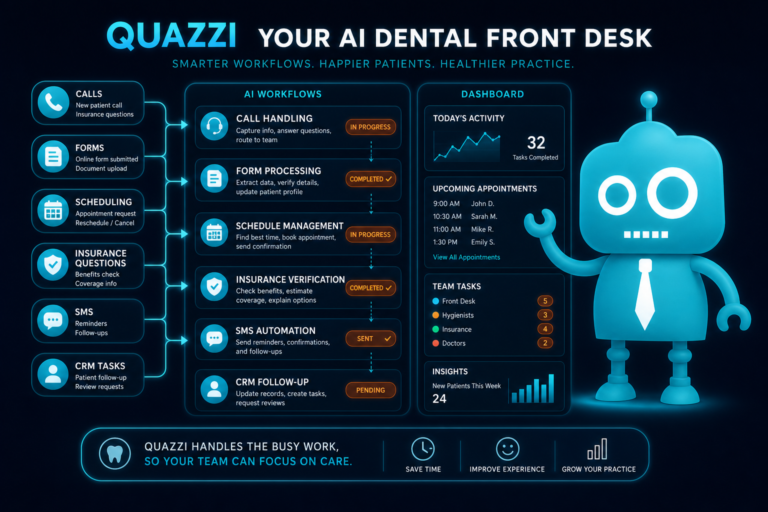
Automation Can Support the Front Desk Without Replacing the Human Touch
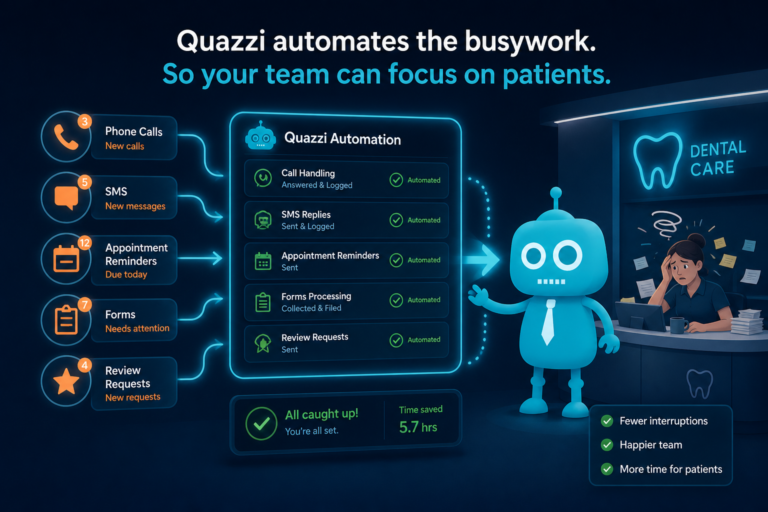
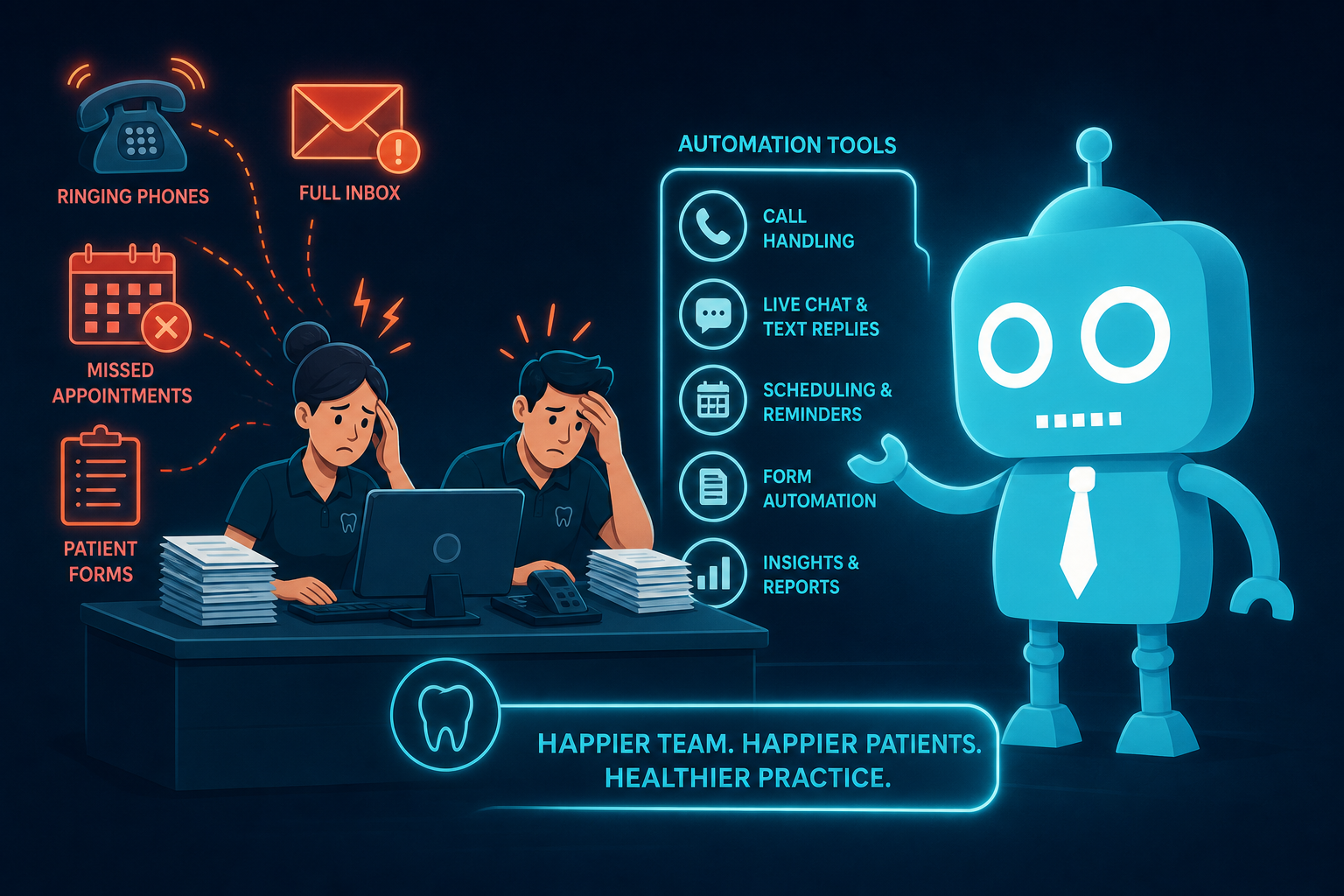
Automation is not about making your dental practice feel robotic. It is about giving your team breathing room so they can focus on the conversations that require human judgment and care.
For understaffed dental offices, the right automation can improve response time, consistency, and lead conversion.
Useful automation for dental practices
- Website lead capture forms: Send appointment requests directly into a CRM or lead management system.
- Instant SMS replies: Confirm that the request was received and tell the patient what to expect next.
- Email follow-up sequences: Provide helpful information about services, insurance, financing, or new patient visits.
- Missed call text-back: Automatically text callers when your team cannot answer.
- Review request automation: Send review links after completed appointments.
- Appointment reminders: Reduce no-shows and last-minute confusion.
- CRM lead stages: Track new, contacted, scheduled, no-show, completed, and lost opportunities.
These systems help ensure that no lead disappears just because the front desk is busy for 20 minutes.
AI Receptionists Can Help Handle Overflow Calls
AI receptionists are becoming a practical option for dental practices that need overflow support. They can help when your team is on another line, after hours, during lunch, or dealing with a busy patient flow at the front desk.
An AI receptionist should not replace your trained dental administrators. Instead, it can act as a safety net.
For example, an AI receptionist can:
- Answer overflow calls when the front desk is unavailable
- Capture caller name, phone number, and reason for calling
- Identify whether the patient is new or existing
- Collect basic appointment preferences
- Route urgent calls appropriately
- Send call details into a CRM or office workflow
- Trigger follow-up by SMS or email
This can be especially helpful for practices investing in SEO, Google Ads, social media campaigns, or direct mail. If marketing increases call volume but staffing stays the same, AI overflow support can help protect your investment.
Where AI receptionists fit best
AI receptionists work best as backup coverage, not as the only point of contact. Dental patients still value empathy, clarity, and personal attention. But when the alternative is voicemail or a missed call, AI support can help capture the lead and keep the process moving.
How to Find the Staffing Gaps Hurting Your Marketing
Before increasing your marketing budget, review your patient acquisition workflow. The issue may not be traffic. It may be conversion.
Start by asking these questions:
- How many calls does the practice miss each week?
- How quickly are website forms answered?
- Are new patient inquiries tracked in a CRM?
- How many follow-up attempts are made before a lead is marked lost?
- Are review requests sent automatically after appointments?
- Can patients receive appointment information by text?
- Is the front desk overwhelmed during peak call times?
- Do missed calls receive an automatic text-back?
- Are marketing leads connected to actual booked appointments?
These answers can reveal where staffing pressure is slowing growth.
Build a Patient Growth System That Does Not Depend on Perfect Staffing
No dental practice is perfectly staffed every day. People get sick, vacations happen, call volume changes, and patient needs are unpredictable. A strong growth system accounts for that reality.
The goal is to build a marketing and follow-up process that supports your team instead of overwhelming them.
That means your practice should have:
- A mobile-friendly website that makes it easy to call or request an appointment
- Clear lead capture forms for new patients and high-value services
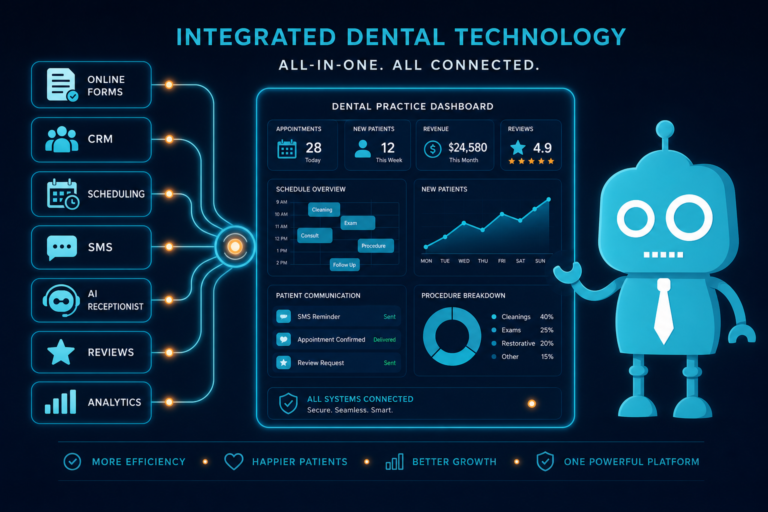
- CRM integrations that organize inquiries automatically
- SMS and email automation for fast follow-up
- Missed call recovery systems
- Consistent review request workflows
- Lead tracking that connects marketing sources to scheduled appointments
- Optional AI receptionist support for overflow calls
When these systems are in place, your front desk can spend less time chasing information and more time helping patients feel confident about scheduling.
Staffing Problems Do Not Have to Stop Patient Growth
Staffing shortages are real, and dental practices are feeling the pressure. But they do not have to quietly undermine your marketing performance.
Missed calls, slow follow-up, burned-out front desk teams, inconsistent review requests, poor lead tracking, and scheduling bottlenecks all reduce new patient growth. The good news is that many of these problems can be improved with better systems, smarter automation, and a website built to support conversion.
When your marketing, website, CRM, and follow-up tools work together, your practice becomes more resilient. You capture more opportunities, respond faster, improve the patient experience, and make life easier for your team.
Get Better Dental Website Conversion with CreateTheSite.com
If your dental practice is investing in marketing but losing opportunities because your team is stretched thin, CreateTheSite.com can help you build a stronger patient growth system.
CreateTheSite.com helps dental practices with modern website design, secure hosting, mobile optimization, lead capture forms, CRM integrations, SMS and email automation, appointment follow-up, and ongoing website support.
Instead of treating your website as a simple online brochure, CreateTheSite.com builds dental websites designed to support new patient acquisition. That means making it easier for patients to find you, contact you, request appointments, receive follow-up, and take the next step with your practice.
If staffing challenges are making it harder to keep up with calls, forms, reviews, and follow-up, the right digital systems can reduce the pressure. CreateTheSite.com can help your practice turn more website visitors into scheduled patients while giving your front desk better support.
Ready to improve your dental website and patient follow-up process? Visit CreateTheSite.com to learn how a better website and smarter automation can help your practice grow with less friction.