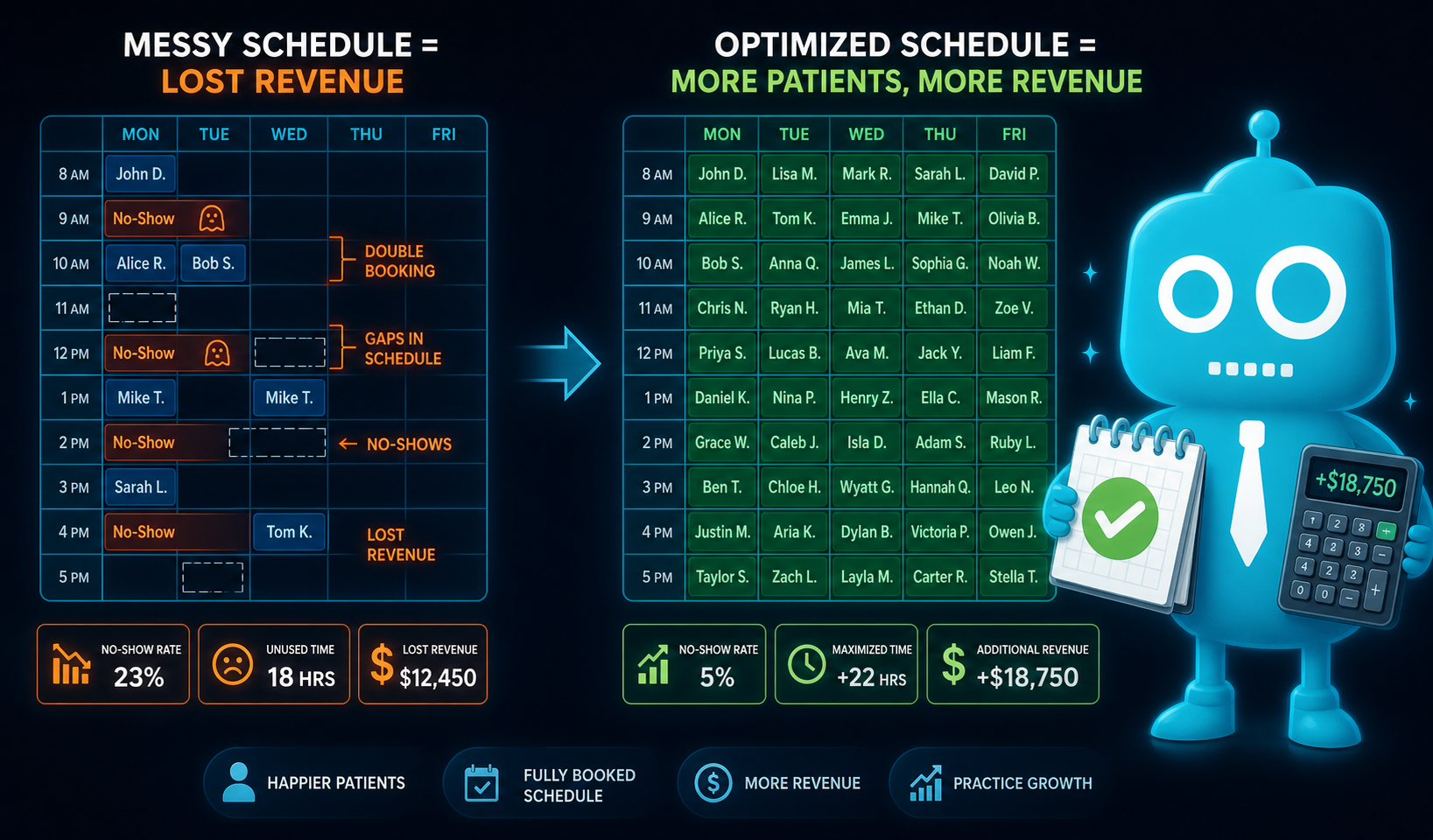
The Hidden Cost of Poor Scheduling
For independent dental practices, scheduling is not just an administrative task. It is one of the biggest drivers of production, patient satisfaction, staff stress, and case acceptance.
A poorly managed schedule can quietly drain revenue, frustrate patients, overwhelm the front desk, and create gaps in follow-up that lead to missed treatment opportunities. Even a practice with strong clinical care and steady patient demand can struggle if the schedule is inconsistent, overbooked, or difficult for patients to access.
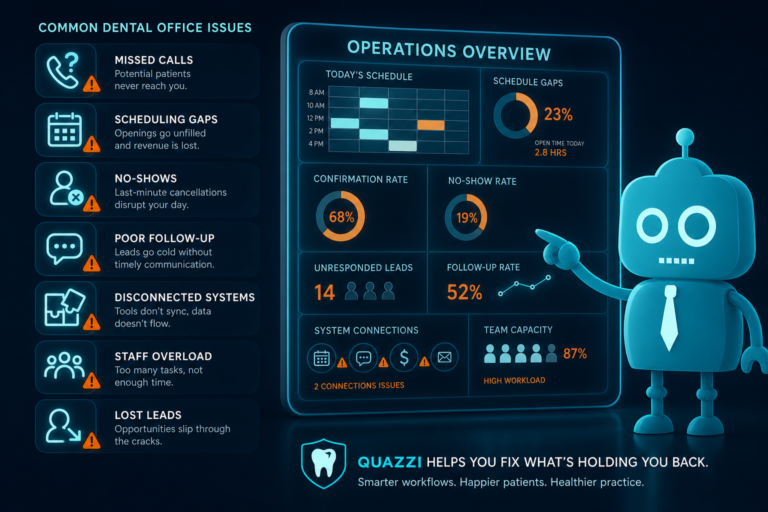
The hidden cost of poor scheduling often shows up in small ways: an empty hygiene chair, a doctor waiting on a late patient, a new patient who never receives a follow-up call, or a treatment plan that gets lost after the consult. Over time, those small issues become major production leaks.
Why Scheduling Problems Are More Expensive Than They Look
Many dental practices focus heavily on attracting new patients through their website, Google Business Profile, reviews, ads, and referrals. That effort matters. But if the scheduling process is weak, the practice may lose the value of those leads before they ever sit in the chair.
A patient may visit your website, fill out a contact form, or call the office, but if they cannot book quickly, receive a timely response, or get convenient appointment options, they may move on to another dentist.
Scheduling affects:
- Daily production and provider utilization
- New patient conversion from website traffic
- Case acceptance and treatment plan follow-up
- Patient reviews and retention
- Front desk workload and stress
- No-show and cancellation rates
In other words, scheduling is not separate from marketing, operations, or patient experience. It connects all of them.
Empty Chair Time: The Silent Production Killer
Empty chair time is one of the clearest signs that scheduling systems need improvement. Every unfilled hygiene or doctor appointment represents lost production that cannot be recovered once the day is over.
For example, if a hygiene appointment worth $200 to $300 goes unfilled several times per week, the monthly revenue loss can be significant. If a larger restorative appointment cancels without a replacement, the impact is even greater.
Common Causes of Empty Chair Time
- Patients canceling without enough notice
- No-shows from unconfirmed appointments
- Weak waitlist management
- Slow response to website form submissions
- No automated follow-up for unscheduled patients
- Lack of online scheduling options for new patients
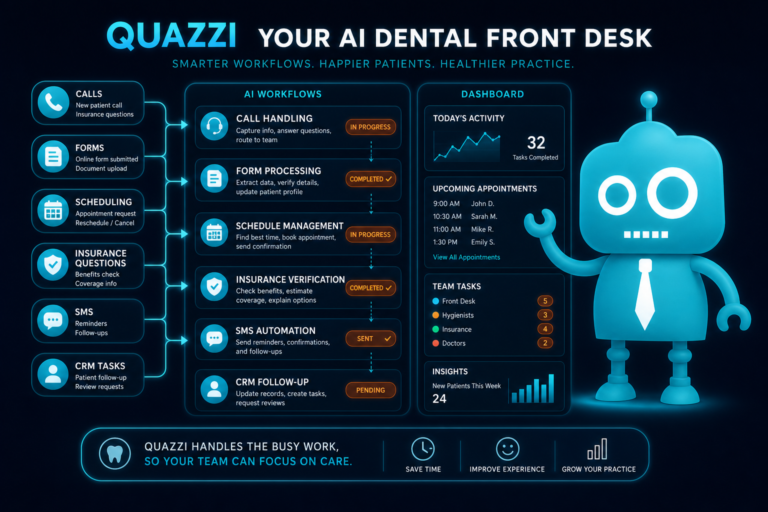
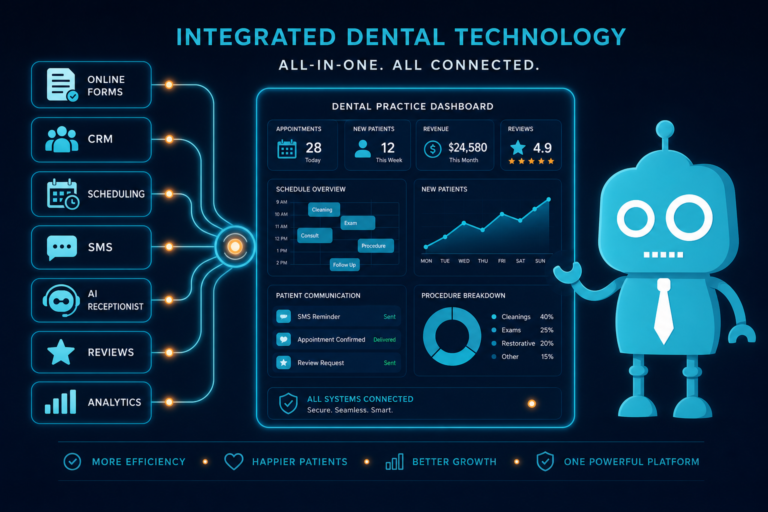
Many practices rely on the front desk to manually fill openings. While the team may do their best, last-minute gaps are difficult to manage without a system. A modern dental website connected to lead capture forms, CRM workflows, and SMS/email automation can help fill these gaps faster.
For example, if a patient cancels a cleaning tomorrow at 10:00 AM, an automated message can go out to a short-notice list:
“Hi Sarah, we had a hygiene appointment open tomorrow at 10:00 AM. Reply YES if you’d like us to reserve it for you.”
That type of simple automation can reduce empty chair time without adding more phone calls to the front desk.
Overbooking: When a Full Schedule Becomes a Problem
A full schedule looks productive, but overbooking can create serious problems. When too many patients are packed into the day, the practice may appear busy while actually becoming less efficient.
Overbooking often leads to rushed appointments, delayed doctor exams, long patient wait times, stressed assistants, and frustrated hygienists. Patients notice when the team feels behind. They also notice when the doctor seems rushed during an exam or treatment presentation.
The Real Cost of Overbooking
- Patients wait longer and become less satisfied
- Providers feel rushed and less focused
- Clinical handoffs become less clear
- Treatment plan conversations are shortened
- The front desk handles more complaints and rescheduling
- Staff burnout increases
Overbooking may help compensate for expected cancellations, but it is not a long-term no-show strategy. If the practice is constantly double-booking because patients do not reliably confirm, the better solution is stronger appointment confirmation, reminder automation, and clear cancellation policies.
A balanced schedule protects both production and patient experience. The goal is not simply to fill every space. The goal is to fill the right appointments at the right times with the right level of support.
No-Shows: A Scheduling Problem and a Communication Problem
No-shows are one of the most frustrating issues for dental practices because they waste time, reduce production, and disrupt the entire day. But many no-shows are preventable with better communication.
Patients are busy. They forget. They miss phone calls. They may not check voicemail. If your practice relies mostly on manual phone confirmations, you may be making it harder than necessary for patients to remember and confirm appointments.
How Automated Reminders Reduce No-Shows
Automated reminders through SMS and email can help patients confirm appointments without needing a phone conversation. A strong reminder sequence might include:
- An appointment confirmation message when the appointment is scheduled
- A reminder one week before the visit
- A reminder 48 hours before the visit
- A final SMS reminder the morning of the appointment
The message should be simple and action-oriented:
“Hi Michael, this is Smile Family Dental confirming your appointment on Tuesday at 2:30 PM. Reply C to confirm or call us if you need to make a change.”
This reduces friction for the patient and saves time for the front desk. It also gives your team more notice when a patient needs to reschedule, making it easier to fill the opening.
Delayed Follow-Up Costs More Than You Think
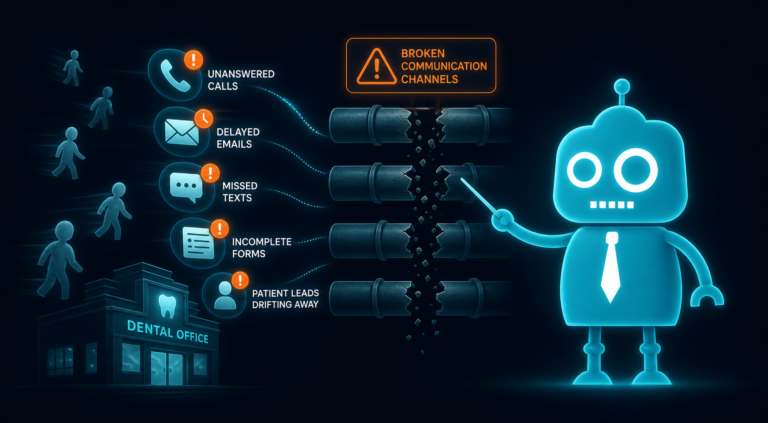
Delayed follow-up is one of the most overlooked scheduling issues in dental practices. A patient may request an appointment through your website, ask a question about Invisalign, call after hours, or leave without scheduling recommended treatment. If follow-up is slow or inconsistent, the opportunity can disappear.
Speed matters. A new patient who submits a website form is often contacting multiple dental offices. If your practice responds the next day while another office responds in five minutes, the other office may win the appointment.
Where Follow-Up Commonly Breaks Down
- Website contact forms go to a general inbox that is not checked often
- New patient calls after hours are not followed up quickly
- Consultation requests are not added to a CRM
- Patients with unscheduled treatment are not placed into an automated follow-up sequence
- The front desk is too busy checking patients in and out to chase every lead manually
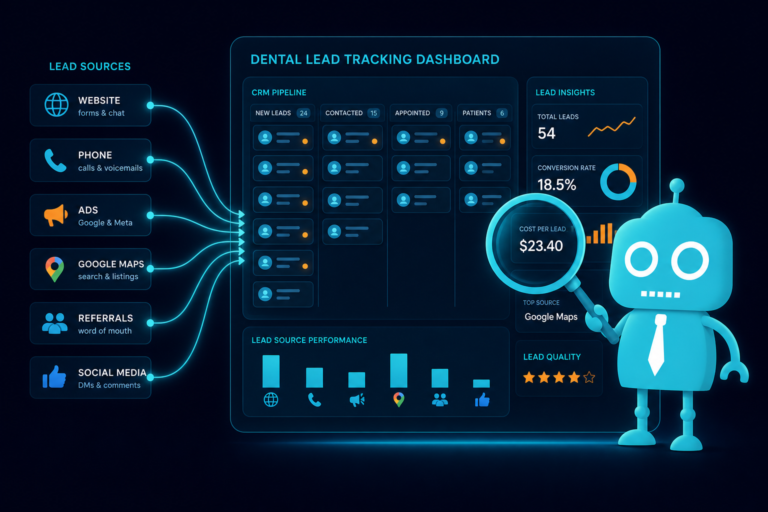
A dental CRM system can help organize these opportunities. Instead of relying on sticky notes or memory, the practice can track leads, assign follow-up tasks, and send automated SMS or email messages based on patient interest.
For example, a patient who requests information about dental implants through your website can receive an immediate confirmation message, followed by a front desk notification and a scheduled follow-up task. This improves the chance that the lead becomes a consultation.
Missed Treatment Plan Opportunities
Poor scheduling does not only affect new appointments. It also affects treatment plan acceptance.
Many patients leave the office with recommended treatment but no scheduled next step. They may need time to review finances, discuss with a spouse, or check their calendar. If the practice does not have a follow-up process, those treatment plans can sit untouched for months.
Examples of Missed Production
- A patient needs a crown but leaves without scheduling
- A whitening consultation never receives a follow-up message
- An Invisalign lead is not contacted after submitting a form
- A patient with periodontal treatment recommendations is not reactivated
- A new patient exam identifies needed care, but no financial follow-up is made
The issue is not always that the patient rejected treatment. Sometimes they simply were not guided to the next step.
Automated follow-up can support the front desk and treatment coordinator by keeping the conversation active. A message might say:
“Hi Amanda, this is Bright Dental. Dr. Lee recommended moving forward with your crown to protect the tooth. Would you like us to help you find an appointment time or review payment options?”
This type of follow-up is helpful, not pushy. It reminds the patient of the importance of care and makes scheduling easier.
Poor Patient Experience Starts Before the Appointment
Patients begin judging your practice before they meet the dentist. They evaluate your website, your reviews, your online forms, your response time, and how easy it is to schedule.
If a patient has to call multiple times, wait for a callback, download a confusing form, or explain the same information repeatedly, the experience feels outdated. That can affect trust before the first visit.
What Patients Expect Today
- A mobile-friendly dental website
- Clear calls to action such as “Request an Appointment”
- Fast response after submitting a form
- Online scheduling or simple appointment request options
- Text and email reminders
- Easy access to office hours, location, insurance information, and services
- Professional review presence on Google and other platforms
When your scheduling process feels smooth, patients are more likely to trust the rest of the practice experience. When it feels disorganized, they may question whether the office is the right fit.
Online Scheduling Helps Convert Website Visitors Into Patients
Your website should do more than look professional. It should help turn visitors into scheduled patients.
Many dental websites lose potential patients because the only option is to call during business hours. That creates friction, especially for patients searching after work, during lunch, or late at night.
Online scheduling or appointment request forms can improve conversion by giving patients a convenient next step. Even if your practice does not want to offer real-time booking for every procedure, you can still use structured forms to capture important details.
Useful Appointment Form Fields for Dental Practices
- New or existing patient status
- Preferred appointment type
- Preferred days and times
- Insurance information
- Urgency of the request
- Phone number and email
- Consent to receive SMS/email follow-up
This information helps the front desk respond faster and more accurately. It also helps segment leads in a CRM so the right follow-up message can be sent.
For example, a new patient requesting an emergency appointment should be handled differently than someone asking about cosmetic dentistry. Your scheduling system should make those differences clear.
Automated Reminders Support the Front Desk
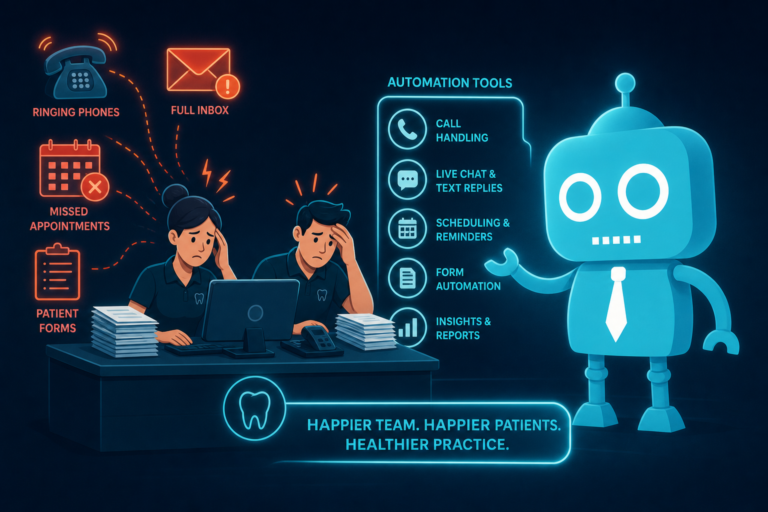
Front desk teams are often expected to answer phones, check patients in, verify insurance, present balances, schedule treatment, respond to emails, manage reviews, and handle cancellations. Adding manual appointment reminders to that workload can create unnecessary stress.
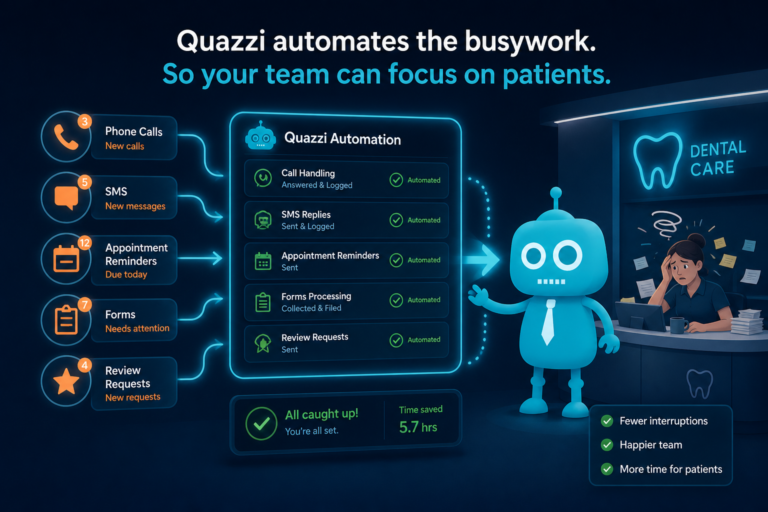
Automation does not replace the front desk. It supports the front desk by handling repetitive communication and keeping patients engaged.
High-Value Automations for Dental Practices
- Appointment confirmations
- Recall and hygiene reminders
- Unscheduled treatment follow-up
- New patient inquiry responses
- Post-appointment review requests
- Missed appointment follow-up
- Reactivation campaigns for overdue patients
For example, after a completed appointment, an automated message can ask a satisfied patient to leave a Google review. Strong reviews can improve local SEO, increase trust, and help convert future website visitors into patients.
Likewise, a patient who misses an appointment can receive a polite message with a rescheduling link or call prompt. This keeps the door open and reduces the chance that the patient disappears completely.
Scheduling Problems Increase Staff Stress
Poor scheduling affects morale. When the day is constantly running behind, the team feels it. When cancellations create production pressure, the team feels it. When patients complain about wait times, the front desk usually absorbs the frustration.
Staff stress often builds from repeated small issues:
- Calling the same patients multiple times to confirm
- Trying to fill last-minute openings manually
- Handling upset patients who waited too long
- Chasing unscheduled treatment without a clear system
- Managing new patient leads from multiple sources with no CRM
- Switching between phone calls, emails, paper notes, and practice management software
A more organized scheduling and follow-up system gives the team clarity. It reduces guesswork, improves accountability, and helps the practice run more predictably.
How to Identify Scheduling Leaks in Your Practice
Before investing in more advertising or hiring more staff, it is worth reviewing where your schedule may be leaking production.
Questions to Ask
- How many hygiene openings go unfilled each week?
- How many new patient website leads become scheduled appointments?
- How quickly does the office respond to appointment requests?
- How many patients leave with unscheduled treatment?
- How many no-shows occur each month?
- Do patients receive SMS and email reminders?
- Is there a clear process for after-hours inquiries?
- Does the website make scheduling easy on mobile devices?
- Are missed calls, forms, and leads tracked in a CRM?
The answers can reveal whether the practice has a demand problem or a conversion and scheduling problem. Many offices do not need more leads first. They need a better system for capturing, scheduling, and following up with the leads they already receive.
Practical Ways to Improve Dental Scheduling
Improving scheduling does not always require a complete operational overhaul. Start with the areas that create the most friction for patients and staff.
1. Make Appointment Requests Easy on Your Website
Use clear buttons such as “Request an Appointment,” “Schedule a New Patient Visit,” or “Book a Consultation.” These calls to action should be easy to find on desktop and mobile.
2. Respond Quickly to New Patient Leads
Set up instant notifications for website forms and missed call inquiries. If possible, connect leads to a CRM so the front desk can track every opportunity from inquiry to scheduled visit.
3. Use SMS and Email Automation
Automated reminders can reduce no-shows, improve confirmations, and support recall. Patients are more likely to respond when communication is simple and convenient.
4. Create a Follow-Up Process for Unscheduled Treatment
Do not let treatment plans disappear after the patient leaves. Use follow-up tasks, email sequences, and text messages to help patients take the next step.
5. Track No-Shows and Cancellations
Look for patterns by provider, appointment type, day, time, or patient category. Data can help you adjust reminder timing, deposit policies, or scheduling rules.
6. Protect the Patient Experience
A productive schedule should still feel calm and organized. Avoid building days that depend on everything going perfectly. A small delay early in the day should not derail the entire afternoon.
The Bottom Line: Better Scheduling Builds a Better Practice
Poor scheduling costs more than lost appointments. It affects production, patient satisfaction, staff stress, no-shows, treatment acceptance, and new patient growth.
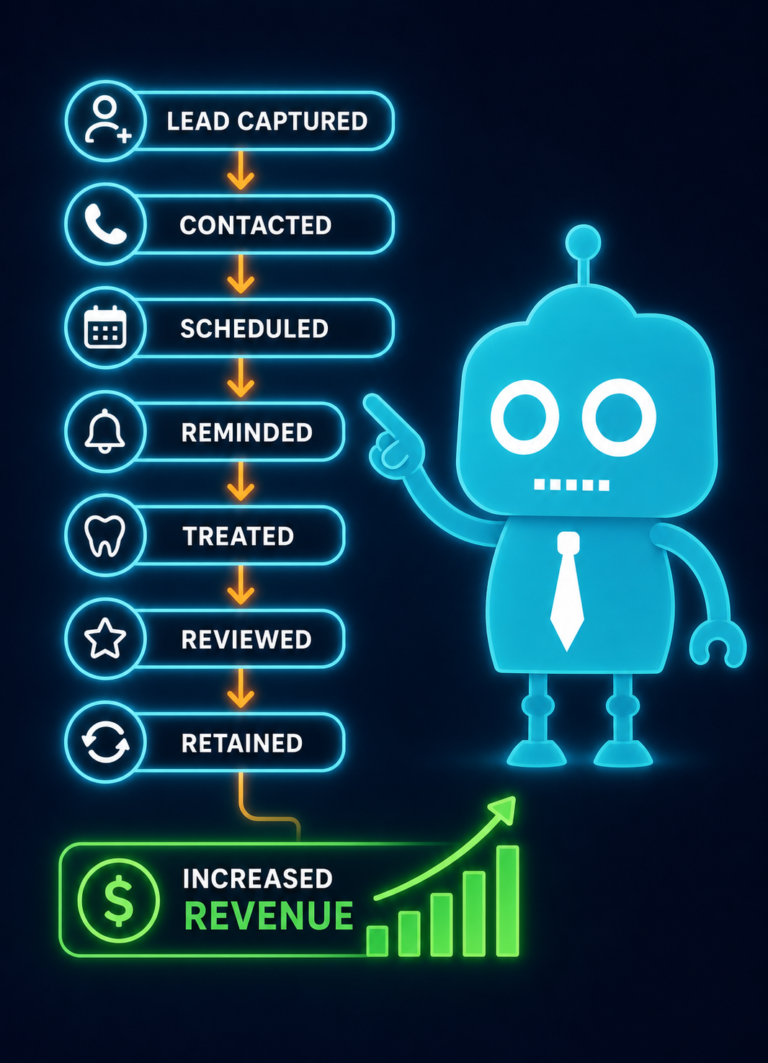
Independent dental practices need scheduling systems that match how patients behave today. That means mobile-friendly websites, fast lead response, online appointment options, automated reminders, CRM tracking, and consistent follow-up.
When scheduling improves, the benefits are felt across the entire practice. Chairs stay full, patients feel cared for, the front desk becomes more efficient, and treatment opportunities are less likely to fall through the cracks.
Build a Better Scheduling Experience With CreateTheSite.com
CreateTheSite.com helps dental practices turn their websites into stronger patient acquisition and scheduling tools.
We support independent dental offices with modern website design, secure hosting, mobile optimization, lead capture forms, CRM integrations, SMS/email automation, appointment follow-up, and ongoing website support. Our goal is to help your practice capture more new patient opportunities, reduce missed follow-up, and create a smoother experience from the first website visit to the scheduled appointment.
If your dental website looks outdated, does not convert visitors well, or makes scheduling harder than it should be, CreateTheSite.com can help you build a more effective online presence that supports your front desk and your growth.
Visit CreateTheSite.com to learn how a modern, conversion-focused dental website can help your practice reduce scheduling friction and turn more visitors into patients.