How Dentists Get More New Patients in 2026
Getting more new patients in 2026 is no longer about one marketing tactic.
It is not just SEO. It is not just Google Ads. It is not just having a nice dental website. It is not just asking for reviews.
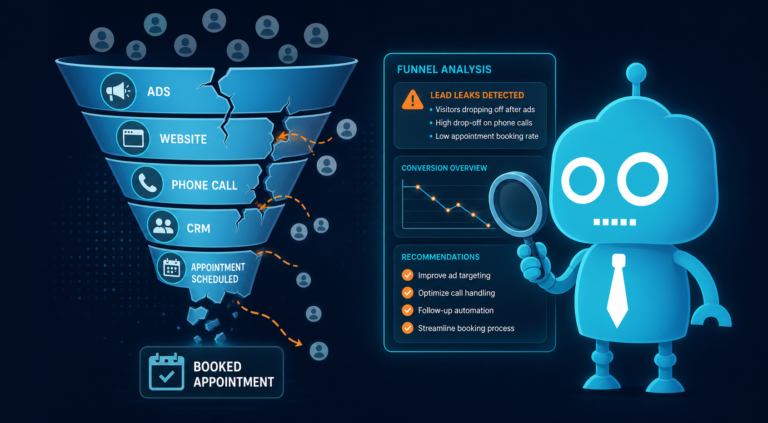
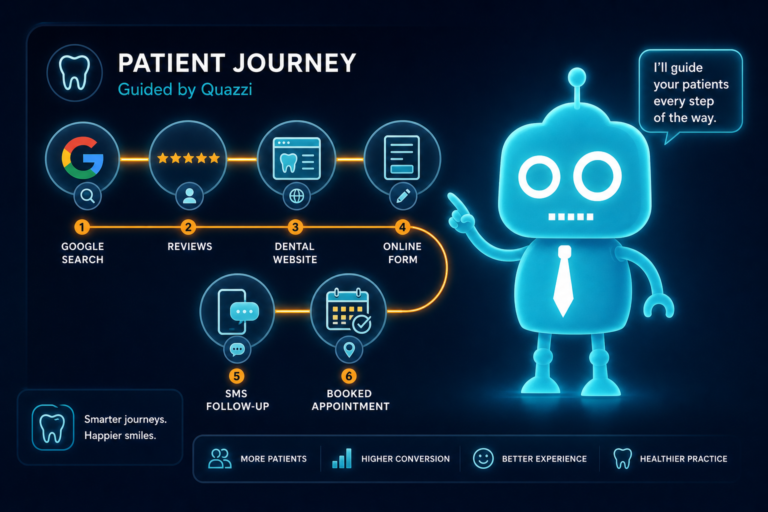
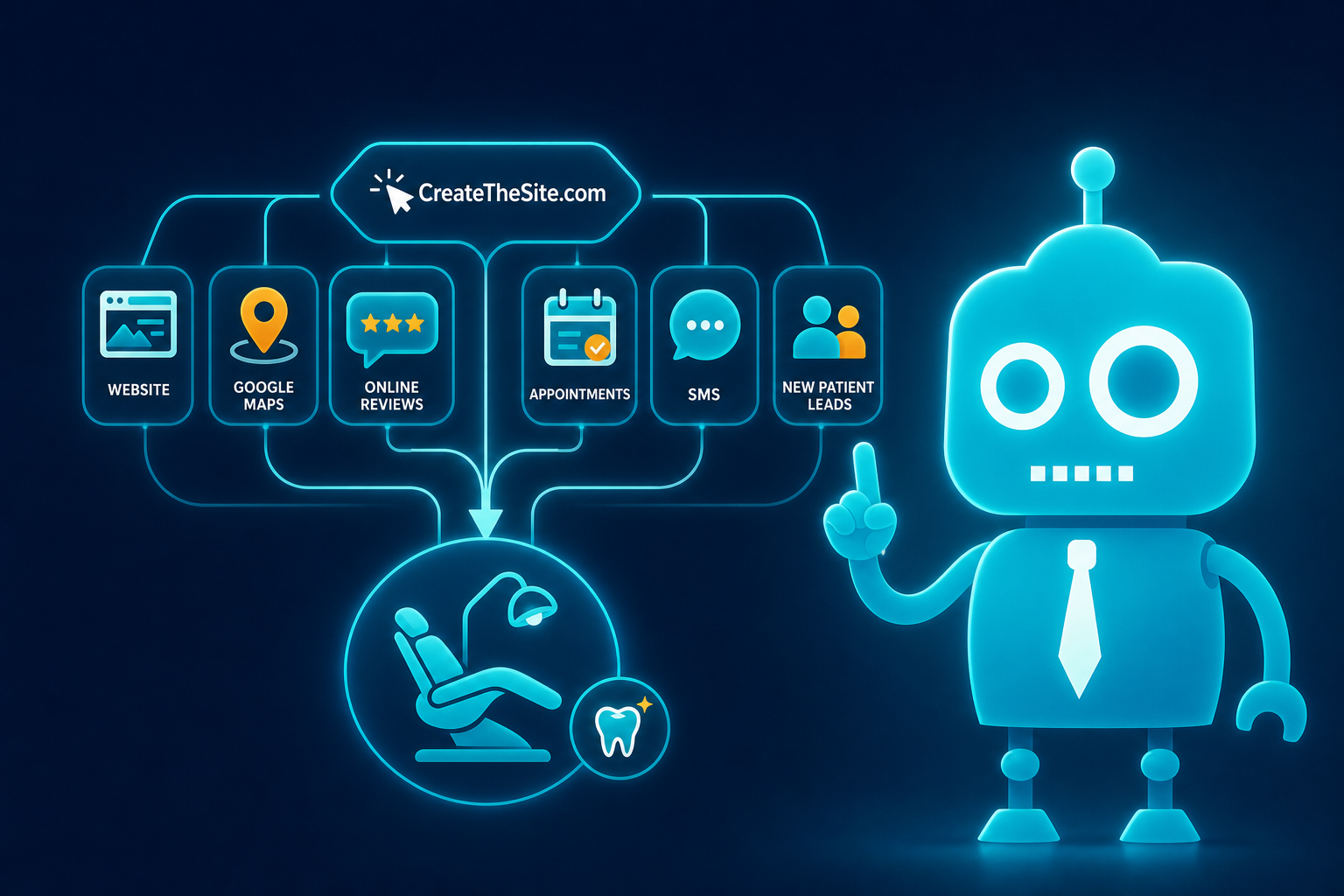
Today, new patient growth works best as a connected system. A potential patient may find your practice on Google Maps, scan your reviews, visit your website from a phone, compare your services, submit a contact form, miss your first call, respond to a text, and finally book an appointment two days later.
If one part of that system is weak, the practice can lose the patient.
For independent dental practice owners, dentists, and office managers, the opportunity in 2026 is clear: build a smoother path from “I need a dentist” to “I booked an appointment.”

New Patient Growth in 2026 Is a Connected System
Many dental practices still think about marketing in separate pieces:
- The website is handled by one company.
- Google Business Profile is updated occasionally.
- Reviews are requested when someone remembers.
- Contact forms go to an inbox.
- The front desk calls back when there is time.
- Follow-up depends on manual notes or memory.
That approach creates gaps. In 2026, patients move too quickly for disconnected systems.
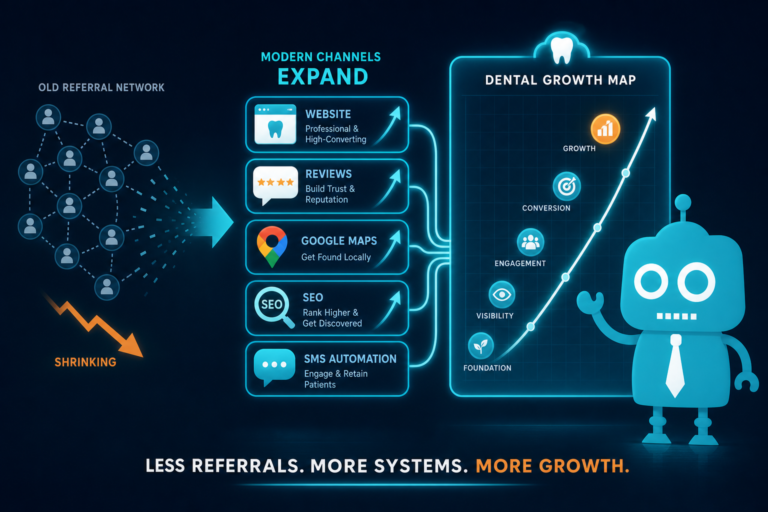
A modern dental new patient system connects the major parts of patient acquisition:
- Local visibility on Google Search and Google Maps
- A mobile-friendly, conversion-focused dental website
- Strong online reviews and reputation signals
- Easy lead capture forms and click-to-call options
- Fast response from the front desk
- CRM tracking for inquiries and follow-up
- SMS and email automation for missed calls, forms, and unscheduled patients
- Ongoing website support and optimization
The goal is not simply to “get traffic.” The goal is to convert interested people into scheduled new patient appointments.
How Patient Behavior Has Changed in 2026
Dental patients have become more informed, more selective, and more impatient.
They are used to booking restaurants, rides, hotel rooms, and healthcare appointments from their phones. They expect information to be easy to find and responses to be fast. If a dental office feels hard to reach or outdated online, many patients will move on without saying anything.

Patients Start Their Search Online
Most new patient journeys begin with a search such as:
- “dentist near me”
- “family dentist in [city]”
- “emergency dentist open today”
- “cosmetic dentist near me”
- “dental implants [city]”
- “Invisalign dentist near me”
Even if a patient receives a referral from a friend, they usually verify the practice online before calling. They check reviews. They look at photos. They visit the website. They compare location, hours, services, insurance information, and the overall feel of the practice.
Patients Expect Fast Answers
A patient who needs a crown, an emergency appointment, a cleaning, or a second opinion does not want to wait days for a reply.
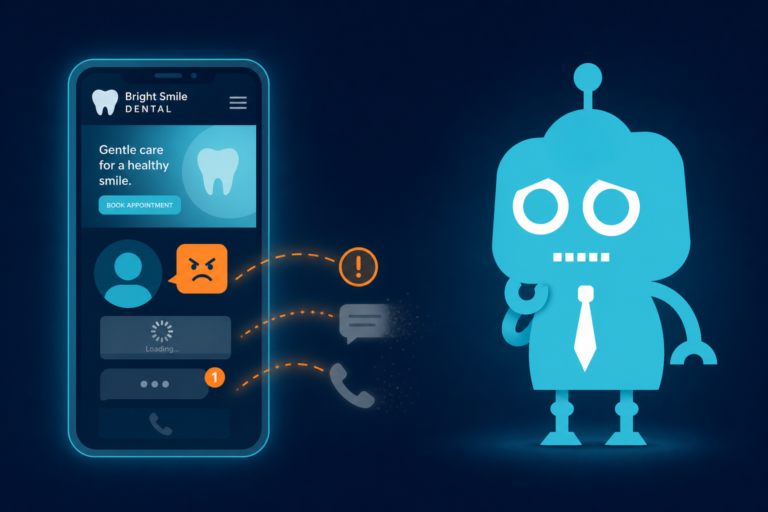
If they submit a form and hear nothing back, they may contact another office. If they call and reach voicemail, they may click the next Google Maps listing. If the website does not clearly explain whether the practice offers the service they need, they may assume it does not.
In 2026, speed and clarity are part of marketing.
Patients Judge the Practice Before They Call
Before a new patient speaks with your front desk, they have already formed an opinion based on your online presence.
They are asking questions such as:
- Does this practice look modern and trustworthy?
- Do other patients seem happy?
- Is the website easy to use on my phone?
- Can I quickly find the phone number or request an appointment?
- Do they offer the treatment I need?
- Are they close to my home, work, or child’s school?
- Do they seem friendly and professional?
This means your digital presence is often the first impression of your dental practice.
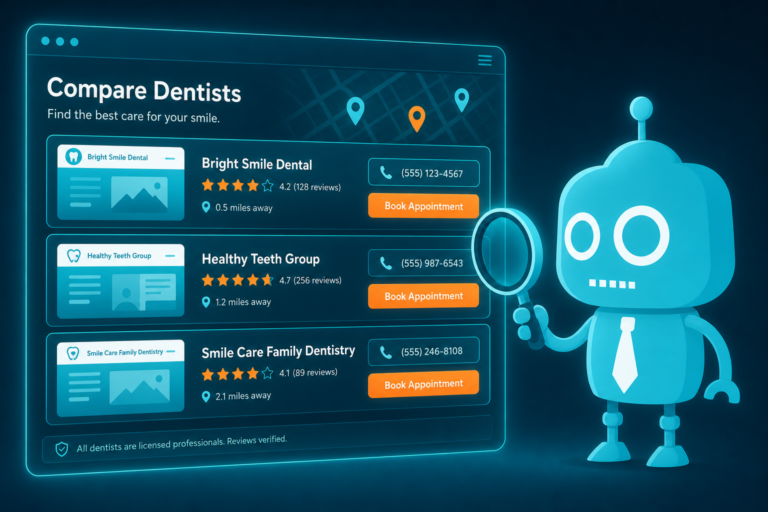
Why Patients Compare Dentists Before Calling
Dental care is personal. Patients are choosing someone they trust with their health, appearance, comfort, and often their family members. That makes comparison natural.
In the past, a patient might call the first dentist they found in the phone book or the office closest to home. In 2026, they can compare several practices in minutes.
They Compare Reviews
Reviews are one of the strongest trust signals for dental practices. A patient may not understand the technical difference between two dentists, but they understand comments about kindness, pain-free visits, clear communication, and how the front desk handled scheduling or insurance.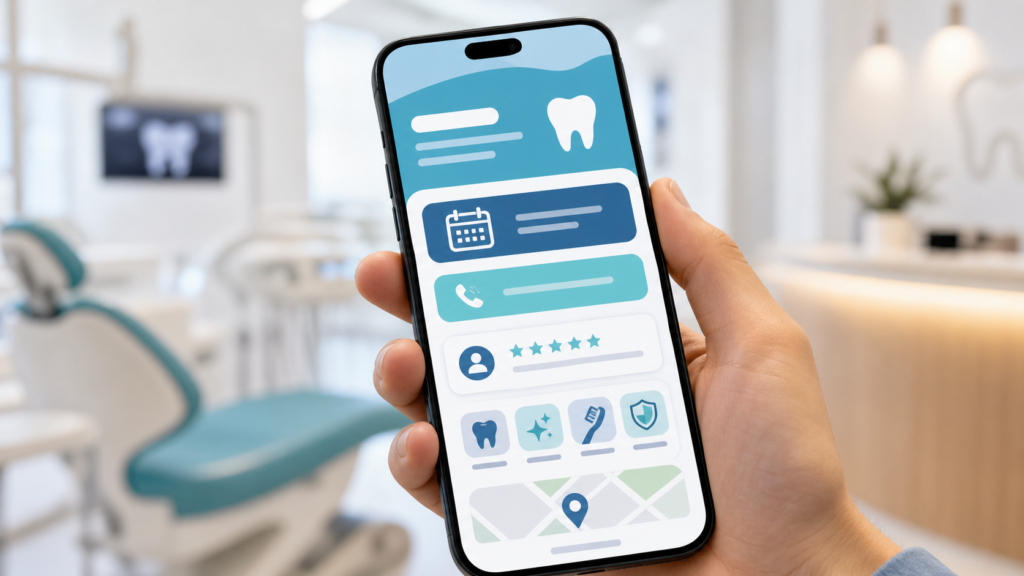
Patients often look for patterns, not just star ratings. For example:
- Are patients mentioning gentle care?
- Do families say the office is good with children?
- Are emergency patients thankful for fast help?
- Do reviews mention clean facilities and modern technology?
- Are there complaints about billing, long waits, or poor communication?
A practice with recent, specific, positive reviews usually feels safer to a new patient.
They Compare Websites
Your website helps patients decide whether your practice is the right fit. A modern dental website should do more than look attractive. It should guide visitors toward action.
Patients compare:
- Services offered
- Provider bios and credentials
- Office photos
- Insurance and payment options
- Emergency availability
- New patient information
- Online forms or appointment request options
- Location, hours, and parking details
If your website is slow, confusing, or outdated, patients may assume the practice experience will feel the same way.
They Compare Convenience
Convenience matters more than many practices realize.
A patient may choose a dentist because the office:
- Responded first
- Had a simple appointment request form
- Offered text communication
- Had clear hours on Google
- Showed up well on Google Maps
- Made insurance and payment options easy to understand
Clinical quality is essential, but patients cannot evaluate that fully before the first visit. They can evaluate how easy you are to find, trust, and contact.
Why Google Maps, Reviews, and Mobile Websites Matter
For local dental marketing in 2026, three assets have become especially important: Google Maps visibility, online reviews, and mobile website performance.
Google Maps Is Often the Front Door
Google Maps is one of the most important discovery channels for dental practices. When someone searches “dentist near me,” they often see map results before traditional website listings.
Your Google Business Profile can influence whether that patient clicks, calls, requests directions, or keeps scrolling.
Important Google Business Profile elements include:
- Accurate practice name, address, and phone number
- Correct office hours, including holiday hours
- Dental service categories
- High-quality office and team photos
- Recent patient reviews
- Responses to reviews
- Appointment links
- Website link
- Questions and answers
A complete and active profile helps patients feel confident. It also supports local SEO for dental practices.
Reviews Build Trust Before the First Call
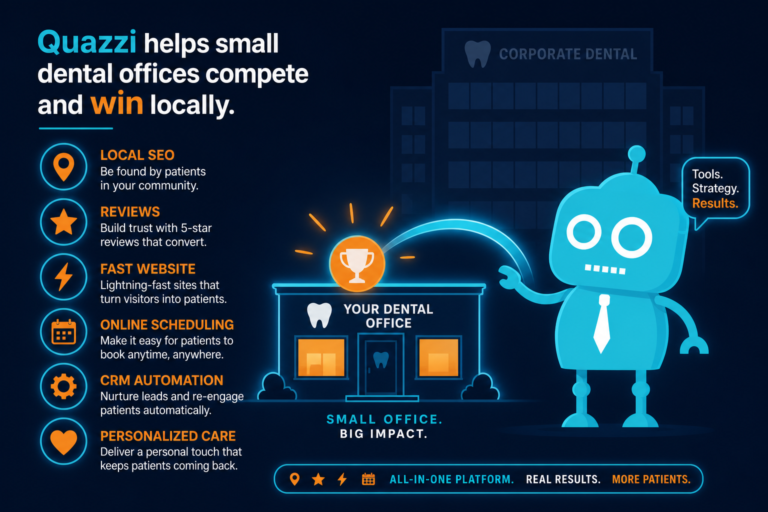
Reviews act like digital word-of-mouth. A strong review profile can help a smaller independent practice compete with larger dental groups or corporate offices.
However, review growth should not be random. Dental offices need a consistent review request process.
Practical examples include:
- Sending a review request by SMS after a positive hygiene visit
- Emailing a review link after a completed treatment plan
- Training the front desk to identify happy patients and ask at checkout
- Using automation to send reminders without adding manual tasks
- Responding professionally to both positive and negative reviews
Recent reviews matter because they show the practice is active and patients are currently having good experiences.
Your Mobile Website Can Make or Break Conversion
Most dental website visitors are on mobile devices. That means your website must be designed for thumbs, small screens, and quick decisions.
A mobile-optimized dental website should include:
- A click-to-call button that is easy to find
- A short appointment request form
- Fast page loading
- Clear service pages
- Simple navigation
- Visible location and hours
- Trust signals such as reviews, associations, and provider bios
- Emergency dental callouts where appropriate
For example, if a patient searches “emergency dentist near me” from a phone, they should not have to pinch, zoom, or dig through a menu. The page should quickly answer:
- Do you treat dental emergencies?
- Can I call now?
- Where are you located?
- What should I do next?
Website conversion is not about decoration. It is about helping the patient take the next step.
How Speed-to-Lead Affects Booked Appointments
Speed-to-lead is the time between a patient inquiry and your office’s response. In dental marketing, it can be the difference between a booked appointment and a lost opportunity.
When someone submits a contact form, clicks a call button, sends a message, or leaves a voicemail, they are usually in decision mode. The faster your office responds, the more likely you are to schedule that patient.
Why Fast Response Matters
Patients often contact more than one dental office. This is especially true for emergency dentistry, implants, cosmetic consultations, Invisalign, and new patient cleanings in competitive areas.
If your practice responds in five minutes and another office responds the next day, your team has a clear advantage.
A fast response communicates:
- The office is organized
- The patient matters
- Scheduling will be easy
- The practice is responsive and professional
A slow response creates doubt, even if the clinical care is excellent.
Common Front Desk Bottlenecks
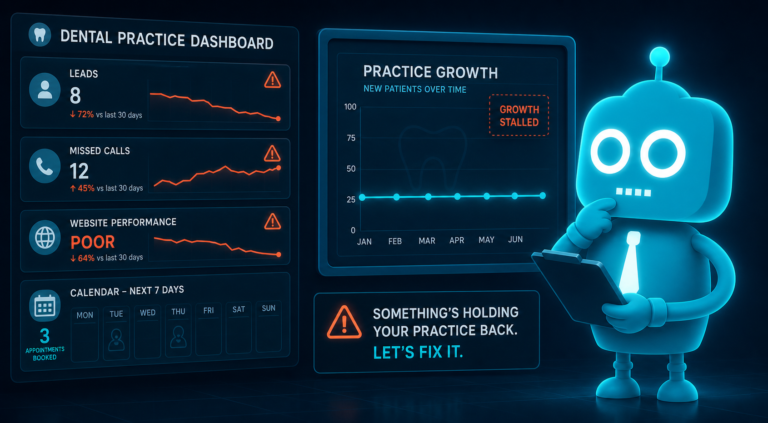
 Many dental offices lose leads for operational reasons, not marketing reasons.
Common issues include:
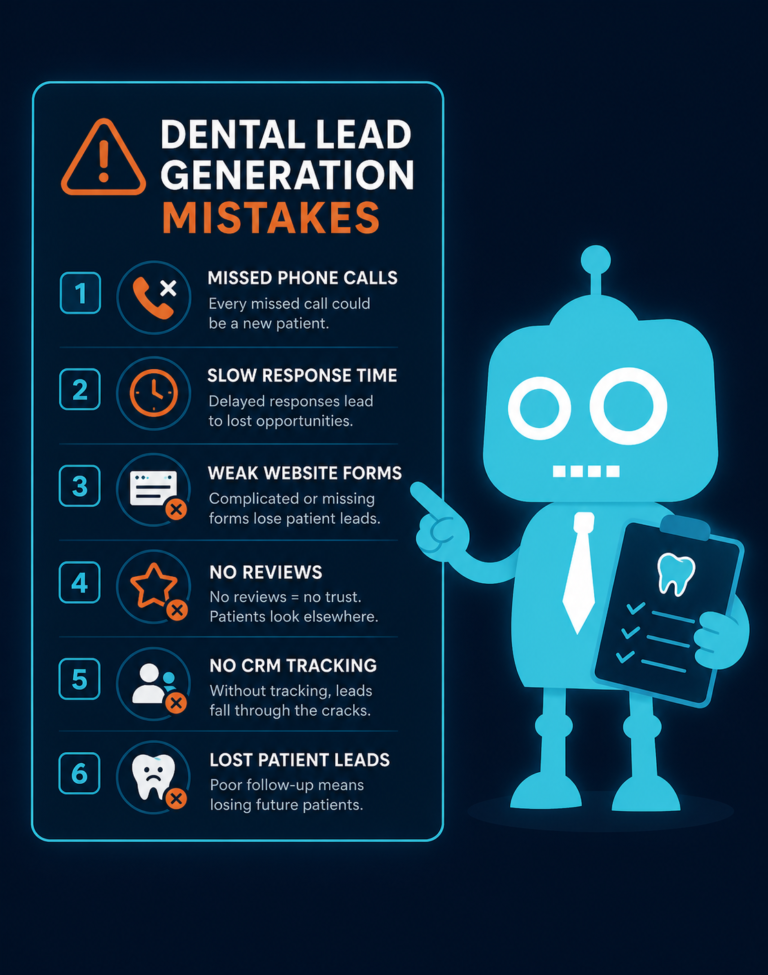
- Contact forms going to a general inbox that is checked only a few times per day
- Missed calls during lunch, morning huddles, or busy checkout periods
- No clear owner for new patient follow-up
- No tracking system for unscheduled inquiries
- Voicemails returned too late
- Staff not knowing which campaign or webpage generated the lead
- No second or third follow-up attempt
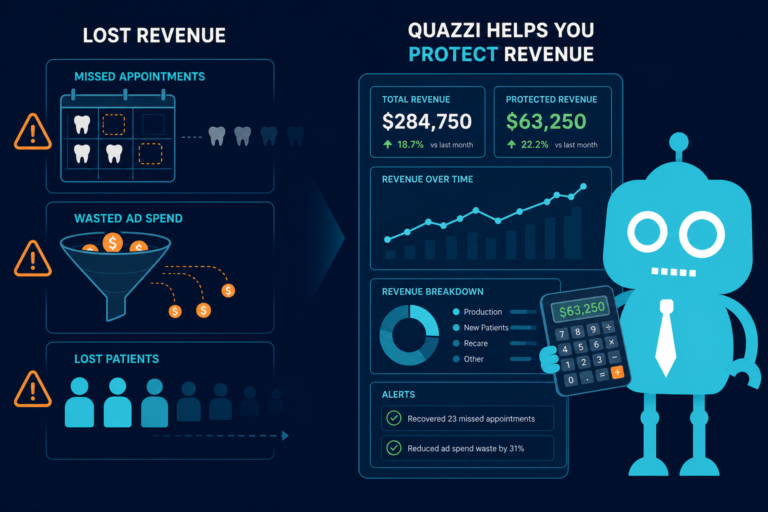
These gaps can make marketing look ineffective when the real issue is lead handling.
What a Better Lead Response Process Looks Like
A stronger process can be simple.
For example:
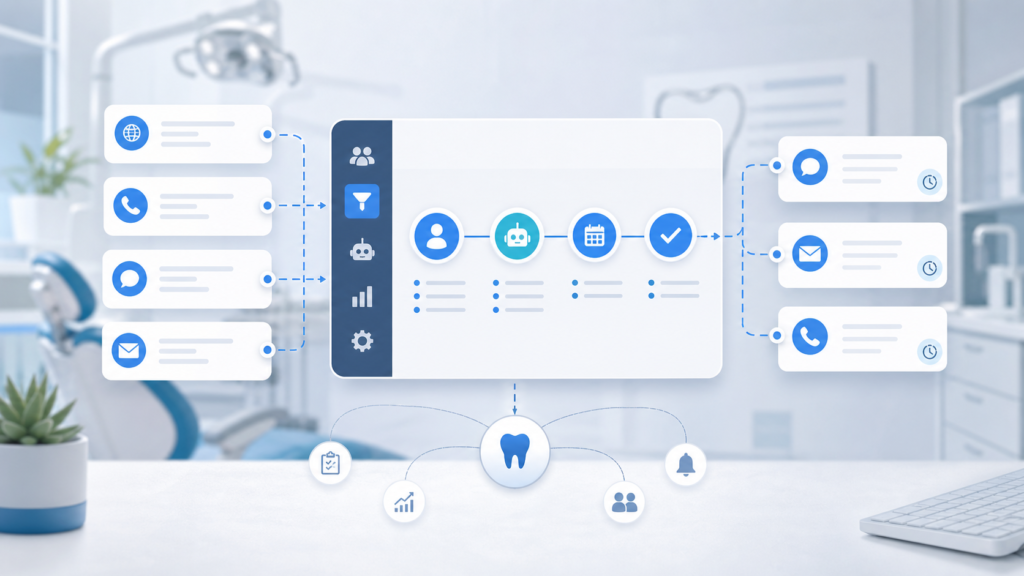
- A patient submits an appointment request form from the website.
- The lead is instantly entered into a CRM.
- The front desk receives an alert.
- The patient receives an immediate text confirming the request was received.
- The office calls within a few minutes during business hours.
- If the patient does not answer, an automated SMS follow-up invites them to reply with a preferred time.
- If they still do not schedule, the CRM reminds the team to follow up again.
This kind of system helps prevent interested patients from slipping through the cracks.
How Automation Helps Dental Offices Capture More Inquiries
 Automation does not replace the front desk. It supports the front desk.
Dental teams are busy. They are answering phones, checking patients in and out, handling insurance questions, collecting payments, managing schedules, and supporting clinical flow. Automation helps ensure that new patient inquiries receive timely attention even when the office is occupied.
Lead Capture Forms
A basic “Contact Us” form is not always enough. Dental websites should use lead capture forms designed around patient intent.
Examples include:
- Request an Appointment
- Request an Emergency Visit
- Schedule a New Patient Exam
- Ask About Dental Implants
- Request an Invisalign Consultation
- Get Help With a Dental Problem
The form should ask for enough information to help the team respond, but not so much that patients abandon it.
Useful fields may include:
- Name
- Phone number
- Email address
- Preferred appointment time
- Service needed
- New or existing patient
- Optional message
CRM Systems for Dental Lead Tracking
A CRM, or customer relationship management system, helps dental practices track inquiries from first contact to scheduled appointment.
Without a CRM, leads may live in email inboxes, sticky notes, voicemail systems, or someone’s memory. That makes follow-up inconsistent.
With a CRM, the practice can track:
- Where the lead came from
- What service the patient asked about
- Whether the office called or texted
- Whether the patient booked
- Which leads need follow-up
- Which marketing channels produce real appointment opportunities
This gives dental owners and office managers better visibility. Instead of guessing whether the website is working, they can see how many inquiries are coming in and how many are becoming scheduled patients.
SMS and Email Automation
Text and email automation can improve response rates because patients do not always answer phone calls from unknown numbers.
Useful automation workflows include:
- Instant confirmation after a website form submission
- Missed call text-back during business hours
- After-hours appointment request follow-up
- Reminder messages for unscheduled consultation requests
- Reactivation campaigns for patients who asked about treatment but never booked
- Review request messages after completed visits
For example, if someone fills out a form at 9:30 p.m. asking about a broken tooth, an automated text can immediately say:
“Thanks for contacting our office. We received your request and will follow up as soon as we open. If this is urgent, please reply with a brief description of your dental concern.”
That response reassures the patient and keeps them engaged until the team can follow up.
Appointment Follow-Up
Not every new patient books on the first contact. Some need to check a calendar, ask a spouse, confirm insurance, or compare costs.
A follow-up system helps the office stay connected without relying on memory.
Examples of helpful follow-up include:
- A same-day text after a missed call
- A next-day email with a link to request an appointment
- A reminder for the front desk to call implant consultation leads
- A message to patients who started but did not complete a form
- A review request after a positive appointment experience
The key is to be helpful, not pushy. Patients appreciate clear communication when it makes scheduling easier.
The Website Is the Hub of the New Patient System
Your dental website should be more than an online brochure. In 2026, it should function as the hub of your new patient acquisition system.
That means it should connect:
- Google Maps traffic
- Organic search traffic
- Paid advertising campaigns
- Social media clicks
- Referral traffic
- Lead capture forms
- CRM integrations
- Call tracking or inquiry tracking
- SMS and email follow-up
When the website is built correctly, it helps patients understand your services, trust your practice, and take action.
Service Pages Should Match Patient Search Intent
A patient searching for “dental implants in [city]” has different questions than someone searching for “kids dentist near me” or “same-day emergency dentist.”
Each important service should have a clear, helpful page that answers common patient questions.
Strong dental service pages often include:
- Who the service is for
- Common symptoms or reasons for treatment
- What the patient can expect
- Benefits of treatment
- Technology or techniques used by the practice
- Payment or consultation information where appropriate
- Clear calls to action
This helps both SEO and conversion.
Calls to Action Should Be Clear
Every important page should make the next step obvious.
Examples include:
- Call to Schedule
- Request an Appointment
- Book a New Patient Visit
- Request an Emergency Appointment
- Ask About Dental Implants
A patient should never wonder how to contact your office.
Trust Signals Should Be Easy to Find
Trust signals help reduce hesitation. For dental practices, these may include:
- Google review ratings
- Patient testimonials
- Dentist biography and credentials
- Team photos
- Before-and-after images where appropriate and compliant
- Technology used in the office
- Memberships or continuing education highlights
- Clear financial and insurance information
Patients want to know who they are choosing. A generic website with stock photos and vague copy does not build the same confidence as a site that feels specific to the practice.
Practical Ways Dentists Can Get More New Patients in 2026
Independent dental practices do not need to do everything at once. The smartest approach is to improve the system step by step.
1. Audit the Patient Journey
Search for your practice like a patient would. Use your phone and look up:
- “dentist near me”
- Your practice name
- Your top services plus your city
Review what patients see. Is your Google profile complete? Are your reviews recent? Does your website load quickly? Is it easy to call or request an appointment?
2. Improve Your Google Business Profile
Update your categories, services, hours, photos, appointment link, and practice description. Make sure the phone number and address are accurate everywhere.
Add new photos regularly. Respond to reviews. Keep your profile active and useful.
3. Make the Website Mobile-First
Do not judge your website only from a desktop computer in the office. Most patients are viewing it from a phone.
Check whether mobile visitors can quickly:
- Call the office
- Request an appointment
- Find services
- Read reviews
- Locate the office
- Understand insurance or payment options
4. Tighten Front Desk Lead Handling
Set a clear standard for new patient inquiries. For example:
- Call web leads within five minutes when possible during business hours
- Send a text if the patient does not answer
- Follow up again the next business day
- Track every inquiry in a CRM
- Review unscheduled leads weekly
This improves results without increasing ad spend.
5. Use Automation for Repetitive Follow-Up
Automation is especially helpful for:
- Form confirmations
- Missed call text-backs
- After-hours inquiries
- Appointment request reminders
- Review requests
- Reactivation campaigns
When automation handles the first touch or reminder, the team has more time for personal conversations that actually book appointments.
The Practices That Win Will Connect Marketing and Operations
In 2026, the dental practices that get more new patients are not always the ones spending the most on ads. Often, they are the ones with the most connected system.
They show up well on Google Maps. They have strong reviews. Their websites are fast, mobile-friendly, and built to convert. Their forms work. Their CRM tracks inquiries. Their front desk responds quickly. Their SMS and email follow-up keeps patients engaged.
That is the new model for dental practice growth.
Marketing creates the opportunity. Operations convert the opportunity. Technology connects the two.
Build a Better New Patient System With CreateTheSite.com
If your dental practice wants more new patients in 2026, your website and follow-up process need to work together.
CreateTheSite.com helps dental practices build modern, conversion-focused websites that support real patient growth. Our team can help with dental website design, secure hosting, mobile optimization, lead capture forms, CRM integrations, SMS and email automation, appointment follow-up, and ongoing website support.
Whether you are updating an outdated website, improving mobile conversion, capturing more appointment requests, or connecting your website to a better follow-up system, CreateTheSite.com can help you create a smoother path from online search to scheduled patient.
Your future patients are already comparing dentists online. Make sure your practice is easy to find, easy to trust, and easy to contact.
Ready to turn your dental website into a stronger new patient system? Visit CreateTheSite.com to learn how we can help your practice grow with modern website design, automation, and ongoing support.