Why Your Dental Practice Isn’t Growing
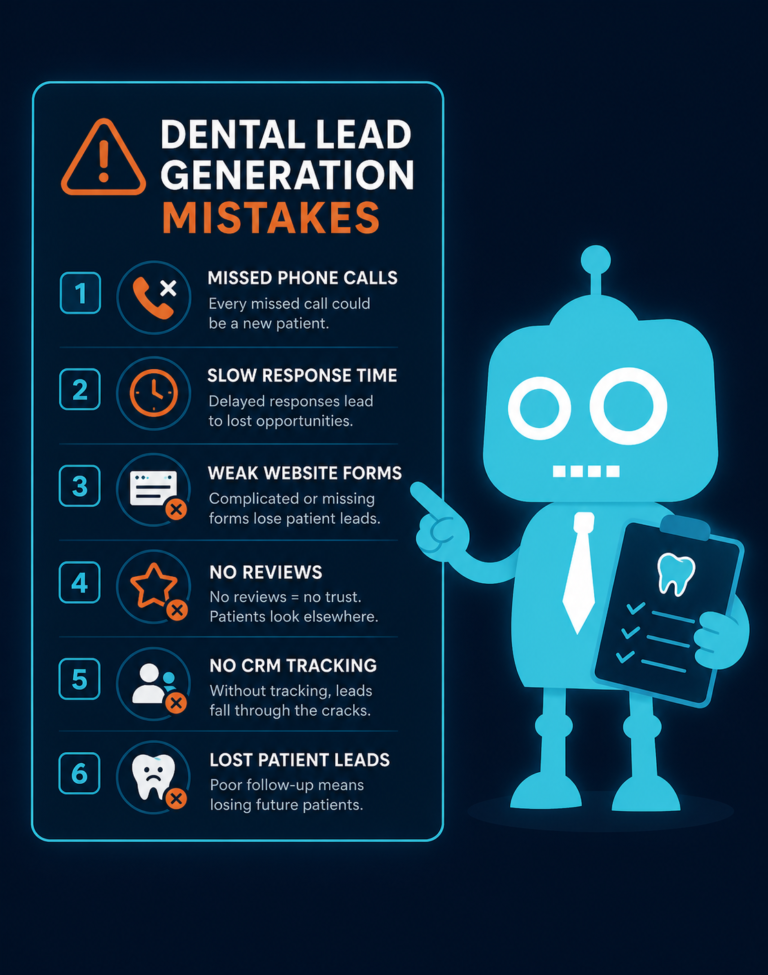
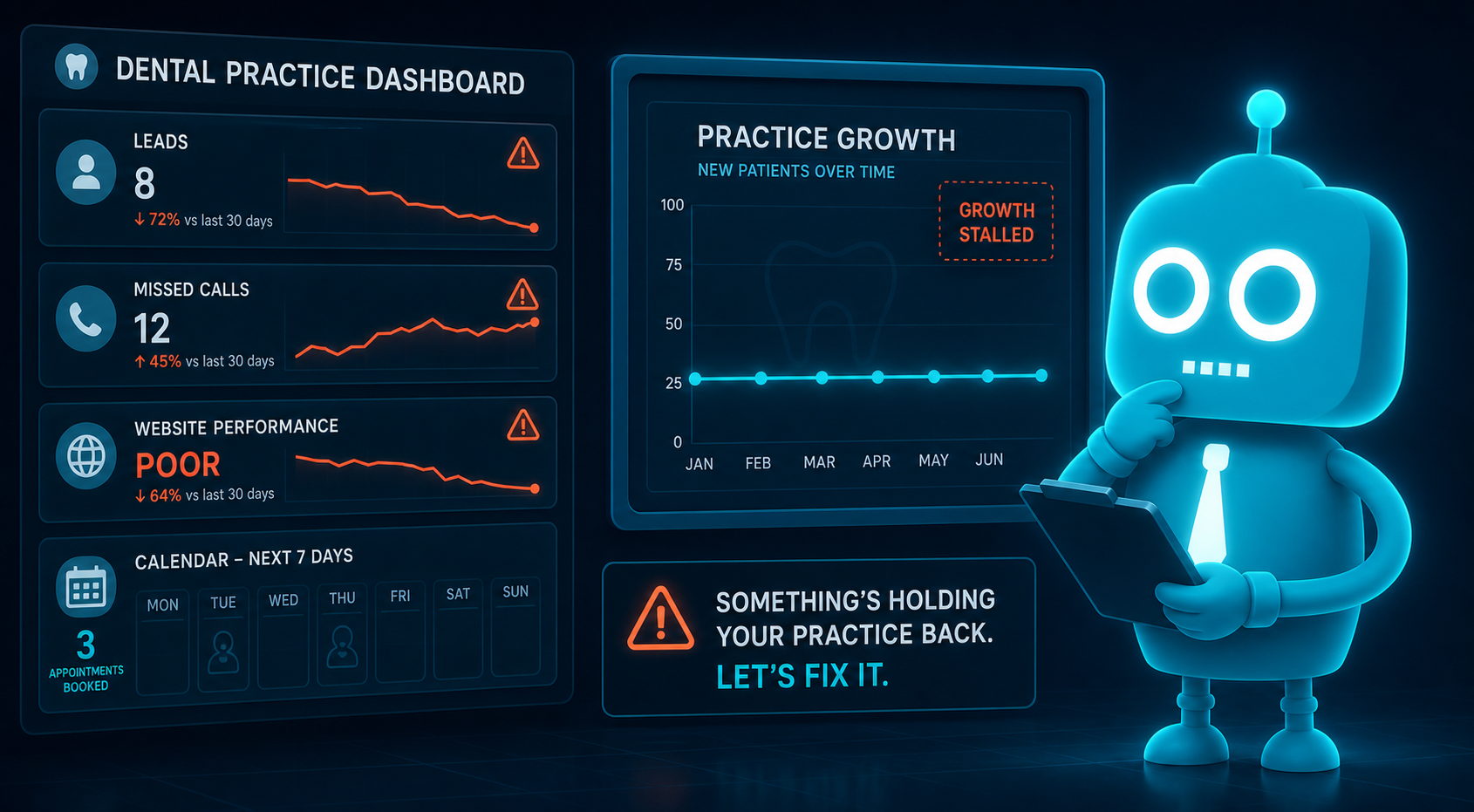
If your dental practice is doing good work but new patient growth feels flat, the problem may not be your clinical care. In most independent dental practices, growth breaks in one of four places: visibility, conversion, operations, or retention.
You may not be showing up when local patients search for a dentist. Or your website may be getting traffic but failing to turn visitors into appointment requests. Your front desk may be missing calls during busy hours. Or existing patients may not be returning often enough for hygiene, treatment, and follow-up care.
For independent dental practice owners, dentists, and office managers, the key is to stop guessing. Growth problems usually leave clues. Here’s where to look first.

1. Your Practice Has a Local Visibility Problem
Dental growth starts with being found by the right people in your local area. If patients nearby are searching for terms like “dentist near me,” “emergency dentist,” “family dentist,” “dental implants,” or “Invisalign provider,” your practice needs to appear where they are looking.
If your competitors show up ahead of you in Google Maps, organic search, or local service results, they are likely receiving calls and appointment requests that could have gone to your office.
Common local visibility issues for dental practices
- Your Google Business Profile is incomplete or outdated
- Your practice has fewer reviews than nearby competitors
- Your website pages are not optimized for local dental keywords
- Your service pages are too thin or generic
- Your name, address, and phone number are inconsistent across directories
- Your website loads slowly or performs poorly on mobile devices
- You do not have separate pages for high-value services like implants, cosmetic dentistry, emergency dentistry, or clear aligners
For example, a practice offering dental implants may have one short paragraph about implants on a general services page. Meanwhile, a competing dental group has a full implant page with FAQs, before-and-after information, financing details, a clear call-to-action, and local SEO optimization. Google and patients both have more reasons to trust the competitor’s page.
Visibility is not just about ranking. It is about showing up with enough credibility that a potential patient feels comfortable taking the next step.

2. Your Website Is Getting Visitors, But Not Converting Them
A dental website should do more than look professional. It should turn visitors into calls, form submissions, and booked appointments.
Many dental practice websites fail because they are designed like online brochures instead of patient conversion tools. They may explain the practice, list services, and include a phone number, but they do not guide patients toward action.
Signs your dental website has a conversion problem
- The phone number is hard to find on mobile
- There is no clear “Request an Appointment” button
- Forms are too long or difficult to use
- Service pages do not explain benefits, process, cost concerns, or next steps
- The website lacks trust signals such as reviews, dentist bios, office photos, and insurance information
- Pages load slowly, especially on mobile
- There is no dedicated landing page for ads or specific treatments
Think about a parent searching for a new family dentist on their phone during lunch. They want to know if you accept their insurance, whether you treat children, where you are located, and how quickly they can schedule. If your site makes them dig for that information, they may move on to the next practice.
Strong dental website conversion depends on clarity. Every important page should answer three questions quickly:
- Can this practice help me?
- Do I trust this practice?
- How do I schedule?
3. Your Response Time Is Too Slow
Speed matters in new patient acquisition. When someone submits a form, leaves a voicemail, or requests an appointment online, they are often contacting multiple dental offices.
If your team responds hours later or the next business day, that patient may already be scheduled somewhere else.
Where response delays usually happen
- Website forms go to a general inbox that is not checked often
- Voicemails pile up during lunch or after hours
- New patient requests are not assigned to a specific team member
- There is no automated SMS or email confirmation after a form submission
- The front desk is too busy with check-ins, check-outs, insurance questions, and clinical interruptions
A patient who requests an emergency dental appointment at 8:30 p.m. may not expect immediate treatment, but they do expect acknowledgment. An automated text or email saying, “We received your request and will contact you first thing in the morning,” can keep that patient engaged instead of searching for another provider.
Fast response time is one of the most overlooked growth levers in a dental practice. You do not always need more leads. Sometimes you need to respond to the leads you already have more effectively.
4. Missed Calls Are Costing You New Patients
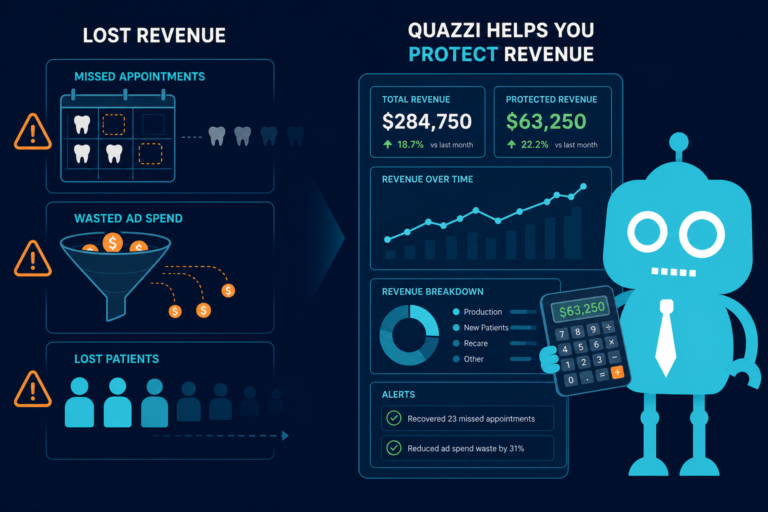
Missed calls are a major hidden revenue leak for dental offices. A missed call from a new patient is not just a missed conversation. It may be a missed hygiene appointment, crown case, implant consultation, emergency visit, or long-term family relationship.
Front desk teams are often expected to answer phones while checking patients in, collecting payments, verifying insurance, coordinating treatment plans, and supporting the clinical schedule. Even excellent teams miss calls when the office is busy.

Why missed calls happen in dental practices
- Phones ring during peak check-in and check-out times
- Lunch breaks leave limited coverage
- After-hours calls are not followed up quickly
- Voicemails are not tracked as new patient opportunities
- There is no call tracking or reporting
- Marketing campaigns drive calls without a front desk plan to handle volume
If your practice invests in SEO, Google Ads, social media, or direct mail but does not track call handling, you may not know how many opportunities are slipping away.
A simple improvement is to create a missed call workflow. For example, every missed call should trigger a same-day callback, SMS follow-up when appropriate, and a note in your CRM or patient communication system. The goal is to make sure no lead disappears just because the office was busy.
5. You Have No CRM Visibility Into New Patient Leads
Many dental practices rely on a practice management system for scheduling and patient records, but that does not always provide clear visibility into marketing leads and new patient follow-up.
A CRM, or customer relationship management system, helps track where leads come from, whether they were contacted, what they asked about, and whether they became scheduled patients.
Without CRM visibility, you may not know:
- How many new patient inquiries came from your website
- Which leads were contacted and which were missed
- How many implant, Invisalign, cosmetic, or emergency inquiries converted
- Which marketing channels produce actual appointments
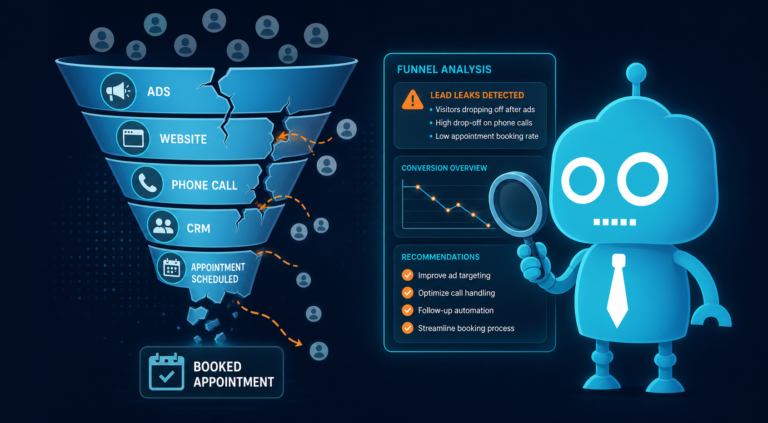
- Where leads drop off in the follow-up process
- Whether front desk follow-up is happening consistently
For example, your website may generate 40 appointment requests in a month, but only 18 get scheduled. Without a CRM or lead tracking process, you may assume the website is underperforming. In reality, the problem may be delayed follow-up, unanswered questions, insurance concerns, or no second attempt after the first call.
CRM visibility helps dental practices manage growth more intentionally. It gives owners and office managers a clearer view of what happens between “interested patient” and “scheduled appointment.”

6. Your Retention Strategy Is Too Weak
New patient acquisition gets most of the attention, but retention is often where profitability improves fastest. If patients are not returning for hygiene visits, diagnosed treatment, follow-ups, or recall appointments, your practice will constantly need more new patients just to stay even.
A healthy dental practice should have systems for keeping patients engaged after the first appointment.
Common dental retention gaps
- Patients leave without scheduling their next hygiene visit
- Unscheduled treatment plans are not followed up consistently
- Recall reminders are generic or inconsistent
- Patients do not receive educational follow-up after consultations
- No-shows and cancellations are not reactivated effectively
- The practice does not use SMS and email automation to stay connected
Consider a patient who needs a crown but says they need to “think about it.” Without a structured follow-up process, that treatment may never be scheduled. But with a thoughtful sequence of reminders, educational content, financing information, and a personal call, the patient is more likely to move forward.
Retention is not about bothering patients. It is about making it easier for them to complete care they already need.
7. Review Gaps Are Hurting Trust and Local SEO
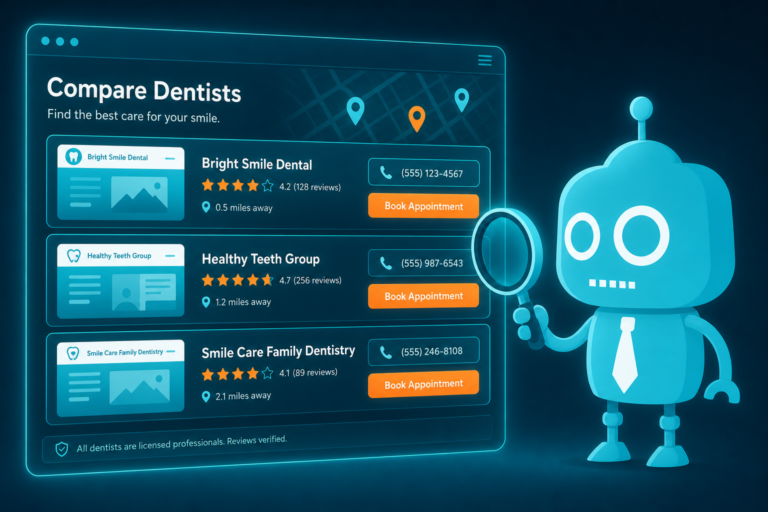
Reviews play a major role in dental marketing. Patients often compare dentists based on star rating, review count, recency, and the content of reviews. Google also uses review signals as part of local search visibility.
If your practice has 42 reviews and the dental group down the street has 800, the difference can affect both rankings and patient trust.
Review gaps that slow practice growth
- You do not ask for reviews consistently
- Only unhappy patients are motivated to leave feedback
- Review requests are not automated
- Staff members are uncomfortable asking
- Positive patient experiences are not being captured
- Reviews are old and do not reflect your current team or office
A strong review system should be simple. After a positive appointment, the patient receives a friendly SMS or email with a direct link to leave a review. The request should feel natural, not forced.
For dental practices, review content matters too. Reviews that mention specific services such as “emergency dental visit,” “dental cleaning,” “Invisalign consultation,” “implant consultation,” or “great with kids” can help future patients see that your practice fits their needs.

8. Larger Dental Groups Are Out-Marketing You
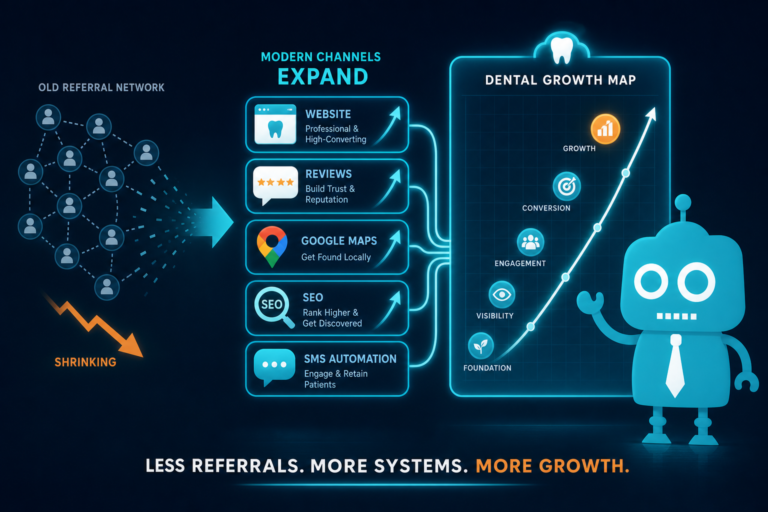
Independent dental practices are competing with larger dental groups and DSOs that often have bigger marketing budgets, centralized call centers, professional websites, SEO teams, paid advertising campaigns, review systems, and automated follow-up.
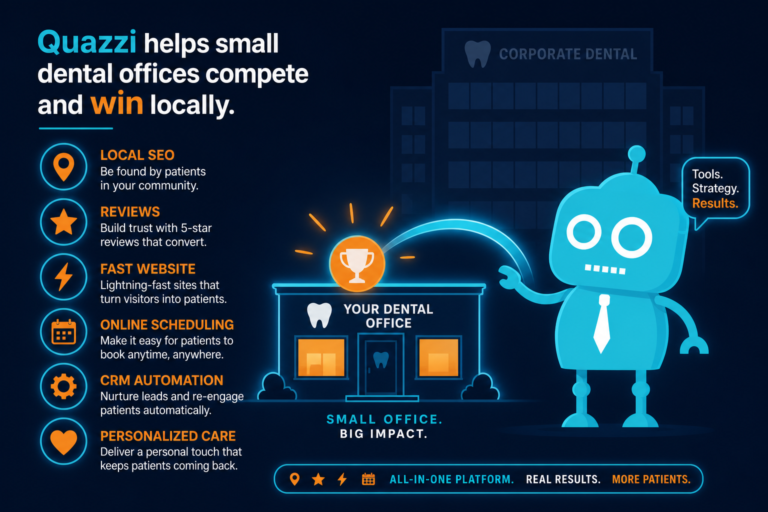
That does not mean independent practices cannot compete. In fact, many patients prefer the personal experience of a privately owned dental office. But your digital presence and patient communication systems need to make that advantage visible.
How larger dental groups often win online
- They have fast, mobile-optimized websites
- They create dedicated pages for each service and location
- They run targeted ads for high-value treatments
- They use call tracking and lead reporting
- They respond quickly to inquiries
- They automate appointment reminders and review requests
- They make scheduling easy from any device
Independent practices can win by combining modern systems with a more personal patient experience. Your website should communicate what makes your practice different: continuity of care, long-term relationships, local ownership, experienced providers, and a team that knows patients by name.
But those advantages only help if patients can find you, trust you, and schedule easily.
How to Diagnose Where Your Dental Practice Growth Is Breaking
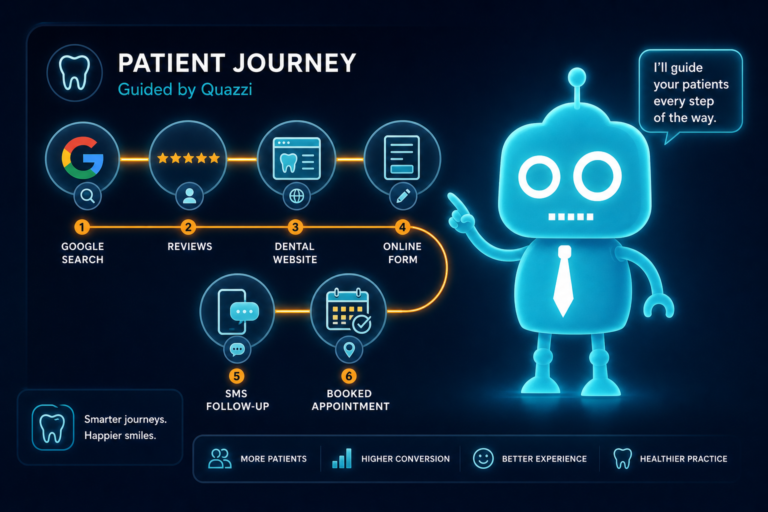
If your dental practice is not growing, look at the full patient journey instead of focusing on one metric. Growth is rarely just a “marketing problem” or a “front desk problem.” It is usually a system problem.
Start with these practical questions
- Visibility: Are we showing up in Google Maps and local search for our most important services?
- Website conversion: Is it easy for mobile visitors to call, request an appointment, and understand our services?
- Response time: How quickly do we respond to web forms, voicemails, and missed calls?
- Call handling: How many calls do we miss each week, and how many are new patient opportunities?
- CRM tracking: Can we see every lead, source, status, and follow-up attempt?
- Retention: Are hygiene recall, unscheduled treatment, and reactivation campaigns running consistently?
- Reviews: Are we generating recent, positive reviews every month?
- Competition: How does our online experience compare to larger dental groups in our area?
These questions help separate symptoms from causes. For example, if new patient numbers are down, the issue may be poor search visibility. But if website traffic is strong and appointments are still flat, the issue may be conversion, response time, or lead follow-up.
What a Modern Dental Growth System Should Include
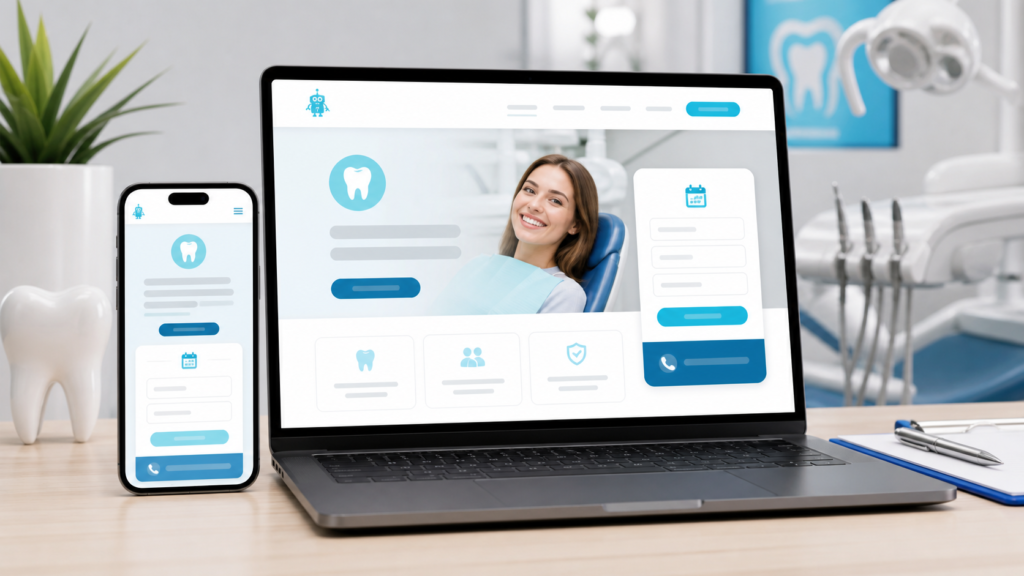
A growing dental practice needs more than a nice website. It needs a connected system that supports the entire patient journey from search to appointment to follow-up.
Key components of a stronger growth system
- Local SEO foundation: Optimized website pages, Google Business Profile improvements, accurate directory listings, and local keyword targeting
- Conversion-focused website design: Clear calls-to-action, mobile click-to-call buttons, appointment request forms, trust signals, service pages, and fast load times
- Lead capture forms: Simple forms that ask for the right information without creating friction
- CRM integration: A way to track leads, sources, follow-ups, and appointment outcomes
- SMS and email automation: Instant confirmations, reminders, follow-ups, review requests, and reactivation campaigns
- Call tracking and missed call workflows: Visibility into call volume, missed calls, and callback performance
- Review generation: Consistent requests after positive patient experiences
- Ongoing website support: Regular updates, security, hosting, content improvements, and technical maintenance
When these pieces work together, your practice becomes easier to find, easier to contact, and easier to choose.
Growth Usually Improves When the Patient Experience Gets Easier
Patients are not evaluating your practice only by your clinical skill. Before they ever sit in the chair, they judge the experience by your website, reviews, response time, scheduling process, and communication.
If those steps feel outdated or difficult, patients may assume the rest of the experience will be the same. If those steps feel modern, clear, and helpful, they are more likely to trust your office.
That is why dental practice growth depends on both marketing and operations. You need visibility to attract patients, conversion tools to capture them, front desk systems to respond quickly, CRM visibility to manage follow-up, and retention automation to keep patients engaged.
Need Help Growing Your Dental Practice Online?
If your dental practice is not growing the way it should, CreateTheSite.com can help you identify and fix the digital gaps that are costing you new patients.
CreateTheSite.com helps dental practices with modern website design, secure hosting, mobile optimization, lead capture forms, CRM integrations, SMS and email automation, appointment follow-up, and ongoing website support.
Whether your current website is outdated, your appointment forms are not converting, your team needs better lead visibility, or your follow-up process needs automation, CreateTheSite.com can help build a more connected online system for your practice.
Your dental website should not just exist. It should help patients find you, trust you, contact you, and return for care.
Visit CreateTheSite.com to learn how a modern dental website and smarter patient communication tools can support your next stage of practice growth.