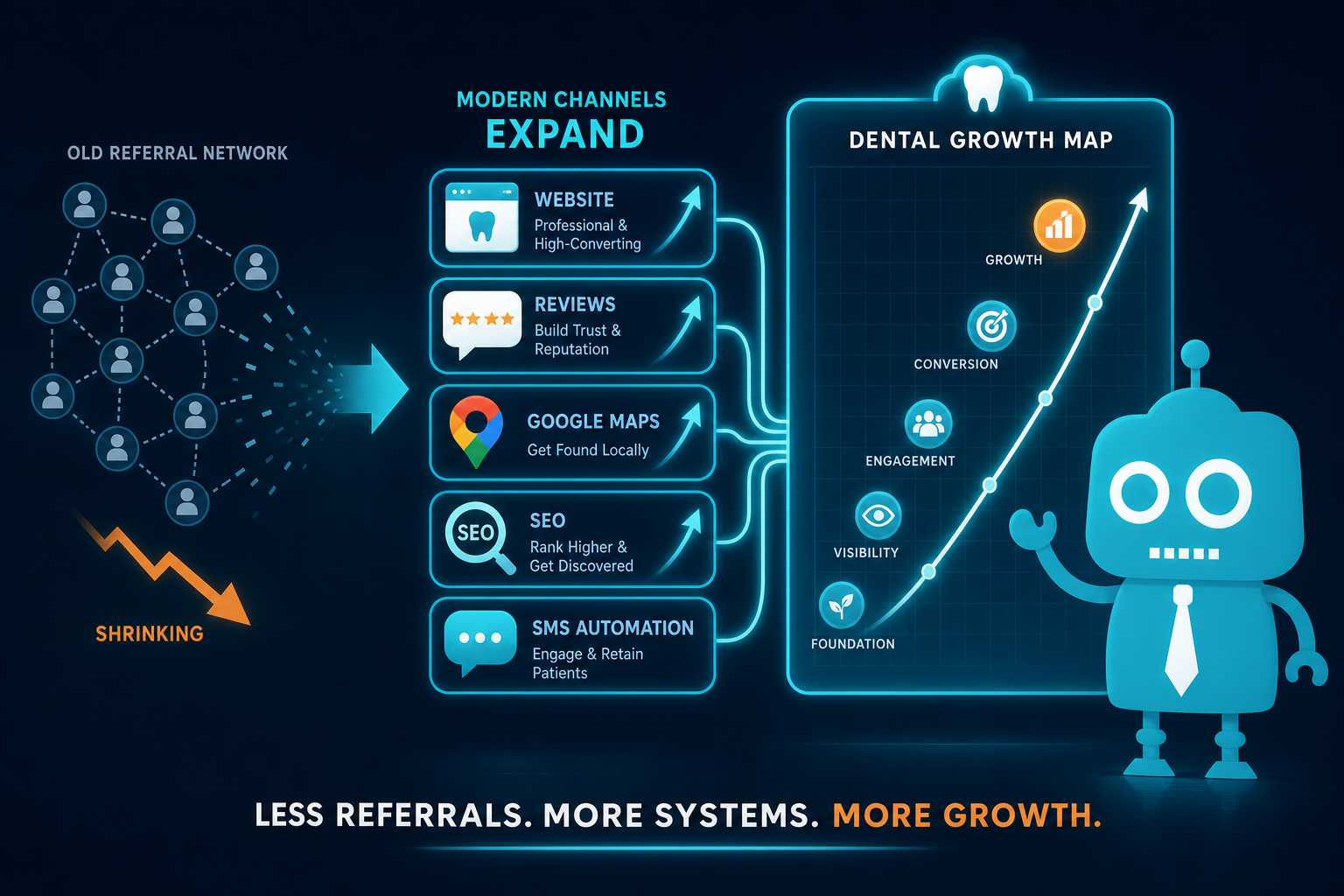
Why Referrals Alone No Longer Grow Dental Practices
For years, word-of-mouth referrals were the most reliable growth engine for independent dental practices. A happy patient told a friend, the friend called the office, and a new patient appointment was booked.
Referrals still matter. In fact, they may be more valuable than ever because they come with built-in trust. But today, referrals rarely move directly from conversation to phone call.
They pass through Google first.
A referred patient will often hear your practice name, then search for you online, read your reviews, visit your website, compare your office to others nearby, and decide whether to call, submit a form, or keep looking.
That means referrals no longer grow dental practices by themselves. They need a strong digital experience to support them.

Referrals Still Matter, But They Now Need Online Validation
When someone recommends your dental practice, they create interest. But interest is not the same as action.
Today’s patients are cautious. Before booking, they want to know:
- Is this practice reputable?
- Do they accept new patients?
- Does the office look modern and professional?
- Are the reviews recent and positive?
- Can I request an appointment easily?
- Do they offer the services I need?
- Is the location convenient?
Even if a trusted friend or family member referred them, most patients still want online confirmation before they contact your office.
This is where many dental practices lose referral opportunities without realizing it. The referral happened, but the patient was not convinced by what they found online.
Why Referrals Pass Through Google
When a patient says, “You should go to my dentist,” the next step is usually a Google search.
They may search your exact practice name, your dentist’s name, or a phrase like “dentist near me” if they only remember part of the recommendation. From there, they see your Google Business Profile, reviews, website, photos, hours, map location, and competing practices.
Google Is Now Part of the Referral Journey
A referral used to be a straight line:
Patient recommendation → phone call → appointment
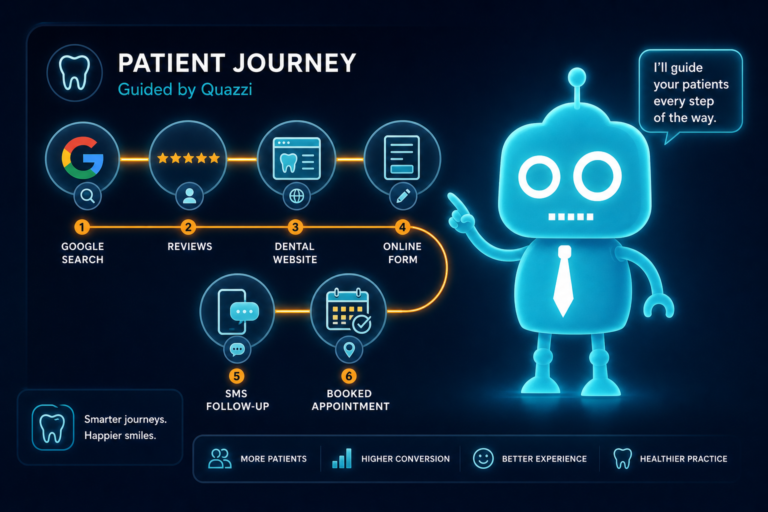
Now it often looks like this:
Patient recommendation → Google search → reviews → website visit → comparison → call or form submission
That extra online research stage can either strengthen the referral or weaken it.
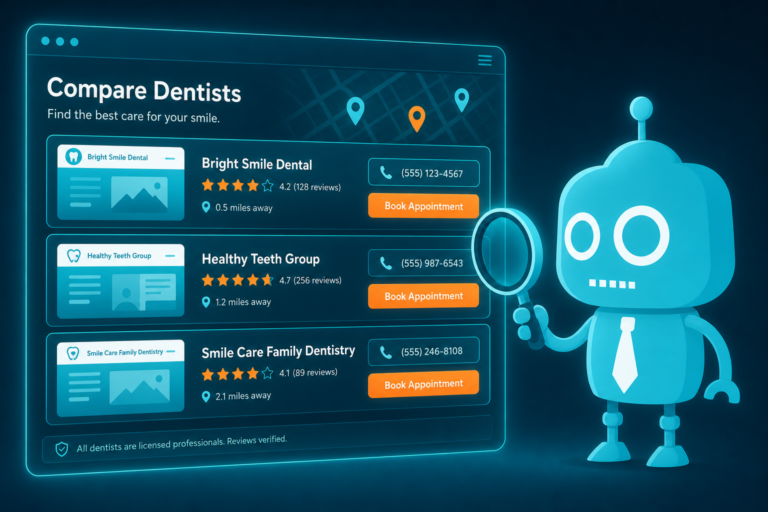
For example, imagine a long-time patient refers a coworker to your office. The coworker searches your practice and sees a Google profile with outdated photos, limited reviews, and a website that loads slowly on mobile. Then they notice another nearby dental office with hundreds of recent reviews, a clean website, and an easy “Request Appointment” button.
The original referral created trust, but the online experience influenced the final decision.
Patients Compare Even After Being Referred
Dental patients are not always looking for the cheapest option. They are looking for confidence.
They want to feel that your office is organized, modern, responsive, and capable of delivering a good experience. Your online presence gives them clues about what to expect before they ever speak to your front desk.
If your website, reviews, and contact process feel outdated, the referred patient may hesitate. If they hesitate, they may keep searching.
Why Outdated Websites Weaken Referrals
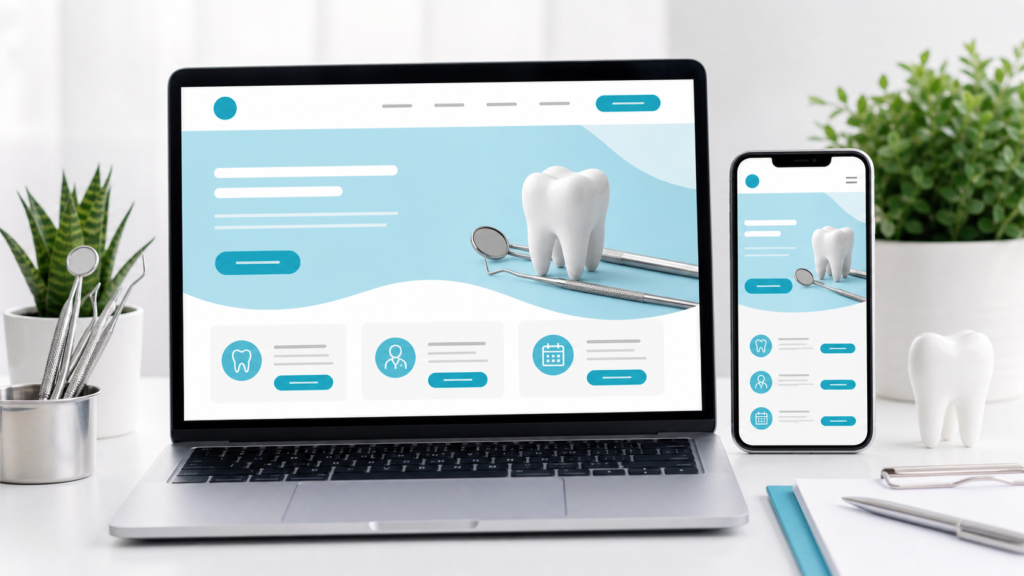
Your dental website is often the first controlled experience a referred patient has with your practice. It should support the positive things they heard from the person who referred them.
An outdated website can do the opposite.
A Weak Website Creates Doubt
Patients may not consciously judge your clinical skills based on your website, but they do judge the overall professionalism of your practice.
Common website problems that weaken referrals include:
- Slow loading pages, especially on mobile phones
- Old design that does not reflect the quality of the office
- Outdated staff photos or missing doctor bios
- Service pages with thin or generic content
- No clear new patient information
- Hard-to-find phone number or location details
- No online appointment request option
- No mention of insurance, financing, or payment options
- Broken links, old announcements, or inaccurate office hours
These issues may seem small, but they add friction. A referred patient may wonder whether the office is behind in other areas too.
Mobile Experience Matters Most
Many referred patients search for your practice on their phone immediately after a conversation or text message. If your website is difficult to use on mobile, you may lose them within seconds.
A modern dental website should make it easy for mobile users to:
- Tap to call the office
- Request an appointment
- Find directions
- Read reviews
- View services
- Meet the dentist
- Understand new patient next steps
For a dental practice, mobile optimization is not just a design issue. It is a new patient acquisition issue.
Your Website Should Reinforce the Referral
If a current patient tells someone, “They are great with anxious patients,” your website should support that message with a page about comfort-focused care, sedation options, gentle dentistry, or what nervous patients can expect.
If a patient refers a friend for dental implants, your website should have a clear dental implants page that explains the process, benefits, consultation steps, and how to request an appointment.
Specific content helps referred patients feel that they are in the right place.
Reviews as Referral Amplifiers
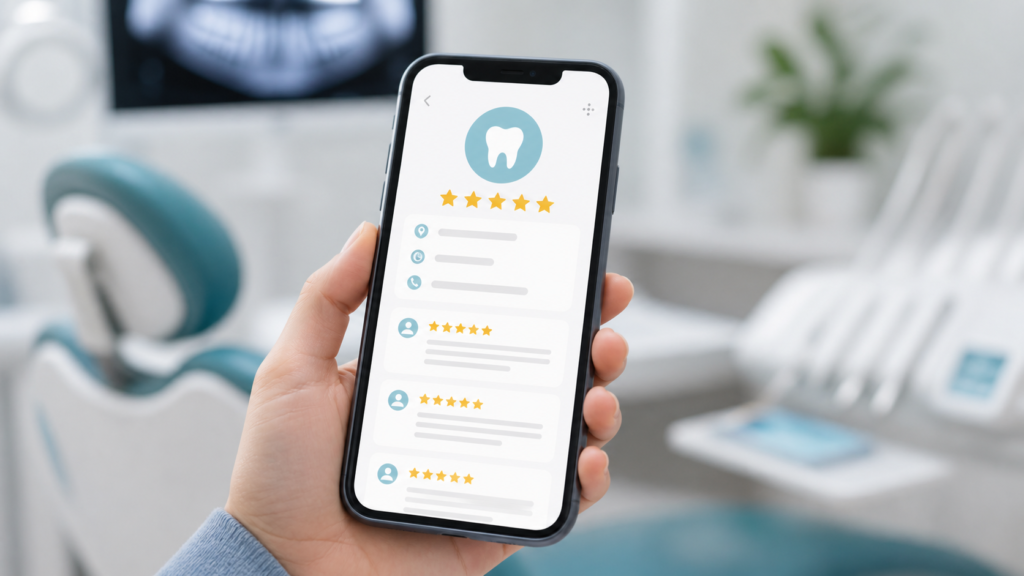
Online reviews are one of the strongest ways to reinforce word-of-mouth referrals. They turn one person’s recommendation into visible social proof from many patients.
When a referred patient sees recent, detailed reviews that match what they were told, confidence increases.
Reviews Confirm the Patient Experience
Dental patients often read reviews to understand the experience beyond clinical treatment. They look for comments about:
- Friendly front desk staff
- Gentle hygienists
- Clear communication
- On-time appointments
- Help with insurance questions
- Comfort during procedures
- Clean and modern office environment
- How the team handles dental anxiety
These details matter because they reduce uncertainty. A referred patient may already believe your dentist is skilled, but reviews help them picture the entire visit.
Recent Reviews Are More Powerful Than Old Reviews
A strong review profile is not only about the total number of reviews. Recency matters.
If your last review was posted eight months ago, a referred patient may wonder if the practice is still active, busy, or providing the same level of service. Consistent recent reviews show that patients are still having positive experiences.
This is especially important for practices competing in crowded local markets where several dentists appear in the map results.
Front Desk Teams Play a Key Role in Review Growth
Review generation should not be random. It should be part of your patient communication process.
For example, after a successful hygiene visit, cosmetic consultation, emergency appointment, or completed treatment, your team can send a simple review request by SMS or email.
The best review systems are easy for the patient and easy for the office. Instead of relying on the front desk to remember every time, review requests can be automated through your CRM, patient communication software, or website-connected lead system.
This helps your practice build a steady stream of reviews that amplify referrals around the clock.
Capturing Referral Traffic With Clear CTAs
A referred patient who lands on your website should never have to wonder what to do next.
Your calls to action, or CTAs, guide visitors toward becoming scheduled patients. Without clear CTAs, referral traffic can disappear without contacting your office.
Make Appointment Requests Easy
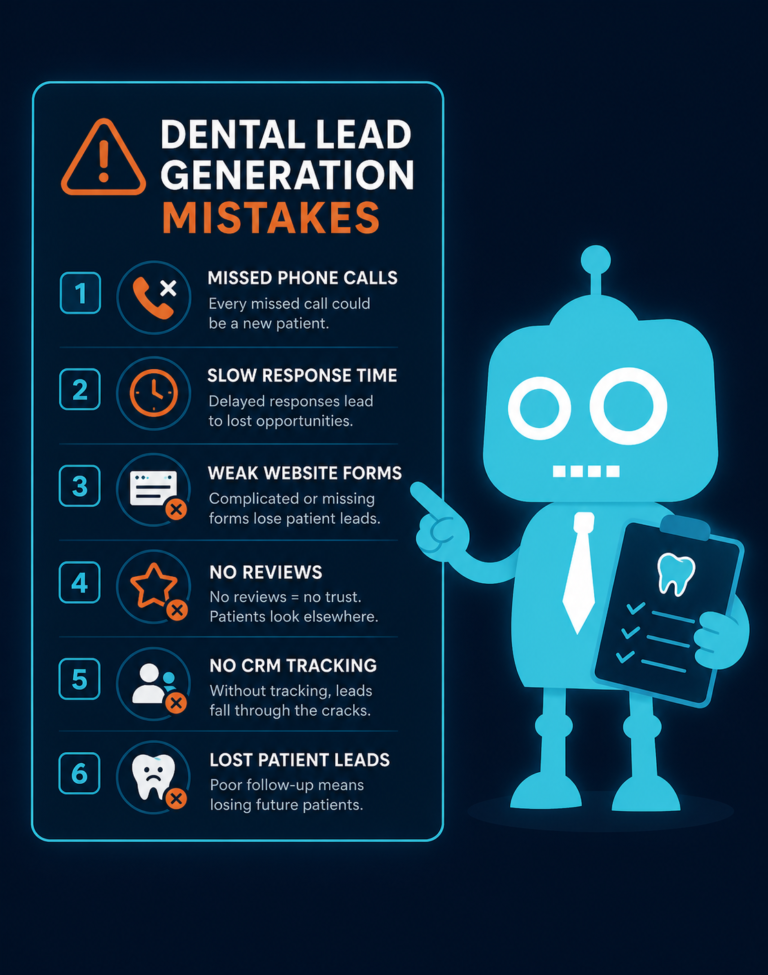
Many dental websites still rely almost entirely on phone calls. Phone calls are important, but they are not enough.
Some referred patients are searching after hours. Others are at work, multitasking, or not ready to call. If the only option is to pick up the phone, you may lose patients who would have submitted a form or responded to a text.
Strong dental website CTAs include:
- “Request an Appointment” buttons in the header and throughout the site
- Tap-to-call phone numbers on mobile
- New patient forms or inquiry forms
- Service-specific consultation requests
- Emergency dental care contact options
- Insurance or financing inquiry forms
- Directions and office hours near the contact section
The goal is simple: reduce friction and make it easy for a referred patient to take the next step.
Use Service-Specific CTAs
Not every referred patient is looking for the same thing. A general CTA can work, but service-specific CTAs often convert better.
For example:
- On a dental implants page: “Schedule a Dental Implant Consultation”
- On an Invisalign page: “Request an Invisalign Evaluation”
- On an emergency dentistry page: “Call Now for Same-Day Emergency Care”
- On a new patient page: “Book Your First Visit”
- On a cosmetic dentistry page: “Start Your Smile Makeover Consultation”
These CTAs match the patient’s intent. That makes the next step feel more natural.

Track Where Referral Leads Come From
If your website forms connect to a CRM or lead management system, your practice can better understand how new patient inquiries are coming in.
You can track whether a lead came from Google search, a direct website visit, a service page, a review link, or a referral campaign. You can also include a simple form field such as “How did you hear about us?” with “Friend or family referral” as an option.
This gives your office manager and practice owner better visibility into what is actually driving new patient growth.
Automated Follow-Up for Referred Patients
A referral is valuable, but it still requires timely follow-up. If a referred patient submits a form and does not hear back quickly, their confidence drops.
Many dental practices lose leads not because patients were uninterested, but because follow-up was too slow, inconsistent, or dependent on a busy front desk.
Speed Matters After a Referral Inquiry
When a patient requests an appointment, they are usually at a high-intent moment. They may be ready to schedule, asking about insurance, or trying to solve a dental problem.
If your team waits until the next day to respond, the patient may have already contacted another office.
Automated SMS and email responses help bridge the gap between inquiry and personal follow-up.
For example, after a referred patient submits a website form, they could immediately receive:
- A confirmation text letting them know the request was received
- An email with office hours, location, and what to expect next
- A link to complete new patient forms
- A reminder that the office will contact them shortly
- A direct phone number if they need urgent help
This creates reassurance while your front desk team manages calls, check-ins, check-outs, and insurance questions.
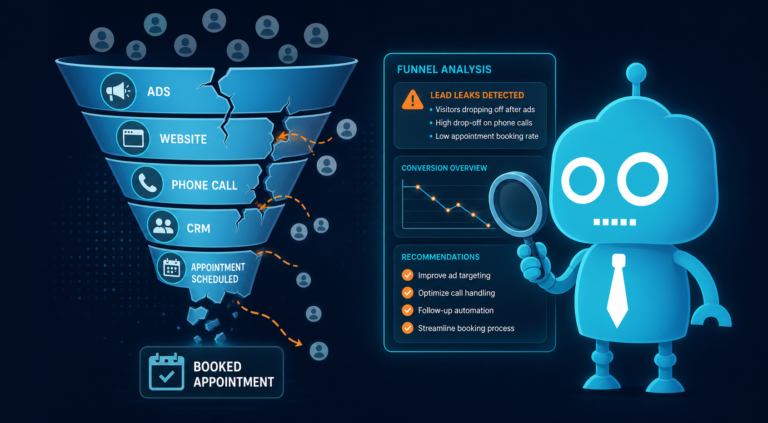
CRM Systems Help Prevent Missed Opportunities
A CRM system can help dental practices organize and follow up with new patient leads more effectively.
Instead of website form submissions sitting in an inbox, they can flow into a lead pipeline where your team can see:
- New inquiries
- Patients who need a call back
- Patients who received an automated message
- Patients who scheduled
- Patients who did not respond
- Follow-up reminders for unscheduled leads
This is especially useful for referred patients because they may already have a personal connection to the practice. Losing track of them can damage both the new opportunity and the relationship with the referring patient.
Follow-Up Should Feel Personal, Not Robotic
Automation works best when it supports human communication, not replaces it.
A simple SMS follow-up might say:
“Hi Sarah, thanks for reaching out to Bright Valley Dental. We received your appointment request and will call you soon. If you were referred by one of our patients, we’re excited to welcome you. You can call us directly at 555-123-4567 if you need immediate assistance.”
This type of message is fast, helpful, and personal enough to build trust.
After the patient schedules, automated reminders can also reduce no-shows and improve the first visit experience. These may include appointment confirmations, paperwork reminders, parking details, insurance reminders, and post-visit follow-up.

How Dental Practices Can Strengthen Referral-Based Growth
Referrals are still one of the best sources of new patients. But to turn more referrals into booked appointments, your practice needs a digital system that supports the referral journey from search to schedule.
Audit the Referral Experience
Start by pretending you are a referred patient. Search for your practice on Google and ask:
- Does our Google Business Profile look complete and current?
- Are our reviews recent, detailed, and positive?
- Does our website look modern and trustworthy?
- Is the mobile experience fast and easy?
- Can a new patient request an appointment in seconds?
- Do our service pages answer real patient questions?
- Does our front desk receive and respond to website leads quickly?
- Do we have automated follow-up for missed calls, forms, and unscheduled leads?
This exercise often reveals the gaps between receiving a referral and converting that referral into a scheduled appointment.
Align Your Website, Reviews, and Front Desk
New patient acquisition works best when your online presence and office operations are connected.
Your website should generate inquiries. Your reviews should build trust. Your CRM should organize leads. Your SMS and email automation should follow up quickly. Your front desk should have a clear process for turning inquiries into appointments.
When those pieces work together, referrals become much more powerful.
Referrals Need a Modern Conversion System
The problem is not that referrals stopped working. The problem is that the patient journey changed.
A referred patient now expects to validate your practice online before making contact. They want a professional website, strong reviews, easy appointment options, fast responses, and clear communication.
If your digital presence supports the referral, you increase the chance that the patient schedules. If it creates friction or doubt, the referral may be lost to another practice.
Independent dental practices do not need to abandon word-of-mouth marketing. They need to modernize what happens after the referral is made.

Build a Dental Website That Turns Referrals Into Appointments
CreateTheSite.com helps dental practices turn online interest into real new patient opportunities.
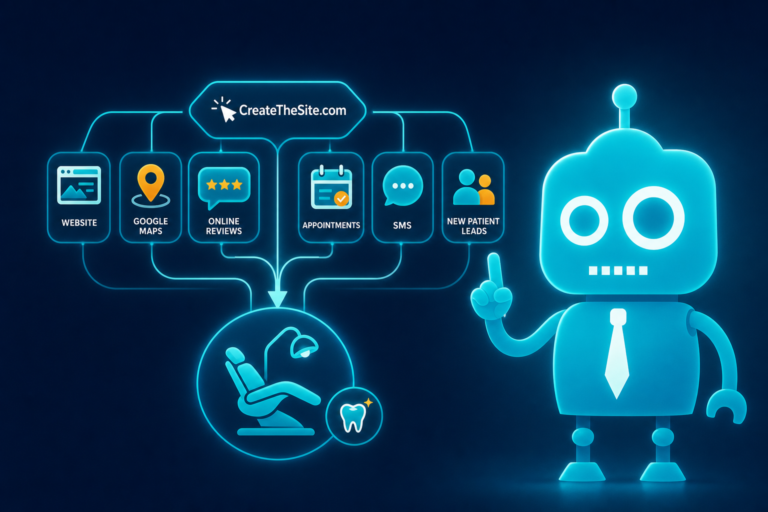
Our team supports independent dental offices with modern website design, secure hosting, mobile optimization, lead capture forms, CRM integrations, SMS and email automation, appointment follow-up, and ongoing website support.
Whether a patient finds you through a referral, Google search, online reviews, or a service page, your website should make the next step simple and trustworthy.
If your current website is outdated, difficult to update, or not helping your front desk capture new patient leads, CreateTheSite.com can help you build a stronger digital foundation for practice growth.
Visit CreateTheSite.com to learn how a modern dental website can help your practice convert more referrals into scheduled appointments.