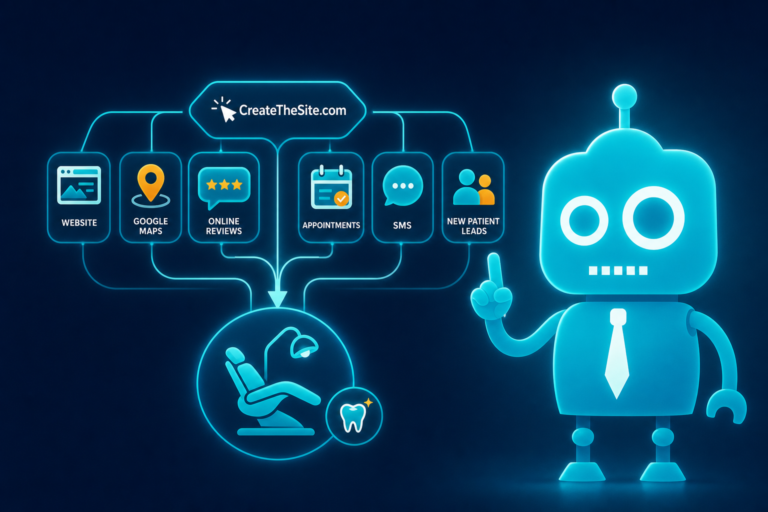

How Independent Dentists Compete with Corporate Dental Chains
Corporate dental chains have bigger budgets, centralized marketing teams, and recognizable brand names. But independent dentists have advantages that chains often struggle to match: trust, local relevance, speed, and authenticity.
Patients are not only choosing a dental office based on who has the largest ad budget. They want to know who will treat them well, explain options clearly, respond quickly, and make them feel comfortable. That is where independent dental practices can win.
With the right website, local SEO strategy, review system, follow-up process, and front desk workflow, a smaller practice can compete effectively for new patients against much larger dental organizations.

Why Independent Dental Practices Can Still Win
Corporate dental chains often compete on convenience, advertising volume, and name recognition. Independent practices can compete on something more personal: a real relationship with the community.
Patients often search for phrases like:
- “dentist near me”
- “emergency dentist in [city]”
- “family dentist near [neighborhood]”
- “dental implants in [city]”
- “Invisalign dentist near me”
When they land on your website, read your reviews, and contact your office, they are looking for signs that your practice is trustworthy, responsive, and local. Independent dentists can build that confidence faster when their marketing and operations are aligned.
Local SEO Helps Independent Dentists Get Found First
Local SEO is one of the most important ways independent dentists compete with corporate dental chains. When a patient searches for a dentist nearby, Google is trying to show the most relevant, trusted, and accessible options.
Your goal is to make it easy for Google and patients to understand who you are, where you are located, what services you offer, and why your practice is a strong choice.
Optimize Your Google Business Profile
Your Google Business Profile is often the first impression a potential patient has of your practice. Before they visit your website, they may look at your photos, hours, reviews, services, and location.
Independent dental offices should make sure the profile includes:
- Accurate practice name, address, and phone number
- Correct business hours, including holiday updates
- Dental service categories such as general dentist, cosmetic dentist, emergency dental service, or pediatric dentist when appropriate
- High-quality photos of the office, front desk, treatment rooms, and team
- A clear appointment link or website button
- Regular posts about services, community involvement, or patient education
Corporate chains may have brand recognition, but a well-managed Google profile with current photos and strong reviews can make a local independent practice feel more trustworthy and approachable.
Use Local Keywords on Your Website
Your website should clearly connect your dental services to your city, nearby neighborhoods, and patient needs. Instead of only saying “We offer dental implants,” use language like “Dental implants in Springfield for patients missing one or more teeth.”
Examples of local SEO phrases include:
- “Family dentist in Austin, TX”
- “Emergency dentist near Downtown Orlando”
- “Cosmetic dentistry in Scottsdale”
- “Dental crowns in Charlotte”
- “Teeth whitening near West Loop Chicago”
The key is to write naturally. Do not stuff keywords into every sentence. Use local language where it helps patients understand that your practice serves their area.
Personal Branding Makes Your Practice More Memorable
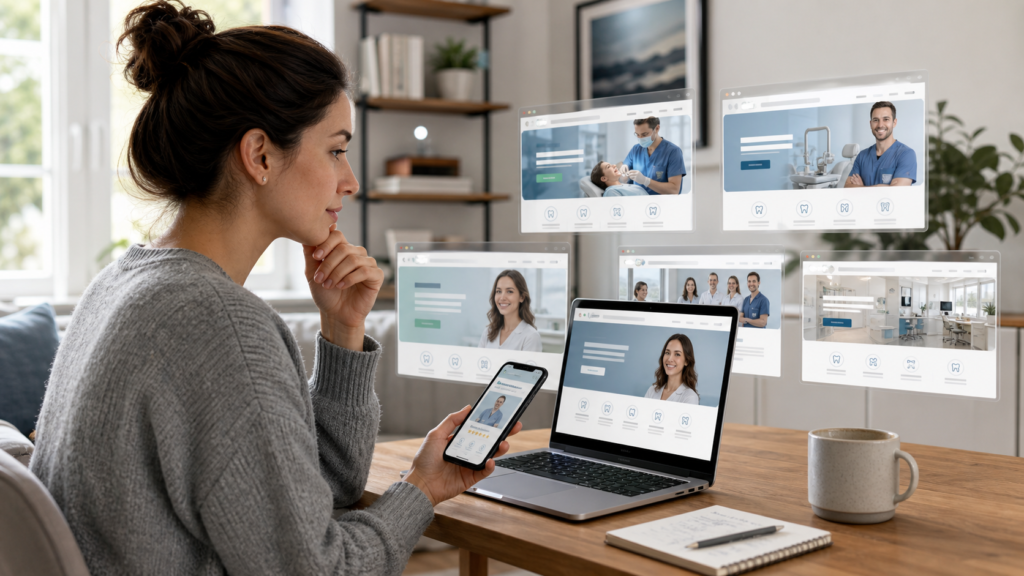
Many corporate dental websites feel interchangeable. They often use stock photos, broad messaging, and generic claims. Independent dentists can stand out by building a personal brand around the doctor, team, patient experience, and practice philosophy.
Patients want to know who will be treating them. A strong personal brand helps reduce uncertainty before the first appointment.
Show the Dentist Behind the Practice
Your website should include more than a short bio and a headshot. Tell patients what you care about and how you approach care.
For example, instead of writing:
“Dr. Smith provides quality dental care in a comfortable environment.”
Write something more specific:
“Dr. Smith is known for helping anxious patients feel more comfortable by explaining each step of treatment before beginning. She focuses on preventive care, conservative treatment planning, and long-term relationships with families in the community.”
That type of content helps patients picture the experience they will have at your office.
Use Real Practice Photos
Authenticity matters. If your website uses the same stock images as every other dental website, it becomes harder for patients to trust what they are seeing.
Use real photos of:
- Your dentists and hygienists
- Your front desk team
- Your reception area
- Your operatories and technology
- Your building exterior so new patients recognize it when they arrive
Real photos help patients feel familiar with your practice before they ever walk through the door.
Community Trust Is a Competitive Advantage
Independent dental practices are part of the local community in a way that corporate chains often are not. Your patients may see you at school events, charity drives, local sports sponsorships, business groups, or community fundraisers.
That local connection can become a powerful new patient acquisition tool when it is reflected online.

Highlight Local Involvement
If your dental practice sponsors a youth sports team, participates in a health fair, donates toothbrush kits to schools, or supports a local nonprofit, your website and social channels should show it.
Create website content or blog posts such as:
- “Our Dental Team Visits Lincoln Elementary for Children’s Dental Health Month”
- “Proud Sponsor of the Northside Little League”
- “Free Dental Screening Day for Local Veterans”
- “How Our Practice Supports Families in [City]”
This content is good for trust and local SEO. It also shows patients that your practice is invested in the same community they live in.
Faster Follow-Up Converts More New Patient Leads
One of the biggest opportunities for independent dentists is speed. A patient who submits a website form, calls after hours, or requests an appointment is often contacting multiple offices. The practice that responds first often wins.
Corporate chains may have call centers, but independent practices can compete by having tighter systems and faster communication.
Respond Quickly to Website Form Submissions
If a potential patient fills out a form for an emergency appointment, dental implant consultation, Invisalign visit, or new patient exam, they should not wait a full business day for a response.
A strong follow-up process might look like this:
- The patient submits a form on the website
- The front desk receives an instant notification
- The patient gets an automatic text or email confirming the request was received
- The office calls or texts within 5 to 15 minutes during business hours
- If the patient does not answer, the system sends a polite follow-up message
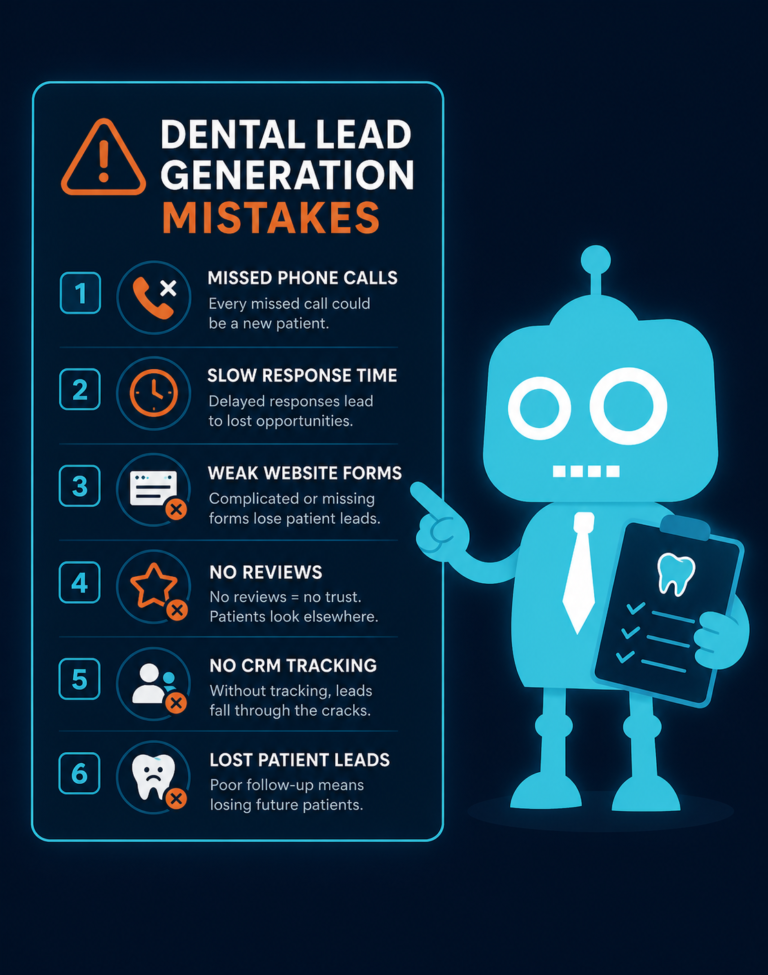
This process makes the practice feel organized and attentive. It also prevents leads from falling through the cracks during busy clinical hours.
Use SMS for High-Intent Patient Communication
Many patients respond faster to text messages than phone calls or emails. SMS can be especially useful for:
- New patient appointment requests
- Emergency dental inquiries
- Consultation follow-ups
- Unscheduled treatment reminders
- Appointment confirmations
- Post-visit review requests
The goal is not to overwhelm patients with messages. The goal is to make communication simple, timely, and convenient.
Better Reviews Help Independent Dentists Outrank and Outconvert Chains
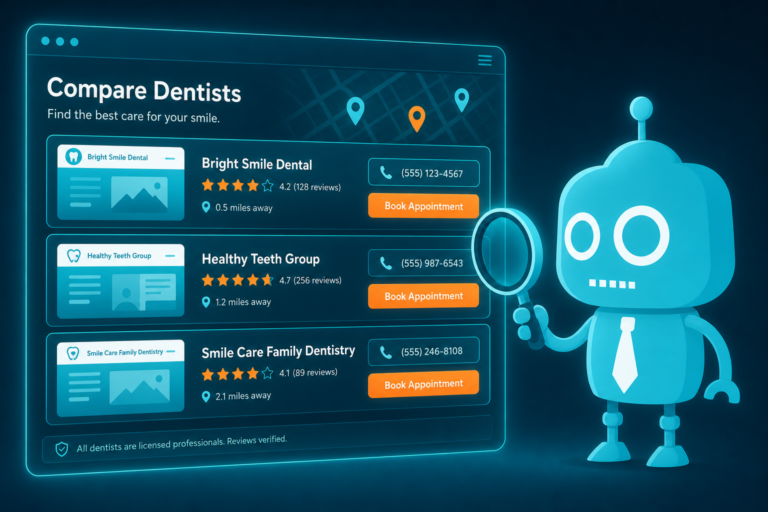
Online reviews are one of the most important factors in dental marketing. Patients compare star ratings, review volume, recent comments, and how the practice responds.
A corporate chain may have many locations, but an independent practice can build a stronger reputation in one specific community.
Ask for Reviews at the Right Moment
The best time to ask for a review is when the patient has just had a positive experience. This could be after a comfortable cleaning, a same-day emergency visit, a successful crown delivery, or a cosmetic consultation where the patient felt heard.
Your team can say:
“We’re so glad you had a good visit today. Reviews really help local patients find our practice. Would it be okay if we texted you a quick link?”
Then send the review link immediately by SMS or email.

Build a Review Workflow
Do not rely on memory alone. The front desk is busy checking patients in, answering calls, verifying insurance, presenting treatment estimates, and scheduling follow-ups. Review requests should be part of a simple system.
A practical review workflow may include:
- Tagging happy patients in the CRM or patient communication system
- Sending an automated review request after the appointment
- Monitoring new reviews weekly
- Responding professionally to positive and negative reviews
- Sharing strong reviews on the website when appropriate
Better reviews improve local trust and can increase website conversion. When patients see specific comments about gentle care, friendly staff, clear pricing, and great communication, they are more likely to book.
Authentic Website Content Converts More Visitors into Patients
Your dental website should not read like it could belong to any practice in any city. It should answer real patient questions, reflect your actual approach, and make it easy to take the next step.
Independent dentists can use website content to communicate warmth, credibility, and clarity.
Answer the Questions Patients Actually Ask
Think about the questions your front desk and treatment coordinators answer every week:
- “Do you take my insurance?”
- “How soon can I be seen for a toothache?”
- “What are my options if I’m missing a tooth?”
- “Is Invisalign right for adults?”
- “Do you offer payment plans?”
- “What happens during a new patient visit?”
These questions should be answered on your website in clear, patient-friendly language. This helps with SEO and reduces friction before the patient calls.
Make Conversion Easy on Every Page
A beautiful dental website is not enough. It must convert visitors into appointments.
Every important page should include:
- A visible phone number
- A clear “Request an Appointment” button
- Mobile-friendly contact forms
- Office hours and location details
- Trust signals such as reviews, doctor credentials, and real photos
- Simple next steps for new patients
If a patient has to search for your phone number or pinch and zoom on mobile, you may lose them to another office.
Service-Specific Landing Pages Help You Attract Higher-Value Patients
Many dental practices make the mistake of listing all services on one general page. That limits your ability to rank in Google and convert patients who are searching for a specific treatment.
Service-specific landing pages allow your practice to target high-intent searches and speak directly to what the patient needs.

Create Pages for Core Dental Services
Useful service pages may include:
- Emergency Dentistry
- Dental Implants
- Invisalign or Clear Aligners
- Teeth Whitening
- Dental Crowns
- Veneers
- Root Canals
- Family Dentistry
- Pediatric Dentistry
- Same-Day Dentistry
- Dentures
Each page should be written for a real patient, not just a search engine. For example, an emergency dentistry page should explain what counts as a dental emergency, how quickly the office can respond, what patients should do before they arrive, and how to request urgent care.
Include Local and Conversion Elements
A strong dental landing page should include:
- The service name and city in the heading when appropriate
- Clear explanation of symptoms, treatment options, or benefits
- Real photos or relevant office imagery
- Patient-focused FAQs
- Insurance or financing information when applicable
- Reviews related to that service if available
- A prominent appointment request form
- Click-to-call buttons on mobile
These pages help your practice appear for more specific searches and give patients the confidence to contact you.
Automation Gives Small Practices Big-Practice Systems
Independent dentists do not need a corporate call center to create a smooth patient experience. With the right automation, a small practice can operate with the consistency of a larger organization while still feeling personal.
The best automation supports the front desk instead of replacing the human touch.
Use a CRM to Track New Patient Leads
A CRM, or customer relationship management system, helps your team track potential patients from first contact to scheduled appointment.
For dental practices, a CRM can help manage:
- Website form submissions
- Missed call follow-ups
- New patient inquiries
- Implant or Invisalign consultation leads
- Unscheduled treatment follow-up
- Recall and reactivation campaigns
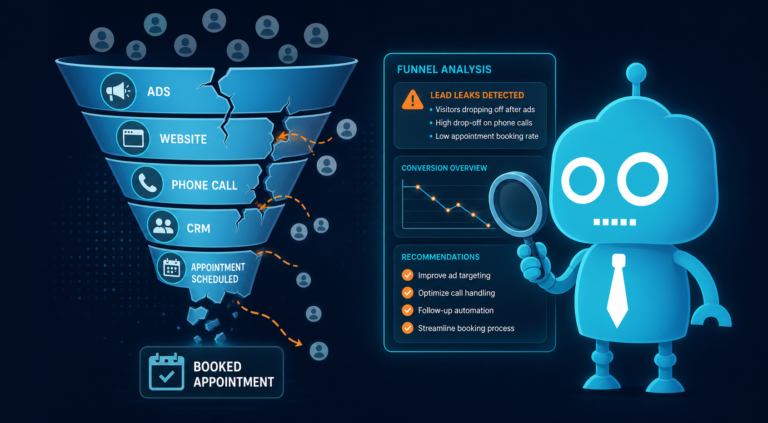
Without a system, leads may be written on sticky notes, left in voicemail, buried in email inboxes, or forgotten during busy days. A CRM creates visibility and accountability.
Automate SMS and Email Follow-Up
Automation can help your practice respond instantly, even when the team is with patients.
Examples include:
- Automatic confirmation after a website appointment request
- Text reminders for patients who have not scheduled yet
- Email follow-up after cosmetic or implant consultations
- Review requests after completed appointments
- Reactivation messages for overdue hygiene patients
- Follow-up for patients with incomplete treatment plans
These systems can increase appointment bookings, reduce no-shows, and help the front desk stay organized.
Keep Automation Personal
Patients should not feel like they are receiving cold, robotic messages. Keep messages short, friendly, and specific.
For example:
“Hi Sarah, this is Bright Smile Dental. We received your request for an Invisalign consultation and would be happy to help. Would morning or afternoon work better for a quick call?”
That type of message feels personal while still being supported by automation.
Front Desk Operations Are Part of Your Marketing
Marketing does not stop when the phone rings. In many dental practices, the front desk determines whether a new patient schedules or keeps looking.
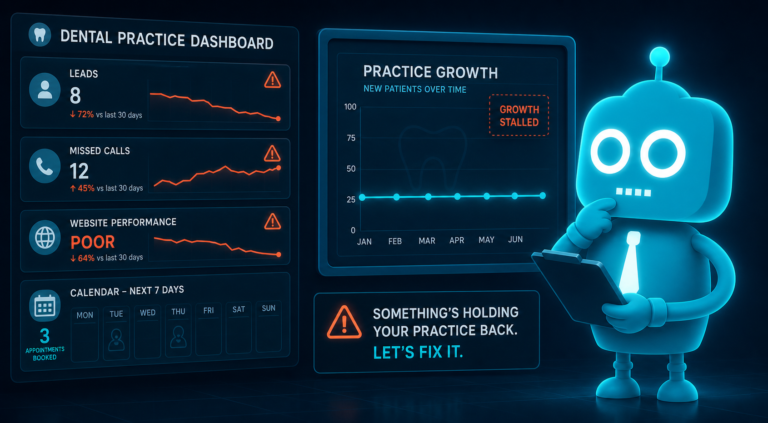
If your website, SEO, and ads are generating leads but your team is slow to respond or unsure how to handle inquiries, marketing performance will suffer.

Train the Team for New Patient Calls
New patient calls should be handled with warmth, confidence, and structure. The goal is to move from inquiry to scheduled appointment without making the patient feel rushed.
A strong front desk call process includes:
- Answering with a friendly, clear greeting
- Asking how the patient heard about the practice
- Understanding the patient’s main concern
- Explaining the next step simply
- Offering specific appointment options
- Confirming contact information
- Sending a text or email confirmation
For example, if a patient calls about a broken tooth, the front desk should not simply say, “Our next opening is Thursday.” A better response is:
“I’m sorry you’re dealing with that. We do see patients for broken teeth, and I’ll help you find the soonest available time. Are you having pain or swelling right now?”
This builds trust immediately.
The Independent Dental Practice Advantage
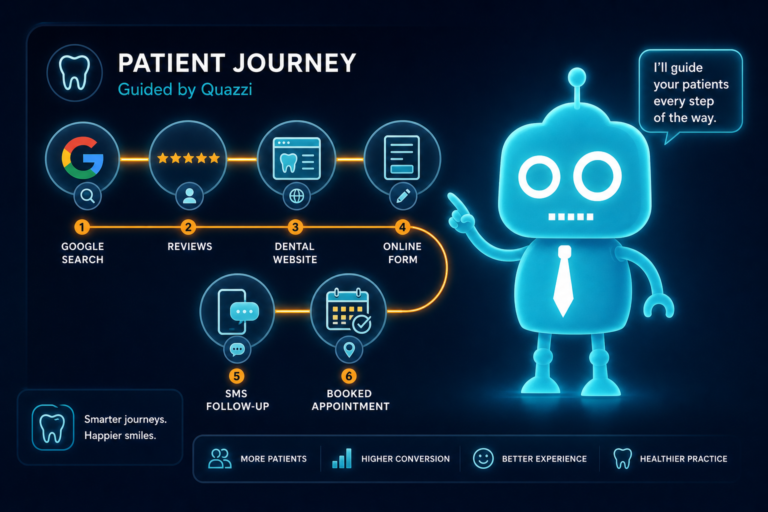
Corporate dental chains can spend more on advertising, but independent dentists can create a better patient journey. The advantage comes from being more local, more responsive, more authentic, and more trusted.
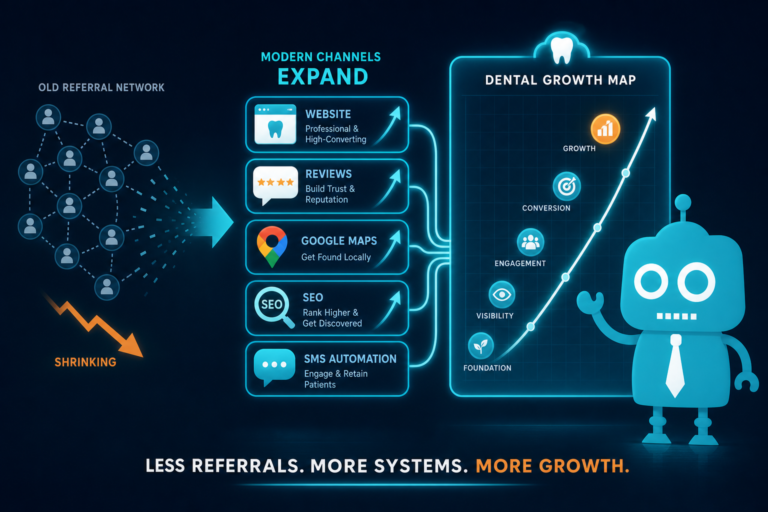
To compete effectively, focus on the systems that influence new patient acquisition:
- Improve your local SEO so nearby patients can find you
- Build a personal brand around the dentist and team
- Show your community involvement
- Respond quickly to every new patient inquiry
- Use reviews as a trust-building asset
- Create authentic website content with real photos
- Build service-specific landing pages for high-intent searches
- Use CRM, SMS, and email automation to follow up consistently
- Train the front desk to convert interest into scheduled appointments
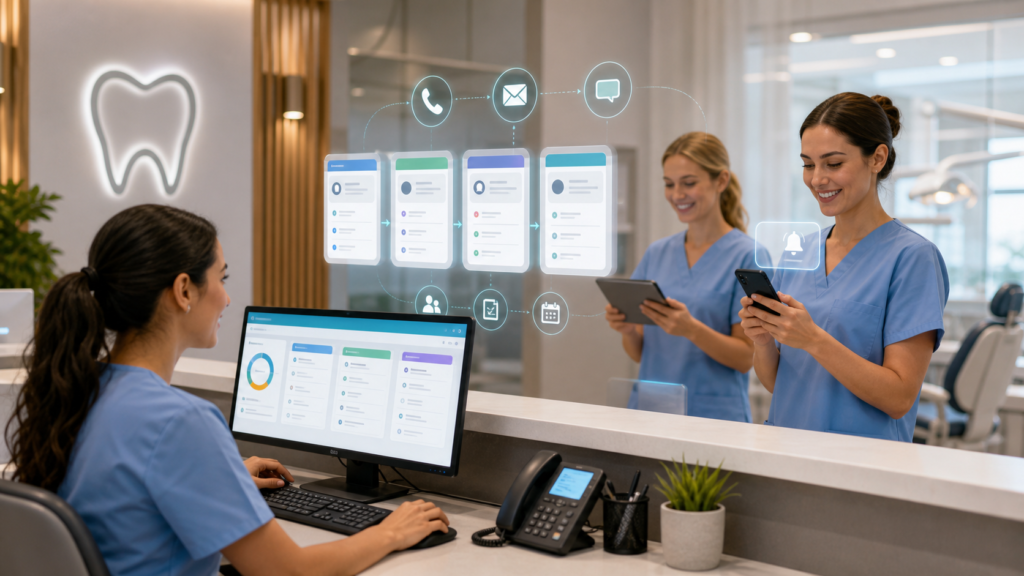
The practices that win are not always the biggest. They are the ones that make patients feel confident before, during, and after the first interaction.
How CreateTheSite.com Helps Independent Dentists Compete
CreateTheSite.com helps dental practices build the online presence and follow-up systems needed to compete with corporate dental chains. Our focus is on creating modern, conversion-friendly websites that make your practice look professional, local, and trustworthy.
We help dental offices with:
- Modern dental website design
- Reliable website hosting
- Mobile optimization for patients searching on phones
- Lead capture forms for new patient requests
- CRM integrations to track inquiries and follow-ups
- SMS and email automation for appointment follow-up
- Review and reputation support workflows
- Service-specific landing pages for treatments like implants, Invisalign, emergency dentistry, and cosmetic dentistry
- Ongoing website support so your site stays updated and effective
If your independent dental practice wants a website and follow-up system that helps turn visitors into scheduled patients, CreateTheSite.com can help you put the right foundation in place.
Ready to compete with a stronger website, smarter lead capture, and faster patient follow-up? Visit CreateTheSite.com to learn how we can support your dental practice.