The Real Cost of Poor Dental Marketing
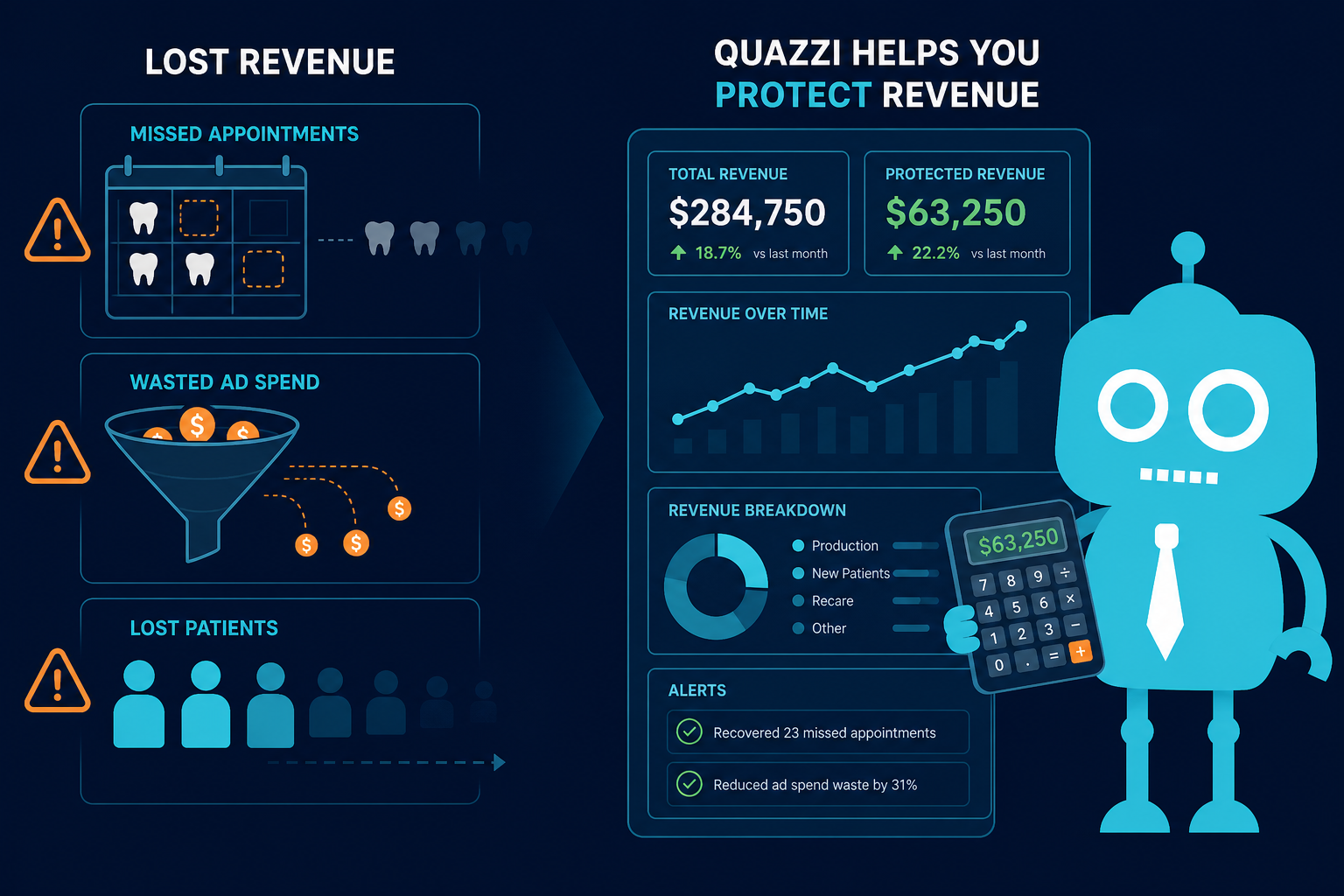
Poor dental marketing does not just waste your ad budget. It quietly reduces production, weakens your schedule, lowers patient lifetime value, and makes your practice less valuable over time.
For independent dental practice owners, dentists, and office managers, this is an important distinction. A failed campaign is not only the $2,000, $5,000, or $10,000 spent on ads. The larger cost is often the implant consult that never booked, the Invisalign lead that chose another office, the new patient who called after hours and never received a follow-up, or the unscheduled treatment plan that disappeared into your software.
In dental practices, marketing should do more than generate clicks. It should create measurable production opportunities. When the systems around your marketing are weak, those opportunities leak out at every step.

Poor Dental Marketing Costs More Than Ad Spend
Many dental practices evaluate marketing by asking one question: “How much did we spend?”
That is only part of the picture. A better question is: “How much production did we fail to capture because our marketing system was not built to convert?”
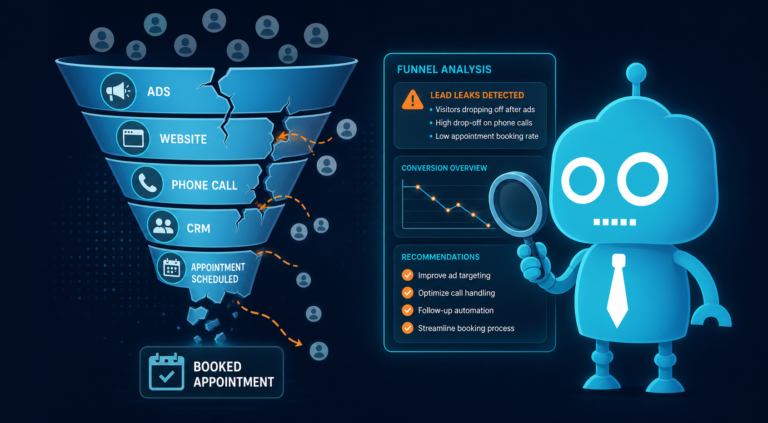
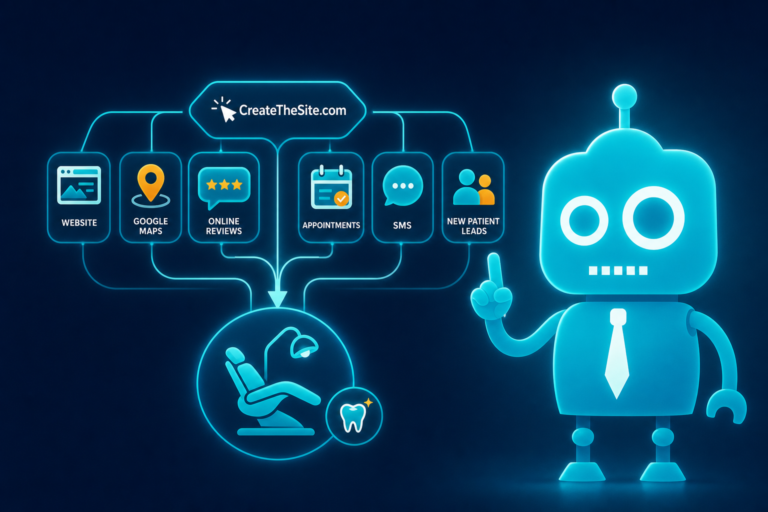
Dental marketing is not just advertising. It includes your website, landing pages, forms, call tracking, reviews, CRM, front desk follow-up, email and SMS automation, online scheduling, and patient communication. If one part of that system breaks down, the practice can lose high-value opportunities without realizing it.
For example, if a patient searches for “dental implants near me,” clicks your ad, lands on a slow page, fills out a form, and never receives a timely response, the problem is not only the wasted click. The real loss may be a $4,000 to $30,000 treatment case.
Missed High-Value Treatment Leads
Not all dental leads are equal. A new patient exam is valuable, but some leads represent much larger production opportunities.
High-value dental leads may include patients interested in:
- Dental implants
- Invisalign or clear aligners
- Cosmetic dentistry
- Veneers
- Full-mouth rehabilitation
- Emergency dental care
- Sleep apnea appliances
- Same-day crowns or restorative treatment
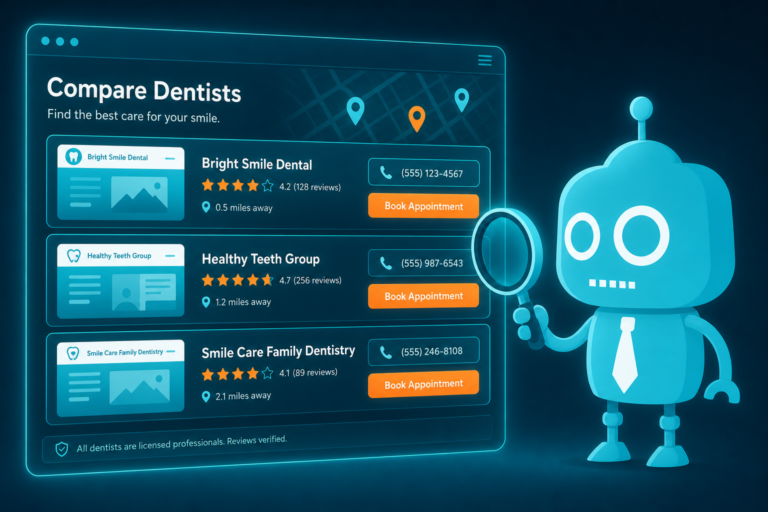
When your marketing system is weak, these patients often do not convert. They may click your ad, browse your website, check your reviews, and then choose another office with a stronger online presence and easier scheduling process.
Example: The Implant Lead That Never Converts
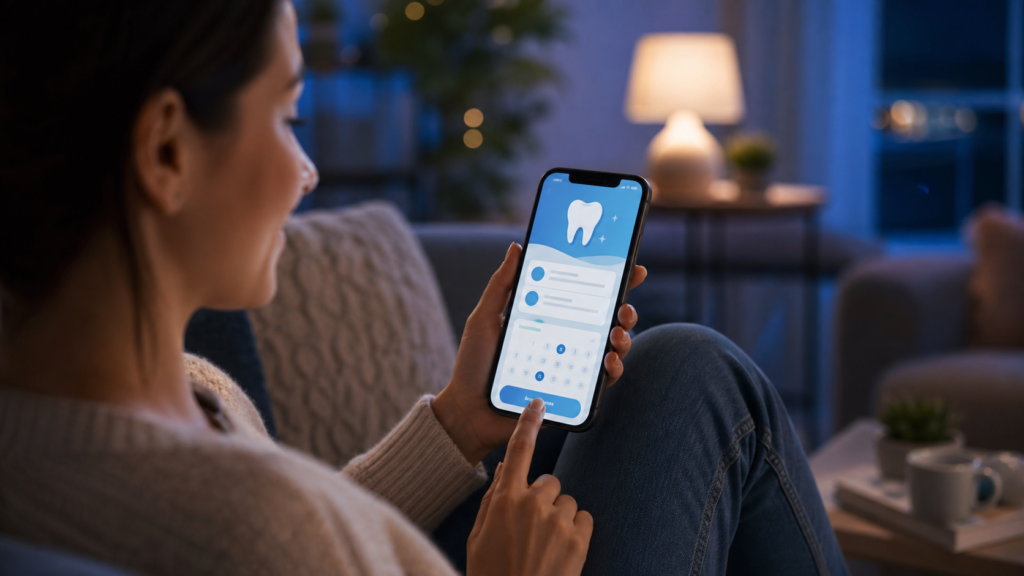
Imagine your practice runs Google Ads for dental implants. A prospective patient clicks your ad at 8:30 p.m. after researching implant options for several weeks. Your landing page has a generic contact form that says, “Request an Appointment.” There is no implant-specific information, no financing mention, no before-and-after photos, no trust-building copy, and no clear next step.
The patient submits the form. The front desk sees it the next morning but is busy checking in hygiene patients, answering calls, and verifying insurance. The lead receives a call six hours later, does not answer, and no automated text or email follow-up is sent.
That patient may have been ready for a consultation. Instead, the opportunity is lost.
The cost was not just the ad click. The cost was a possible implant case, the future hygiene visits, referrals, reviews, and long-term patient value that could have followed.
Weak Landing Pages Reduce New Patient Conversion
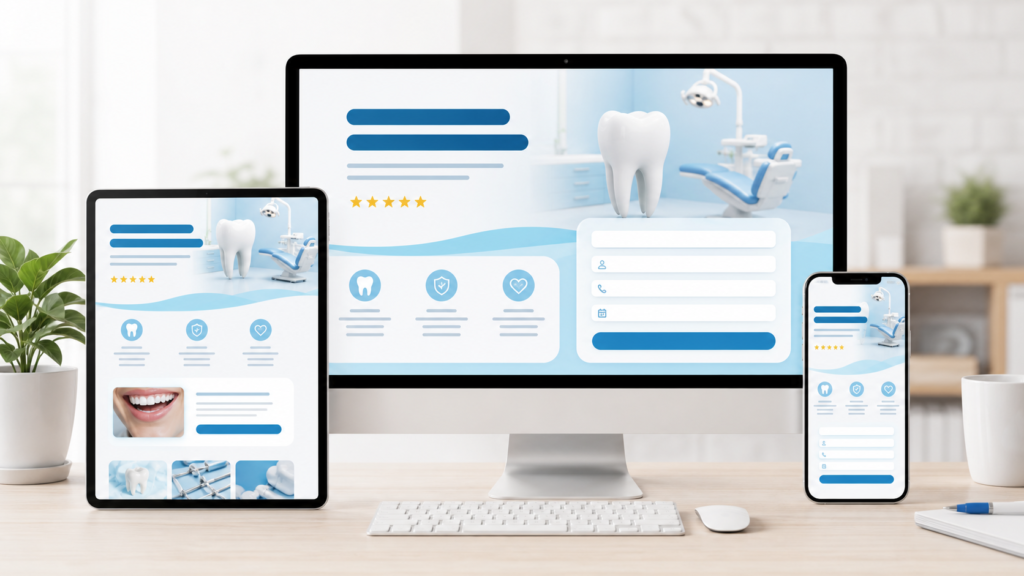
A dental landing page has one job: convert a visitor into a scheduled appointment or qualified lead. Many dental practices send paid traffic to a homepage that was not designed for conversion.
A homepage is usually broad. It introduces the practice, lists services, and provides general information. A landing page should be focused. It should match the patient’s intent and guide them toward one specific action.
Common Dental Landing Page Problems
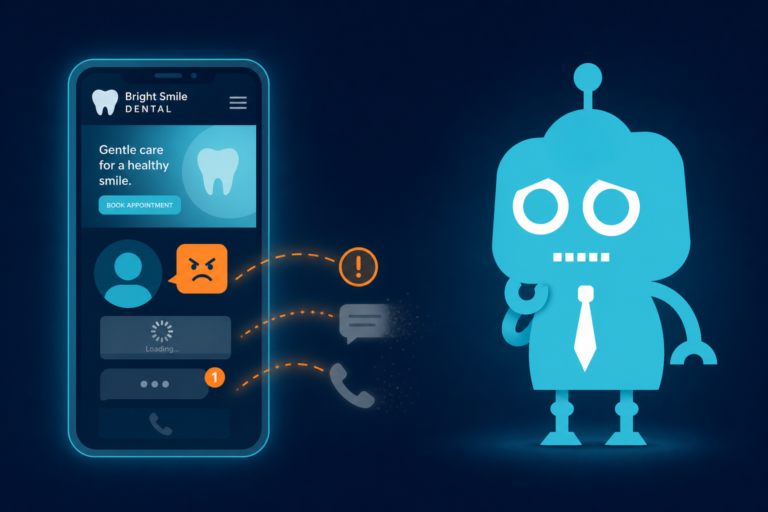
- The page loads slowly on mobile devices.
- The phone number is hard to find.
- There is no clear “Request an Appointment” button above the fold.
- The page does not match the ad topic.
- There are no trust signals, such as reviews, dentist credentials, or patient testimonials.
- The form asks for too much information.
- There is no mention of financing, insurance, or payment options.
- The design looks outdated compared to competing dental offices.
These issues create friction. Patients searching for dental care are often comparing several practices at once. If your page feels confusing, outdated, or difficult to use, they may leave within seconds.
What a Strong Dental Landing Page Should Include
A high-converting dental landing page should be specific to the service being promoted. For example, an Invisalign landing page should not look exactly like an emergency dentistry page.
Effective landing pages often include:
- A clear headline that matches the patient’s search intent
- Mobile-friendly design
- Click-to-call buttons
- Simple lead capture forms
- Online scheduling or appointment request options
- Patient reviews and ratings
- Service-specific benefits
- Financing or payment information
- Photos of the practice and dental team
- Clear follow-up expectations
If your practice is paying for traffic, every landing page should be built to turn that traffic into production opportunities.
Wasted Ad Clicks Drain Your Marketing Budget
Dental advertising can be competitive, especially for services like implants, Invisalign, cosmetic dentistry, and emergency dentistry. In many markets, every click has a real cost.
Wasted ad clicks happen when patients click but do not take the next step because the marketing system fails them.
Why Dental Ad Clicks Get Wasted
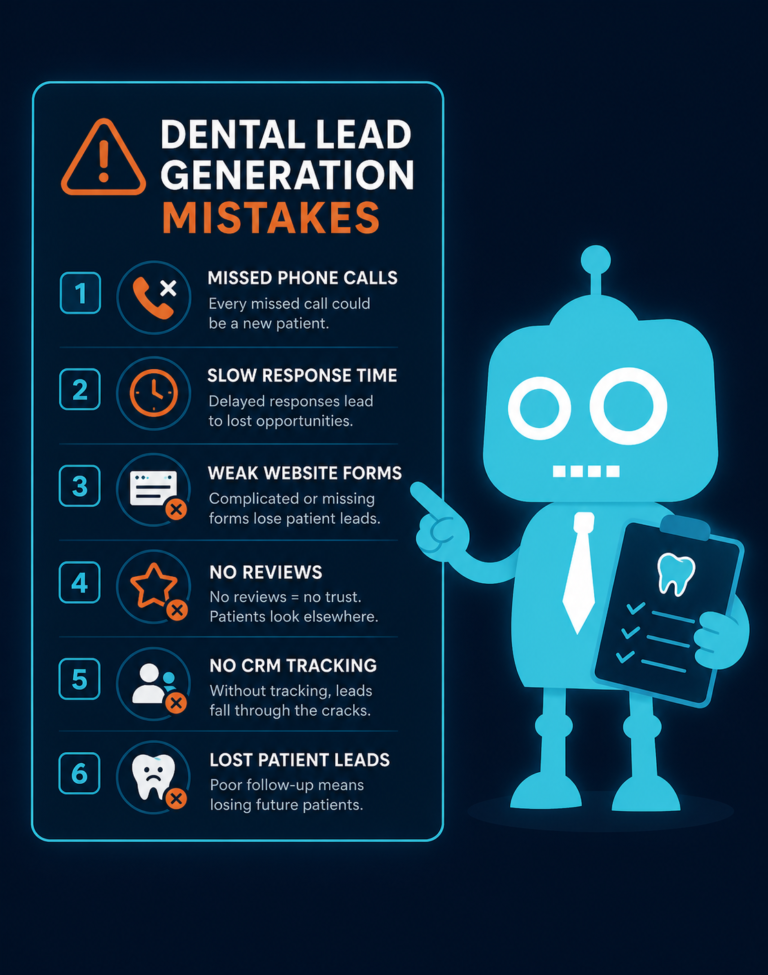
- The ad sends patients to a generic or outdated website.
- The website is not mobile optimized.
- The page does not answer common patient questions.
- The contact form does not work properly.
- The practice does not respond quickly enough.
- There is no CRM to track the lead.
- No automated SMS or email follow-up is sent.
- The front desk does not have a clear script for new patient leads.
Clicks are only valuable if they create conversations, appointments, and accepted treatment. If your practice is spending money to generate traffic but has no reliable conversion process, the ad platform is not the only problem.
The full patient acquisition system needs attention.
Staff Time Waste at the Front Desk
Poor marketing also creates operational waste. When your website, forms, and follow-up systems are not organized, your front desk team spends unnecessary time chasing incomplete leads, answering repetitive questions, and manually managing tasks that could be automated.
This matters because the front desk is already busy. They are answering phones, checking patients in and out, confirming appointments, collecting balances, verifying insurance, managing cancellations, and supporting the clinical schedule.
If your marketing creates messy or unqualified leads, the team absorbs the cost.

Examples of Marketing-Related Staff Waste
- Calling leads multiple times with no structured follow-up process
- Manually copying website form submissions into practice management software
- Sorting through spam form submissions
- Answering the same insurance or financing questions that should be addressed on the website
- Trying to identify where a patient came from without call tracking or CRM data
- Following up on unscheduled treatment without automated reminders
Good marketing should make the front desk more effective, not more overwhelmed. A modern dental website and CRM system can route leads, send instant confirmations, trigger follow-up messages, and help the team prioritize the most valuable opportunities.
Lower Patient Lifetime Value
Patient lifetime value is one of the most important numbers in a dental practice. A new patient may start with an exam and cleaning, but over time that patient may accept restorative care, cosmetic treatment, periodontal maintenance, whitening, aligners, crowns, implants, and refer family members.
Poor marketing lowers patient lifetime value when it attracts the wrong patients, fails to educate them, or does not keep them engaged after the first appointment.

How Poor Marketing Lowers Long-Term Value
- Patients choose the practice only because of a discount.
- The website does not communicate comprehensive care.
- There is no email or SMS nurture sequence after a consultation.
- Patients are not reminded about unscheduled treatment.
- Reviews are not requested consistently.
- Inactive patients are not reactivated with targeted campaigns.
- Patients do not understand the full range of services offered.
For example, a patient may visit your office for an emergency toothache. If your systems are strong, that patient can become a long-term comprehensive care patient. They receive a great first impression, helpful follow-up, clear treatment options, and reminders for future care.
If your systems are weak, that same patient may come in once, complete the urgent procedure, and disappear.
The difference is not just marketing. It is patient relationship management.
Lost Treatment Plans Are a Hidden Production Leak
One of the biggest hidden costs in dental practices is unscheduled treatment. Many patients leave with diagnosed treatment but never book. Some are not ready. Some need financing. Some want to talk to a spouse. Some simply get busy.
Without a structured follow-up process, treatment plans are forgotten.
The Problem With Manual Follow-Up
Many practices rely on the front desk or treatment coordinator to manually follow up with patients. While this can work in small volumes, it is easy for opportunities to fall through the cracks.
A busy team may intend to call a patient about a crown, implant consult, or periodontal treatment plan, but daily tasks take priority. After a few weeks, the opportunity becomes colder. After a few months, the patient may be in pain, frustrated, or seeing another dentist.
How CRM and Automation Help Recover Treatment
A dental CRM and automated communication system can help keep treatment opportunities active. For example, when a patient leaves without scheduling, the system can trigger a series of personalized messages:
- A same-day thank-you message with a scheduling link
- A follow-up email explaining the recommended treatment
- An SMS reminder to call with questions
- A financing information email
- A reminder to schedule before insurance benefits expire
This does not replace human communication. It supports it. Automation helps ensure patients receive timely, helpful reminders while your team focuses on live conversations and in-office patient care.
Weak Reviews Reduce Trust and Conversion
Dental patients rely heavily on reviews. Before calling your office, many patients check your Google rating, read recent comments, compare photos, and look for signs that other patients had a positive experience.
If your practice has few reviews, outdated reviews, or a lower rating than nearby competitors, your marketing performance suffers. Even strong ads may underperform if the patient does not trust what they see after clicking.
Reviews Affect More Than Reputation
Reviews influence:
- Google Maps visibility
- Website conversion rates
- New patient phone calls
- High-value treatment inquiries
- Patient confidence before consultations
A patient considering veneers, implants, or Invisalign wants reassurance. Strong reviews help reduce perceived risk. A consistent review request system through SMS and email can make reputation building part of your normal workflow instead of an occasional effort.

Weak Practice Valuation
Poor marketing can even affect the long-term value of your dental practice. Whether you plan to sell, bring on an associate, expand, or simply build a more profitable business, predictable new patient acquisition matters.
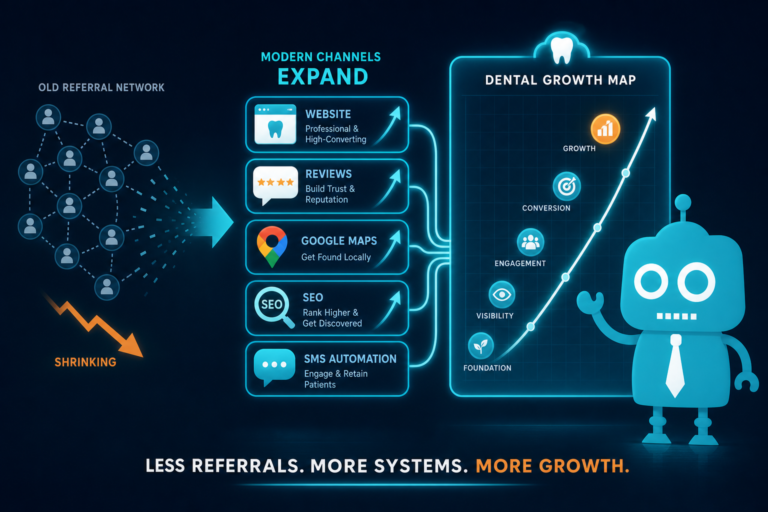
A practice with strong marketing systems is more attractive because it has clearer growth potential. A buyer or partner wants to see that the practice is not dependent only on word-of-mouth, outdated referral patterns, or the owner dentist’s personal relationships.
Marketing Systems That Support Practice Value
- A modern, mobile-friendly website
- Consistent new patient lead flow
- High-quality reviews and reputation management
- Documented lead tracking
- CRM data showing conversion performance
- Automated patient communication
- Reliable follow-up for unscheduled treatment
- Clear reporting on marketing ROI
When these systems are in place, the practice is less dependent on guesswork. It becomes easier to understand where patients come from, which services are growing, and where production opportunities exist.
That operational clarity can strengthen the business and support a better valuation.
How to Identify If Poor Marketing Is Costing Your Dental Practice Production
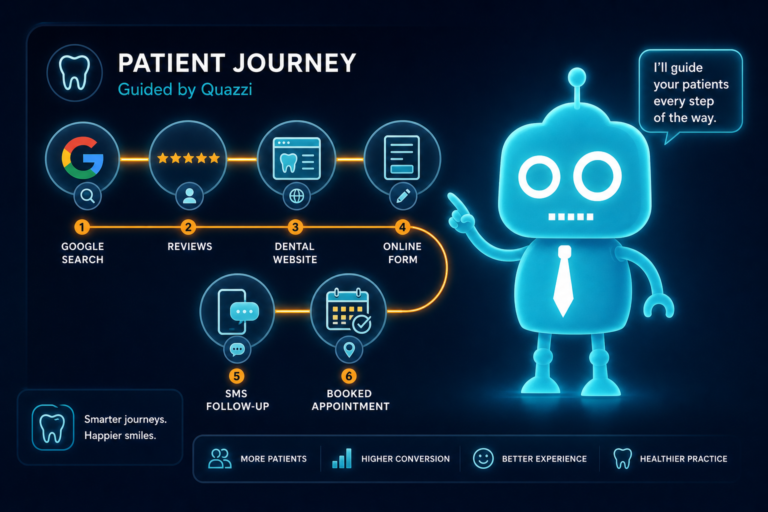
Many practices know their marketing could be better, but they do not know where the biggest leaks are. Start by reviewing the full patient journey from search to scheduled treatment.
Ask These Practical Questions
- Is our website fast and easy to use on a phone?
- Can a new patient request an appointment in under 30 seconds?
- Do our landing pages match the services we advertise?
- Are implant, Invisalign, cosmetic, and emergency leads tracked separately?
- Do we know how many website forms become scheduled appointments?
- How quickly does our team respond to new patient inquiries?
- Do we send automated SMS and email follow-up when a lead does not answer?
- Are unscheduled treatment plans followed up consistently?
- Do we request reviews after positive patient experiences?
- Can we connect marketing activity to actual production?
If the answer to several of these questions is “no,” your practice may not have a traffic problem. You may have a conversion and follow-up problem.
The Real Cost Is Lost Production Opportunity
Ad spend is visible. Lost production is harder to see.
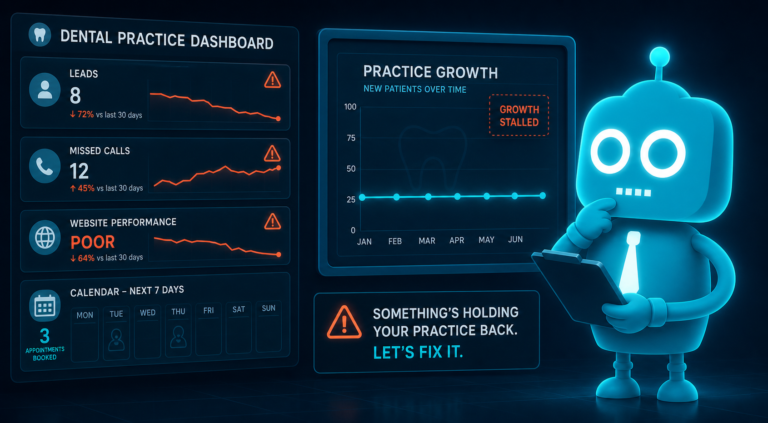
You can see the monthly invoice from Google Ads, Meta Ads, SEO, or your website provider. What you may not see are the patients who visited your site and left, the calls that were missed, the forms that were not followed up, the treatment plans that went cold, and the high-value cases that booked with another office.
That is the real cost of poor dental marketing.
Strong dental marketing is not about chasing every trend or spending more money. It is about building a reliable system that turns patient interest into scheduled appointments, accepted treatment, positive reviews, and long-term practice growth.
Build a Dental Marketing System That Captures More Opportunities
If your practice is investing in new patient acquisition, your website and follow-up systems need to work as hard as your ads. Every click, call, and form submission should have a clear path toward an appointment.
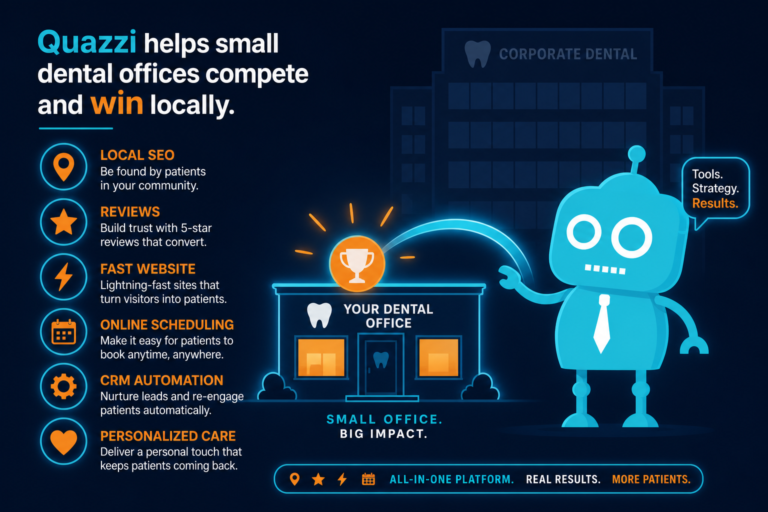
CreateTheSite.com helps dental practices modernize the digital systems that support growth. Our services include modern dental website design, secure hosting, mobile optimization, lead capture forms, CRM integrations, SMS and email automation, appointment follow-up, and ongoing website support.
Whether your practice needs a better website, stronger landing pages, improved lead tracking, or automated follow-up for new patient inquiries, CreateTheSite.com can help you build a system designed to convert more opportunities into production.
If you are ready to stop losing valuable dental leads to outdated technology and inconsistent follow-up, visit CreateTheSite.com to learn how a better website and smarter patient communication system can support your practice growth.