
Why Online Scheduling Improves Dental Patient Acquisition
Most dental practices think of online scheduling as a convenience feature. It is more than that. For independent dental practices, online scheduling can directly improve new patient acquisition by capturing people at the exact moment they are ready to book.
That moment does not always happen during office hours.
A potential patient may search for an emergency dentist after dinner, compare cosmetic dentistry options on a Sunday, or finally decide to schedule a cleaning while scrolling on their phone at 10:30 p.m. If your website only says “Call us to schedule,” that patient may move on to another practice with a faster path to an appointment.
Online scheduling helps turn website visitors into booked patients by reducing delays, removing friction, improving mobile conversion, and supporting follow-up through reminders, CRM systems, SMS, and email automation.

Online Scheduling Captures Patients When They Are Ready
Dental patient acquisition depends heavily on timing. A person searching for a dentist is often motivated by a specific need:
- A toothache or dental emergency
- A broken crown or filling
- A new insurance plan
- A recent move to the area
- Dissatisfaction with their current dentist
- Interest in whitening, veneers, Invisalign, or implants
- A child who needs a first dental visit
When someone is actively looking, your website has a short window to convert that interest into action. Online scheduling gives them a clear next step without requiring them to wait, call, or leave a voicemail.
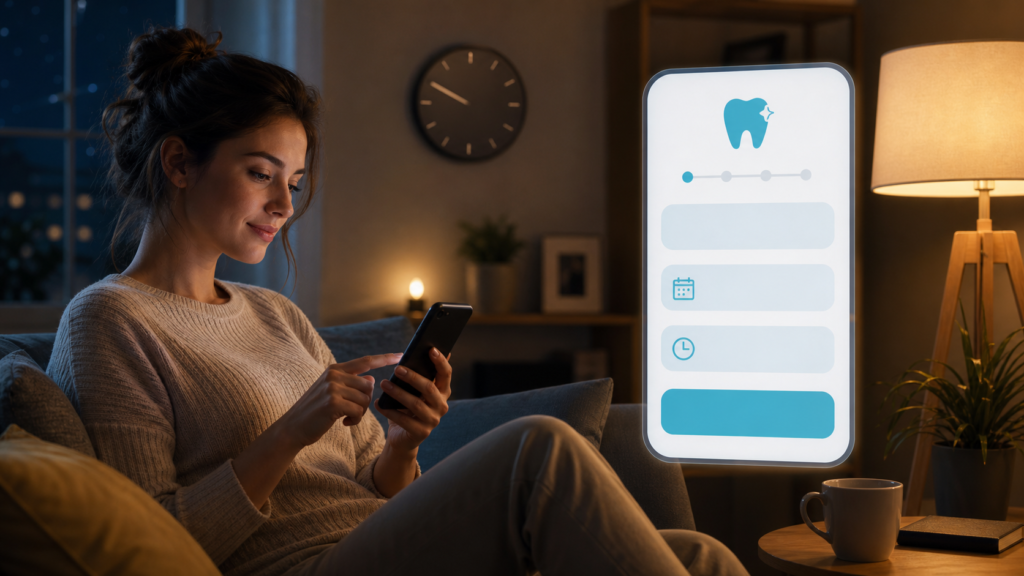
The After-Hours Advantage
Many dental decisions happen after hours. Patients research healthcare options when they are not at work, when their children are asleep, or when discomfort becomes hard to ignore.
For example, a patient with a cracked tooth may search “dentist near me open tomorrow” at 9:45 p.m. If your practice website allows them to request or book an appointment immediately, you have a better chance of winning that patient before another practice does.
Without online scheduling, that same patient may:
- Forget to call in the morning
- Call another office first
- Submit a form and never receive a timely response
- Choose a competitor with visible availability
Online scheduling turns your dental website into a 24/7 acquisition tool. Your front desk does not need to be available at midnight for your practice to capture new patient demand.
Reduced Front Desk Friction Helps More Patients Book
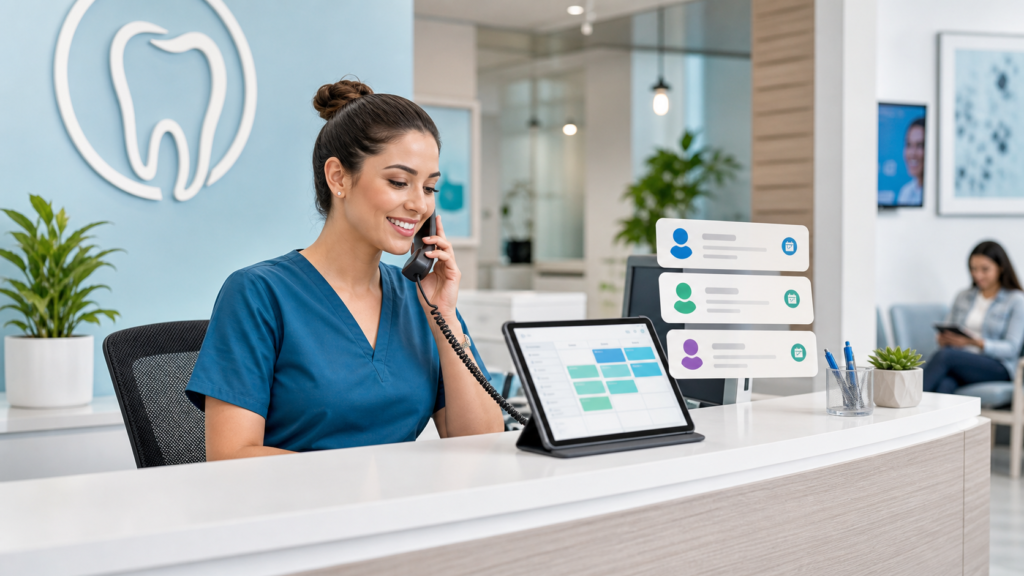
Your front desk team plays a critical role in patient experience, but phone-based scheduling can create friction for both staff and patients.
Patients may call during lunch, during school pickup, or between meetings. If they are placed on hold or sent to voicemail, the opportunity may be lost. On the practice side, the front desk is often managing check-ins, checkouts, insurance questions, treatment plan discussions, hygiene recalls, and clinical team interruptions.
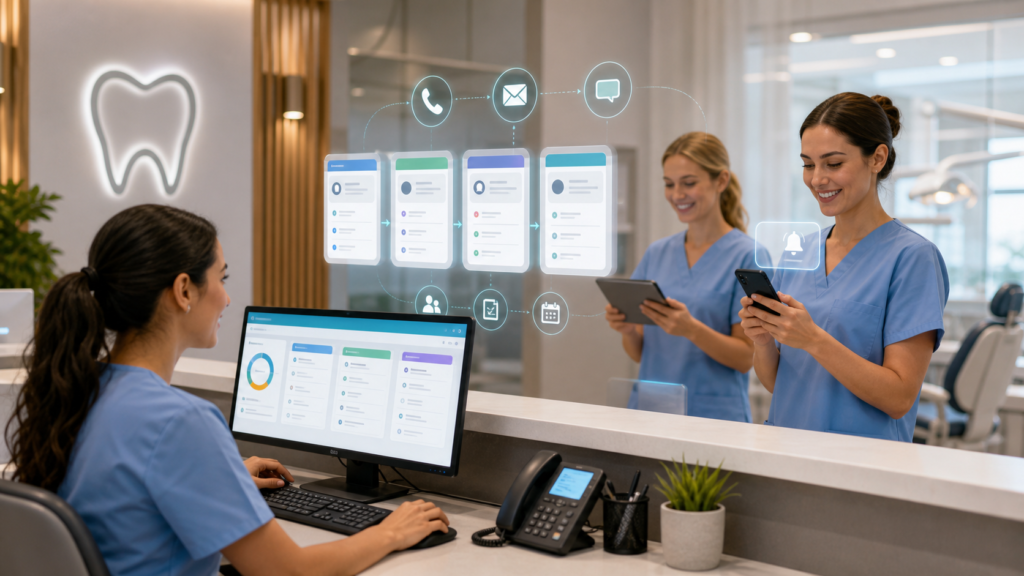
Online scheduling reduces pressure on the front desk by allowing patients to take the first step themselves.
Common Scheduling Friction Points
- Busy phone lines during peak hours
- Voicemail messages that require callbacks
- Patients who cannot talk during the workday
- New patient calls that take several minutes to complete
- Manual transfer of website form leads into practice systems
- Missed calls from high-intent website visitors
When your website includes a prominent “Book Online” or “Request an Appointment” option, patients do not have to wait for a phone conversation to express intent. Your team can then confirm, review details, and prepare for the visit instead of starting from scratch.
Faster Booking Improves Website Conversion
Dental marketing does not stop when someone lands on your website. The goal is conversion: turning that visitor into a scheduled appointment.
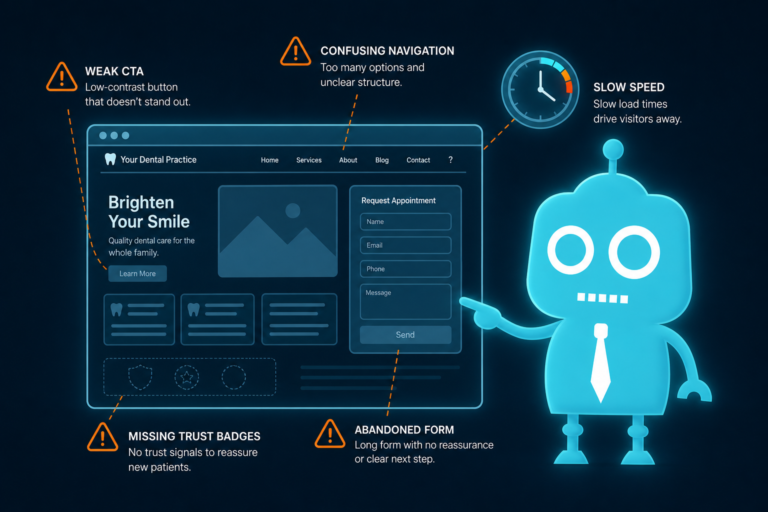
If a potential patient clicks a Google ad, finds your practice through local SEO, or reads your reviews, the next step should be obvious. A slow or confusing booking process can reduce conversion rates, even if your website looks professional.
Faster booking works because it matches patient behavior. People are used to booking restaurants, haircuts, car service, hotel rooms, and medical appointments online. Dental practices that make scheduling easy feel more modern and accessible.
What a High-Converting Dental Booking Path Looks Like
A strong online scheduling flow should be simple and direct:
- Patient visits your website from Google, social media, maps, or a referral.
- They see a clear call-to-action, such as “Schedule Your Visit” or “Request an Appointment.”
- They choose a service category, such as cleaning, emergency visit, consultation, or cosmetic dentistry.
- They enter basic contact information.
- They select or request a preferred appointment time.
- They receive confirmation by email or SMS.
The fewer unnecessary steps involved, the more likely the patient is to complete the process.
Mobile Conversion Is Essential for Dental Patient Acquisition
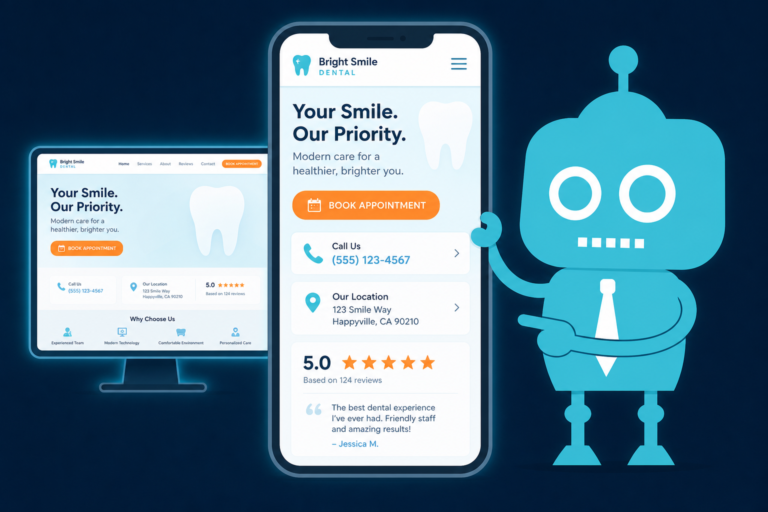
A large share of dental searches happen on mobile devices. Patients search “dentist near me,” check reviews, compare office photos, look at services, and decide whether to book directly from their phones.
If your scheduling experience is difficult on mobile, you may be losing new patients without realizing it.
Mobile Scheduling Must Be Fast and Easy
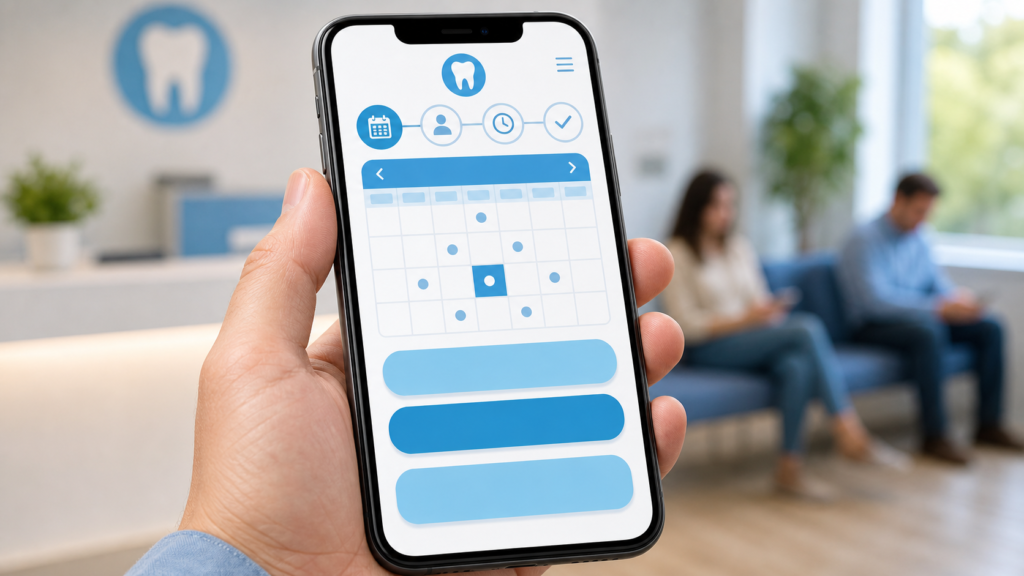
Mobile users are less patient with long forms, tiny buttons, slow-loading pages, or confusing navigation. A mobile-friendly dental scheduling system should include:
- Large, easy-to-tap buttons
- A visible booking CTA near the top of the page
- Fast page loading
- Short forms that ask only for necessary information
- Click-to-call as a backup option
- SMS confirmation when possible
For example, a parent searching for a family dentist from a phone should not have to pinch, zoom, or dig through multiple pages to request an appointment. A strong mobile experience helps convert that search into a real new patient opportunity.
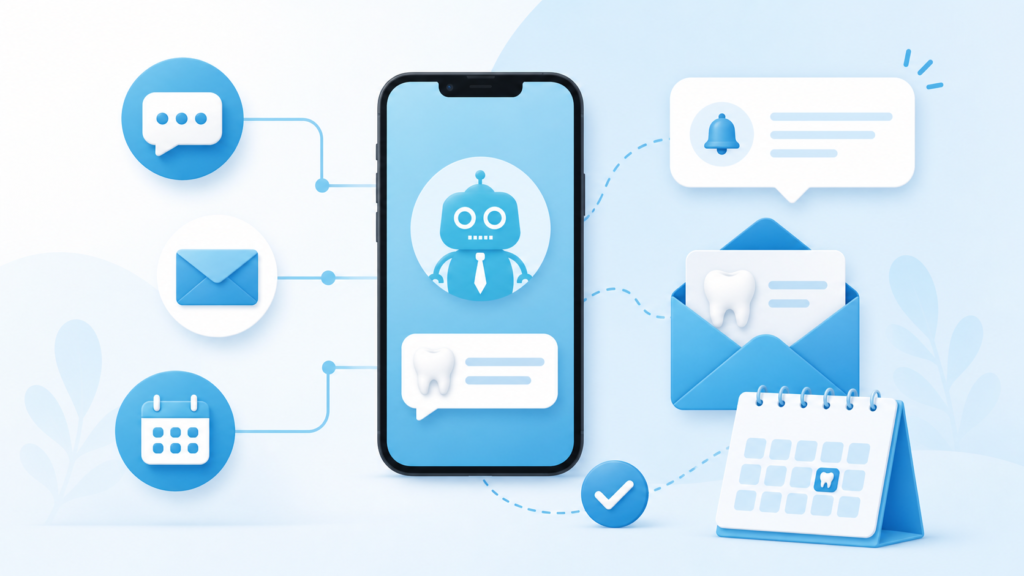
Reminders Keep New Patients Engaged Before the Visit
Getting the appointment request is only the first step. New patients still need to show up.
Automated reminders help keep patients engaged between booking and the appointment date. This is especially important for new patients who do not yet have a strong relationship with the practice.
Useful Reminder Types for Dental Practices
- Immediate confirmation: “Your appointment request has been received.”
- Appointment confirmation: “You are scheduled for Tuesday at 2:00 p.m.”
- Pre-visit instructions: “Please complete your new patient forms before your visit.”
- Reminder message: “We look forward to seeing you tomorrow.”
- Same-day reminder: “Your dental appointment is today at 2:00 p.m.”
These messages can be sent through SMS and email automation, depending on your systems and patient preferences. They reduce uncertainty and make the practice feel organized before the patient ever walks through the door.
Online Scheduling Can Help Reduce No-Shows
No-shows affect production, team efficiency, and patient flow. While online scheduling alone will not eliminate no-shows, it can help reduce them when paired with reminders, confirmations, and follow-up workflows.
Patients who receive clear digital communication are less likely to forget their appointment. They also have an easier way to confirm, cancel, or reschedule if something changes.
How Online Scheduling Supports No-Show Reduction
- Automated SMS and email reminders keep appointments top of mind.
- Confirmation links make it easy for patients to verify attendance.
- Pre-appointment forms increase commitment before the visit.
- Rescheduling options help preserve the patient relationship.
- CRM follow-up can re-engage patients who miss or cancel.
For a dental office, even a small reduction in missed appointments can make a meaningful difference. More completed appointments mean better chair utilization, stronger production, and less wasted time for the team.
CRM Integration Turns Appointment Requests Into Trackable Leads
One of the most overlooked benefits of online scheduling is better lead tracking. Many dental practices receive leads from multiple sources: website forms, phone calls, Google Business Profile, paid ads, Facebook, referrals, and email campaigns.
Without a CRM or organized follow-up system, it is easy for opportunities to slip through the cracks.
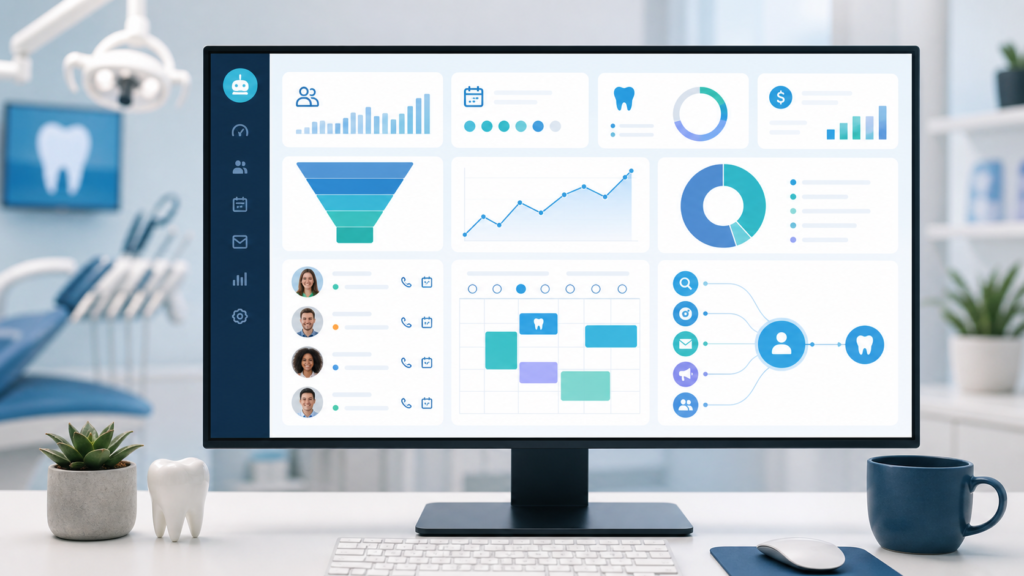
When online scheduling is connected to a CRM, your practice can track where patient requests come from, what services they are interested in, and whether they actually become scheduled and completed appointments.
What Dental Practices Can Track With CRM Integration
- New patient appointment requests
- Emergency dental leads
- Cosmetic consultation inquiries
- Implant or Invisalign leads
- Hygiene recall responses
- Missed appointment follow-ups
- Form submissions from specific website pages
- Lead sources such as Google Ads, SEO, or social media
This data helps practice owners and office managers make better marketing decisions. Instead of guessing which campaigns are working, you can see which channels are producing real appointment opportunities.
SMS and Email Automation Improve Follow-Up
Speed matters in dental lead response. If a potential patient requests an appointment and does not hear back quickly, they may keep searching.
SMS and email automation can respond instantly, even when the front desk is closed. This does not replace your team. It supports them by acknowledging the patient, setting expectations, and keeping the conversation moving.
Practical Automation Examples
- A new patient submits a request at 8:15 p.m. and receives an immediate text confirming the request.
- An emergency patient receives a message explaining that the office will contact them first thing in the morning.
- A cosmetic dentistry lead receives a follow-up email with information about veneers or whitening.
- A patient who does not complete the form receives a reminder to finish scheduling.
- A completed appointment triggers a review request after the visit.
Automation creates consistency. Every lead gets a response. Every new patient receives guidance. Every completed appointment can be followed by a review request or reactivation sequence when appropriate.
Patient Expectations Have Changed
Today’s dental patients expect convenience. They want to research your practice, read reviews, understand your services, and take action without unnecessary barriers.
A modern dental website should answer key questions quickly:
- Do you offer the service I need?
- Are you accepting new patients?
- Are you close to me?
- Do you have good reviews?
- Can I schedule easily?
- Will your office communicate clearly?
Online scheduling supports these expectations by giving patients control. It also signals that your practice is organized, accessible, and patient-focused.
Reviews and Scheduling Work Together
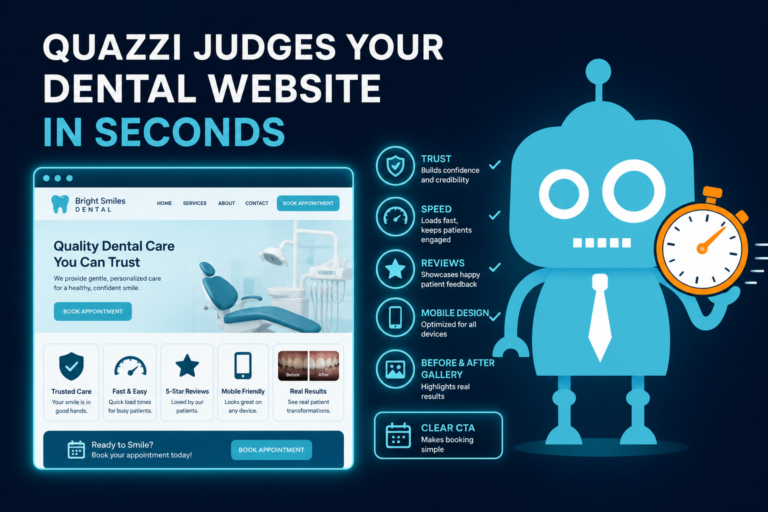
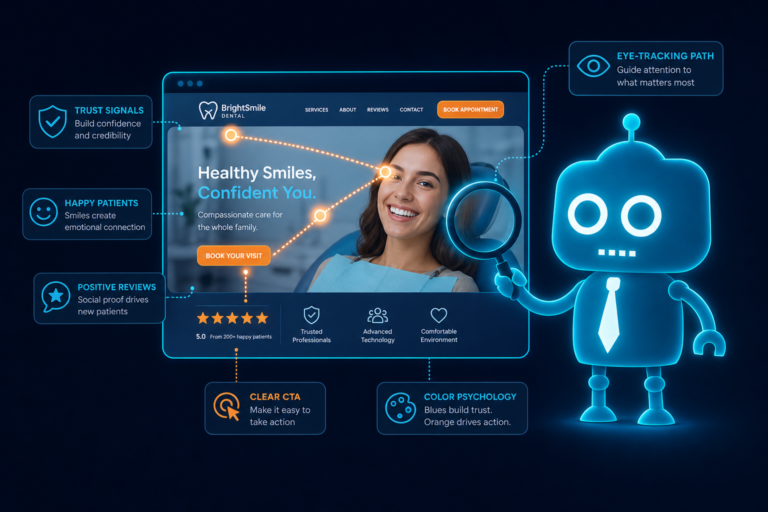
Online reviews often influence the decision to book. A patient may read your Google reviews, visit your website, and look for the next step. If scheduling is easy, your positive reputation can convert into an appointment faster.
On the other hand, if reviews are strong but the website has no clear booking option, the patient may hesitate or return to the search results. The combination of reviews, mobile-friendly design, and online scheduling is powerful for dental patient acquisition.
How Online Scheduling Supports the Front Desk Instead of Replacing It
Some practices worry that online scheduling will create confusion or reduce control over the schedule. That concern is valid if the system is poorly configured. But when implemented correctly, online scheduling can support front desk operations rather than disrupt them.
Your practice can decide which appointment types are available online, whether requests require approval, how confirmations are handled, and what information is collected before the visit.
Smart Scheduling Controls for Dental Offices
- Offer request-based scheduling for complex appointments.
- Allow direct booking only for selected visit types.
- Route emergency requests differently from routine cleanings.
- Collect insurance status before the appointment.
- Ask whether the patient is new or existing.
- Send new patient forms automatically after booking.
- Notify the front desk immediately when a request comes in.
This gives patients convenience while allowing the practice to maintain control over chair time, provider availability, and appointment types.
Online Scheduling Improves the ROI of Dental Marketing
If your practice invests in SEO, Google Ads, social media, direct mail, or referral marketing, your website needs to convert traffic effectively. Online scheduling can increase the return on those marketing efforts by making it easier for interested visitors to become patients.
Think of your website as the bridge between marketing and the front desk. If that bridge is slow, confusing, or outdated, potential patients may drop off before your team ever has a chance to speak with them.
A clear online scheduling system improves that bridge by:
- Capturing after-hours demand
- Reducing missed phone opportunities
- Improving mobile conversion
- Speeding up new patient requests
- Supporting automated follow-up
- Improving lead tracking through CRM integration
- Helping generate more completed appointments from existing traffic
Best Practices for Adding Online Scheduling to a Dental Website
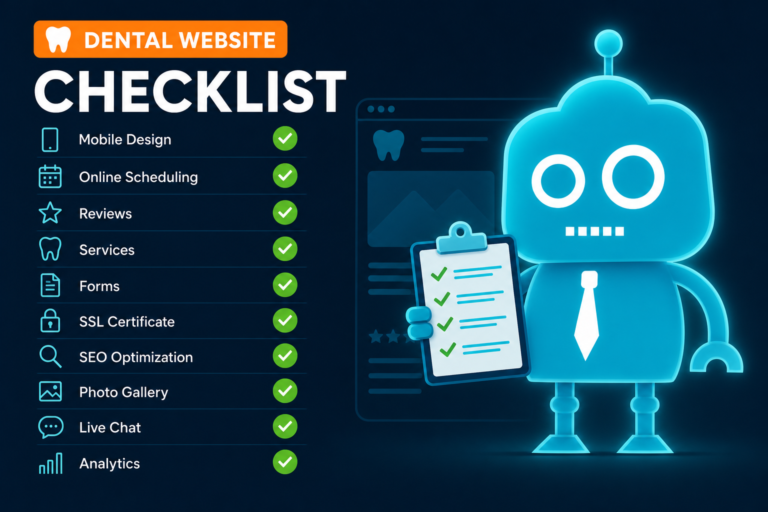
Online scheduling works best when it is part of a complete website conversion strategy. Simply adding a small scheduling link in the footer is not enough.
Make the Call-to-Action Easy to Find
Add scheduling buttons in high-intent areas of your website, including the homepage, service pages, header, mobile menu, and contact page. Use direct language such as “Book an Appointment,” “Schedule Online,” or “Request a Visit.”

Match Scheduling Options to Dental Services
A hygiene visit, emergency exam, implant consultation, and cosmetic consultation may require different workflows. Your online scheduling process should reflect how your practice actually operates.
Use Short Forms
Ask for the information needed to begin the scheduling process. Long forms can reduce completion rates, especially on mobile devices. Additional details can be collected after the appointment is requested.
Connect Scheduling to Follow-Up
Whenever possible, connect scheduling to SMS, email, CRM, and front desk notifications. This ensures that every request receives a timely response and is visible to the team.
Track Performance
Measure appointment requests, completed bookings, source attribution, and conversion rates. This helps you understand how your dental website is contributing to patient acquisition.
Online Scheduling Is a Competitive Advantage for Independent Dental Practices
Independent dental practices compete not only on clinical care, but also on accessibility and patient experience. Large dental groups often invest heavily in digital convenience. Independent practices can compete effectively by making their websites easier to use and their scheduling process more responsive.
Patients do not always choose the best clinical option based on credentials alone. They often choose the practice that makes it easiest to take the next step.
Online scheduling helps your practice be available when the patient is ready, whether that is during lunch, after work, late at night, or over the weekend.
Build a Dental Website That Turns Visitors Into Appointments
Online scheduling is one of the most practical ways to improve dental patient acquisition because it removes delays at the most important moment: when a patient is ready to book.
It helps your practice capture after-hours decisions, reduce front desk friction, improve mobile conversion, automate reminders, reduce no-shows, connect leads to your CRM, and meet modern patient expectations.
For dental practices that want more new patient opportunities from their website, the scheduling experience matters just as much as the design.
How CreateTheSite.com Helps Dental Practices Grow Online
CreateTheSite.com helps dental practices build modern, conversion-focused websites designed to support new patient acquisition and front desk efficiency.
Our team can help with professional dental website design, reliable hosting, mobile optimization, lead capture forms, CRM integrations, SMS and email automation, appointment follow-up, and ongoing website support. Whether your practice needs a stronger first impression, better mobile performance, or a smoother path from website visit to booked appointment, CreateTheSite.com can help you create a system that works for patients and your team.
If your dental website is not capturing patients after hours or making scheduling easy, it may be time to upgrade. Visit CreateTheSite.com to learn how a modern dental website can help turn more visitors into appointments.